Khao Phanom Bencha National Park: Waterfalls, Jungle Trails, and Wildlife Near Krabi Town
Khao Phanom Bencha National Park is Krabi's inland rainforest reserve, protecting steep limestone peaks, a dramatic five-tier waterfall, and dense jungle habitat roughly 20 km north of Krabi Town. It rewards early risers with cool air, birdsong, and cascading water, but trails beyond the lower falls require preparation and a degree of fitness.
Quick Facts
- Location
- Thap Prik Subdistrict, Mueang Krabi District, Krabi Province — approx. 20 km north of Krabi Town
- Getting There
- Public transport is limited; a bus runs from Krabi to Ban Huai To, but arrange onward transport to the park. Alternatively, hire a songthaew from Krabi Town, book a private transfer, or self-drive via Si Trang Road toward Ban Huai To
- Time Needed
- 2–4 hours for the waterfall trail; a full day if exploring further into the park
- Cost
- Foreign adults ฿100, foreign children (3–14) ฿50; Thai adults ฿20, children ฿10; vehicles ฿30. Verify fees on arrival as prices can change.
- Best for
- Nature lovers, hikers, wildlife watchers, families with older children
- Official website
- portal.dnp.go.th/Content/nationalpark?contentId=35183
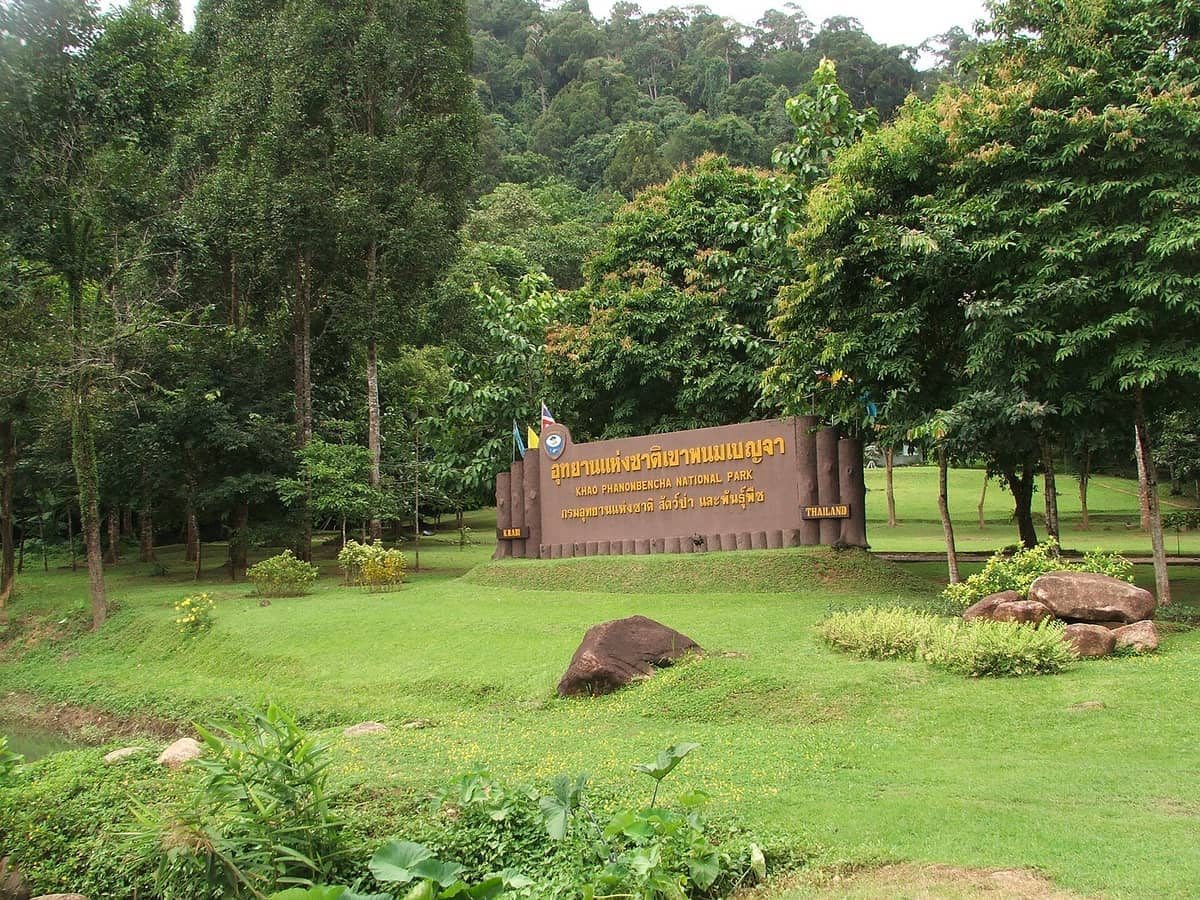
What Khao Phanom Bencha National Park Actually Is
Khao Phanom Bencha National Park (Thai: อุทยานแห่งชาติเขาพนมเบญจา) was established on 10 July 1981, making it one of southern Thailand's longer-standing protected areas. It covers a range of steep limestone and granite peaks rising abruptly from the Krabi lowlands, with the park's namesake peak — Phanom Bencha — forming the dominant ridge. The vegetation is dense tropical rainforest, and the park provides habitat for hornbills, langurs, civets, and a range of reptiles and amphibians, though most wildlife keeps its distance from visitor areas.
For most visitors, the park means one thing: Huai To Waterfall, a five-tier cascade that drops more than 80 metres through forested ravines. The lowest tier is an easy 500-metre walk from the visitor centre and is genuinely accessible to anyone who can walk on uneven ground. Higher tiers involve steeper, sometimes slippery, rocky paths. The park is open daily from 08:30 to 16:30 year-round, though trail conditions in the upper sections deteriorate significantly during heavy rain.
💡 Local tip
Arrive as close to 08:30 as possible. The lower waterfall is coolest, quietest, and most photogenic in the early morning, before groups arrive and before midday humidity peaks.
The Huai To Waterfall: Tier by Tier
The path from the car park to the first tier of Huai To Waterfall is paved and shaded, roughly 500 metres, passing through a corridor of dense fern and bamboo. You hear the water before you see it — a steady rush that separates the stillness of the forest from the cascade itself. The first tier spills into a wide, shallow pool surrounded by smooth boulders and overhanging vegetation. Early in the morning, light filters down through the canopy at an angle that makes the water appear almost white against the dark rock.
The second and third tiers require scrambling up natural rock steps beside the falls. Handrails appear at some sections, but the stone is often wet and mossy, so grip is inconsistent. Sandals are a risk here. Rubber-soled shoes with ankle support make a real difference. The views from the upper tiers are less about panoramas and more about immersion — you are surrounded by forest, the sound of water amplifies, and the air temperature drops noticeably.
Tiers four and five see far fewer visitors. The trail narrows, roots cross the path at ankle height, and the incline becomes serious. If you have limited hiking experience or are visiting with children under about ten, stopping at tier three is the sensible call. The reward for continuing is near-solitude and a rawer sense of the forest, but the payoff is incremental rather than dramatic.
⚠️ What to skip
Do not attempt upper tiers during or immediately after heavy rainfall. The rock surfaces become dangerously slippery, and water levels can rise quickly in the narrow gullies.
Tickets & tours
Live prices and dates from our booking partner. If you book, we may earn a commission at no extra cost to you.
Daily Cooking Class at Thai Cookery School in Krabi
From 42 €Instant confirmationFree cancellation7 islands speedboat excursion from Krabi
From 41 €Instant confirmationFree cancellationSpeedboat Tour to Hong Island Archipelago from Krabi
From 34 €Instant confirmationFree cancellationPhi Phi archipelago and Krabi 4 Islands full‑day speedboat tour
From 0 €Instant confirmationFree cancellation
Wildlife and Forest Environment
The park's forest is classified as tropical evergreen rainforest, and it functions as a wildlife corridor between the coastal lowlands and the interior hills. Hornbills are the most reliably spotted large bird, and their wingbeats are audible from some distance. Dusky langurs (grey-and-black leaf monkeys) occasionally appear in the canopy near the lower trail, particularly in the early morning. Common monitor lizards are frequently spotted near the stream edges.
The insect life here is extraordinary if you slow down enough to notice it. Enormous millipedes cross the path during and after rain. Stick insects cling to fern fronds. Orb-weaver spiders build webs between trees at head height on some trail sections — worth watching for, especially at dawn when dew makes them visible. Birdwatchers should bring binoculars; the canopy is thick, and calls are more common than sightings.
If wildlife and forest ecosystems are a priority for your Krabi trip, Khao Phanom Bencha pairs well with a visit to the Emerald Pool and the Blue Pool in Khlong Thom District, which together form a distinct inland natural circuit within Krabi Province.
How the Experience Changes by Time of Day and Season
Morning visits, between 08:30 and 10:30, offer the best combination of light, temperature, and quiet. The air temperature in the forest can feel ten degrees cooler than coastal Krabi, and the humidity is more tolerable before midday. Bird activity is highest in this window. By mid-morning, school groups and day-tour buses begin arriving, and the lower waterfall area becomes considerably more crowded.
The rainy season, roughly May through October, increases waterfall volume dramatically. The lower tiers become more spectacular visually, but trail safety deteriorates. Upper tiers should be considered off-limits in wet conditions unless you have experience on wet rock and understand the risks. The dry season, December through February, offers safer trail conditions and cooler temperatures, though the falls are somewhat reduced in volume.
For context on how Krabi's seasons affect outdoor activities generally, the best time to visit Krabi guide covers the tradeoffs between rainfall, crowds, and activity availability across the year.
ℹ️ Good to know
In the rainy season, the park remains open, but check conditions locally before making the drive. Flash flooding in the gorge area has been reported during sustained heavy rain.
Getting There and Practical Logistics
The park is located at 170 Moo 4, Thap Prik Subdistrict, Mueang Krabi District, about 20 km north of Krabi Town. The access route from town follows Si Trang Road for roughly 1 km before turning left onto the Ban Huai To road and continuing to park headquarters. The road is paved throughout and passable by car, motorbike, or songthaew.
There is no scheduled public bus directly to the park gate, though an hourly bus runs from Krabi to Ban Huai To; arrange onward transport from there. The most practical options from Krabi Town are: renting a motorbike or car and self-driving (approximately 30–40 minutes), hiring a songthaew (shared pickup truck taxi) through your guesthouse or the town market area, or booking a private transfer. Grab ride-hailing operates in Krabi, but pickup and availability in this area should be confirmed rather than assumed. Park hours are 08:30 to 16:30 daily. Plan to leave the park by 16:00 to allow time to descend safely.
If you are basing yourself in Krabi Town, the guide to getting around Krabi outlines transport options and approximate costs for reaching inland attractions.
Photography, Preparation, and Who Should Skip It
The lower waterfall photographs well in the soft light of early morning, when shadows fall behind rather than across the cascade. A wide-angle lens works for capturing the full height of the lower tiers. Waterproof cases or dry bags are worth considering if you plan to walk near the cascade; mist from the lower pool drifts further than expected. A polarising filter helps cut glare on the pool surface and improve colour in the water on brighter days.
Bring sufficient water — there are no reliable refill points on the trail, and the exertion level increases sharply on the upper tiers. Insect repellent is important; the forest floor and stream margins harbour biting insects, particularly in the rainy season. Wearing long lightweight trousers reduces exposure on the trail sections away from the water.
This park is not suitable for visitors with limited mobility beyond the paved lower section. Wheelchair users or those with significant difficulty on uneven ground will be unable to access anything beyond the initial approach area, and there is no information suggesting accessible facilities at the waterfall itself. The park is also a poor fit for anyone expecting a beach-style relaxation experience. It is a working rainforest reserve, and insects, heat, and physical exertion are part of the visit.
Travellers who want natural scenery with less physical commitment might prefer Huai To Waterfall as a standalone entry point, or consider the more accessible thermal springs at Khlong Thom Hot Springs as an alternative inland day trip.
Insider Tips
- Pack a dry change of clothes in a sealed bag if you plan to swim at the lower pool. The mist and splash zone is wider than it looks, and wet clothes on the return drive in air conditioning become uncomfortable quickly.
- The car park area has a small food and drink stall on most days, but it is not guaranteed to be open. Bring food and at least 1.5 litres of water per person before entering the trail.
- If you are visiting during a period of recent rain, ask the park staff at the entrance about upper trail conditions before committing to the full climb. They will generally advise honestly.
- Combine this park with a stop at Huai To village on the way back toward Krabi Town for simple local food at roadside stalls — it is a quieter, cheaper lunch option than anything in central Krabi Town.
- Sunrise is not accessible here since the park opens at 08:30, but the first 30 minutes after opening are reliably the quietest window of the day. Being at the gate when it opens rewards you with near-solitude at the falls.
Who Is Khao Phanom Bencha National Park For?
- Nature and wildlife enthusiasts willing to spend a half-day away from the coast
- Hikers looking for a moderate trail with a payoff at each tier
- Photographers wanting waterfall shots in a jungle setting
- Families with older children (10 and above) who are comfortable on uneven terrain
- Visitors on a longer stay in Krabi who have already covered the main beach and island options
Nearby Attractions
Other things to see while in Krabi Town:
- Ao Tha Lane & Mangrove Forest
Ao Tha Lane, also listed officially as Tha Lane Bay, is a tidal bay in Khao Thong Subdistrict where dense mangrove forest meets sheer karst cliffs. The only meaningful way to explore it is by kayak, paddling through narrow channels where the canopy closes overhead and the water turns dark green. It is quieter and less commercialized than most of Krabi's headline attractions.
- Huai To Waterfall
Huai To Waterfall (Nam Tok Huai To) is a multi-tiered cascade tucked inside Khao Phanom Bencha National Park, roughly 20 km north of Krabi Town. A short forest walk leads through dense tropical vegetation to a series of pools fed by cool mountain water, making it one of the most accessible natural retreats on the Krabi mainland.
- Khao Khanab Nam Caves
Two sheer limestone towers rising roughly 100 metres above the Krabi River, Khao Khanab Nam is the geological signature of Krabi Town. A short long-tail boat ride from Chao Fah Pier leads into cave chambers that served as a Japanese military camp in World War II and contain fossilised remains estimated to be millions of years old.
- Koh Klang Village
Koh Klang Village (Ban Ko Klang) sits on a low-lying island about 10 minutes by longtail boat from Krabi Town, offering a genuine look at southern Thailand's Muslim fishing community culture. It's a slow, unhurried experience: bicycle rides along dirt tracks, handmade batik workshops, and views of mangroves and limestone karsts without the crowds. No admission fee, no scripted performances.
Planning a trip? Discover personalized activities with the Nomado app.