Best Time to Visit Krabi, Thailand: A Month-by-Month Guide
Krabi's weather shapes everything from island hopping to hotel rates. This guide breaks down every month of the year so you know exactly when to go, when to save money, and what to realistically expect from Thailand's most dramatic coastline.
Tickets & tours
Live prices and dates from our booking partner. If you book, we may earn a commission at no extra cost to you.
TL;DR
- December to February is the best time to visit Krabi: dry weather, calm seas, and ideal conditions for island hopping and beaches.
- March and April are hot and mostly dry but increasingly crowded and expensive — book accommodation early.
- May to October is monsoon season: rain increases significantly, some boat routes become unreliable, and several resorts on Koh Lanta close. But prices drop sharply and crowds thin out.
- November is a genuine shoulder-season sweet spot: rain eases, prices haven't spiked yet, and the islands start reopening.
- Rainy season does NOT mean rain every day — many visitors in June or September have perfectly good trips, especially if they focus on inland attractions like the Emerald Pool or Tiger Cave Temple.
Understanding Krabi's Climate
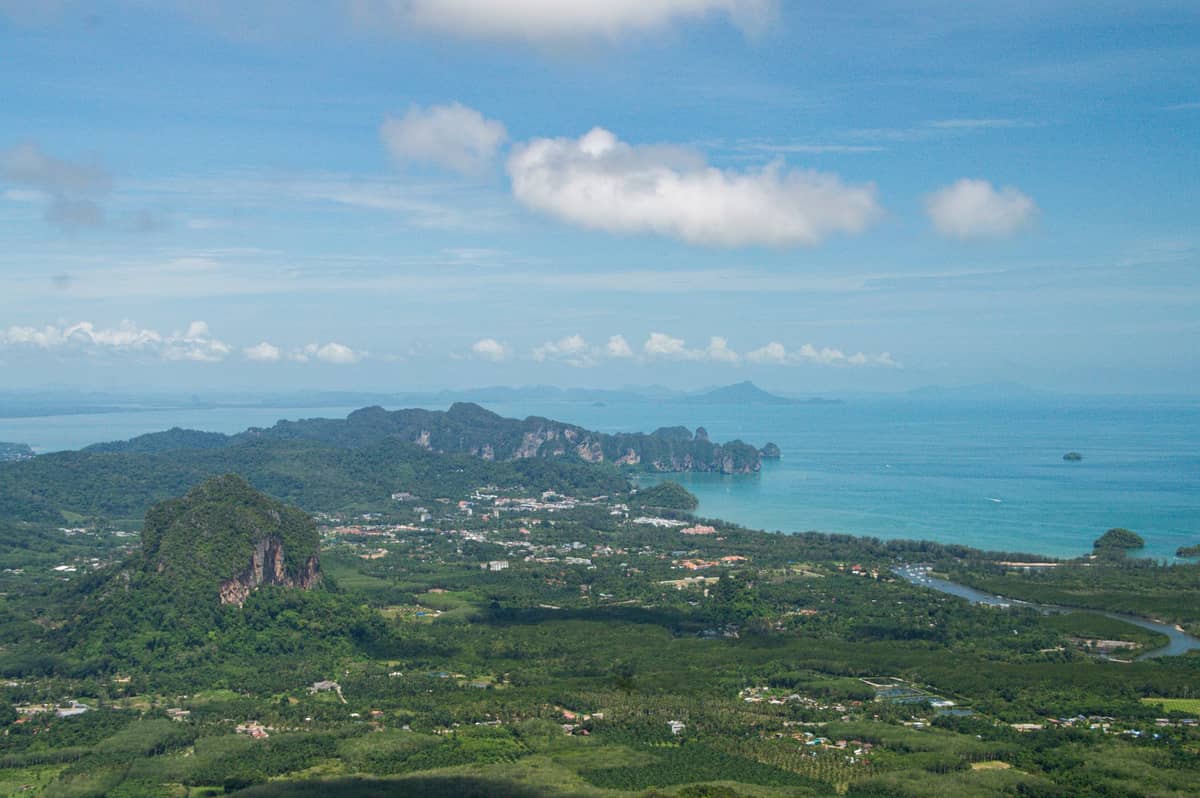
Krabi Province sits on Thailand's Andaman coast at roughly 8°N latitude, which means it's hot year-round. Mean temperatures hover between 26.6°C and 28.8°C across all twelve months, with daytime highs typically reaching 31–34°C. The real variable isn't temperature — it's rain and sea conditions. Krabi experiences a classic tropical monsoon pattern driven by the southwest monsoon, which rolls in around May and retreats by late October or November. This single climatic rhythm dictates almost everything about the visitor experience: when boats run reliably, when hotels discount their rates, when the beach is packed, and when you can practically have Railay to yourself.
One important correction to a common misconception: monsoon season does not mean continuous, day-long downpours from May through October. Most rainy-season days in Krabi follow a pattern of sun in the morning, clouds building in the afternoon, and a sharp shower in the late afternoon or evening. Some days are entirely clear. The difference between peak and off-peak months is measured in the number of rainy days and the intensity of those showers, not in whether you'll see sunlight at all. That said, September and October are the wettest months, and seas can become genuinely rough for boat travel.
ℹ️ Good to know
Krabi uses Indochina Time (ICT, UTC+7). Thailand operates on a single nationwide time zone, so there's no adjustment needed when traveling between Bangkok, Krabi, and Koh Lanta.
Peak Season: December to February
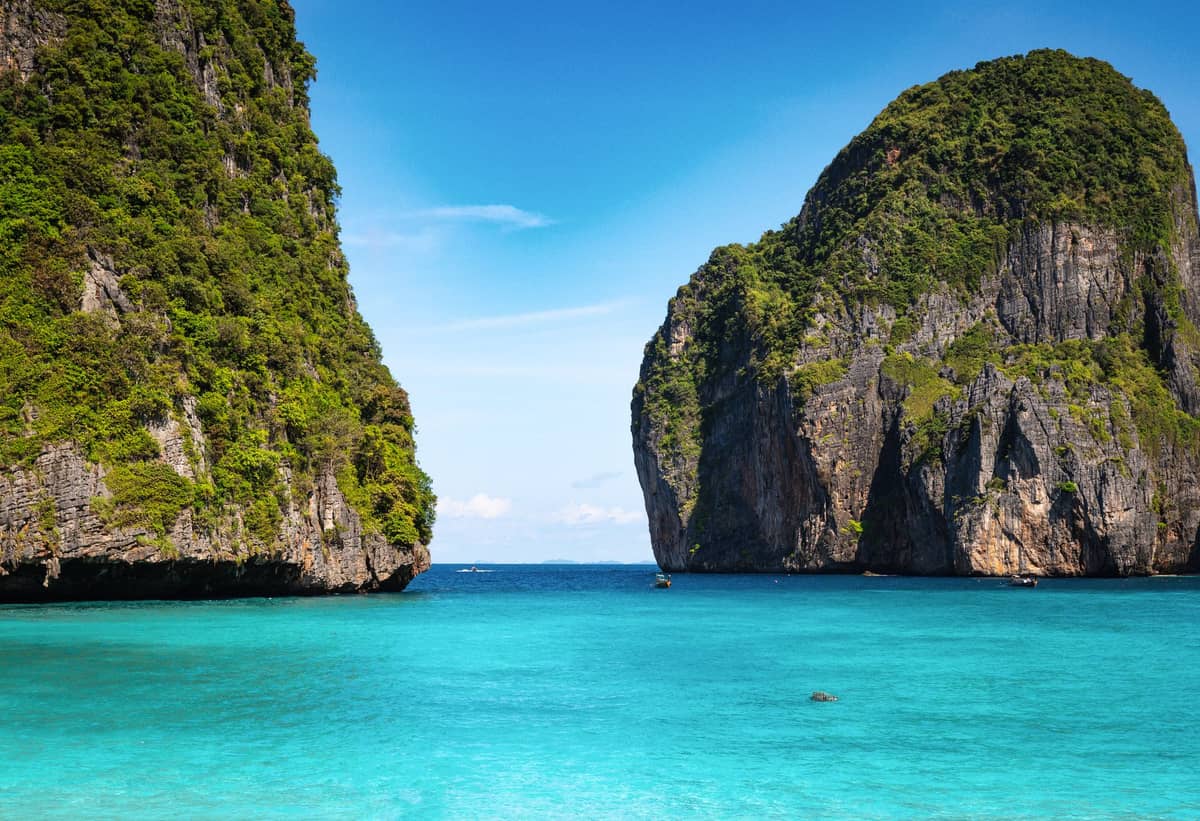
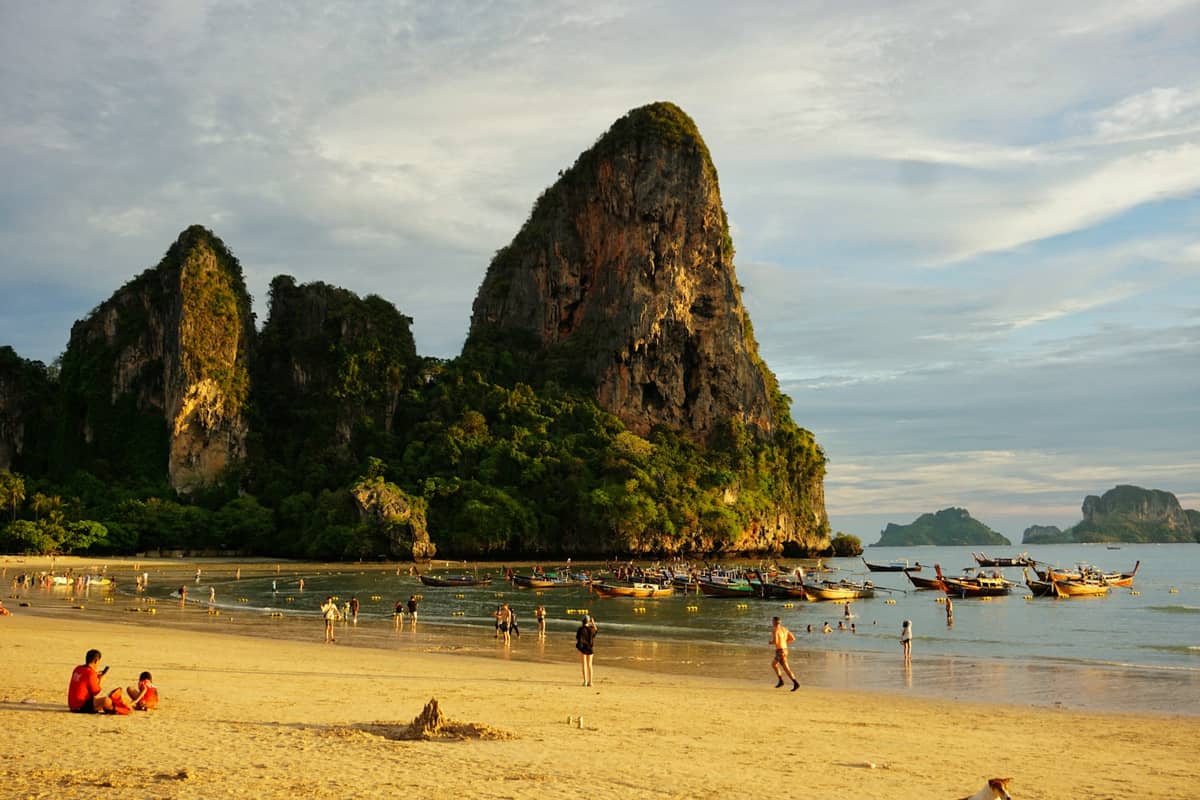
This is Krabi at its most reliable. December through February brings the driest weather of the year, with the fewest rainy days and the calmest Andaman seas. Visibility underwater is excellent, making this the prime window for snorkeling around Koh Phi Phi and diving at sites like Koh Haa. Boat trips to the Four Islands and Hong Island run consistently, and Railay Beach — accessible only by longtail boat — is fully operational and at its most scenic.
The trade-off is price and crowds. December (especially from Christmas through New Year) is the single most expensive period in Krabi. Hotels across Ao Nang and Railay fill up weeks in advance, and some properties apply minimum-stay requirements during the holiday window. January is slightly calmer in terms of crowds, and February offers arguably the best overall balance in the peak season: still dry, still good sea conditions, but with a fraction less pressure on bookings and pricing. If you can only choose one month, February is it.
- December Driest month alongside January. Christmas and New Year bring the year's highest prices and crowd density. Book 2-3 months in advance for popular properties.
- January Still very dry and sunny. Post-holiday calm makes early January feel genuinely pleasant. Prices ease slightly from the December peak.
- February The best all-round month. Weather is excellent, seas are calm, and visitor numbers haven't hit their ceiling yet. The optimal window for island day trips and rock climbing.
⚠️ What to skip
If you're traveling during Christmas or New Year, budget accommodations in Ao Nang and Railay can sell out entirely. Don't assume you'll find a room on arrival. Book well in advance, and check cancellation policies carefully.
Shoulder Season: March, April, and November
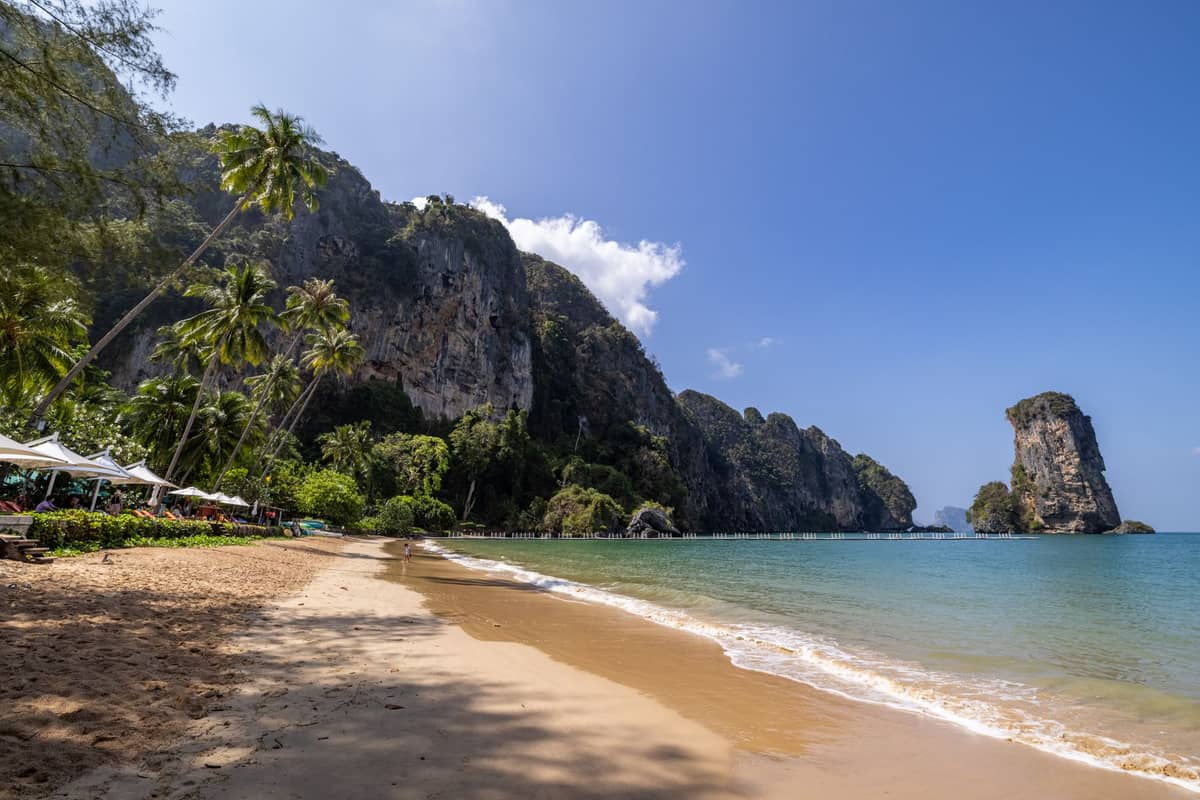
March and April occupy an awkward middle ground. The weather is mostly dry but temperatures climb, humidity starts to build, and April sees the beginning of increased afternoon showers. These are still valid months to visit — boat trips generally run without disruption, and the sea remains swimmable — but they require more heat tolerance. March is the hotter end of what most people would call 'good' weather. April, which overlaps with the Thai New Year festival of Songkran (typically April 13-15), brings chaotic and celebratory water fights across the country, including in Krabi Town and Ao Nang.
November is a different kind of shoulder season. The monsoon is winding down, but the transition can be unpredictable in early November. By mid-to-late November, conditions typically improve significantly. Resorts on Koh Lanta that close during peak monsoon begin reopening around November 1. Prices are lower than December, availability is better, and the island feels more authentic before the full tourist wave arrives. For travelers with flexibility, early November carries some risk; late November is generally a solid bet.
Monsoon Season: May to October
The southwest monsoon brings meaningful rainfall and rougher seas to Krabi from around May through October. September and October are typically the wettest months, with the highest number of rainy days and the strongest swells. During this period, some longtail and speedboat operators reduce services or cancel trips on short notice depending on sea state. Always check with your operator the evening before a planned island trip, not just at the time of booking.
That said, the rainy season is not a write-off. Hotel rates drop considerably across the board — sometimes by 30 to 50% compared to peak season — and popular sites like Phra Nang Beach and West Railay Beach are far less crowded. Inland attractions positively thrive in the wet season: the Emerald Pool and Blue Pool at Khlong Thom are at their most lush and green, waterfalls like Huai To are flowing at full force, and the jungle landscapes around Khao Phanom Bencha National Park are spectacular.
May and June are the lightest months of the monsoon. Rainfall increases but hasn't peaked, and many days remain partly sunny. Experienced travelers willing to accept some weather unpredictability often find May and June offer a surprisingly good ratio of value to conditions. July and August see increased rain but remain manageable. September and October are the months to approach most cautiously if your trip depends on reliable beach and boat access.
- May–June: Early monsoon. Rain increases but conditions often manageable. Good value, lighter crowds.
- July–August: Peak monsoon. More consistent rain, some boat disruptions possible. Still workable for Krabi Town-based itineraries.
- September–October: Wettest months. Roughest seas. Best reserved for travelers focused on inland activities or those on tight budgets with flexible plans.
- November: Transitional. Risk decreases through the month. Late November is usually reliable enough for beach and island activities.
✨ Pro tip
Visiting in the low season? Prioritize inland experiences early in your trip and schedule island day trips for the middle of your stay once you've assessed local sea conditions. Operators at Ao Nang pier will tell you honestly whether a trip is advisable — they don't want passengers on a rough crossing either.
What to Do Based on When You're Visiting
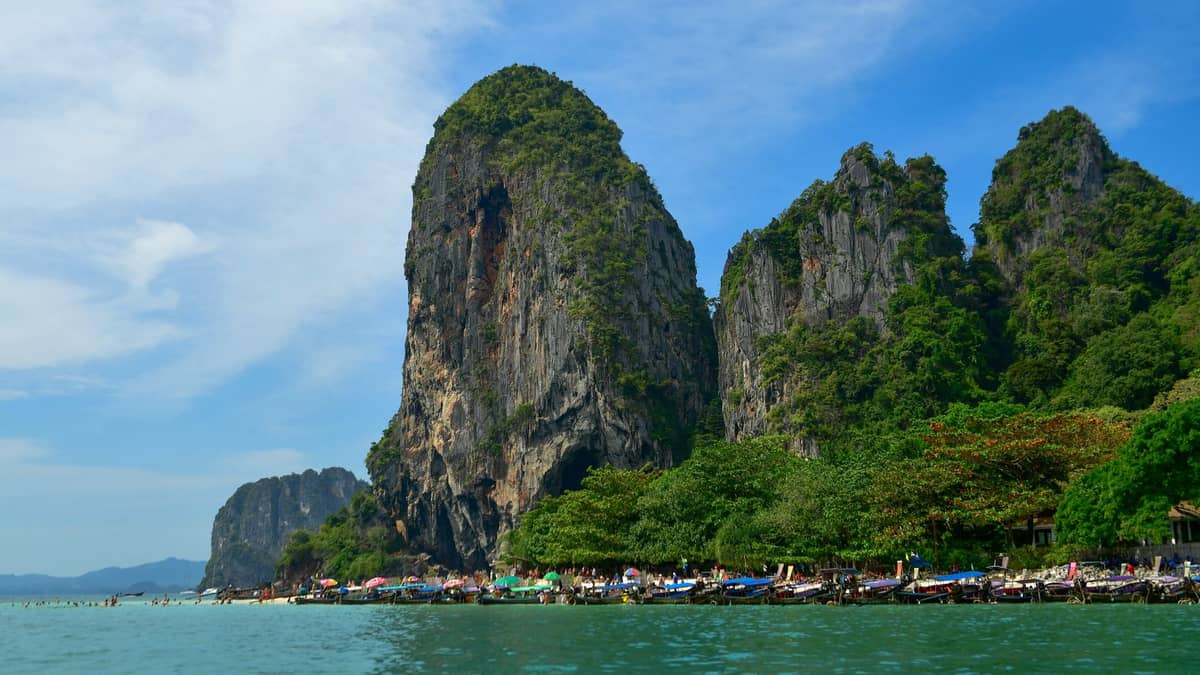
Your timing shapes your activity options significantly. During peak season (December–February), almost everything is on the table: diving and snorkeling, rock climbing on Railay's limestone walls, kayaking through sea caves, and multi-island boat tours. The classic 3-day Krabi itinerary is easiest to execute during these months because every component is reliably available.
During the rainy season, the smarter move is to front-load your itinerary with inland experiences. The Emerald Pool and Blue Pool near Khlong Thom are among the best natural attractions in southern Thailand and are accessible year-round by road. Hiking options around Tiger Cave Temple and Dragon Crest Mountain are also unaffected by sea conditions, though trails can be slippery after heavy rain. Rock climbing on Railay's overhanging limestone is actually popular year-round because the overhangs provide some natural shelter from light rain.
Crowds, Prices, and Practical Planning
Travelers arriving from Bangkok or Phuket should factor in that flight prices track the same seasonality as hotel prices. Peak-season flights to Krabi International Airport (KBV) fill up fast on popular routes from Bangkok's Suvarnabhumi and Don Mueang airports. If you're flying in from Phuket or taking the ferry-and-road route, our Phuket to Krabi guide and Bangkok to Krabi guide cover current transport options and approximate costs.
Where you stay in Krabi also interacts with seasonal timing. Koh Lanta has the most pronounced seasonal closure pattern: many guesthouses and resorts close entirely from approximately May to October, with the island effectively hibernating during peak monsoon. Ao Nang and Krabi Town stay open year-round, making them better bases during the rainy season. If Koh Lanta is on your list, aim for November through April.
On budget: low-season visitors can realistically find solid guesthouse accommodation in Ao Nang for significantly less than peak-season rates. The savings on accommodation during May to October can be substantial enough to offset the higher travel flexibility you need. Transfers between the airport and town or Ao Nang cost around 100–150 THB by shared bus, or more by private taxi; these prices are relatively stable year-round, so transport isn't where seasonality hits your wallet.
💡 Local tip
If budget is your primary concern, late May and early June offer a reasonable compromise. The monsoon is just starting, prices have dropped from their April levels, and conditions are often better than the reputation of 'rainy season' suggests. Avoid September and October if beach access matters to you.
FAQ
What is the best month to visit Krabi?
February is generally the best single month. Weather is reliably dry, sea conditions are calm for island trips, prices are slightly lower than December and January, and crowds haven't hit their absolute peak. December is a close second if you don't mind paying more and booking earlier.
Is it worth visiting Krabi in the rainy season?
Yes, with realistic expectations. Hotels are cheaper, popular beaches are less crowded, and inland attractions like the Emerald Pool, Tiger Cave Temple, and jungle waterfalls are excellent year-round. What you lose is reliability for boat trips and consistent beach weather. May, June, and November are the most workable rainy-season months. September and October require the most flexibility.
Does it rain every day in Krabi during monsoon season?
No. Most rainy-season days follow a pattern of morning sun and afternoon showers, often short and heavy. Extended multi-day downpours do happen, especially in September and October, but continuous all-day rain is not the norm for most of the wet season. Many visitors in June or July have perfectly enjoyable trips.
When should I avoid Krabi?
September and October are the most challenging months: heaviest rainfall, roughest seas, and the most unpredictable boat conditions. Some ferry and longtail services reduce or suspend operations. If your trip depends on beaches and island hopping, these two months carry the most risk. That said, they're not impossible — just best suited to travelers with flexible itineraries.
When does Koh Lanta close for the season?
Most Koh Lanta resorts and many restaurants close around May and reopen in October or November. The exact dates vary by property. If Koh Lanta is central to your trip, plan to arrive no later than late April and aim to return no earlier than late October to mid-November.
Tickets & tours
Live prices and dates from our booking partner. If you book, we may earn a commission at no extra cost to you.
Planning a trip? Discover personalized activities with the Nomado app.