3 Days in Krabi: The Weekend Itinerary That Actually Works
Three days in Krabi, Thailand is enough to hit the highlights without rushing — if you plan smart. This itinerary covers Railay Peninsula, island day trips, Krabi Town's underrated food scene, and the key logistics most guides get wrong.
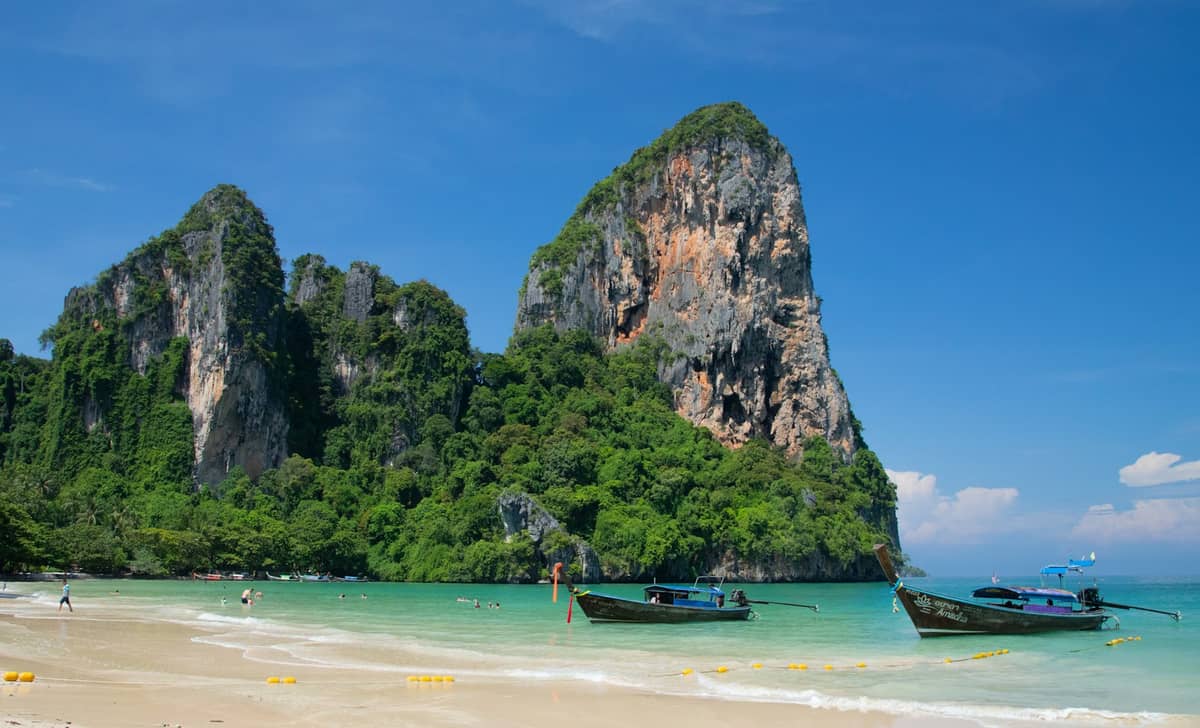
Tickets & tours
Live prices and dates from our booking partner. If you book, we may earn a commission at no extra cost to you.
TL;DR
- Base yourself in Ao Nang for Day 1-2 and consider a night in Krabi Town for Day 3 — it cuts transit time significantly.
- Railay is not road-accessible; longtail boats from Ao Nang or Ao Nam Mao are the only way in, and evening boats can be infrequent.
- Island tour prices rarely include national park fees — budget an extra ฿300-400 per person on top of what the operator quotes.
- December through February offers the best conditions for beaches and boat trips; the rainy season (May–October) is not impossible but reef visibility and sea access are unpredictable. See our best time to visit Krabi guide for full seasonal breakdown.
- Three days rewards focused planning over trying to do everything — pick one island day trip, not two.
Before You Arrive: Logistics That Matter
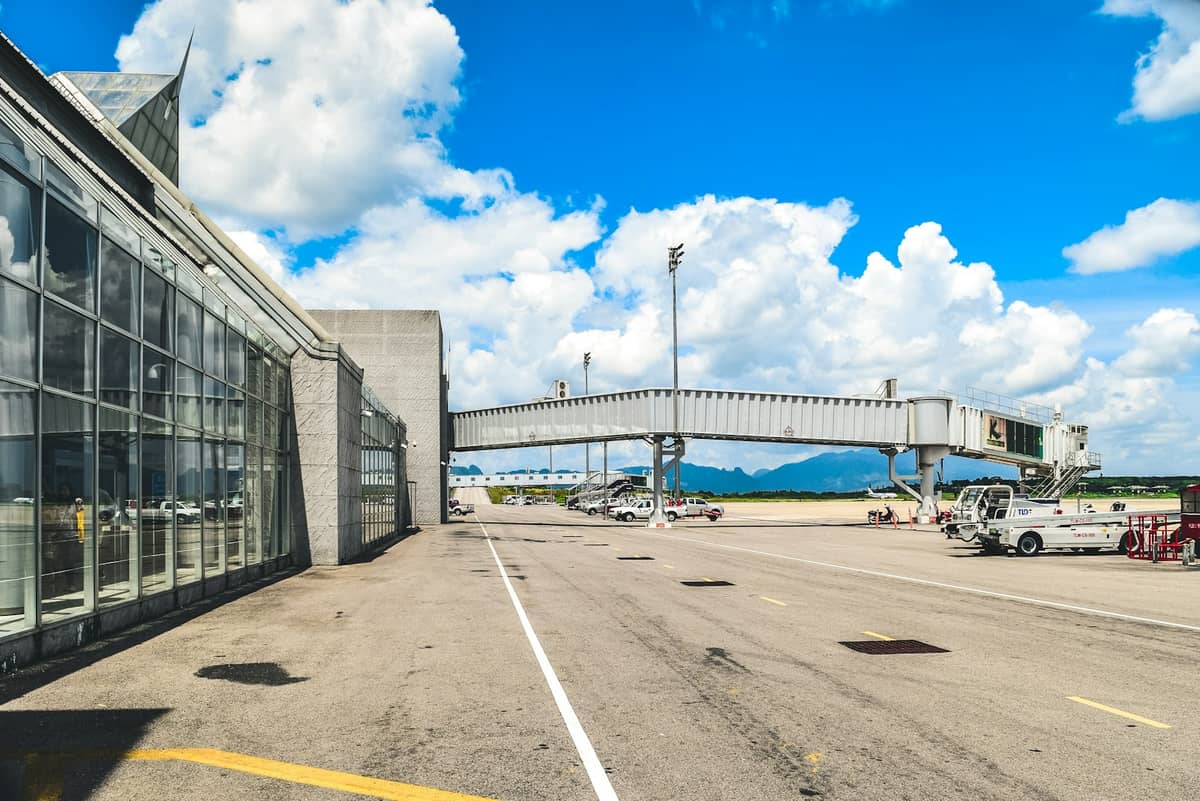
Krabi International Airport (KBV) sits about 9 km from Krabi Town and roughly 25-30 km from Ao Nang. The cheapest option from the airport is the shared airport bus, which reportedly costs around ฿100 to Krabi Town and ฿150 to Ao Nang — but departure timing and frequency are not fixed, so confirm on arrival and build in extra time before any onward connections. Grab operates in the area with variable availability. Pre-booked private transfers are the most predictable choice if you're arriving late or traveling with luggage. Full details in our Krabi Airport guide.
Where you stay shapes your entire itinerary. Ao Nang is the practical base for beach access and boat departures to Railay and the islands. Krabi Town is quieter, cheaper, and better for food — but adds 30-45 minutes to most beach trips. For a three-day visit, Ao Nang wins on convenience unless you specifically want to explore the mainland's interior or are on a tight budget.
⚠️ What to skip
Railay Peninsula is surrounded by water on all sides and has no road connection to the mainland. Longtail boats run from Ao Nang and Ao Nam Mao. Evening departures are less frequent after dark — if you plan to stay for sunset, confirm the last boat time before you go in, or arrange a hotel transfer. Don't assume boats run like clockwork.
Day 1: Railay and the Limestone Coast
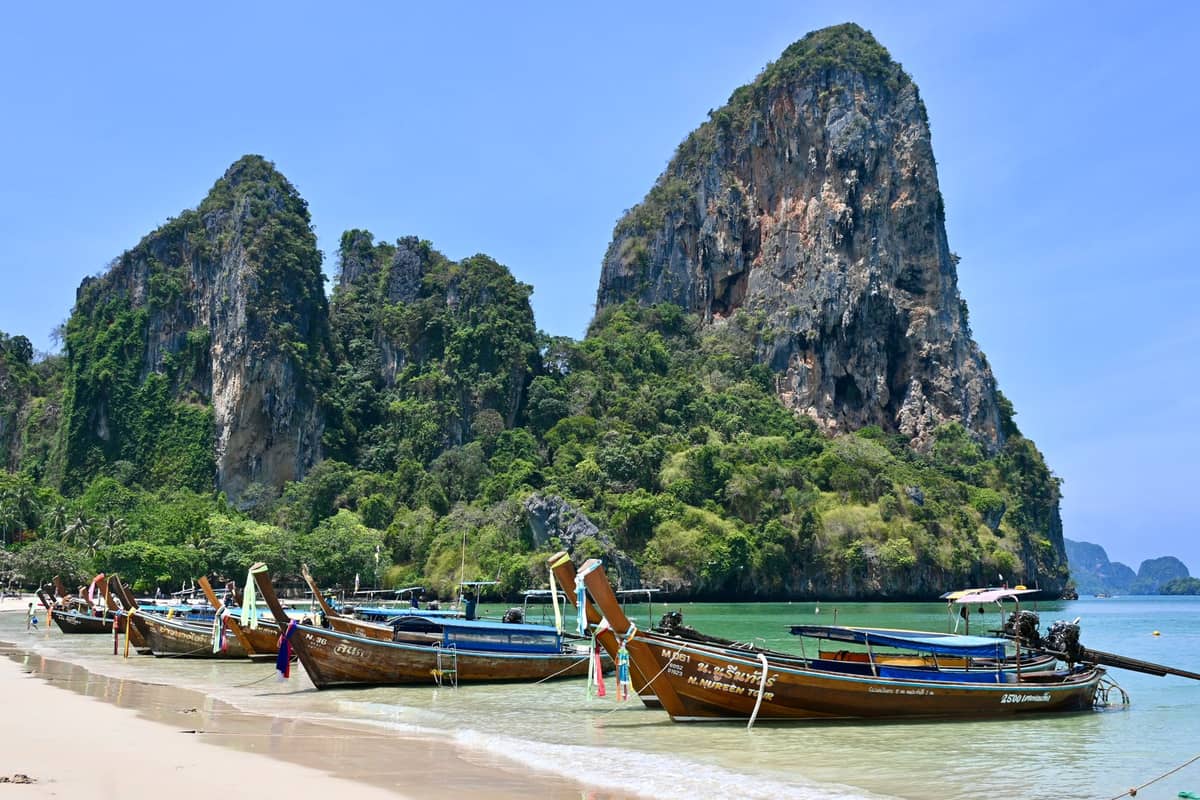
Start early — longtail boats to Railay from Ao Nang run from around 7:30am, and the peninsula gets crowded by mid-morning in peak season (December–February). The crossing takes about 15 minutes and costs roughly ฿100-150 per person each way. Land at West Railay Beach, which has the calmer water and better swimming, then walk across the narrow peninsula to the east side.
The morning is best spent at Phra Nang Beach — widely considered one of the finest stretches of sand in southern Thailand. The cave shrine at its northern end (Phra Nang Cave) is genuinely interesting if you're curious about the local spirit traditions, though the beach draws large tour groups by 10am. Get there before 9am if you want it relatively uncrowded.
- Railay Viewpoint A steep 20-minute climb through jungle from East Railay. The trail is unmarked and slippery when wet — wear shoes, not flip-flops. Views over both bays from the top are worth it.
- Railay Lagoon Accessible via a scramble from the viewpoint trail. Tidal and sometimes muddy, but gives a real sense of the interior limestone karst landscape.
- Rock climbing on Railay Krabi is one of Southeast Asia's best sport climbing destinations. Half-day sessions with a guide start around ฿800-1,200 per person at the base of the cliffs near East Railay.
For lunch, eat on Railay itself rather than rushing back. The restaurants on West Railay are overpriced relative to Ao Nang, but the alternative is fighting for a longtail during peak midday hours. Back in Ao Nang by late afternoon, the beach there is pleasant for an easy swim before dinner — it lacks the drama of Railay but is far more accessible.
💡 Local tip
If you enjoy rock climbing or want a quieter alternative to Railay's main beaches, Tonsai Beach sits just west of Railay and is reachable by boat or by scrambling over rocks at low tide. It has a long-standing climbing culture, basic guesthouses, and a more relaxed atmosphere. It is not suitable for families with young children.
Day 2: Island Hopping — Choose One Route, Do It Well
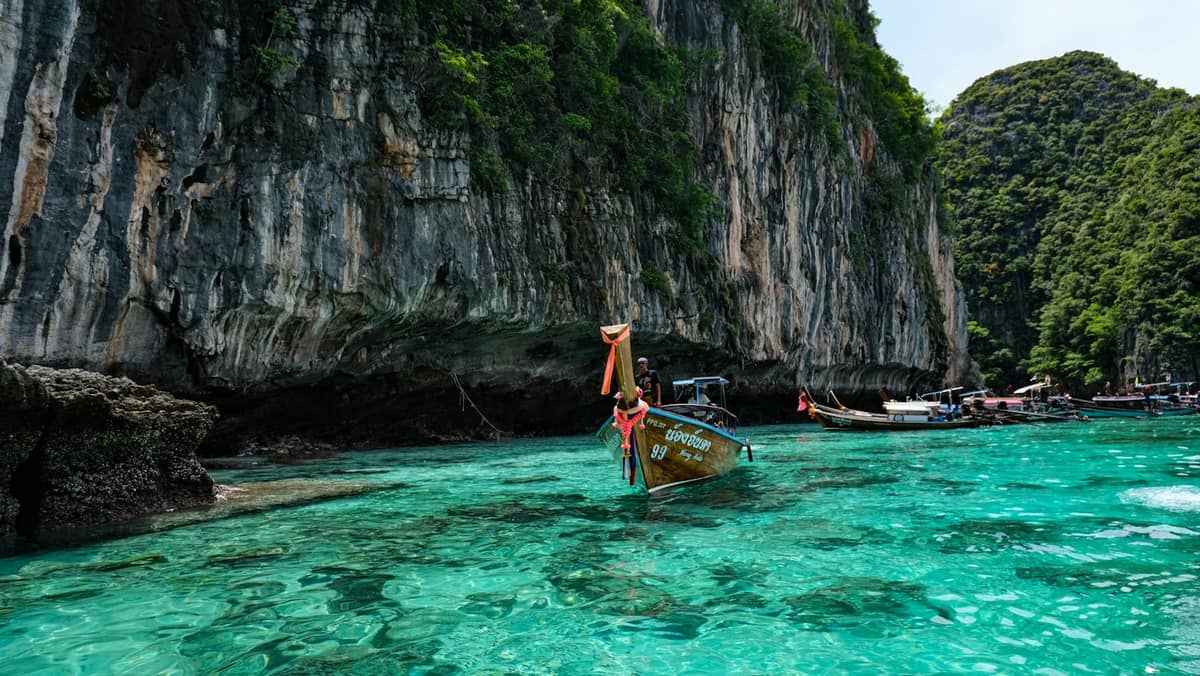
The single biggest mistake on a 3-day Krabi itinerary is trying to book two island day trips in two days. You end up exhausted, sunburned, and unable to tell one beach from another. Pick one route and commit to it.
The two main options from Ao Nang are the Four Islands tour and the Hong Islands. The Four Islands route covers Koh Poda, Koh Kai (Chicken Island), Koh Tup, and Koh Mor, often with a stop at Thale Waek when the tide is right — it's a full day on the water and suits travelers who want variety. Hong Islands sit in Than Bok Khorani National Park, with impressive enclosed lagoons; the landscape is more dramatic but the swimming depends on sea conditions. Reported national park fees for Hong Islands are around ฿300 per adult and ฿150 per child, paid separately at the pier on top of tour costs.
A Phi Phi day trip is also possible from Ao Nang, but it consumes most of the day in transit (A is also possible from Ao Nang, but it consumes most of the day in transit (roughly 50 minutes to 1 hour each way by speedboat or about 2 hours by ferry). The national park entry fee is reported at around ฿400 per adult and ฿200 per child, separate from tour price. If you haven't been to Phi Phi before, it's impressive — but it's also very crowded. For a 3-day visit, only include it if it's your primary reason for coming to Krabi.
✨ Pro tip
Island tour prices posted online or at booking desks in Ao Nang almost never include national park fees. Always ask the operator directly: 'Does this price include the park fee?' before booking. The total cost can be 20-30% higher than the advertised price once fees are added.
- Book island tours through your hotel or a physical booking desk in Ao Nang rather than random street touts — you get clearer information on inclusions and departure points.
- Speedboat tours cost more than longboat tours (roughly 2-3x the price) but cut travel time significantly — worth it for distant islands like Phi Phi.
- Check the sea forecast the night before. Operators will often cancel in poor conditions, but some run regardless — ask about their cancellation policy.
- Bring reef-safe sunscreen, a dry bag for electronics, and cash for park fees and tips. ATMs are not available on the islands.
For travelers who prefer a quieter alternative to the main island circuits, sea kayaking around Ao Thalane offers mangrove channels and limestone karst scenery without the crowds. Half-day trips run from Krabi Town and suit all fitness levels.
Day 3: Krabi Town, Temples, and the Fossil Coast
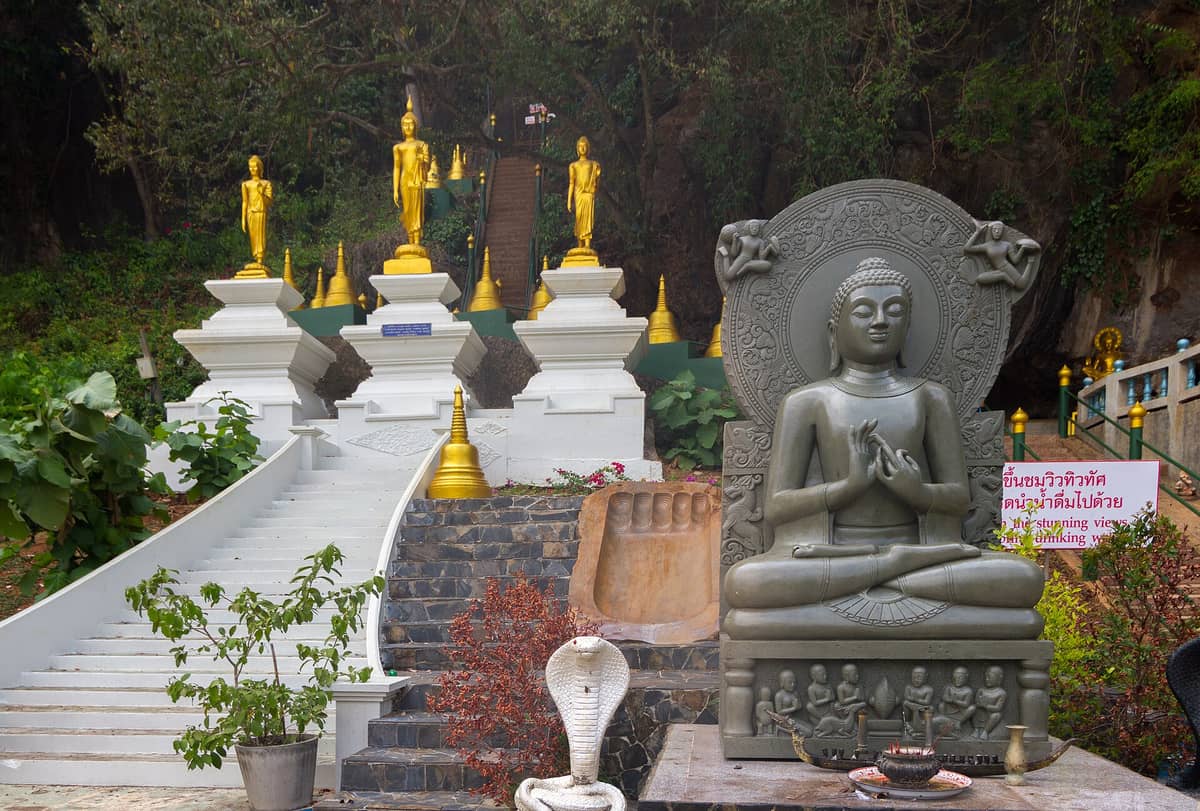
Most visitors skip Krabi Town entirely, which is a mistake. The town has the best street food in the province, a genuine local market atmosphere, and two attractions that are far more rewarding than their low profile suggests. Start the morning at Tiger Cave Temple (Wat Tham Sua) — a Buddhist complex built into limestone caves at the base of a large karst hill. The climb to the summit involves 1,237 steps and takes 30-45 minutes each way. It's strenuous in the heat, so go before 9am. The views from the top over the surrounding plains and mangroves are genuinely striking.
After the temple, head to Shell Cemetery (Fossil Shell Beach) at Susan Hoi, about 17 km west of Krabi Town. The site contains layered fossil shells estimated to be around 75 million years old — one of only three such formations in the world. Entry is ฿200 for foreign adults. It's not a beach for swimming, but the geological formations are genuinely unusual. Combine it with a stop at Nopparat Thara Beach nearby, which is quieter than Ao Nang and backed by casuarina trees rather than resort development.
Spend your final afternoon at the Krabi Town Night Market or the Walking Street (weekends only). Both are genuinely local rather than tourist-facing — grilled seafood, fresh fruit, and Thai dishes at prices well below what you'd pay in Ao Nang. Pad thai here costs around ฿60-80; the same dish at an Ao Nang beachfront restaurant can run ฿180-220. The Krabi street food scene rewards curiosity — point at things you don't recognize.
What to Skip (And Why)
Three days is not enough to also do a day trip to Koh Lanta or venture deep into Khao Phanom Bencha National Park. Both are worth visiting — but they work better as destinations in their own right, not as add-ons to an already full itinerary. Koh Lanta in particular requires a 1.5-2 hour ferry or bus plus ferry, which eats your day. Save it for a longer trip.
The Emerald Pool and Blue Pool in Khlong Thom district are frequently recommended, and they are beautiful — but they are 45-60 km south of Ao Nang and work best on a dedicated half-day from Krabi Town. If you're based in Ao Nang, fitting them into a three-day visit without a rental car requires hiring a private driver (around ฿1,500-2,000 for the round trip). The Emerald Pool is at its best early in the morning before tour groups arrive — by 11am it's crowded.
ℹ️ Good to know
Krabi Province includes dozens of islands. Three days realistically covers one base area well. The itinerary above is built around Ao Nang and Krabi Town — the most practical combination for first-time visitors. If you have 5 days or more, see our full Krabi itinerary guide for expanded options.
Practical Notes for the Trip
- Currency Thai baht (THB). ATMs are widely available in Ao Nang and Krabi Town. Most island and longtail boat operators are cash-only, so carry enough before heading out.
- Getting around Songthaews (shared pickup trucks) run between Ao Nang and Krabi Town for about ฿50-60 per person. Grab works in Krabi Town but is less reliable in Ao Nang. Motorbike taxis fill the gaps.
- Dress codes Tiger Cave Temple and all other Buddhist sites require shoulders and knees covered. Carry a light sarong if you're coming from the beach.
- Water Do not drink tap water. Buy sealed bottled water or use a filtered bottle. Dehydration is a real risk when climbing stairs or spending a full day at sea in 31-34°C heat.
- Emergency numbers Tourist Police: 1155. General emergency (police): 191. Ambulance: 1669.
For travelers considering whether Krabi is the right destination versus alternatives, our Krabi vs Phuket comparison lays out the trade-offs honestly. Krabi is better for natural scenery and rock formations; Phuket has more infrastructure, nightlife, and resort variety. For most first-time visitors to southern Thailand with limited time, Krabi wins on scenery per day.
FAQ
Is 3 days enough time for Krabi?
Three days is enough to experience Railay, one island day trip, and a half-day in Krabi Town — which covers the essential highlights. You won't reach Koh Lanta, the Emerald Pool in Khlong Thom, or Koh Phi Phi comfortably within that window unless you sacrifice something else. If your main goal is beaches and limestone scenery, three days is genuinely satisfying.
Where is the best base for a 3-day trip to Krabi?
Ao Nang is the most practical base for a short trip. It's the main departure point for boats to Railay and the islands, has the widest range of accommodation and restaurants, and sits on a swimmable beach. Krabi Town is cheaper and has better food, but adds transit time to every beach activity. A practical option for a 3-day visit is to spend nights 1 and 2 in Ao Nang, then move to Krabi Town for night 3.
How do I get from the airport to Ao Nang?
Krabi International Airport (KBV) is about 25-30 km from Ao Nang. The shared airport bus costs around ฿150 per person but runs on its own schedule — confirm timing on arrival. A private taxi or pre-booked transfer costs more (around ฿400-600) but is predictable. Grab is an option with variable availability. Allow extra time if you have a ferry or boat to catch.
Do Krabi island tours include national park fees?
Usually not. Most tour prices quoted in Ao Nang or online cover the boat, guide, and sometimes snorkel gear — but national park entry fees are charged separately at the pier or park entrance. Hong Islands fees are reported at around ฿300 per adult; Phi Phi is around ฿400 per adult. Always ask the operator explicitly whether the park fee is included before you book.
What is the best time of year to visit Krabi for a 3-day trip?
December through February offers the driest weather, calmest seas, and best conditions for beach and boat activities. March and November are shoulder months with generally good conditions but more variability. The rainy season runs roughly May through October — island trips and beach days are still possible but weather can disrupt plans, particularly boat departures. A 3-day itinerary with island activities is highest-risk during June through September.
Tickets & tours
Live prices and dates from our booking partner. If you book, we may earn a commission at no extra cost to you.
Planning a trip? Discover personalized activities with the Nomado app.