Phra Nang Beach: Railay's Most Dramatic Shoreline
Phra Nang Beach sits at the southern tip of Railay Peninsula, hemmed in by sheer limestone cliffs and reachable from the mainland only by longtail boat, or on foot from Railay East. The roughly 450-metre stretch of pale sand, a sea cave shrine, and turquoise water make it one of Krabi Province's most visually striking beaches — though its reputation means it is rarely quiet during peak hours.
Quick Facts
- Location
- Southern tip of Railay Peninsula, Mueang Krabi District, Krabi Province, Thailand
- Getting There
- Longtail boat from Ao Nang (reported ~฿100/person one way); walk ~500 m from Railay East on a flat concrete path. No road access exists.
- Time Needed
- 2–4 hours for the beach and cave shrine; combine with a half-day on Railay
- Cost
- No verified beach entry fee; pay for boat transport separately. Verify current fares locally before travel.
- Best for
- Scenery, swimming, cliff photography, cultural curiosity (cave shrine)
What Makes Phra Nang Beach Worth the Effort
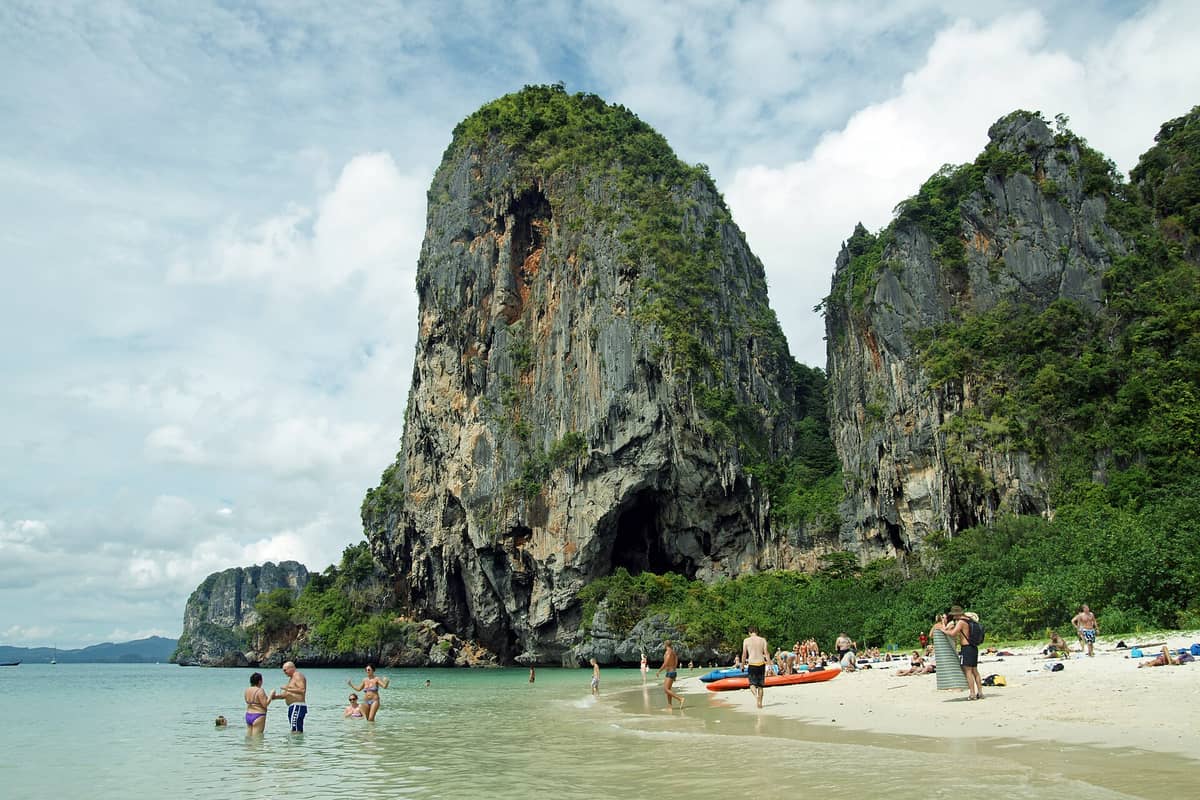
Phra Nang Beach — locally written หาดพระนาง (Hat Phra Nang) or อ่าวพระนาง (Ao Phra Nang) — occupies a position that geography seems to have designed specifically for drama. Towering karst limestone cliffs wrap around three sides of the bay, their grey-white faces streaked with moss and dotted with cave mouths. In front of them, the Andaman Sea delivers water in shades that shift from pale jade near the shore to deep teal further out. The approximately 450-metre arc of sand is fine and pale, with almost none of the coarser grit you find on more exposed beaches in the region.
None of this comes without a trade-off. The same scenery that makes Phra Nang photogenic also makes it popular, and because it sits at the end of a peninsula with no road access, every visitor arrives the same way: by longtail boat. During peak season (December through February), the beach fills steadily from mid-morning onward. If your tolerance for crowds is low, this page will help you plan around them rather than into them.
💡 Local tip
Arrive before 9 a.m. or after 3 p.m. to see the beach with noticeably fewer people. The first boats from Ao Nang typically run from early morning, and late-afternoon light on the cliffs is better for photography than harsh midday sun anyway.
Getting There: The Longtail Boat Journey
Phra Nang Beach is on the Railay Peninsula, a landmass cut off from the mainland by impassable limestone cliffs. The standard approach is a longtail boat from Ao Nang, with a reported shared-boat fare of around ฿100 per person one way. Fares and schedules are set by boat operators rather than a fixed official rate, so confirm the current price at the pier before boarding. The crossing takes roughly 15 to 20 minutes depending on sea conditions.
Boats typically drop passengers at Railay East, the calmer mangrove-side shore, rather than directly at Phra Nang. From there, a flat concrete walkway of about 500 metres leads through the narrow strip of land to the beach. The path passes through shade and takes around 10 minutes on foot. Some operators run boats directly to Phra Nang itself, particularly for larger groups or chartered trips, but this should be confirmed when booking.
Boat services are generally daytime only and may stop operating in the late afternoon or evening, or when seas are rough. During the southwest monsoon season (roughly May through October), wave heights and wind can make the crossing uncomfortable or temporarily suspend services. If you are visiting between May and October, check sea conditions on the day and have a flexible return plan. No verified step-free or wheelchair-accessible boarding information could be found for these services.
⚠️ What to skip
During the rainy season (May–October), longtail boat services can be disrupted by rough seas with little notice. Do not plan a tight connection from this beach to an airport or onward transport without a generous time buffer.
Tickets & tours
Live prices and dates from our booking partner. If you book, we may earn a commission at no extra cost to you.
Jurassic Jungle Kayak and Phra Nang Cave Beach Tour from Krabi
From 742 €Instant confirmationFree cancellationEvening Thai cookery class with chef Ya in Ao Nang
From 36 €Instant confirmationFree cancellationPrivate Longtail Boat Island Hopping Tour from Ao Nang
From 132 €Instant confirmationFree cancellationDaily Cooking Class at Thai Cookery School in Krabi
From 42 €Instant confirmationFree cancellation
The Beach Itself: What You Actually See
Walking out of the tree line onto Phra Nang Beach for the first time, the visual impact is immediate. The cliff face directly ahead drops almost vertically into the sand, and the bay is enclosed enough that the horizon feels framed rather than open. Longtail boats bob just offshore, their painted prows often tipped toward the cliffs. The sound is a combination of water on sand, the distant grunt of boat engines, and the calls of vendors operating from simple stalls near the tree line.
The sand itself is fine enough to stick to wet skin, and the beach shelves gently into the water, making entry straightforward for swimmers. The water clarity is good during dry-season months, when visibility below the surface is notably better than at more exposed mainland beaches. During peak season, however, the combination of heavy boat traffic and high visitor numbers can temporarily stir up sediment near the shore.
Loungers and umbrellas are available for rent. Vendors sell drinks and snacks from the tree-line area. The facilities are basic: expect a few toilet blocks, not resort-level infrastructure. Bring cash, as card payment is not reliably available from beach vendors.
Phra Nang Cave: The Shrine at the Cliff Base
At the southern end of the beach, tucked into the base of the limestone cliff, is Phra Nang Cave (also written as Princess Cave). This is one of the more unusual cultural features on the Railay Peninsula. The cave functions as an active shrine: fishing communities have historically made offerings here to the spirit believed to inhabit it, praying for safe seas and good catches. The offerings left at the cave include carved wooden phalluses in a range of sizes, garlands, incense, and figurines — a sight that surprises many first-time visitors.
The cave itself is shallow rather than deep, and you can see the interior without entering far. The smell of incense mixes with the salt air, and the sound inside is a low ambient echo of the sea. The shrine is actively used, and visitors should treat it accordingly: observe without touching the offerings, keep noise respectful, and understand that this is not an exhibit but a working religious site. No verified historical dates for the shrine's establishment could be found, but local communities in this part of Krabi have long traditions of animist and spirit-based beliefs alongside Buddhism.
How the Beach Changes Through the Day
Early morning, before the tour groups arrive, Phra Nang has a quality that midday visitors rarely experience. The light is soft and low, catching the cliff faces at an angle that emphasizes texture and shadow. The water is calmer, often nearly still, and the sand near the waterline is unmarked. A handful of fishermen may still be present, and the vendors have not yet set up. This window, roughly 7 to 9 a.m., is when the beach most resembles the photographs that draw people here.
By mid-morning, longtails arrive in succession and the beach becomes busy. Between 11 a.m. and 2 p.m. it is at its most crowded, and the midday sun removes most of the shadow from the cliffs, flattening the visual drama that makes the location distinctive. Heat is intense at this hour, and the combination of direct sun and reflected light off pale sand is harsh.
Late afternoon brings a genuine improvement. The sun drops toward the cliffs to the west, shadows return to the bay, and the crowd begins to thin as day-trippers head for their return boats. The light in the last hour or two before sunset, particularly on the upper cliff faces, turns warm and orange. This is also a good time to photograph the cave shrine, as the lower angle of light reaches into areas that are in shadow during the middle of the day.
Photography and the Cliff Walls
The cliff faces at Phra Nang are active climbing routes, and on any given dry-season day you are likely to see climbers on the rock above the beach. The combination of figures on limestone against sky and water makes for compelling photography. A mid-length zoom (70–200 mm equivalent) is useful for isolating climbers against the cliff without needing to be directly below them.
For wide shots of the bay, the beach is wide enough that you can move away from the main concentration of loungers to find cleaner foregrounds. The view back toward the cliffs from the water's edge at either end of the bay is more dramatic than the central section. Serious rock climbing visitors should note that dedicated climbing sessions on this part of the peninsula are usually arranged through Railay's climbing operators — see the guide to rock climbing on Railay for details.
Who This Beach Suits — and Who Should Look Elsewhere
Phra Nang is a strong choice for travelers who prioritize scenery and are willing to share it with others. The cliff-and-sand combination is genuinely among the most striking in Krabi Province, and combining the beach with a broader half-day on Railay — including West Railay Beach — is a logical and satisfying itinerary.
Travelers who require accessible facilities, step-free water entry, or reliable mobility infrastructure should note that no verified information on these features exists for Phra Nang. The boat journey itself involves stepping between a moving vessel and a pier or beach, which can be unstable.
Travelers seeking a quiet, uncrowded beach during peak season should consider alternatives. Tonsai Beach is nearby and attracts a smaller, more independent crowd. For genuinely remote shorelines, the best beaches in Krabi Province include options on Koh Lanta and the outer islands that see a fraction of Phra Nang's traffic.
ℹ️ Good to know
There is no verified beach admission fee for Phra Nang Beach. You pay for boat transport only. If anyone at the beach attempts to charge a separate access fee, verify this is an official charge before paying.
Insider Tips
- The path from Railay East to Phra Nang passes a secondary cave partway along — Railay Lagoon is accessible via a rope climb from a trail just before the beach. It is steep and muddy after rain, but gives a view down over the bay that few day-trippers see.
- Bring more water than you think you need. The walk is short, but the heat between the cliffs is significant, especially at midday, and vendor prices for drinks on the beach are higher than in Ao Nang.
- If you are returning to Ao Nang by longtail in the late afternoon, aim to reach Railay East pier by 4 p.m. at the latest during peak season. Boats fill quickly as day visitors all leave around the same window, and waiting times can extend significantly.
- The wooden phallus offerings at Phra Nang Cave are genuinely surprising to many first-time visitors. If you are traveling with children, be prepared to explain them — there are a lot of them, and they are impossible to miss.
- Dry-season mornings (December to February) occasionally bring a light mist that sits at the base of the cliffs for the first hour after sunrise. If the conditions align, this is the most atmospheric time to visit, and the beach is at its emptiest.
Who Is Phra Nang Beach For?
- Scenery-focused travelers who want Krabi's most dramatic cliff-and-beach combination
- Photographers working in the early morning or late afternoon golden hours
- Visitors combining a half-day on Railay with climbing, kayaking, or lagoon exploration
- Travelers curious about local spirit shrines and active religious sites
- Couples or small groups who want a visually memorable beach without needing resort facilities
Nearby Attractions
Other things to see while in Railay Peninsula:
- East Railay Beach
East Railay Beach is the main arrival point for longtail boats reaching the Railay Peninsula. It is not a swimming beach, but it is the first thing most visitors see — and understanding what it is, and what it is not, shapes the entire Railay experience.
- Phra Nang Cave & Princess Shrine
Tucked into the limestone cliffs at the southern tip of Railay Peninsula, Phra Nang Cave holds a shrine to a revered sea-princess spirit, surrounded by hundreds of carved wooden offerings left by local fishermen. The cave sits steps from one of Krabi's most photographed beaches, making it easy to combine a cultural visit with a morning swim or a sunset sit on the sand.
- Railay Lagoon
Railay Lagoon, also known as Princess Lagoon, is a secluded tidal pool carved into the limestone heart of the Railay peninsula. Reaching it requires a steep, rope-assisted scramble that most visitors never attempt, which is exactly why the reward feels so outsized for those who do.
- Railay Rock Climbing
Railay Peninsula is one of Southeast Asia's most striking climbing destinations, where sheer limestone karst towers rise directly from the Andaman Sea. Whether you've never touched a climbing wall or you're chasing multi-pitch routes above the ocean, the cliffs at Railay deliver a setting that's genuinely hard to match.
Planning a trip? Discover personalized activities with the Nomado app.