Railay Rock Climbing: Scaling Krabi's Most Dramatic Cliffs
Railay Peninsula is one of Southeast Asia's most striking climbing destinations, where sheer limestone karst towers rise directly from the Andaman Sea. Whether you've never touched a climbing wall or you're chasing multi-pitch routes above the ocean, the cliffs at Railay deliver a setting that's genuinely hard to match.
Quick Facts
- Location
- Railay Peninsula, Krabi Province, Thailand (boat access only)
- Getting There
- Longtail boat from Ao Nang or Krabi Town pier to Railay West or East
- Time Needed
- Half-day for a beginner course; full day for experienced climbers
- Cost
- Guided courses from approximately ฿1,500–฿2,600 per person (verify with operator)
- Best for
- Adventure seekers, first-time climbers, and experienced sport climbers
- Official website
- railayrockclimbing.com
Why Railay Is Different From Every Other Climbing Destination
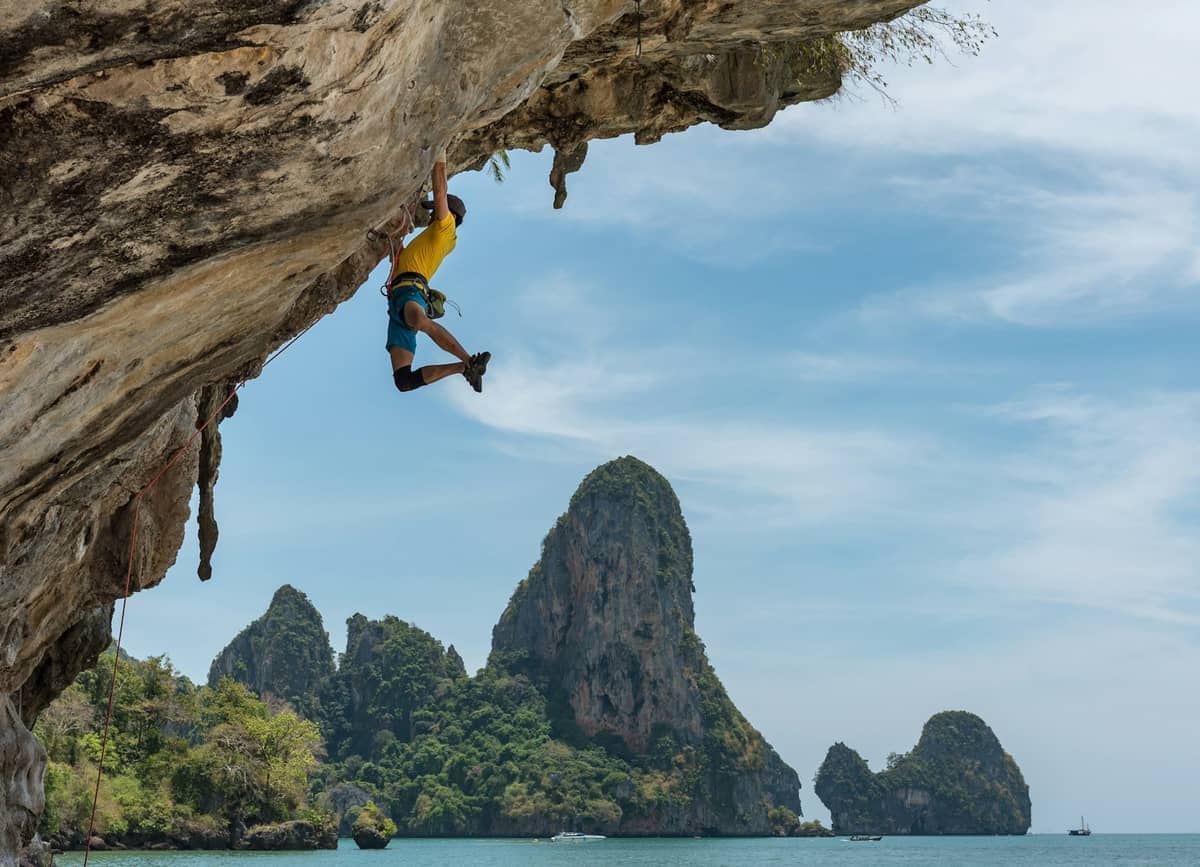
Railay Rock Climbing is not an activity bolted onto a beach resort. It is the reason many climbers visit Krabi Province at all. The peninsula's limestone karst formations, some rising well over 100 metres from the shoreline, are part of the same ancient geological system that produced the dramatic scenery across this stretch of southern Thailand. What sets Railay apart is that you are climbing on sea cliffs with the Andaman Sea as your backdrop, not an inland crag or a manufactured wall.
Because the peninsula is cut off from the mainland by the cliff faces themselves, there are no roads in or out. Everyone arrives by longtail boat, which means the atmosphere stays relatively contained. You will not find coach parties rolling up. What you will find is a concentrated community of climbers, instructors, and curious beginners who have all made a deliberate effort to get here.
ℹ️ Good to know
Railay Rock Climbing's shop has been part of the Railay and Tonsai climbing community since 2003, making it one of the most established operators on the peninsula. King Climbers is another long-running school. Course times and prices vary by operator — always confirm directly before booking.
The Cliffs: What You Are Actually Climbing
The limestone at Railay is pocketed and featured, which means it rewards technique over raw strength. Holds are frequently incut or sloping, and the rock itself has a rough, almost sculptural texture that gives good friction when dry. Routes range from straightforward single-pitch lines suitable for absolute beginners to technical overhangs and multi-pitch routes for experienced climbers who want a serious objective.
The main climbing areas are clustered around Railay West, Railay East, and the adjacent Tonsai Beach. Tonsai in particular has a reputation among intermediate and advanced climbers for steeper, more gymnastic routes. The air at the cliff base typically smells of salt and the faint chalk dust of previous climbers, and the sound of the sea carries up surprisingly clearly even partway up a wall.
For context on the wider peninsula and its layout, the guide to the Railay Peninsula covers how the different beaches connect and what else is worth doing between climbing sessions.
Tickets & tours
Live prices and dates from our booking partner. If you book, we may earn a commission at no extra cost to you.
Beginner Courses: What the Day Actually Looks Like
Most operators run introductory courses in two slots: a morning session typically starting at 9 a.m. and an afternoon session at 2 p.m. (based on King Climbers' published schedule; confirm with your chosen operator before arrival). A beginner half-day course usually covers the fundamentals of harness fitting, knot tying, footwork, and movement on the rock, followed by supervised top-rope climbing on routes graded for new climbers.
Instructors generally speak functional English and are used to working with people who have no climbing background. The ratio of instructors to students is worth asking about before you book — smaller groups make a tangible difference to how much coaching you actually receive. King Climbers lists a half-day course at approximately ฿1,500 per person and a one-day course at around ฿2,600, though prices should be confirmed directly.
💡 Local tip
Wear clothes you can move freely in — athletic shorts or leggings and a fitted top are better than baggy swimwear. Climbing shoes are provided by most operators. Bring water, sun protection, and cash, as not all operators on the peninsula take card payments.
How Light and Time of Day Shape the Experience
Morning sessions have a clear practical advantage: the cliffs on the west-facing side of the peninsula are still in shade during the first hours of the day, which keeps the rock cooler and more comfortable to hold. By midday, certain walls catch direct sun and the limestone can become uncomfortably warm to the touch. If you are sensitive to heat or climbing in the shoulder season when humidity is higher, the 9 a.m. start is worth prioritising.
The afternoon slot has its own appeal. The light shifts to a warmer tone in the hours before sunset, and if you finish a session on a higher route, the view across the Andaman Sea toward the islands takes on a quality that photographs struggle to reproduce. The water shifts from blue-green to something deeper in the later afternoon, and you can often see longtail boats tracing white lines across the bay far below.
Avoid climbing during or immediately after rain. Wet limestone loses its friction dramatically and the approach paths can become slippery. Experienced climbers sometimes use overhanging routes as shelter during light showers, but for beginners this is not a sensible option.
⚠️ What to skip
Rainy season in Krabi Province runs roughly May through October. Climbing is possible during this period but conditions are less predictable. Heavy rain can make routes dangerous, and sea conditions sometimes affect boat access to the peninsula. If you are planning a trip specifically around climbing, December to February offers the most reliable weather.
Getting to Railay: The Boat Journey In
Because Railay is a peninsula enclosed by cliffs on the landward side, it is only reachable by boat. Longtail boats depart regularly from Ao Nang and from Krabi Town's Chao Fa pier. The crossing from Ao Nang to Railay West takes around 15 minutes; the journey from Krabi Town is longer. Boats depart when they have enough passengers — there is no fixed timetable in the conventional sense, though frequency is high during daylight hours.
Some climbing operators, including King Climbers, offer pickup from the Ao Nang and Krabi Town area, which simplifies logistics if you are not already staying on the peninsula. If you are arranging your own transport, confirm the last boat return time before you start climbing, especially if you are planning an afternoon session. Missing the last boat is a genuine inconvenience and the alternatives are expensive.
For a full picture of how to move around the region, the getting around Krabi guide covers boat routes, local transport, and how to plan transfers efficiently.
Experienced Climbers: What Railay Offers Beyond the Courses
If you already climb at a reasonable level, Railay's appeal extends well beyond beginner instruction. The area has a substantial catalogue of bolted sport routes across different grades, and operators rent equipment and can connect you with local guides for more ambitious objectives. Tonsai Beach, a short walk or scramble from Railay East, is particularly well-regarded by climbers looking for steeper terrain and a slightly more low-key atmosphere.
The view from mid-route on some of the higher walls gives a perspective over the bay and toward Phra Nang Beach that is genuinely disorienting in the best way. The scale of the karst landscape only becomes fully apparent when you are partway up a wall looking out rather than looking up from below.
Bring your own belay device and harness if you have them, as rental equipment varies in quality across operators. A chalk bag is useful but not essential for beginner sessions. Verify route conditions and rack requirements with local guides before heading onto anything technical — beta that is a few seasons old may not reflect bolting updates or rock changes.
Honest Assessment: Who Might Not Enjoy This
Railay rock climbing is not for everyone, and it is worth being clear about that. If you have a genuine fear of heights, a beginner course will push you well outside your comfort zone — the walls are real cliffs, not indoor climbing centres with padded floors and perfect lighting. That challenge is the point for some people, but for others it will simply be unpleasant.
Accessibility is also a significant consideration. Railay requires a boat journey, and the terrain around the beach and cliff bases is uneven. No verified information on wheelchair-accessible routes or adapted climbing facilities exists for this location, so anyone with significant mobility limitations should contact operators directly before making travel arrangements.
Families with younger children may find that the climbing itself is not suitable, though older children and teenagers often take to beginner courses well. If climbing is not the draw, the peninsula still has plenty to offer — West Railay Beach and the surrounding landscape are worth the boat ride on their own terms.
Insider Tips
- Book your operator in advance during the dry season (December to February) — popular schools fill their morning slots early, and turning up without a booking can mean waiting or settling for a less reputable outfit.
- The morning session on west-facing walls avoids direct sun. If the heat is a concern, ask your operator specifically which walls you will be climbing on and what time they receive direct sunlight.
- Bring more cash than you expect to need. ATMs on the peninsula are limited, and fees are high. Draw cash in Ao Nang or Krabi Town before you board the boat.
- If you are already an experienced climber, consider spending at least one day exploring Tonsai Beach independently. The atmosphere is more relaxed, the routes are more technical, and the crowd is smaller and more climbing-focused.
- Confirm the last longtail boat departure time on the day of your visit — it can shift depending on sea conditions and season. An afternoon climbing session that runs long is genuinely at risk of stranding you overnight if you are not staying on the peninsula.
Who Is Railay Rock Climbing For?
- First-time climbers wanting a genuine introduction on real rock rather than a gym wall
- Experienced sport climbers looking for bolted sea-cliff routes in a spectacular setting
- Adventure travellers who want an active half-day to complement beach time
- Couples or small groups looking for a shared physical challenge with a memorable backdrop
- Photographers who want to capture the intersection of vertical limestone and open ocean
Nearby Attractions
Other things to see while in Railay Peninsula:
- East Railay Beach
East Railay Beach is the main arrival point for longtail boats reaching the Railay Peninsula. It is not a swimming beach, but it is the first thing most visitors see — and understanding what it is, and what it is not, shapes the entire Railay experience.
- Phra Nang Beach
Phra Nang Beach sits at the southern tip of Railay Peninsula, hemmed in by sheer limestone cliffs and reachable from the mainland only by longtail boat, or on foot from Railay East. The roughly 450-metre stretch of pale sand, a sea cave shrine, and turquoise water make it one of Krabi Province's most visually striking beaches — though its reputation means it is rarely quiet during peak hours.
- Phra Nang Cave & Princess Shrine
Tucked into the limestone cliffs at the southern tip of Railay Peninsula, Phra Nang Cave holds a shrine to a revered sea-princess spirit, surrounded by hundreds of carved wooden offerings left by local fishermen. The cave sits steps from one of Krabi's most photographed beaches, making it easy to combine a cultural visit with a morning swim or a sunset sit on the sand.
- Railay Lagoon
Railay Lagoon, also known as Princess Lagoon, is a secluded tidal pool carved into the limestone heart of the Railay peninsula. Reaching it requires a steep, rope-assisted scramble that most visitors never attempt, which is exactly why the reward feels so outsized for those who do.
Planning a trip? Discover personalized activities with the Nomado app.