Tonsai Beach: Krabi's Off-Grid Cove for Climbers and Slow Travelers
Tonsai Beach sits on the Railay Peninsula in Krabi Province, reachable only by longtail boat or a tidal trail from Railay. Roughly 300 metres of coarse sand, towering limestone, and a loose-knit community of rock climbers make it one of the most distinctive spots on the Andaman Coast.
Quick Facts
- Location
- Railay Peninsula, Mueang Krabi District, Krabi Province, Thailand
- Getting There
- Longtail boat from Ao Nang; or on foot/wading from West Railay (tide-dependent)
- Time Needed
- Half day to full day; longer stays possible with bungalow accommodation
- Cost
- No beach entrance fee. Longtail boat fares apply — verify current rates locally
- Best for
- Rock climbers, budget travelers, anyone wanting a quieter alternative to Railay
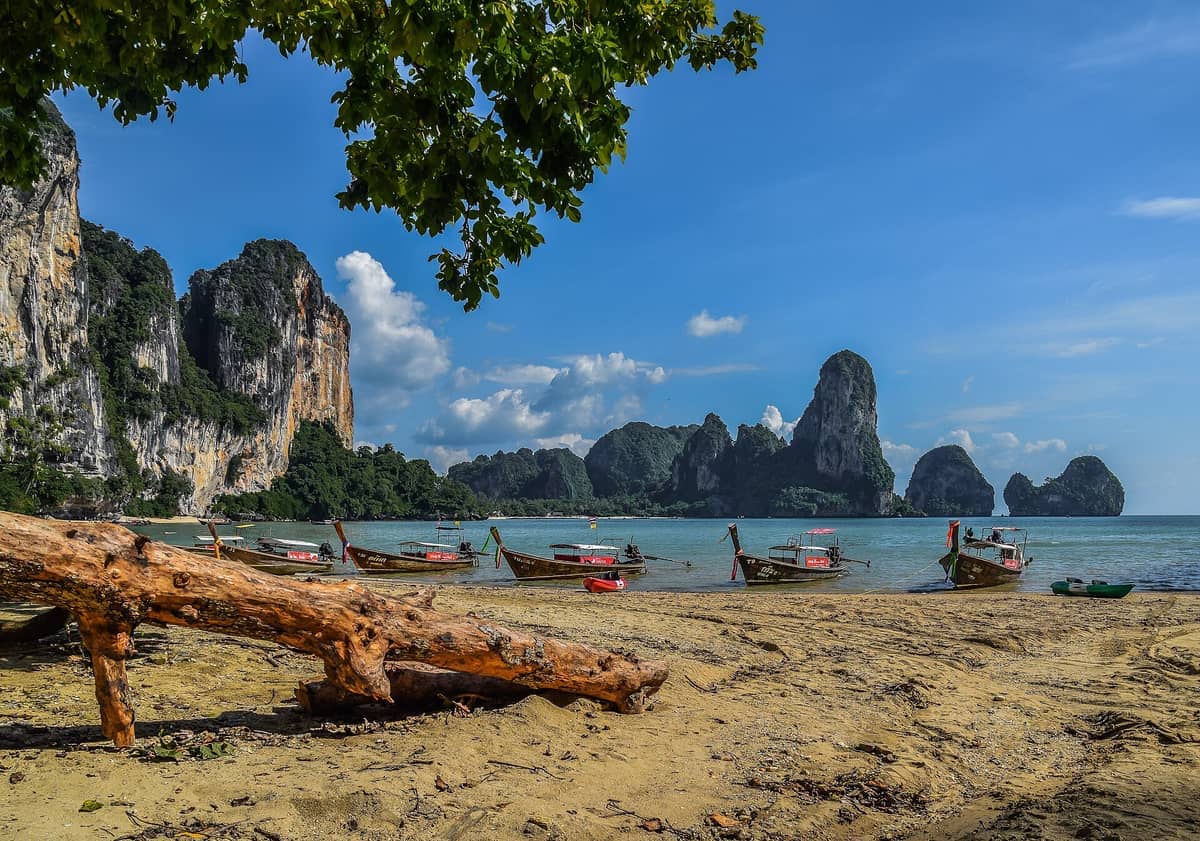
What Tonsai Beach Actually Is
Tonsai Beach (Thai: หาดต้นไทร, sometimes written Hat Ton Sai) occupies a shallow cove on the north side of the Railay Peninsula, hemmed in by jungle-covered limestone cliffs and the Andaman Sea. There is no road to this beach. No car parks, no tourist buses, no convenience stores with air conditioning. Access is by longtail boat from Ao Nang, or by picking your way along a trail or shoreline from West Railay — a route that involves clambering over rocks and, depending on the tide, wading through ankle-to-knee-deep seawater.
That physical barrier is the whole point. The slight inconvenience of getting here filters out the casual day-tripper crowd, leaving a beach that moves at a slower pace than its more polished neighbours. The sand itself is coarser and darker than the powder-white stretches of West Railay or Phra Nang, and the shoreline is dotted with boulders. At low tide, tidal flats extend outward and swimming becomes limited. At high tide, the water is clearer and calmer, and the backdrop of vertical limestone feels almost cinematic.
⚠️ What to skip
The trail between Tonsai and West Railay passes through tidal terrain. At high tide it can involve wading or become impassable entirely. Check tide conditions before attempting the walk, especially with luggage or young children.
The Climbing Culture That Defines This Beach
If West Railay is for the resort crowd and Phra Nang for day-trippers chasing a famous beach, Tonsai is for climbers. The limestone karst walls rising directly from the sand and jungle offer some of the most distinctive sport climbing in Southeast Asia. Routes range from introductory grades suited to beginners taking their first lesson to technically demanding overhangs that draw experienced climbers from around the world. Several small operations along the beachfront offer guided climbs, gear rental, and instruction.
This climbing identity shapes everything about the place: the guesthouses are basic and cheap, the restaurants serve the kind of food that fuels a full day on the wall, and the social life happens in open-air bars where people compare routes rather than Instagram feeds. If you want a more structured experience of Railay's rock faces, the Railay rock climbing scene spans both sides of the peninsula, but Tonsai is where the core community actually lives and trains.
Even if you have no interest in climbing, the scale of the karst walls overhead is worth pausing to appreciate. In the late afternoon, the light catches the cliff faces and turns them a warm amber, while birds wheel around the upper ledges and the jungle at the base hums with insects. It is a landscape that feels genuinely remote, despite being a short boat ride from Ao Nang.
Tickets & tours
Live prices and dates from our booking partner. If you book, we may earn a commission at no extra cost to you.
Daily Cooking Class at Thai Cookery School in Krabi
From 42 €Instant confirmationFree cancellation7 islands speedboat excursion from Krabi
From 41 €Instant confirmationFree cancellationSpeedboat Tour to Hong Island Archipelago from Krabi
From 34 €Instant confirmationFree cancellationPhi Phi archipelago and Krabi 4 Islands full‑day speedboat tour
From 0 €Instant confirmationFree cancellation
How the Beach Changes Through the Day
Early morning at Tonsai is its most peaceful hour. Mist sometimes clings to the upper cliffs, the longtail boats have not yet arrived in numbers, and the beach belongs largely to the people who slept here the night before. The smell of salt air and wet sand is strong, and the only sounds are the lapping water, birdsong from the canopy, and perhaps someone chalking up their hands at the base of a route.
By mid-morning, boats from Ao Nang begin dropping off day visitors, and the small cluster of restaurants and shops along the back of the beach sees its first real activity. This is also prime climbing time: conditions are better before the afternoon heat makes the rock surfaces uncomfortably warm and the humidity peaks. Swimmers and those just wanting to sit and watch the cliffs tend to cluster toward the centre of the 300-metre beach, while climbers gravitate toward the wall sections on either side.
Afternoons can be heavy with heat and humidity, particularly between May and October. The trade-off during the shoulder and wet season months is that the crowds are much smaller and the jungle is intensely green. Late afternoon light transforms the cliffs. By evening, Tonsai settles into its unhurried social rhythm, with fire shows and music at some of the bars, though this is not a nightlife destination in any conventional sense.
💡 Local tip
Tide timing matters more here than at most Krabi beaches. Low tide limits swimming but makes the tidal trail from West Railay more navigable. High tide improves the water for swimming but can close the trail. Check a tide table for the day you plan to visit.
Getting to Tonsai Beach
The primary access route is by longtail boat from Ao Nang Beach. Boats depart from the Ao Nang beachfront and take around 10 to 15 minutes depending on conditions. Fares are not fixed and should be confirmed at the pier before boarding. Boats generally operate during daylight hours, and service may be reduced or suspended in rough sea conditions, particularly during the height of the southwest monsoon.
The alternative is walking from West Railay Beach. Follow either the inland trail through the trees or the rocky shoreline route, whose tidal section can require wading. At low tide this is manageable for most adults wearing appropriate footwear (sandals with grip, not flip-flops). At high tide or after rain, sections may require wading or be impassable. Allow 20 to 30 minutes and carry minimal baggage.
There is no road access to the Railay Peninsula at all, which means Tonsai effectively sits at the end of a chain of boat-and-foot connections from the mainland. Plan your return trip before you arrive: if you miss the last boat back to Ao Nang, your options are limited to accommodation on the beach itself.
Practical Realities: What to Expect On the Ground
Tonsai has a small selection of bungalow-style guesthouses and basic resorts, several open-air restaurants serving Thai food and traveller staples, and a handful of climbing outfitters. The infrastructure is minimal by design. ATMs are not reliably available, so bring sufficient Thai baht in cash before you arrive. Facilities for travellers with mobility limitations are very limited: the boat landing, rocky terrain, tidal trail, and uneven surfaces throughout the beach area are not suited to wheelchairs or anyone who cannot navigate uneven ground.
Water at Tonsai should be treated as you would anywhere else in Krabi Province: drink sealed bottled water, not tap water. Shade is available under the tree line at the back of the beach and at restaurant tables, but the beach itself is open and exposed. Sun protection — reef-safe sunscreen, a hat, and a rashguard if you plan to be in the water for long periods — is important, especially between 10am and 3pm.
Photography here rewards patience. The limestone karst backdrops are dramatic in the golden hour before sunset, and the boats arriving and departing at the shoreline make for strong foreground elements. For a broader perspective on photographing the peninsula's landscape, the Railay viewpoint offers an elevated angle over the whole area, though it requires a steep climb.
Who Tonsai Beach Is For — and Who It Is Not
Tonsai works best for independent travellers comfortable with basic infrastructure, people who want to learn or practise rock climbing, and anyone looking for a more relaxed pace than the main Railay beaches deliver. Budget travellers will find it one of the more affordable places to base themselves on the peninsula. The bungalow scene and social mix give it a character closer to a traveller enclave than a resort beach.
It is a poor fit for families with young children or travellers with limited mobility, given the access challenges. It is also not the right choice if your priority is a pristine white-sand beach with clear, calm swimming water: for that, Phra Nang Beach is a short walk or boat ride away and consistently delivers on that front, though it draws significantly larger crowds.
Travellers expecting polished resort amenities, reliable Wi-Fi, or nightlife will find Tonsai falls short on all counts. That gap between expectation and reality is the most common source of disappointment here. Arrive knowing what you are getting, and it is a genuinely interesting place to spend time.
ℹ️ Good to know
Tonsai Beach has no official entrance fee as of the last verified date (February 2026). Boat fares from Ao Nang apply and should be confirmed locally, as rates are not fixed. Always carry Thai baht in cash before arriving.
Tonsai in Context: The Wider Railay Peninsula
The Railay Peninsula sits within Krabi Province's Mueang Krabi District and is one of several boat-access-only destinations along this stretch of coastline. It shares its limestone karst geography with the offshore islands: the same dramatic vertical rock formations that define Tonsai appear throughout the peninsula and across Railay Peninsula, making the whole area a coherent landscape rather than a collection of individual beaches.
Tonsai is at its most rewarding during the dry season months of December through March, when sea conditions are calmer, boat services run reliably, and the humidity drops to more comfortable levels. During the wetter months from May to October, access can be disrupted and the trail from Railay more challenging. For a full picture of how seasons affect the region, the best time to visit Krabi guide covers the trade-offs in detail.
Insider Tips
- Arrive by the first boats of the morning (typically around 8am from Ao Nang) if you want to walk the beach and reach the climbing routes before the heat peaks. The experience at 8am is substantially different from noon.
- The trail between Tonsai and West Railay is passable at low tide without getting fully wet if you pick your footing carefully along the upper rocks. Wear sandals with a back strap, not slip-on flip-flops.
- Bring more cash than you think you need. There is no guarantee of a working ATM on or near the beach. The guesthouses and restaurants operate primarily in cash, and boat fares are cash-only.
- If you are curious about climbing but have no experience, the small outfitters on the beach offer half-day beginner sessions that include all equipment and guiding — booking in person on the day is usually fine outside peak season.
- Check tide tables the night before your visit. A free tide app or a quick search for 'Ao Nang tide table' gives times that apply closely to Tonsai. Planning your boat trip and beach time around the tides significantly improves the experience.
Who Is Tonsai Beach For?
- Rock climbers at all ability levels, from first-timers to advanced sport climbers
- Budget and backpacker travellers who prefer atmosphere over amenities
- Photographers drawn to limestone karst landscapes and boat-and-beach compositions
- Travellers wanting a quieter alternative to the busier Railay and Ao Nang beaches
- People spending multiple nights on the Railay Peninsula who want to explore beyond the main beaches
Nearby Attractions
Other things to see while in Railay Peninsula:
- East Railay Beach
East Railay Beach is the main arrival point for longtail boats reaching the Railay Peninsula. It is not a swimming beach, but it is the first thing most visitors see — and understanding what it is, and what it is not, shapes the entire Railay experience.
- Phra Nang Beach
Phra Nang Beach sits at the southern tip of Railay Peninsula, hemmed in by sheer limestone cliffs and reachable from the mainland only by longtail boat, or on foot from Railay East. The roughly 450-metre stretch of pale sand, a sea cave shrine, and turquoise water make it one of Krabi Province's most visually striking beaches — though its reputation means it is rarely quiet during peak hours.
- Phra Nang Cave & Princess Shrine
Tucked into the limestone cliffs at the southern tip of Railay Peninsula, Phra Nang Cave holds a shrine to a revered sea-princess spirit, surrounded by hundreds of carved wooden offerings left by local fishermen. The cave sits steps from one of Krabi's most photographed beaches, making it easy to combine a cultural visit with a morning swim or a sunset sit on the sand.
- Railay Lagoon
Railay Lagoon, also known as Princess Lagoon, is a secluded tidal pool carved into the limestone heart of the Railay peninsula. Reaching it requires a steep, rope-assisted scramble that most visitors never attempt, which is exactly why the reward feels so outsized for those who do.
Planning a trip? Discover personalized activities with the Nomado app.