Four Islands Krabi: Koh Poda, Koh Kai, Koh Tup & the Thale Waek Sandbar
The Four Islands tour from Ao Nang covers Koh Poda, Koh Kai, Koh Tup, and Koh Mo, with the main draw being Thale Waek: a tidal sandbar that briefly connects three islands at low tide. It is one of Krabi's most photographed natural phenomena, and understanding the tides is essential to seeing it at its best.
Quick Facts
- Location
- Off the coast of Ao Nang, Krabi Province, Thailand
- Getting There
- Longtail or speedboat from Ao Nang Beach pier; tours typically depart in the morning
- Time Needed
- Half day (most tours run 5–7 hours)
- Cost
- Tour prices vary by operator; national park entry fee applies (verify current amount with your operator or the park before visiting)
- Best for
- Snorkelers, photographers, beach lovers, and couples
- Official website
- portal.dnp.go.th/Content/nationalpark?contentId=35169
What the Four Islands Tour Actually Covers
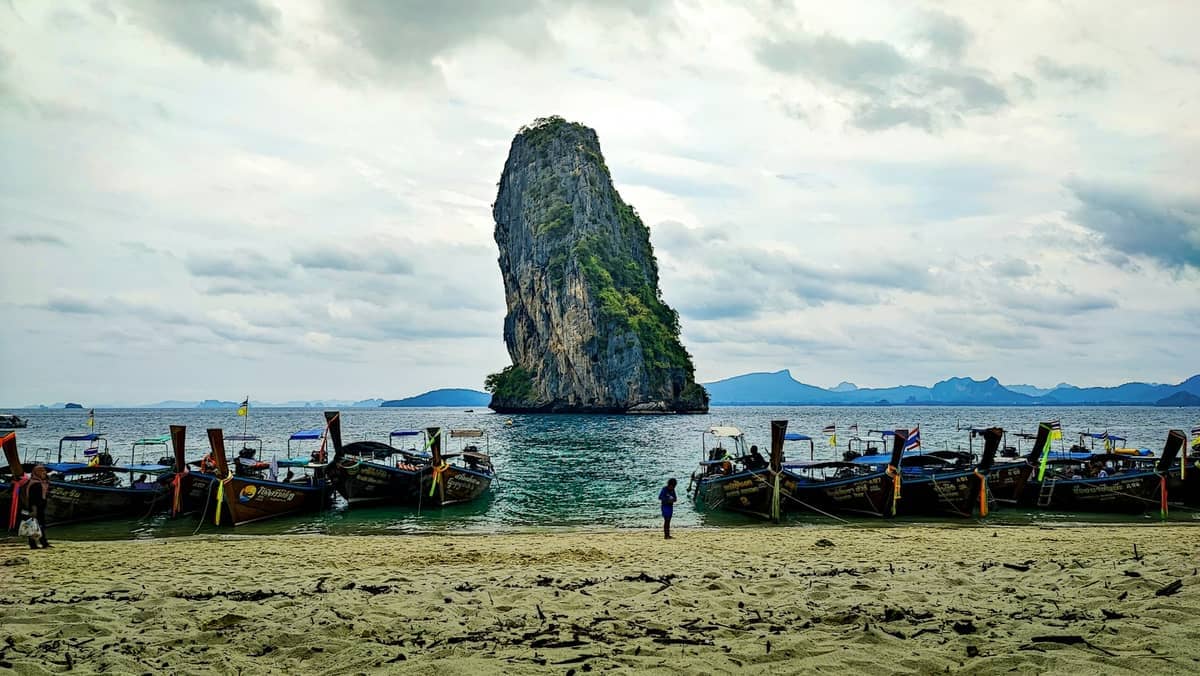
The Four Islands boat trip is one of the most popular half-day excursions departing from Ao Nang, and it groups together four distinct limestone islands in the Andaman Sea: Koh Poda, Koh Kai (Chicken Island), Koh Tup, and Koh Mo. Each island has its own character, from shaded sandy coves to shallow coral gardens, but the trip is anchored by a single natural event that gives it lasting appeal: the appearance of Thale Waek, the so-called Separated Sea.
Thale Waek (ทะเลแหวก) is a tidal sandbar that emerges at low tide to physically connect Koh Kai, Koh Tup, and Koh Mo in a single thin strip of white sand. When it appears, the surrounding water takes on contrasting shades of turquoise and deep blue on either side, making it one of the most striking sights in Krabi Province. The bar is temporary: as the tide rises, it narrows, then disappears beneath the surface. Timing your visit around low tide is not optional; it is the whole point.
💡 Local tip
Before booking, ask your tour operator at what time low tide falls on your intended day and whether their itinerary is timed to arrive at Thale Waek while the sandbar is still exposed. Not all operators adjust their schedules for the tides.
Thale Waek: The Tidal Sandbar in Detail
When the sandbar is at its widest, typically an hour or two either side of low tide, it stretches wide enough to walk along comfortably. The sand underfoot is fine and compact, and the water on both flanks is shallow enough to wade into knee-deep from the bar's edge. The visual contrast is striking: the Andaman Sea sits in two distinct colour bands on either side, separated by this sliver of exposed sand.
The crowds concentrate here. Groups arrive by longtail and speedboat simultaneously, and the sandbar can feel surprisingly packed around mid-morning when multiple tours converge. If you are hoping for an unobstructed photograph, you will need either an early start or patience and a willingness to work around other visitors. By the time the tide begins to reclaim the bar, the boats start pulling away, and the scene quietens.
The sandbar is only accessible by boat, and access depends entirely on tidal conditions. On some days, particularly around high tide, the bar does not emerge enough to land on. The islands themselves remain accessible regardless of the tide, but Thale Waek as a walkable feature is tide-dependent. Check tidal times for your specific travel date before committing to a tour.
⚠️ What to skip
If you visit during high tide, Thale Waek will not appear. Disappointment is common among travelers who book tours without checking tidal timing. Tidal tables for Krabi are available online and your tour operator should be able to advise.
Tickets & tours
Live prices and dates from our booking partner. If you book, we may earn a commission at no extra cost to you.
The Four Islands: What Each One Offers
Koh Poda is the largest and most developed of the group, with a beach long enough to spread out on without feeling pressed against other visitors. The water around it is relatively clear and the snorkeling around its rocky headlands can be rewarding, particularly for those who stay closer to the submerged limestone formations than the sandy bottom. There is shade available from the tree line, which matters more than it sounds when you are on a reflective white sand beach in direct sun.
Koh Kai, named for the chicken-head shape of its limestone cliff when seen from the right angle, is surrounded by some of the shallower and more coral-rich water of the group. The beach is smaller and the island fills quickly on busy days. Koh Tup and Koh Mo are the two islands flanking the sandbar and are less remarkable as individual destinations; their value is primarily as anchors for the Thale Waek experience rather than as standalone attractions.
How to Get There and What Tours Look Like
Four Islands tours depart from Ao Nang Beach pier, with longtail boats offering the traditional route and speedboats cutting journey times considerably. Longtail tours are slower and cheaper; speedboats allow more time at each stop. Most tours depart in the morning, typically between 8:30 and 9:30, and return by early to mid-afternoon. This timing means you generally arrive at Thale Waek around mid-morning, which may or may not coincide with low tide depending on the day.
Tours are bookable through guesthouses, tour desks along the Ao Nang strip, or through online booking platforms. The price usually includes the boat, snorkeling equipment, and occasionally a simple lunch at one of the island stops. The national park entry fee, which applies because these islands fall within Hat Noppharat Thara–Mu Ko Phi Phi National Park, is sometimes bundled into the tour price and sometimes collected separately on arrival. Confirm this with your operator before you pay, and keep your receipt as park officials may request it.
ℹ️ Good to know
The national park entry fee applies to all visitors. The exact amount is not fixed here as fees are subject to change. Confirm the current rate directly with your tour operator or the Department of National Parks before your visit.
Snorkeling, Photography, and What to Bring
The snorkeling around Koh Poda and Koh Kai is the better of what the tour group offers, though conditions vary considerably by season and sea state. During the dry season from roughly December through February, visibility is generally better and the water calmer. During the transition months of April and May, and through much of the southwest monsoon season from May to October, choppy water and reduced visibility can diminish the snorkeling experience significantly. If clear-water snorkeling is your priority, time your visit accordingly.
For photography, the Thale Waek sandbar offers its best light in the morning, when the sun is behind you if you are shooting from the Koh Tup side looking toward Koh Kai. Midday light is harsh and flattening. A waterproof case or dry bag for your phone or camera is not optional on these trips; spray from longtail engines and the habit of wading out onto the sandbar in ankle-deep water will test any unprotected device. For more serious underwater photography around the coral, the waters near Koh Ha or the Phi Phi area offer more dramatic options if your schedule allows.
Bring reef-safe sunscreen, as conventional sunscreen is harmful to the coral ecosystems here. A rash guard is worth packing both for sun protection and for snorkeling comfort. Water shoes help when entering and exiting the boat onto rocky shorelines. Drinking water is sometimes provided on tours, but bringing your own sealed bottles avoids relying on whatever the boat carries.
Best Season and Honest Expectations
The Four Islands tour is most reliably good between November and April, when sea conditions are calmer and skies are clearer. December through February represents peak conditions and also peak crowds. If you are visiting during these months, check out the broader context in the best time to visit Krabi guide for how conditions vary month by month.
During the rainy season from May to October, many operators still run Four Islands tours, but wave height and wind can make the experience significantly less pleasant, particularly on slower longtail boats. Some departures are cancelled when conditions are poor. If you are visiting during Krabi's rainy season, have a backup plan and be prepared for the possibility that the tour does not operate on your preferred day.
The Four Islands tour is genuinely enjoyable on the right day, but it is not an intimate or exclusive experience. The route is well-worn and the islands see substantial traffic during high season. If you are expecting deserted beaches and complete solitude, this tour will not deliver that. What it will deliver, assuming good tidal timing and calm seas, is a visually memorable natural event at Thale Waek and access to decent snorkeling and beach time across multiple small islands in a single half-day outing.
Who Should Consider Skipping This
Travelers who are visiting Krabi primarily for serious snorkeling or diving will likely find the Four Islands tour underwhelming compared to the reef quality available elsewhere in the province. The coral around these islands is not the most pristine in the region. Similarly, anyone who prioritizes uncrowded natural spaces should know that Thale Waek, at its prime low-tide window, draws multiple boats at once and can feel like a shared photo opportunity rather than a natural discovery.
If you are after quieter island experiences in Krabi, islands like Koh Jum or day trips toward less-trafficked southern areas may suit you better. And if the sandbar is your primary goal, understand that you are dependent on both tidal timing and weather, which are not fully within any tour operator's control.
Insider Tips
- Check the tidal table for your exact travel date before booking. Search 'Krabi tide times' and look for the low tide window. If low tide falls before 7am or after 1pm, the standard morning tour schedule may not coincide with the sandbar at its best.
- Speedboat tours cost more but allow longer stops at each island. On a longtail tour, you may find that the time actually spent on the sandbar or in the water is shorter than the journey itself.
- The sandbar crowds peak around 10–11am when multiple tours converge. Arriving earlier than other boats, even by 20 minutes, makes a real difference for photographs.
- Keep your national park entry receipt. Officials occasionally check at the islands, and some operators have reported visitors being asked to pay again without proof of payment.
- If snorkeling is a priority, head to the rocky formations at the northern tip of Koh Poda rather than staying in the sandy shallows near the main beach. The reef fish and coral coverage are noticeably better there.
Who Is Four Islands (Koh Poda, Koh Kai, Koh Tup, Koh Mo & Thale Waek) For?
- First-time visitors to Krabi who want a compressed introduction to the area's island scenery in a single outing
- Photographers and content creators whose schedules can flex around tidal timing
- Couples looking for a scenic half-day trip without committing to a full-day island excursion
- Families with children old enough to snorkel, since the calm, shallow water around the sandbar is suitable for beginners
- Travelers on tighter schedules who want beach and island time without an overnight stay
Nearby Attractions
Other things to see while in Ao Nang:
- Ao Nang Beach
Ao Nang Beach is the commercial heart of Krabi Province's coastline, a broad arc of sand backed by restaurants and boat piers that gives you direct access to some of Thailand's most spectacular islands. It is free, open around the clock, and works as both a destination and a staging point.
- Dragon Crest Mountain (Khao Ngon Nak)
Dragon Crest Mountain, known in Thai as Khao Ngon Nak, is a 3.7 km trail that climbs to a 565-metre summit above Tubkaek in Krabi Province. The reward at the top is one of the most expansive views in the region: a sweeping panorama of limestone karsts, jungle canopy, and the Andaman Sea stretching toward Koh Lanta. It is a proper hike requiring effort, preparation, and an early start.
- Hong Island (Koh Hong)
Hong Island, known in Thai as เกาะห้อง (Koh Hong), is a protected island in Than Bok Khorani National Park off the Krabi coast, reached by boat from Ao Nang. It combines a sheltered turquoise lagoon, a sandy beach framed by limestone karsts, and a short viewpoint climb into a half-day trip that holds up against the hype.
- Khlong Muang Beach
Khlong Muang Beach (หาดคลองม่วง) stretches along Krabi's coastline between Ao Siao Beach to the south and Tubkaek Beach to the north. With soft sand, limestone karst views across the water, and a notably calmer atmosphere than nearby Ao Nang, it draws travelers who want a beach day without the noise of a resort strip.
Planning a trip? Discover personalized activities with the Nomado app.