Visiting Krabi in the Rainy Season: What to Expect
Krabi's rainy season runs from May to October, but it's rarely the washout people fear. This guide covers what the southwest monsoon actually means for your trip: which activities hold up, which boat routes get disrupted, where prices drop, and how to plan around the weather without wasting your time or money.
Tickets & tours
Live prices and dates from our booking partner. If you book, we may earn a commission at no extra cost to you.
TL;DR
- The rainy season in Krabi runs roughly May to October, with September and October being the wettest months (roughly 275–325 mm of rain each).
- Rain usually comes in heavy but short bursts, not all-day downpours. Most days still have dry windows for activities.
- Boat trips to places like Koh Phi Phi and Railay can be delayed or cancelled due to rough seas — always confirm departures the morning of your trip.
- Some national park attractions close seasonally. Maya Bay has had a recurring August 1–September 30 closure; verify current status before booking.
- Hotel rates and tour prices drop significantly in low season, making this the best time to visit Krabi on a budget.
How the Rainy Season Actually Works in Krabi
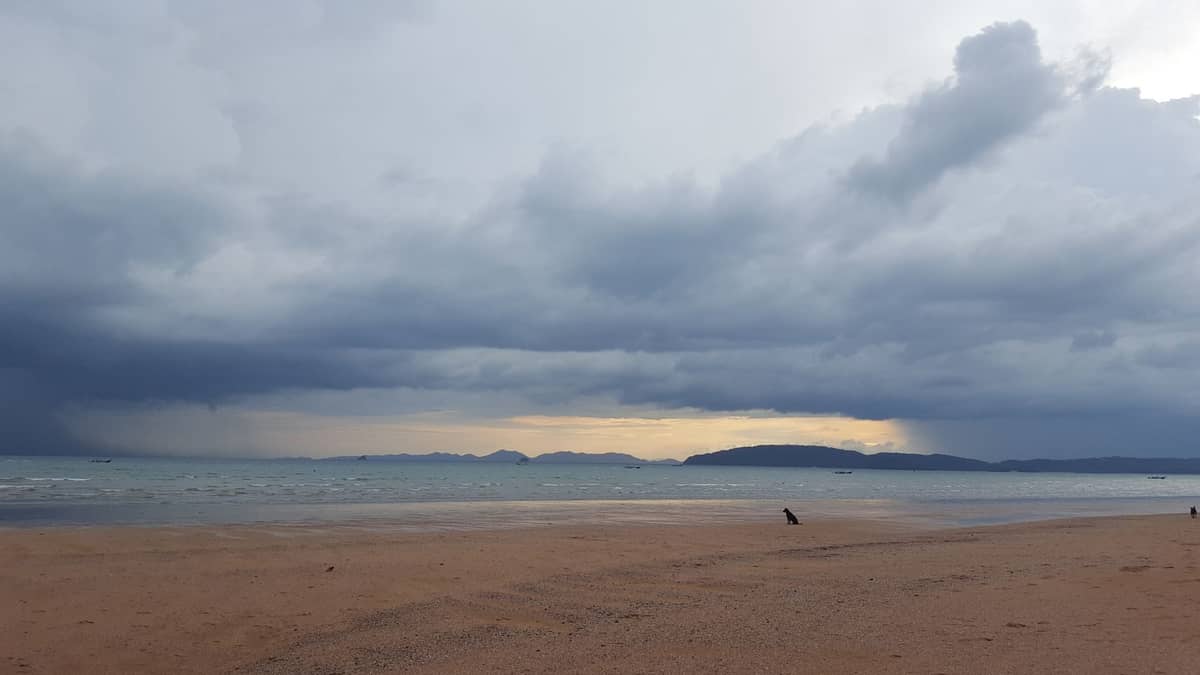
Krabi Province sits on Thailand's Andaman coast, which means it's squarely in the path of the southwest monsoon. This weather system pushes moisture onshore from around May and typically eases off by late October or early November. The word 'monsoon' conjures images of relentless grey skies, but the reality is more nuanced. Krabi's rainy season is characterised by periods of intense rain, often in the afternoon or evening, interspersed with long dry spells earlier in the day. Humidity climbs, the sea gets choppier, and some days are genuinely difficult to plan around. But weeks-long continuous rain? That's rare.
The wettest months are September and October, with long-term averages pointing to around 275 mm in September and 325 mm in October. By comparison, January receives roughly 20–30 mm. That's a significant difference, but it doesn't translate to constant rain. What it does mean is a higher probability that any given afternoon involves a downpour. Temperatures stay relatively stable year-round, with daytime highs typically between 31–34°C and lows around 22–24°C, so it's still hot during the rainy season.
ℹ️ Good to know
The Thai Meteorological Department publishes regional forecasts for Krabi at tmd.go.th. Check it the evening before any boat trip or outdoor activity — local operators use this, and you should too.
Boat Trips, Ferries, and Sea Conditions
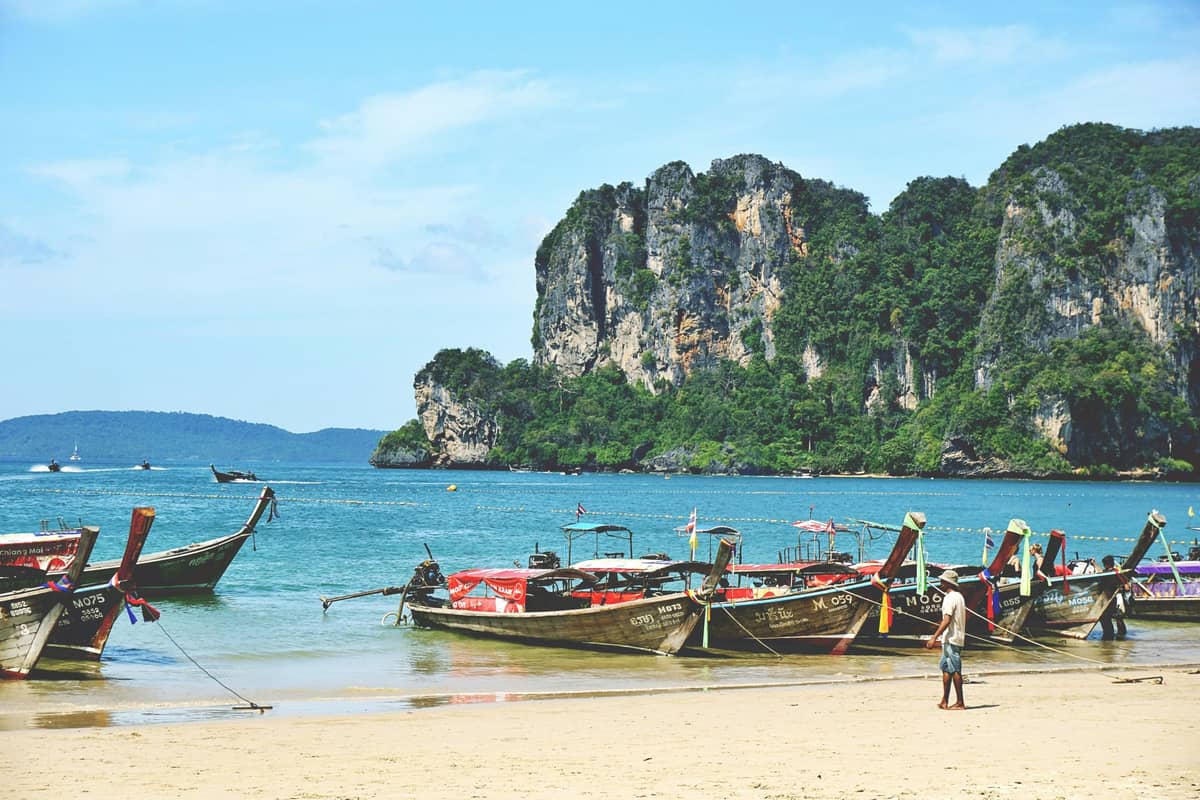
This is where the rainy season has real teeth. The Andaman Sea can become genuinely rough between June and October, with swells that make speedboat trips uncomfortable or unsafe. Ferries to Koh Lanta and Koh Phi Phi run year-round in principle, but departures are subject to cancellation or delay when sea conditions deteriorate. A posted schedule is not a guarantee of sailing. Operators make go/no-go decisions based on conditions that morning, sometimes at short notice.
If your plans depend on reaching Koh Phi Phi Don or doing a day trip to the Four Islands, build flexibility into your itinerary. Don't book non-refundable connecting transport for the same day as a boat trip. Confirm departure with the operator the morning of, not the night before. Most reputable operators will give you a refund or rescheduling option if they cancel for safety reasons — if a company refuses this, that's a red flag.
⚠️ What to skip
Overcrowded longtail boats and speedboats are a documented safety concern in Thai waters. In rough conditions, the risk increases. Check that your boat has functioning life jackets, wear one, and don't board a vessel that looks overloaded — regardless of what the operator tells you. UK and Australian government travel advisories both flag this specifically for Thailand.
That said, many popular short-range routes remain operational through most of the rainy season. Longtail boats from Ao Nang to Railay usually continue unless conditions are severe, since that crossing is sheltered and relatively short. Even during the heart of monsoon season, you'll likely get multiple viable boat-trip windows each week. The key is not to pre-book every day back-to-back with no margin for weather days.
What Closes and What Stays Open
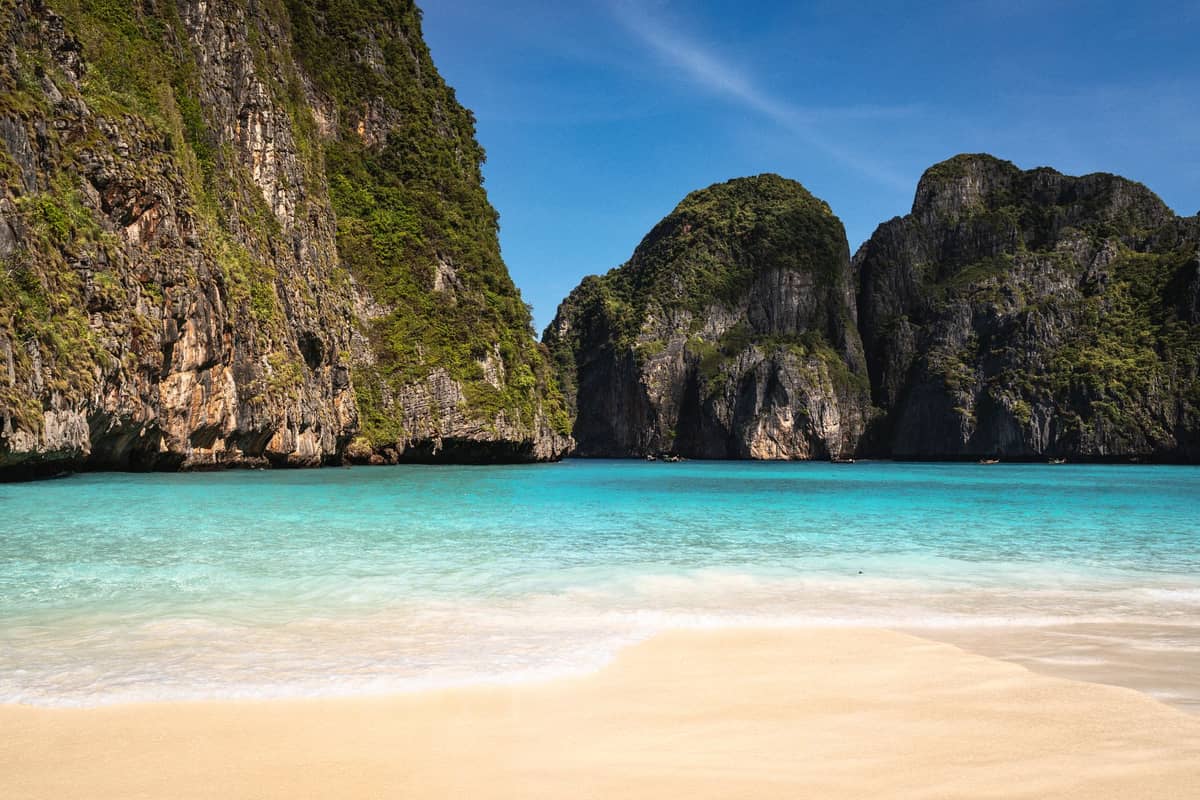
Some attractions operate seasonal closures that coincide with the rainy season, and these are worth checking before you book anything around them. Maya Bay on Koh Phi Phi Leh has had a recurring annual closure roughly from August 1 to September 30, linked to reef restoration efforts. This is managed by Hat Noppharat Thara – Mu Ko Phi Phi National Park, and the exact dates can shift year to year. Check the national park's official notices before planning any visit.
- Maya Bay (Koh Phi Phi Leh) Has had a recurring August–September closure for reef recovery. Verify current status with the national park before booking.
- Some smaller island day trips Tours to exposed outer islands like Koh Rok and Koh Haa are often suspended by operators during the heaviest swells, typically August–October.
- Inland and jungle attractions The Emerald Pool, Blue Pool, and waterfalls in Khlong Thom generally stay open and are often more impressive during and after the rains, when water levels are high.
- Rock climbing at Railay Wet limestone is genuinely dangerous to climb. Most climbing tours pause during heavy rain, though some sheltered walls are climbable. Confirm with your instructor.
- Resorts and restaurants Some smaller resorts and beachside restaurants on quieter islands reduce hours or close entirely during low season. This is more of an issue on Koh Lanta than in Ao Nang.
Krabi's inland attractions are genuinely worth prioritising in wet season. The Emerald Pool and Blue Pool in Khlong Thom are stunning after rain, with higher water levels and slightly cooler air. The Tiger Cave Temple in Krabi Town is accessible year-round, though the 1,237 steps to the summit viewpoint become slippery when wet. Waterfalls like Huai To Waterfall are at their most dramatic during the monsoon months.
Prices, Crowds, and the Honest Trade-offs
Low season in Krabi is real, and the price difference is significant. Hotels that charge 3,000–5,000 THB per night in December and January routinely drop to 1,200–2,500 THB for the same room in September. Tour operators discount heavily to fill spots. Popular beaches are noticeably less crowded. If you're the kind of traveller who'd rather have a beach mostly to yourself in exchange for a 40% chance of afternoon rain, this is your season.
The honest trade-offs: some of what makes Krabi iconic is genuinely harder to access. The postcard conditions of turquoise flat water and cloudless skies exist mostly from December to March. During the rainy season, the sea can look grey and uninviting. Snorkelling visibility drops when the water is churned up. If your trip is primarily about the beaches and island-hopping, low season is a compromise, and you should know that going in.
✨ Pro tip
May and June are often underrated. You get the early low-season discounts and smaller crowds, but the heaviest rains haven't arrived yet. Sea conditions are generally better than August or October. If you have flexibility, aim for late May or June rather than peak monsoon in September.
For context on how low season compares across the province, the best time to visit Krabi guide breaks down each month in detail. And if budget is a factor, the Krabi on a budget guide covers specific strategies that work particularly well during low season.
What to Do in Krabi When It Rains
Having a rainy-day plan is just smart travel anywhere, but it's particularly useful in Krabi. The good news is that the province has enough variety to fill several weather days without repeating yourself.
- Visit Krabi Town's markets and temples: Wat Kaew Korawaram and the surrounding streets are best explored on foot, and neither requires sunshine.
- Spend a morning at the Emerald Pool or Blue Pool in Khlong Thom — the jungle drive there is atmospheric in the rain, and the natural hot springs are particularly enjoyable in cooler wet-season air.
- Take a kayaking tour into the mangroves at Ao Thalane. Overcast days make the light better for photography and the heat less brutal.
- Explore Krabi Town's food scene. The night market runs regardless of weather, and the town's Thai-Muslim food culture is one of the underrated parts of visiting this region.
- Book a Thai cooking class. Several operators in Ao Nang and Krabi Town run half-day classes that fill a rainy morning perfectly.
- Visit the Krabi Fossil Shell Beach (Susan Hoi) — a short drive from town and completely weather-independent.
Kayaking deserves a specific mention. The Ao Tha Lane mangrove paddling routes and the sea caves at Than Bok Khorani National Park are genuinely excellent in wet season. Water levels are higher, which makes cave access easier, and the jungle is intensely green. The Krabi kayaking guide has specific route recommendations worth reading before you go.
Practical Tips for Rainy Season Travel in Krabi
A few adjustments to how you pack and plan make a real difference to the quality of a low-season trip in Krabi.
- Pack a compact rain jacket or poncho A small packable waterproof is more practical than an umbrella, especially on boats or while doing anything outdoors. Buy one before you arrive — airport prices are steep.
- Use dry bags for electronics and documents Longtail boat spray and sudden downpours can soak a bag in seconds. A basic dry bag (around 100–150 THB from local shops) protects your phone and passport.
- Book refundable tours where possible Many operators offer free rescheduling for weather cancellations. Confirm this policy before you pay, and get it in writing if you're booking a more expensive experience.
- Build in at least one buffer day per major island trip If you want to reach Koh Lanta or Koh Phi Phi, assume one day might be delayed. Don't make it the last day before a flight.
- Morning is your friend Rain is most common in the afternoon and evening. Schedule boat trips and outdoor activities for 7–11am. Most longboats leave at dawn anyway, which works in your favour.
- Check sea conditions, not just weather Wind speed and wave height matter more than rainfall for boat safety. The Thai Meteorological Department publishes marine forecasts. Windy.com is also widely used by local operators.
💡 Local tip
If you're travelling with kids, the rainy season is actually more manageable than it sounds. Indoor and semi-indoor options like cooking classes, aquarium visits, and cooking up a storm at the night markets work well. The heat is also slightly less intense, which helps with younger travellers. For more detail, see the Krabi with kids guide.
FAQ
Is it worth visiting Krabi in the rainy season?
Yes, for the right kind of traveller. Prices are lower, crowds are thinner, and many inland attractions are at their best. The trade-off is reduced reliability for boat trips and island-hopping, and a higher chance of afternoon rain. If your priority is beach weather and snorkelling, the dry season (December–March) is more suitable. If you want to experience Krabi without the high-season crowds and costs, May–June or late October are good compromises.
Which months are the wettest in Krabi?
September and October are consistently the wettest months, with long-term averages of around 275 mm and 325 mm of rainfall respectively. These are the most disruptive months for boat travel and outdoor activities. May, June, and July are transitional months with more moderate conditions.
Do ferries and boat tours still run during the rainy season?
Many routes continue operating through the rainy season, but departures depend on daily sea conditions rather than a fixed schedule. Operators cancel or delay trips when swells are considered unsafe. Always confirm departure the morning of your trip and check that your booking includes a weather cancellation policy.
Is Maya Bay closed during the rainy season?
Maya Bay on Koh Phi Phi Leh has had a recurring seasonal closure, typically from around August 1 to September 30, for reef conservation. The exact dates vary by year. Check the official notices from Hat Noppharat Thara – Mu Ko Phi Phi National Park before planning a visit.
What should I pack for Krabi in the rainy season?
Bring a compact waterproof jacket or poncho, a dry bag for your phone and documents, and quick-dry clothing. Sandals that can get wet are more practical than trainers. Sunscreen is still essential — UV levels are high even on overcast days. And travel insurance that covers weather-related cancellations is strongly recommended.
Tickets & tours
Live prices and dates from our booking partner. If you book, we may earn a commission at no extra cost to you.
Planning a trip? Discover personalized activities with the Nomado app.