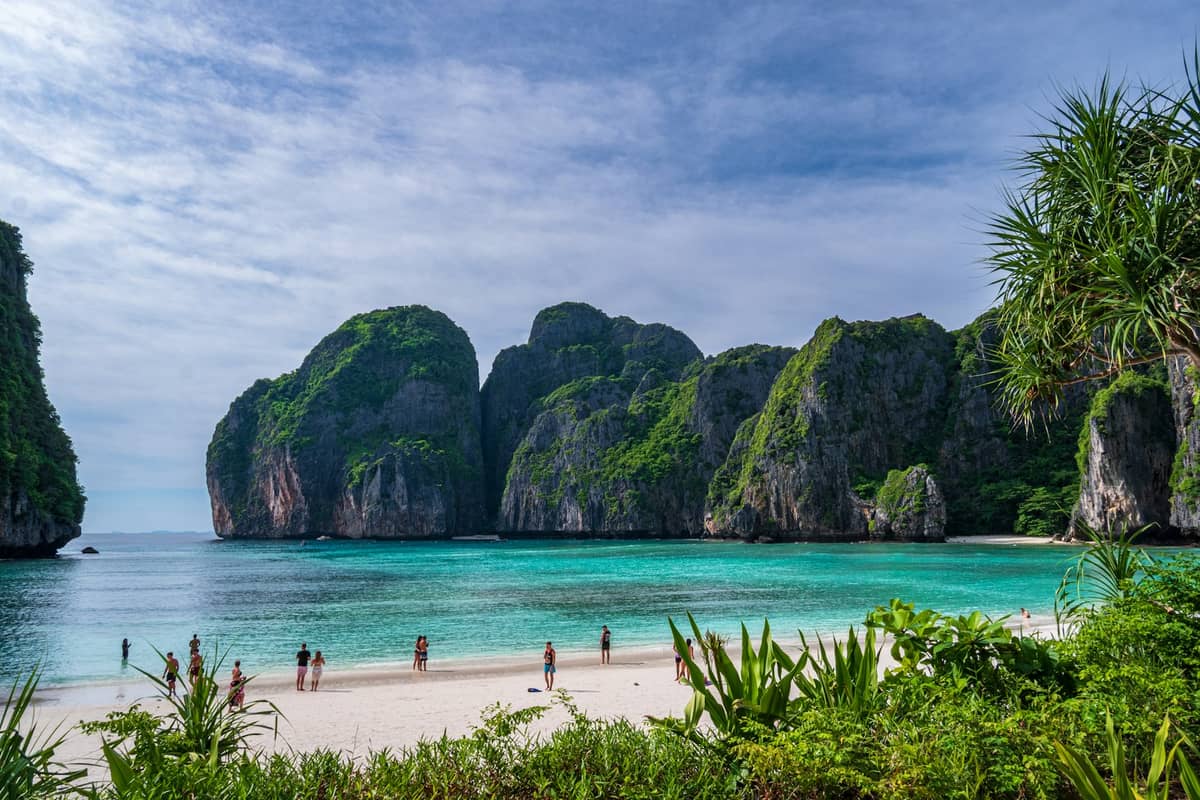
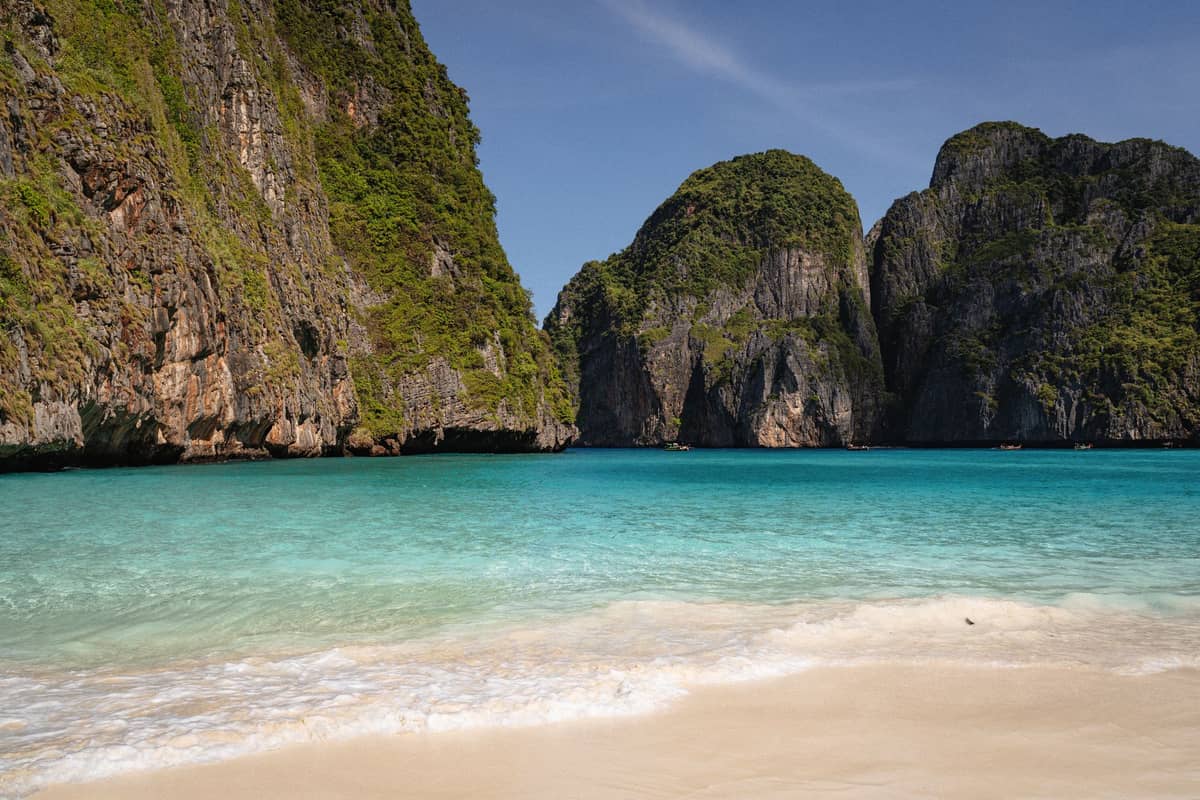
Koh Phi Phi is a group of islands within Krabi Province, Thailand, known for dramatic limestone cliffs, clear water, and one of Southeast Asia's most recognizable beach landscapes. The inhabited island, Phi Phi Don, runs on foot traffic and boat connections, with no roads or vehicles in the main settlement. It suits travelers who want to be close to the water, but it demands trade-offs in noise, crowds, and cost.
Koh Phi Phi sits in the Andaman Sea as part of Krabi Province, and it divides opinion more sharply than almost any other destination in southern Thailand. The scenery is genuinely extraordinary, with sheer karst walls dropping into turquoise bays on every side, but the main settlement on Phi Phi Don is dense, loud after dark, and draws more visitors per square meter than almost anywhere else in the region. Understanding exactly what you are arriving into makes the difference between a memorable trip and a disappointing one.
Orientation
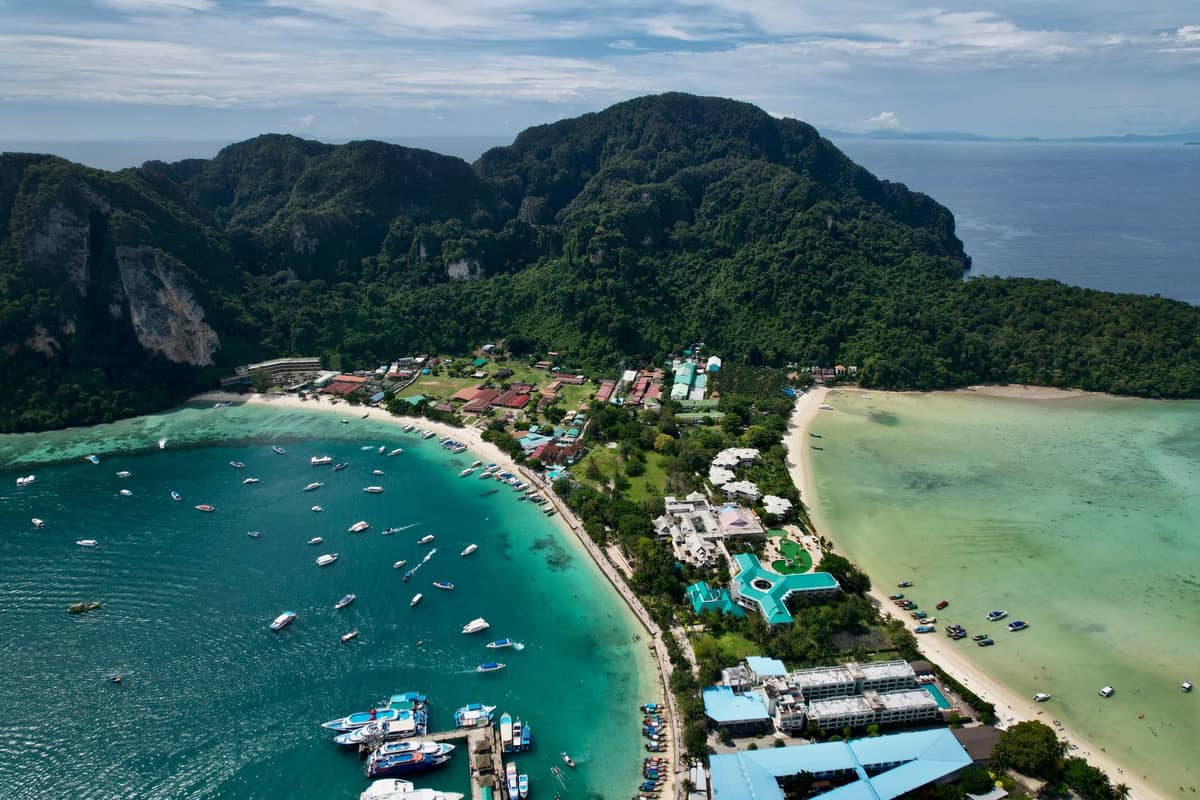
The Phi Phi Islands are administered within Krabi Province, sitting roughly 40 kilometers southwest of Krabi Town and about 45 kilometers southeast of Phuket. The group consists of six islands, but two matter most to visitors. Phi Phi Don is the only inhabited island, and it is shaped like a butterfly: two larger landmasses connected by a narrow, flat isthmus. That isthmus is where almost everything happens. Tonsai Bay faces south, Loh Dalum Bay faces north, and the isthmus between them, known as Tonsai Village, holds the pier, the majority of guesthouses, restaurants, dive shops, and bars.
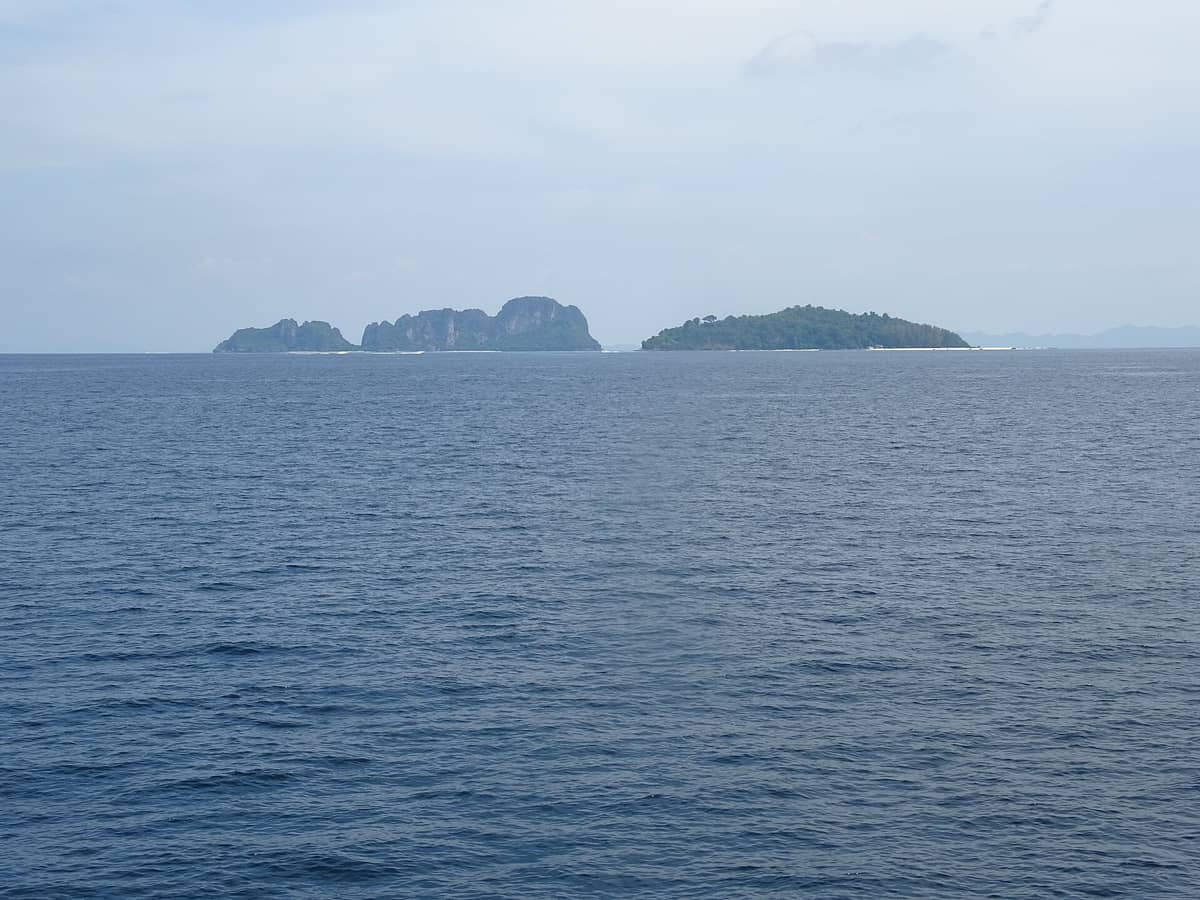
Phi Phi Leh is the second island, about four kilometers south of Phi Phi Don. It is uninhabited and protected within Hat Noppharat Thara–Mu Ko Phi Phi National Park. Day-trippers reach it by longtail or speedboat to visit Maya Bay, Pileh Lagoon, and Viking Cave. You cannot sleep there. The geography matters: if you are staying on Phi Phi Don, Phi Phi Leh is a short boat trip away, not a walk.
Beyond Tonsai Village, Phi Phi Don has other beaches and bays accessible only by boat or on foot via hilly jungle trails. Loh Bakao and Laem Tong in the north are quieter and home to upmarket resorts. Tonsai Beach and the beaches near Railay on the mainland give a useful comparison point: Railay is similarly car-free and boat-access only, but considerably quieter than Phi Phi Don's main village.
Character & Atmosphere
Tonsai Village wakes up gradually. In the early morning, before the day-trip boats arrive from the mainland, the narrow lanes between the pier and Loh Dalum Bay are quiet enough to hear the water. Vendors set up fruit stalls, dive shop staff organize equipment on the beach, and the light on the limestone cliffs behind the village is at its best, low and golden. This window, roughly 6:00 to 8:30 AM, is when Phi Phi Don briefly resembles the place people come expecting.
By mid-morning, the day boats start arriving at Tonsai Pier in successive waves. The isthmus fills quickly. The lanes through the village are unpaved and narrow, designed for foot traffic, and they become genuinely congested. Prices on the beach-facing strip are calibrated for tourist volume, not local economy. Afternoon heat and crowd pressure combine in a way that exhausts many visitors who did not plan for it.
After the day-trip boats depart in the late afternoon, the island settles again into a different rhythm. Loh Dalum Bay's beach is worth walking at this hour: the water reflects pink and orange, the cliffs frame the view, and you can actually find space on the sand. Then, as darkness falls, the bars along the beach light up and fire-show performances begin on the sand. The nightlife on Phi Phi Don is loud and continues well past midnight. This is not a place for early sleepers or light sleepers unless you find accommodation further from the main strip.
⚠️ What to skip
Tonsai Village has almost no vehicle traffic, but the lanes are completely unlit in some sections after dark and can be disorienting after a few drinks. Theft and opportunistic crime increase at night near the bar strip. Keep valuables secured and be aware of your surroundings.
What to See & Do
The viewpoint above Tonsai Village is the single most-photographed spot on the island, and for good reason. The trail climbs steeply from the village via a marked path and takes roughly 20 to 30 minutes depending on fitness. From the top, the double-bay geography of Phi Phi Don is fully visible, with Tonsai Bay on one side and Loh Dalum Bay on the other, limestone walls rising behind both. Go early morning or late afternoon to avoid direct sun and thick crowds at the summit.
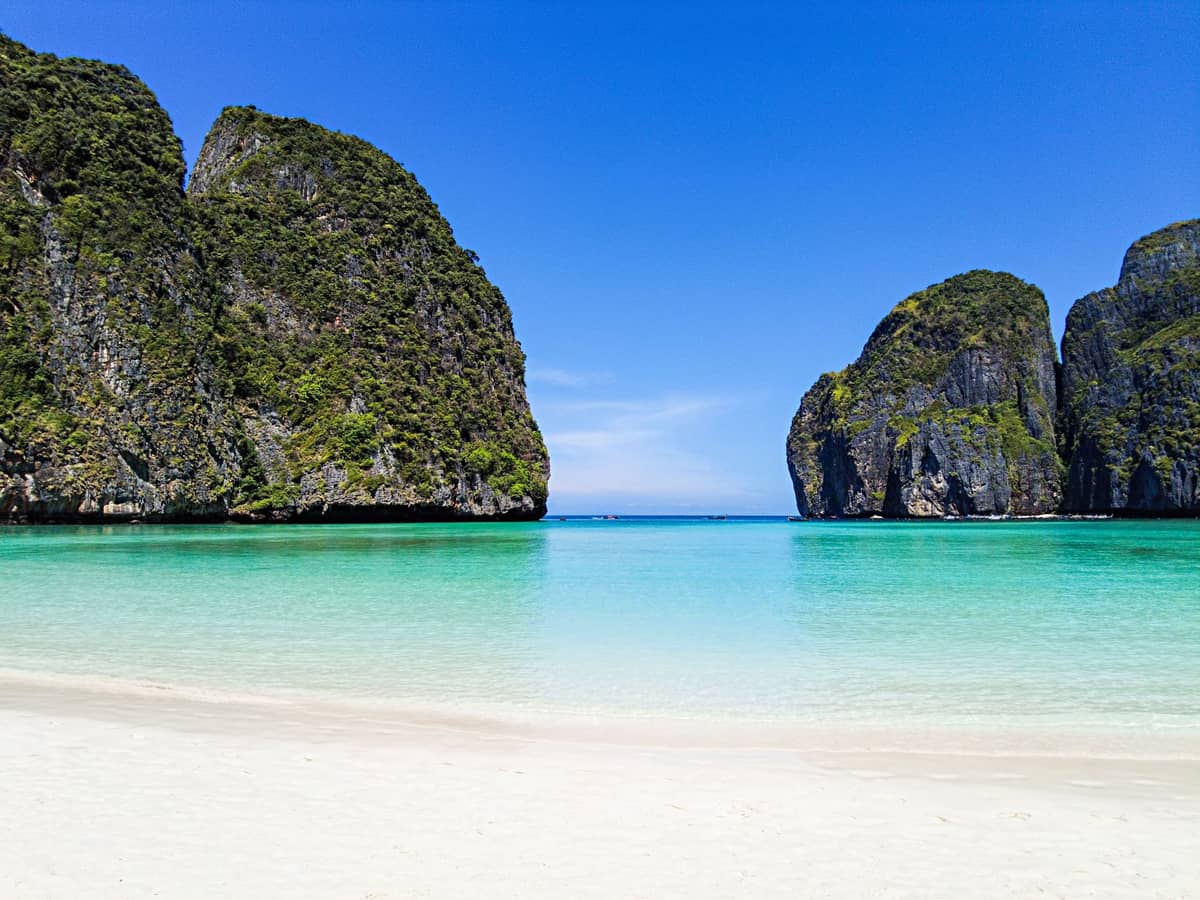
Phi Phi Leh deserves serious attention as a day trip from the island. Maya Bay was closed for environmental rehabilitation from 2018 to 2022 and has since reopened with stricter controls on visitor numbers and boat anchoring. It remains one of the most visually striking beaches in Thailand, but access is time-limited and managed. Arrive by speedboat early in the morning, before the main tour groups, for the best experience.
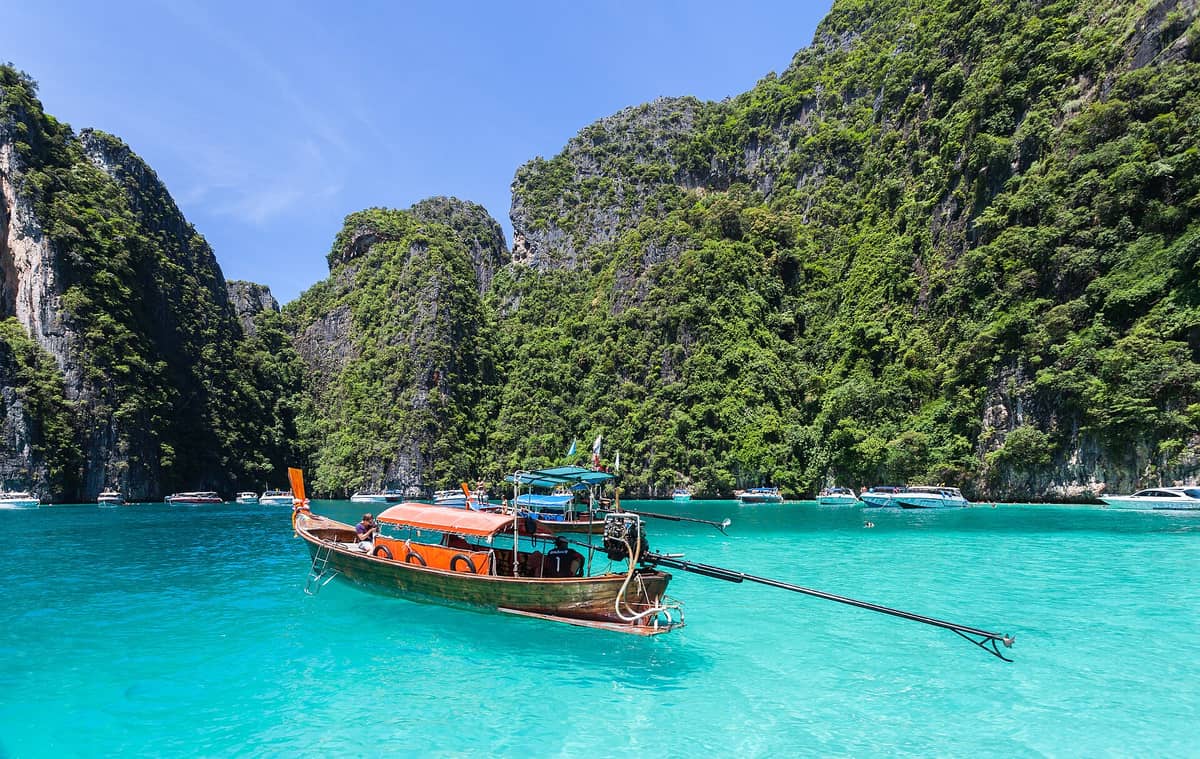
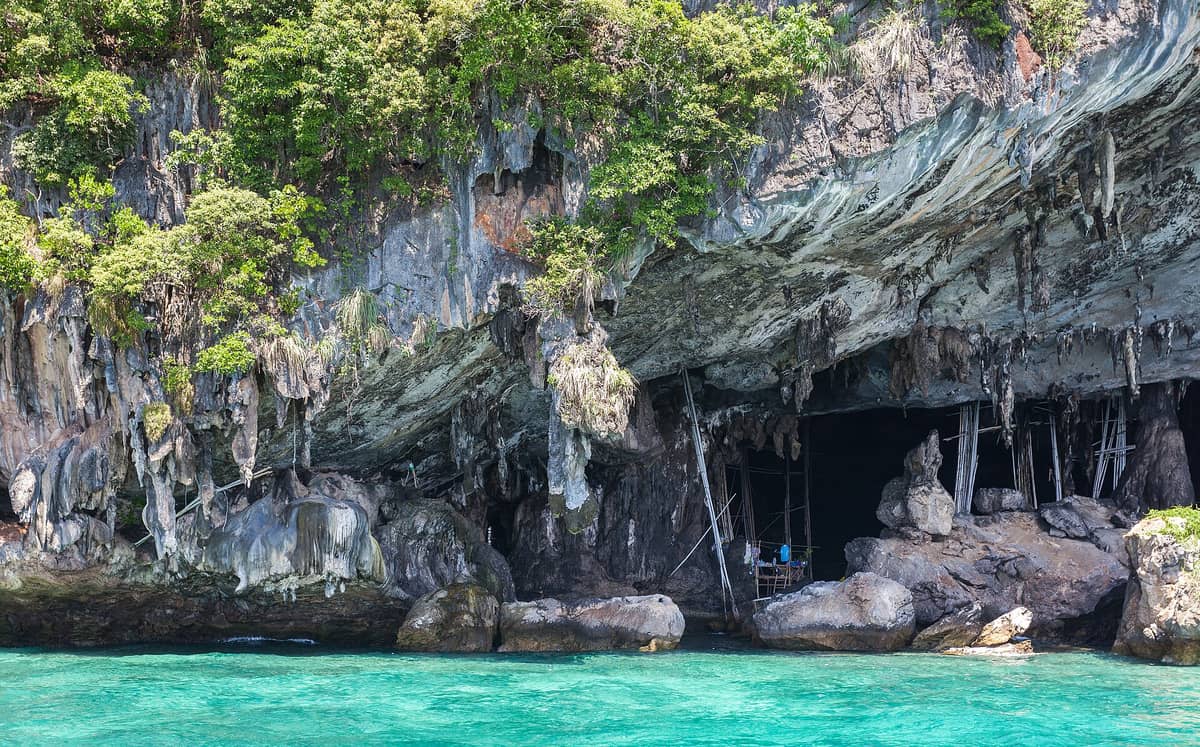
Pileh Lagoon on Phi Phi Leh is a semi-enclosed sea lagoon surrounded by limestone walls, best seen by kayak or longtail boat when the light hits the water directly. Viking Cave on the northeastern tip of Phi Phi Leh is where local workers harvest edible bird nests from the cave walls; the cave takes its name from 18th-century boat paintings found inside.
Snorkeling at Hin Klang and Bida Nok, two dive sites near Phi Phi Leh accessible by day tour from Tonsai
Rock climbing on the limestone walls around Tonsai and Loh Dalum, organized through operators in the village
Sea kayaking around the bays and cave systems of Phi Phi Don, available from beach operators
Longtail boat hire for independent exploration of the quieter eastern and northern bays of Phi Phi Don
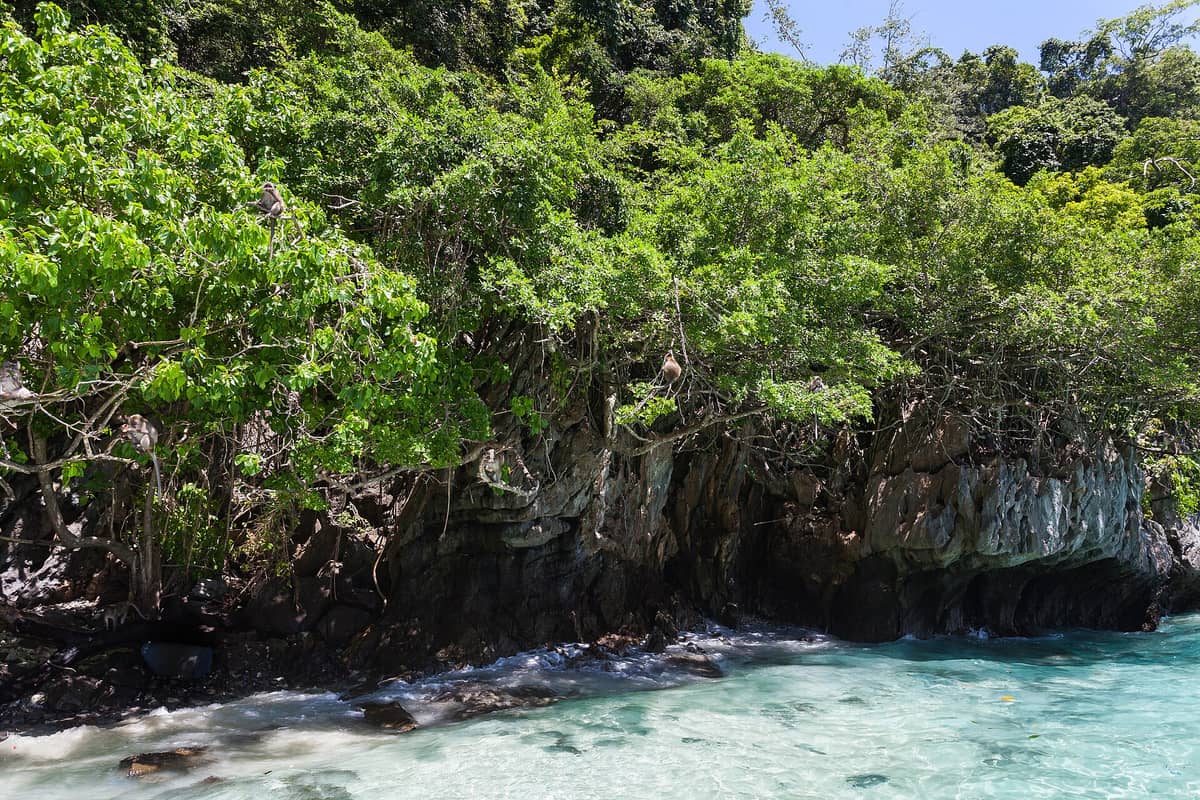
Monkey Beach, a small cove on Phi Phi Don where macaques gather near the shoreline
For context on the wider diving options in this part of Krabi Province, the Krabi diving guide covers the full range of sites, including those only reachable on liveaboard trips from the mainland.
⚠️ What to skip
Thai and international travel advisories specifically note drowning risks from strong coastal currents and reported incidents involving jellyfish around Koh Phi Phi. Always follow posted warnings, swim at patrolled beaches where possible, and respect red flag conditions. Do not swim at night.
Eating & Drinking
The food scene on Phi Phi Don is heavily oriented toward international tourists, and prices reflect that. The main strip through Tonsai Village has restaurants offering everything from Thai curries to wood-fired pizza and Israeli breakfast, all within a few hundred meters. Quality varies enormously. The better Thai food tends to be found in the smaller side lanes off the main pedestrian path rather than on the beach-facing restaurants, where you pay substantially more for the view.
Street food is limited compared to a mainland town like Krabi Town, but fresh seafood grilled to order is available at several spots near the pier area. Look for the stalls where local staff are eating rather than the ones with laminated menus in six languages. Prices at those stalls tend to be noticeably lower, and the food is usually better.
The bar scene is concentrated along Loh Dalum Beach. Bars here operate buckets of mixed spirits, play loud music, and organize fire juggling and fire-skipping rope shows on the sand after dark. It is the kind of nightlife that suits a certain kind of trip and actively repels another. If you are not there for it, book accommodation in the northern or eastern parts of the island, well away from the beach strip.
Fresh grilled seafood near Tonsai Pier: market-rate pricing by weight, best at lunch before the midday rush
Thai curries and pad thai from smaller lane restaurants: expect to pay 80-150 THB per dish
Beach bars along Loh Dalum: cocktail buckets and Chang beer, prices from around 150 THB upward
Bakeries and coffee shops serving Western breakfasts scattered through the main village lanes
Convenience stores stocking water, sunscreen, and snacks at predictably inflated island prices
💡 Local tip
Bring more cash than you think you need. ATMs exist in Tonsai Village but charge high transaction fees and occasionally run out of notes during peak periods. Credit card acceptance is inconsistent outside larger restaurants and dive operators.
Getting There & Around
Koh Phi Phi is accessible by ferry or speedboat only. There is no airport on the islands. Ferries depart from Krabi Town's Passenger Port (Klong Jilad Pier) and from Ao Nang's Nopparat Thara Pier, taking roughly 90 minutes to two hours depending on conditions and the type of boat. Speedboats make the crossing faster, around 45 minutes, but cost more. Ferries also connect Phi Phi to Phuket, making it a viable stop on a route between the two provinces. The getting around Krabi guide covers the full logistics of ferry routes and booking.
All arrivals land at Tonsai Pier. From there, the entire Tonsai Village area is walkable in under ten minutes end to end. There are no roads, cars, trucks, or motorbikes in the main settlement. Luggage is transported on handcarts pushed by porters, for a fee. This is one of the genuinely pleasant characteristics of the island: the absence of traffic noise.
Reaching other parts of Phi Phi Don, such as Loh Bakao, Laem Tong, or the beaches on the eastern coast, requires a longtail boat. These can be hired from the beach or arranged through your accommodation. The boat operators at Tonsai Pier also run scheduled shared transfers to the northern resorts. There are no fixed timetables for longtails, so factor in negotiation time when planning half-day excursions.
For travelers combining Phi Phi with Koh Lanta, direct ferries run during high season. The Krabi to Koh Lanta guide explains the options. For day trips from the mainland, the Phi Phi day trip guide outlines what to expect from a tour versus independent travel.
Where to Stay
Accommodation on Phi Phi Don divides fairly cleanly by geography. Tonsai Village and its immediate surroundings offer the widest range of budget and mid-range guesthouses, with the trade-off being noise from the bars at night. The closer you are to the Loh Dalum Beach strip, the louder it gets. Budget travelers who plan to join the nightlife will not mind. Anyone expecting a full night's sleep should look elsewhere.
The northern bays, particularly Loh Bakao and Laem Tong, have several resort-style properties aimed at travelers who want to be on the island without being in the thick of the village. These are quieter, more expensive, and require a boat journey to access the main pier and its services. They suit couples and those on a specific package; they are less convenient for anyone wanting to explore independently.
Travelers uncertain about committing to Phi Phi Don as a base might consider using Ao Nang on the mainland as their home base and doing Phi Phi as a day trip. The where to stay in Krabi guide compares all the main areas in the province and can help you decide.
ℹ️ Good to know
High season runs from roughly December to March. Book accommodation several weeks in advance during this period, especially if you want anything beyond the most basic guesthouse rooms. The island has limited supply relative to demand at peak times.
Honest Considerations Before You Go
Phi Phi Don is genuinely beautiful. That is not in question. The combination of the double-bay geography, the karst limestone walls, and the clarity of the water in the early morning is difficult to match anywhere in Krabi Province. But the island's popularity has created conditions that do not suit every type of traveler, and it is worth being honest about what those conditions are.
The environmental pressure on the island is significant. Phi Phi Don is part of a national park, but the volume of visitors, the concentration of development on a small isthmus, and the impact of boat traffic on the reefs have all been documented as concerns. Maya Bay's closure and subsequent managed reopening is a direct result of this pressure. The park entry fee applies to visitors arriving by boat; verify the current amount before traveling as fees are subject to revision.
Phi Phi is not the place to come for a quiet beach holiday. For that, consider Khlong Muang Beach on the mainland, or the quieter side of Koh Lanta. Phi Phi is the place to come if you want dramatic scenery, accessible snorkeling and diving, a social atmosphere, and a particular kind of island energy that trades on its own fame. Going in with accurate expectations makes it work.
Practical Information
Currency: Thai baht (THB). ATMs available in Tonsai Village with high fees; bring cash from the mainland.
Language: Thai is official; English is widely spoken in tourism businesses throughout the village.
Emergency numbers: Tourist Police 1155, general police 191, ambulance/emergency medical 1669.
Electricity: 220V, 50Hz. Bring a universal adapter; socket types vary.
Water: Do not drink tap water. Use sealed bottled water available throughout the village.
Best time to visit: December to February for dry conditions and calm seas. May to October brings monsoon conditions with rougher ferry crossings.
Park fee: A national park entry fee applies on arrival by boat; verify the current amount before traveling.
TL;DR
Koh Phi Phi is best for travelers who want iconic limestone scenery, good snorkeling and diving access, and a social island atmosphere, and who can tolerate crowds and nightlife noise.
Tonsai Village on Phi Phi Don is car-free and compact; the entire main settlement is walkable, with longtail boats needed for other parts of the island.
Maya Bay on the uninhabited Phi Phi Leh is the most famous attraction and is worth visiting, but go by speedboat early in the morning before the main tour groups arrive.
The island is not suited to light sleepers, travelers seeking a quiet retreat, or those on a tight budget expecting good value for accommodation and food.
Use Ao Nang or Krabi Town as a mainland base if you want to do Phi Phi as a day trip rather than committing to staying on the island.
Bangkok to Krabi is one of Thailand's most-traveled long-distance routes, and there are three main ways to do it: fly, take the overnight bus, or combine a southern-line train with a road transfer. This guide breaks down every option with real costs, journey times, and the real trade-offs so you can pick the right route for your trip.
Krabi Province has more great beaches than most travelers can visit in a single trip, spread across the mainland coast, the Railay Peninsula, Koh Phi Phi, and Koh Lanta. This guide ranks and compares the best, so you can choose the right beach for your style.
Krabi's weather shapes everything from island hopping to hotel rates. This guide breaks down every month of the year so you know exactly when to go, when to save money, and what to realistically expect from Thailand's most dramatic coastline.
Krabi is one of southern Thailand's best bases for day trips, with stunning islands, jungle waterfalls, sacred temples, and sea caves all within reach. This guide covers the top destinations you can explore in a single day, from the legendary Phi Phi Islands to the serene mangroves of Ao Tha Lane.
Krabi Province spans coastline, islands, and inland jungle with no metro or rail network. This guide covers every transport option, from airport minivans and local songthaews to long-tail boats and ferries, so you can move around without overpaying or getting stranded at the wrong pier.
Three days in Krabi, Thailand is enough to hit the highlights without rushing — if you plan smart. This itinerary covers Railay Peninsula, island day trips, Krabi Town's underrated food scene, and the key logistics most guides get wrong.
Krabi International Airport (KBV) is a manageable gateway, but the transfer options are genuinely confusing if you haven't researched them. This guide breaks down every transport option from the airport, with realistic fare ranges, journey times, and tips for avoiding the most common mistakes.
Krabi Province offers some of southern Thailand's most accessible and rewarding dive experiences, from shallow coral gardens off Ao Nang to advanced wreck dives and world-class drift sites. This guide covers the best dive sites, how to choose a course, what operators charge, and a clear take on when diving here is worth it.
Most visitors to Krabi stick to Ao Nang, Railay, and the Phi Phi day trip. But the province holds far more: ancient fishing villages, mineral-fed jungle pools, empty beaches, and islands with no roads. This guide points you to the places worth the extra effort.
Krabi's limestone karst landscape delivers some of Southeast Asia's most dramatic hiking. From the roughly 1,240-step climb to Tiger Cave Temple's panoramic summit to the rope-assisted scramble into Railay Lagoon, these are the best trails, viewpoints, and jungle walks across the province.
Krabi Province offers one of Southeast Asia's most compelling honeymoon settings: limestone karsts rising from turquoise water, car-free beach peninsulas, and islands that feel genuinely remote even in peak season. This guide covers where to stay, what to do, and how to plan a honeymoon in Krabi that goes beyond the standard tourist trail.
December marks the start of Krabi's drier travel season, bringing warm temperatures, calmer seas, and the year's biggest tourist crowds. Here's everything you need to plan your trip, from realistic weather expectations to the best activities and where to stay.
Krabi's rainy season runs from May to October, but it's rarely the washout people fear. This guide covers what the southwest monsoon actually means for your trip: which activities hold up, which boat routes get disrupted, where prices drop, and how to plan around the weather without wasting your time or money.
Krabi Thailand sits at the centre of one of Southeast Asia's great island-hopping regions. This guide breaks down every major route, from the classic Four Islands trip to the quieter Hong Islands circuit, with real pricing, seasonal warnings, and booking tips to help you plan smarter.
Five days is enough time to experience the best of Krabi Thailand without rushing. This itinerary balances iconic beaches, island excursions, jungle trails, and local culture — with practical logistics, realistic cost breakdowns, and advice on what to skip.
Krabi Thailand offers some of Southeast Asia's most dramatic paddling terrain: limestone karsts rising from calm water, mangrove labyrinths, and island lagoons accessible only by kayak. This guide covers the top routes, tour formats, seasonal conditions, and practical advice to help you choose the right experience.
Koh Lanta is one of the most rewarding islands in Krabi Province, and getting there is straightforward once you know which transport option suits your trip. This guide covers minivans, ferries, speedboats, fares, journey times, and the key details that booking platforms often leave out.
Krabi Province offers some of Southeast Asia's most dramatic luxury settings, from cliffside villas at Railay to private pool suites on Koh Lanta. This guide breaks down where to stay, what to do, and how to get the most from a high-end trip to Krabi, Thailand, without falling for overhyped options.
Krabi's after-dark scene spreads across several distinct areas, each with its own vibe, price point, and closing time. This guide covers Ao Nang, Krabi Town, and Railay so you know exactly where to go, what to spend, and what to skip.
Krabi, Thailand can devour a travel budget faster than most visitors expect, or stretch it surprisingly far if you know where the price traps are. This guide covers transport, accommodation, food, beaches, and island trips with realistic cost breakdowns and no fluff.
Planning a Koh Phi Phi day trip from Krabi? This guide covers ferry routes, speedboat tours, Maya Bay access, park fees, seasonal closures, and the practical details that most travel sites gloss over. Know what you're booking before you pay.
Krabi Thailand is one of Southeast Asia's most rewarding destinations, but a handful of well-worn scams and avoidable risks can derail a trip fast. This guide covers the real threats, practical precautions, and emergency contacts you need before you go.
Krabi Province has some of Thailand's finest snorkeling, with clear Andaman water, limestone island scenery, and healthy reefs accessible from multiple departure points. This guide covers the best snorkeling spots by area, what to expect underwater, and how to plan your trips from Ao Nang, Koh Lanta, and beyond.
Krabi Thailand's street food scene runs the full spectrum from southern Thai curries ladled out of giant woks to fresh-caught seafood grilled on the spot. This guide covers the best dishes, the top markets, neighborhood-by-neighborhood options, and practical tips for eating well without getting burned by tourist pricing.
Two of Thailand's most-visited southern destinations, Krabi and Phuket sit on the same Andaman coastline but offer very different experiences. This guide breaks down the key differences across scenery, access, budget, beaches, and travel style so you can decide which one belongs on your itinerary.
Krabi Province has the beaches, islands, and outdoor adventures that make it one of Thailand's best destinations for families. This guide covers the top kid-friendly activities, where to base yourself, how to get around with children, and what to watch out for so your family holiday runs smoothly.
Krabi Province offers one of the most geographically varied destinations in southern Thailand, from mainland karst scenery and inland waterfalls to boat-access beaches and remote islands. But is it right for you? This guide cuts through the hype and gives you a clear-eyed look at what Krabi delivers, what it doesn't, and who should actually go.
Phuket and Krabi are neighboring provinces in southern Thailand, yet getting between them takes more planning than most travelers expect. This guide breaks down every realistic option, from shared minivans to scenic ferries, with candid assessments of cost, comfort, and when each makes sense.
Krabi, Thailand is one of Southeast Asia's top rock climbing destinations, with hundreds of bolted limestone routes at Railay and Tonsai. This guide covers beginner courses, operator prices, the best season to climb, and what nobody tells you before you book.
Krabi Province packs limestone cliffs, emerald lagoons, jungle temples, and some of Thailand's finest beaches into one compact destination. This guide covers the best things to do in Krabi across beaches, islands, inland attractions, and adventure activities, with practical notes on pricing, seasonality, and what tour operators often skip.
Krabi Thailand covers a sprawling province of limestone coast, islands, and inland jungle. Choosing the wrong base can cost you hours of unnecessary travel. This guide breaks down every major area, who each one suits, and what to realistically expect from your accommodation.