Is Krabi Worth Visiting? An Honest Assessment
Krabi Province offers one of the most geographically varied destinations in southern Thailand, from mainland karst scenery and inland waterfalls to boat-access beaches and remote islands. But is it right for you? This guide cuts through the hype and gives you a clear-eyed look at what Krabi delivers, what it doesn't, and who should actually go.
Tickets & tours
Live prices and dates from our booking partner. If you book, we may earn a commission at no extra cost to you.
TL;DR
- Krabi Province is far more than a beach destination — it includes limestone karst interiors, islands, waterfalls, and national parks across 5,323 km².
- The best time to visit is December to February for dry weather; May to October brings the southwest monsoon, which disrupts boat trips — see the best time to visit Krabi guide for a full seasonal breakdown.
- Ao Nang is the main tourist hub; Railay, Koh Lanta, and the Phi Phi Islands each have distinct characters and require different expectations.
- Krabi suits independent travelers, couples, families with older children, and anyone who wants flexible access to multiple environments in one trip.
- It is not the right choice if you want consistent nightlife, a flat landscape, or guaranteed calm seas from May through October.
What Krabi Actually Is (And Why the Question Matters)
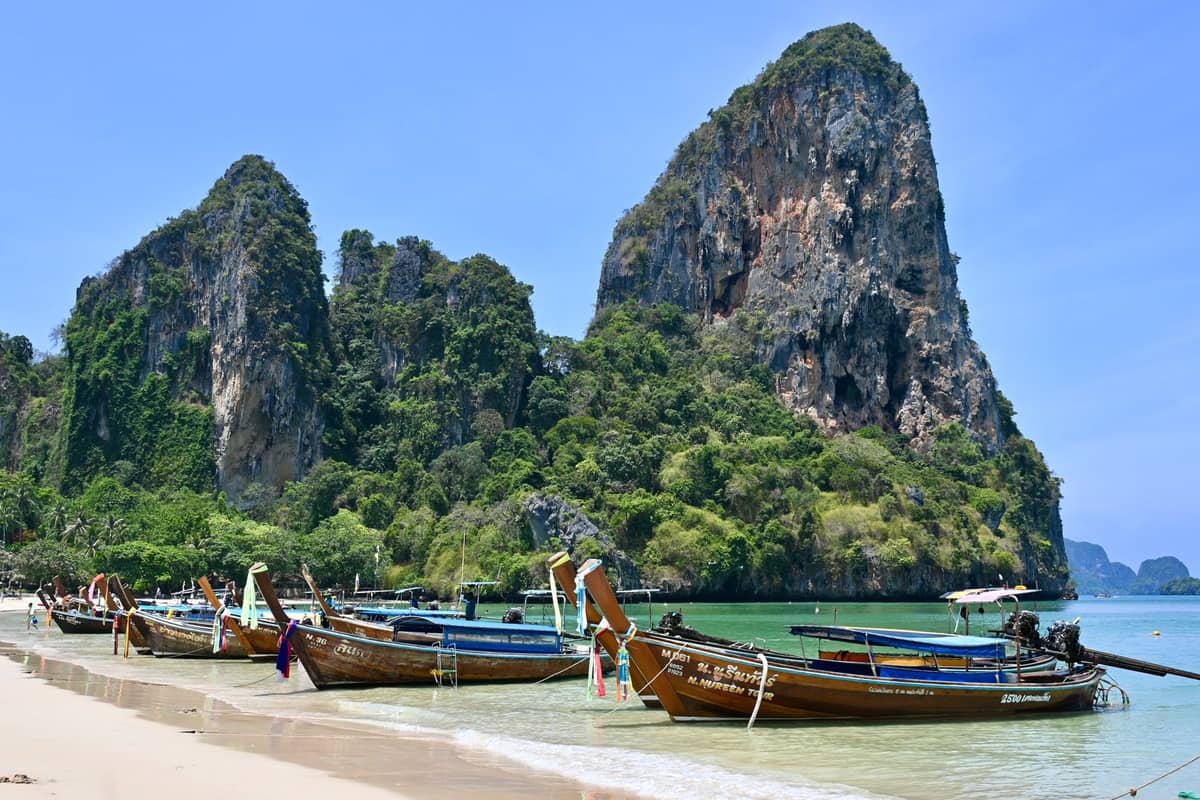
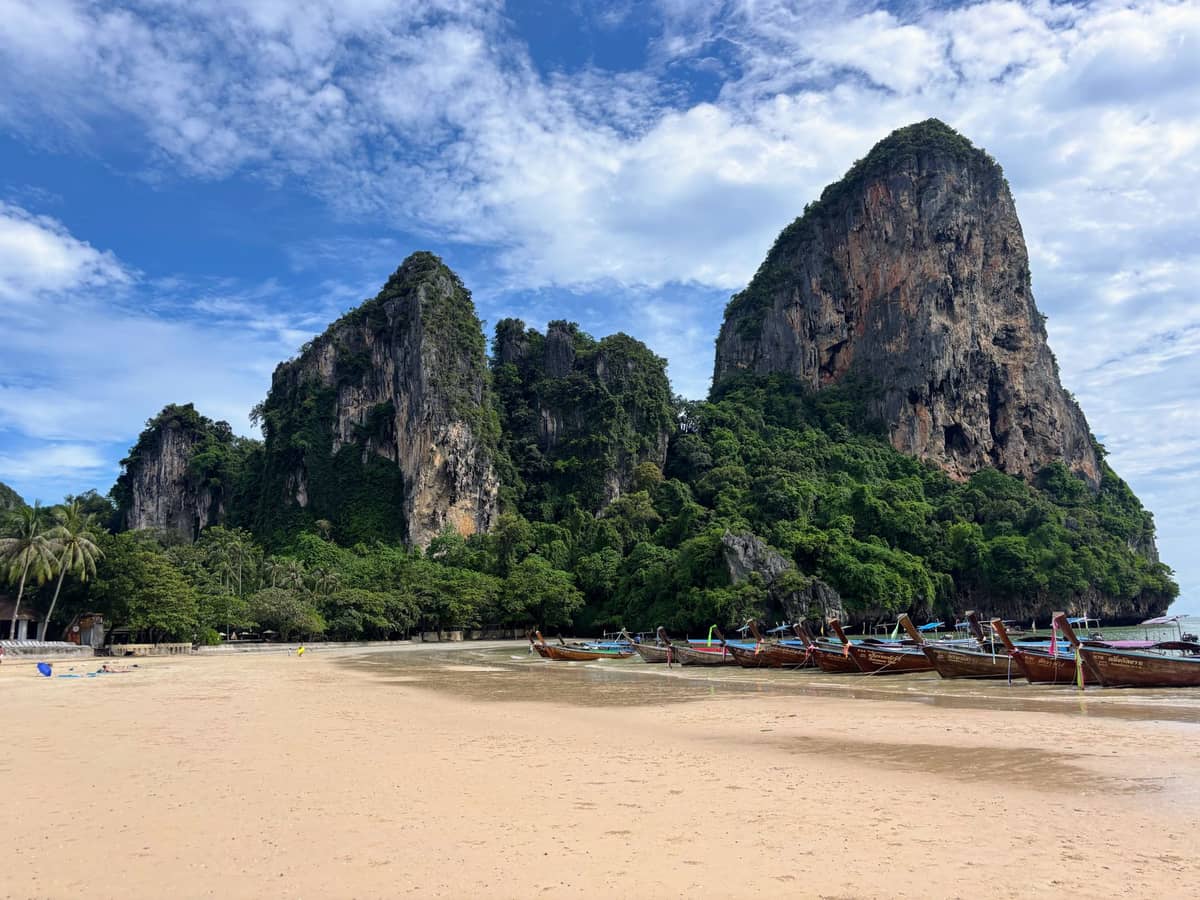
Most travelers searching for Krabi, Thailand have a rough image in mind: turquoise water, towering limestone cliffs, longtail boats. That image is accurate, but it only describes part of what the province offers. Krabi Province covers 5,323 km² of southern Thailand, bordered by the Andaman Sea to the west. It encompasses beach resorts, an administrative town, inland national parks, cave temples, hot springs, and an island district that includes Koh Lanta. Phi Phi — one of Thailand's most recognized island groups — falls under Krabi Province's administration and is reached by ferry from the mainland.
The question 'is Krabi worth it?' depends on which part of Krabi you're asking about, what you're comparing it to, and what you expect from a Thai beach destination. Someone who wants a compact resort strip with walking-distance restaurants is describing Ao Nang. Someone who wants isolation and dramatic scenery is describing Railay or Koh Lanta. Getting the geography straight before you book is half the battle.
ℹ️ Good to know
Krabi Town is the provincial capital and transport hub — it's where the bus terminal and ferry piers are located. Most visitors don't stay there but pass through it. When people say 'staying in Krabi,' they usually mean Ao Nang, Klong Muang, or Railay, not the town itself.
The Genuine Strengths: What Krabi Gets Right
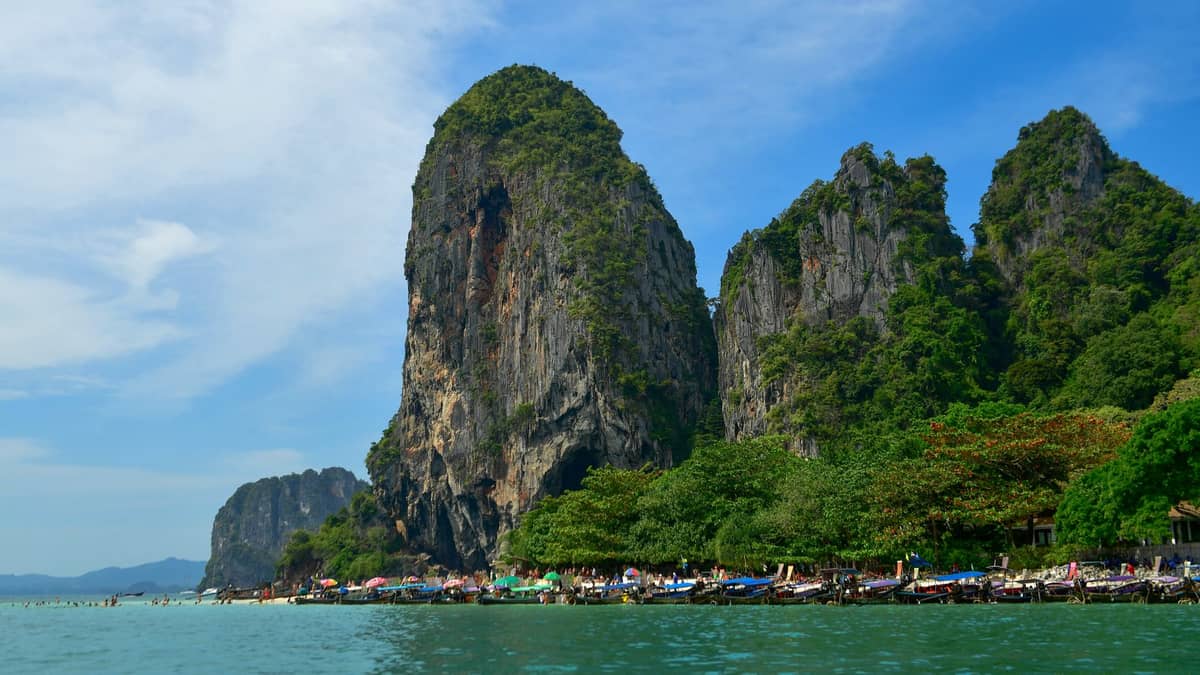
The primary draw is the landscape. Krabi's limestone karst formations are some of the most dramatic coastal scenery in Southeast Asia — sheer cliffs rising from flat water, caves, sea caves, and lagoons that don't exist in the same density anywhere else in Thailand. Railay Peninsula, accessible only by longtail boat from Ao Nang or Krabi Town because cliffs block road access, concentrates this scenery into a small, walkable area. Phra Nang Beach, on Railay's southern tip, consistently ranks among the most photogenic beaches in the country.
The province's geographic variety is genuinely unusual. Within a single trip you can visit the Emerald Pool and Khlong Thom Hot Springs in the interior, climb the 1,237 steps of Tiger Cave Temple for panoramic views, kayak through mangrove channels, and then take a ferry to a different island the next morning. Few destinations in southern Thailand offer this range without requiring a flight or a long overland journey.
- Beach variety Ao Nang is accessible by road. Railay and Phra Nang require a boat. Klong Muang sits north of Ao Nang with fewer crowds. Each has different character, water conditions, and price levels.
- Island access Phi Phi Don, Phi Phi Leh, Koh Lanta, Koh Ngai, Koh Rok, and Bamboo Island are all reachable from Krabi piers. The range of one-day and multi-day options is exceptional.
- Rock climbing Railay and Tonsai host internationally recognized sport climbing routes on limestone. Beginners and experienced climbers both have options, with guide services operating year-round.
- Inland alternatives When seas are rough, Khao Phanom Bencha National Park, Than Bok Khorani, the Emerald Pool, and Khlong Thom provide full-day inland itineraries that most coastal Thai destinations can't match.
The Honest Drawbacks: What Krabi Gets Wrong
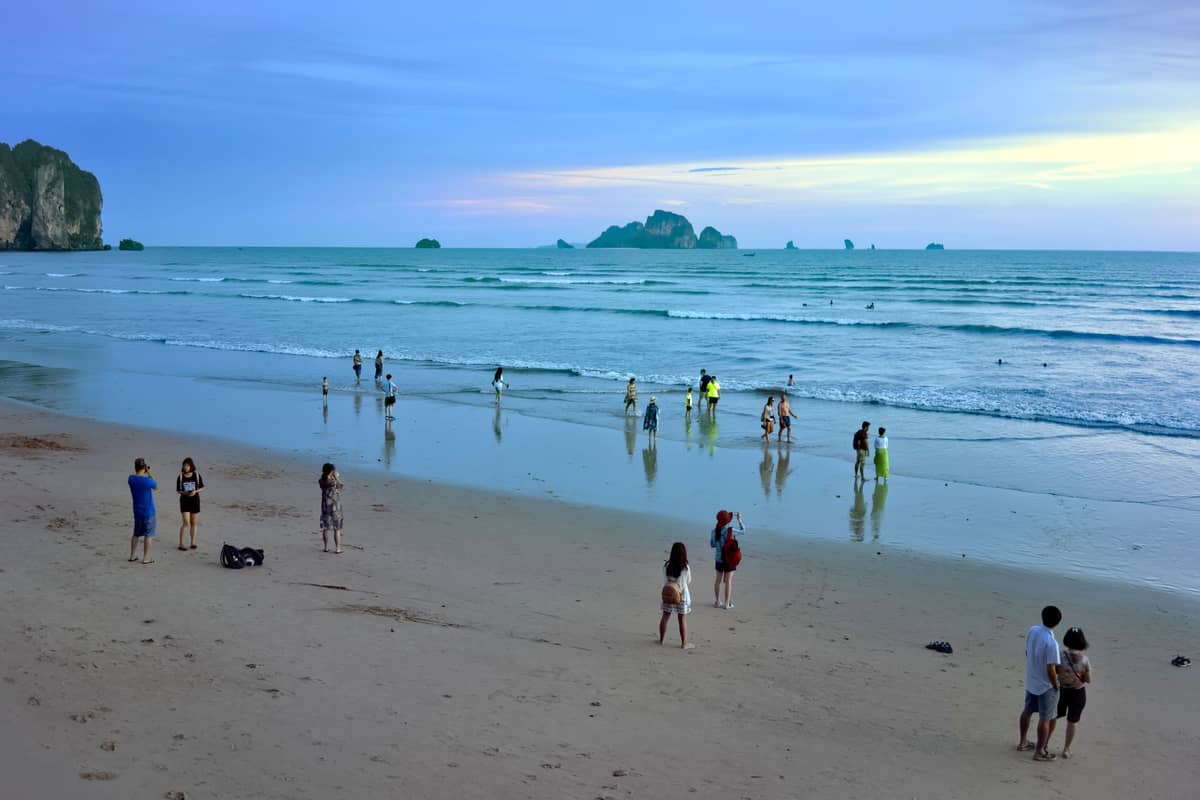
Ao Nang, the main tourist strip, has grown significantly and feels heavily commercialized in peak season (December to February). The main beach road is lined with tour operators, massage parlors, and restaurants targeting short-stay visitors. The beach itself at Ao Nang is functional but not exceptional — it's better understood as a staging point for boat trips than as a destination in its own right. If you expect the beach in front of your hotel to look like the cliff-backed coves in your research photos, you may be disappointed unless you're staying at or very near Railay.
Getting around Krabi Province requires effort. There is no metro, no passenger rail, and local bus coverage is limited to a few routes. Songthaews (shared pickup trucks) connect some areas, but renting a scooter or hiring taxis is how most visitors manage. Between islands, you depend entirely on boat schedules, which the southwest monsoon makes unpredictable from around May through October. If your itinerary relies on a specific island trip during that window, have a backup plan.
⚠️ What to skip
Monsoon season (roughly May to October) doesn't cancel Krabi, but it does change what's possible. Boat trips to outlying islands can be cancelled on short notice due to sea conditions. Phi Phi, Koh Rok, and Koh Haa are the routes most affected. If island-hopping is your main reason for visiting, consider shifting your trip to November or December instead.
Overtourism at specific hotspots is real. Maya Bay on Phi Phi Leh — the beach made famous by the film The Beach — was closed for four years to allow reef recovery and now operates with visitor caps and time restrictions. Even with these measures, it sees significant daily boat traffic. Monkey Beach on Phi Phi Don has been widely criticized for wildlife feeding practices. If you are motivated by ecological responsibility, it's worth researching specific sites and operators before booking.
Who Krabi Is Right For (And Who Should Look Elsewhere)

Krabi works well for travelers who want flexibility and variety. A five-day Krabi itinerary can reasonably combine mainland exploration, a Railay day trip, a full-day island-hopping tour, and inland sightseeing without feeling rushed. It also works for couples looking for a honeymoon-style destination with high-end resort options along Klong Muang and on Koh Lanta, and for families with older children comfortable with boat travel and some walking.
If you're deciding between Krabi and Phuket, the differences are meaningful. Phuket has more infrastructure, a wider range of nightlife, and more direct international flights. Krabi has better scenery, quieter beaches, and easier access to smaller islands. The Krabi vs Phuket comparison goes into detail, but the short answer is: Krabi is better for scenery and island variety; Phuket is better for convenience and nightlife.
- Krabi suits: couples, solo travelers who enjoy outdoor activities, families with children 8+, anyone doing a multi-island route through the Andaman.
- Krabi is less ideal for: party-focused travelers (Koh Samui or Koh Phangan are better), visitors with limited mobility (boat-dependent beaches are challenging), those wanting a compact walkable destination.
- Budget travelers can make Krabi work, but Railay is expensive relative to the mainland, and island day tours from reputable operators cost more than budget hostels suggest.
Getting to Krabi: Realistic Options and What They Cost
Krabi International Airport (KBV) sits about 9 km from Krabi Town and handles direct flights from Bangkok (Don Mueang and Suvarnabhumi), Kuala Lumpur, Singapore, and several Chinese cities. From Bangkok, flight time is roughly 1.5 hours. Budget carriers including AirAsia and Lion Air serve the route. For travelers already in Phuket, the Phuket to Krabi route by ferry or bus takes 3 to 4 hours depending on the option chosen.
From the airport, shared minivans run to Ao Nang for around 150 THB per person, and taxis cost more depending on negotiation or meter. Grab is available but pickup can be inconsistent at the airport. The Krabi Airport guide covers transport options in detail. For travelers coming overland from Bangkok, the overnight train to Surat Thani followed by a bus-and-ferry connection is a slower but scenic alternative — see the Bangkok to Krabi guide for route options and current journey times.
✨ Pro tip
Book airport transfers in advance during peak season (late December and January). Taxis and Grab availability drops sharply when multiple international flights land within the same hour. Pre-booked shared minivans are usually the most reliable and cost-effective option for solo travelers heading to Ao Nang.
The Verdict: Is Krabi Worth Visiting?
Yes, with appropriate expectations. Krabi Province delivers on its core promise: dramatic limestone scenery, varied beaches, accessible islands, and a range of activities that can fill a week without repetition. The landscape genuinely earns its reputation. The drawbacks — commercial strip development in Ao Nang, monsoon-dependent boat access, and crowding at specific hotspots — are real but manageable if you time your visit well and base your itinerary on realistic geography.
The travelers who leave disappointed are usually those who stayed in Ao Nang expecting Railay, or who visited in September expecting the same sea conditions as January. Do the research, pick the right base for your priorities, and Krabi rewards the effort significantly. For a practical starting point, the where to stay in Krabi guide matches accommodation areas to traveler types, and things to do in Krabi provides a full breakdown of activities by area and season.
FAQ
Is Krabi worth visiting in the rainy season?
It depends on what you plan to do. The rainy season (roughly May to October) brings lower prices and fewer crowds, and the rain is often concentrated in afternoon showers rather than full-day downpours. However, boat trips to outlying islands like Koh Rok and Phi Phi can be cancelled with little notice due to rough seas. Inland activities — the Emerald Pool, Tiger Cave Temple, Khao Phanom Bencha, Krabi Town's markets — remain fully viable. If island-hopping is your priority, visit between November and March.
How does Krabi compare to Phuket?
Krabi has more dramatic scenery, quieter beaches, and better access to smaller islands across the Andaman. Phuket has more infrastructure, wider nightlife options, more direct international flights, and a greater range of accommodation at every price point. For natural scenery and variety, Krabi wins. For convenience, connectivity, and nightlife, Phuket is easier. Many travelers combine both on a single trip — Phuket has frequent ferry connections to Krabi's islands.
Is Krabi good for families with children?
Krabi works well for families with children aged roughly 8 and older. Boat travel is central to the experience, which can be tiring and occasionally rough for very young children. Ao Nang beach is calm enough for swimming at low tide, and Nopparat Thara has a long, shallow stretch suitable for children. Inland attractions including the Emerald Pool and Khlong Thom Hot Springs are accessible and manageable with younger kids. Railay requires a longtail boat ride and has limited flat ground, so assess mobility honestly.
How many days do you need in Krabi?
A minimum of four full days allows you to see Railay, do one island day trip (Phi Phi or a four-islands tour), and visit one inland attraction. Five to seven days is more comfortable and lets you explore Koh Lanta or add a second island. If your time in Krabi is two days or less, focus on Railay and the closest beaches rather than trying to squeeze in island ferries.
Is Krabi safe for solo travelers?
Krabi is generally considered safe for solo travelers, including solo women. The main risks are typical of any tourist destination: bag snatching in crowded areas, scams involving tour bookings or transport, and road safety on scooters. The Tourist Police number in Thailand is 1155, and English-speaking assistance is available. Common sense — not sharing your room number with strangers, using reputable operators for boat trips, and securing valuables on beaches — covers most situations.
Tickets & tours
Live prices and dates from our booking partner. If you book, we may earn a commission at no extra cost to you.
Planning a trip? Discover personalized activities with the Nomado app.