Best Things to Do in Krabi, Thailand: The Complete Activity Guide
Krabi Province packs limestone cliffs, emerald lagoons, jungle temples, and some of Thailand's finest beaches into one compact destination. This guide covers the best things to do in Krabi across beaches, islands, inland attractions, and adventure activities, with practical notes on pricing, seasonality, and what tour operators often skip.
Tickets & tours
Live prices and dates from our booking partner. If you book, we may earn a commission at no extra cost to you.
TL;DR
- Railay is not an island but requires a longtail boat from Ao Nang (around ฿100–150 one way) since there's no road access. See our Railay Peninsula guide for logistics.
- Island tour prices often exclude national park fees — always confirm what's included before paying.
- The dry season (December to March) is best for boat trips and beach activities. When to visit Krabi depends heavily on what you plan to do.
- Maya Bay closes annually around August 1 to September 30 for reef recovery — check current park notices before booking.
- Inland trips to Emerald Pool, Khlong Thom Hot Springs, and Tiger Cave Temple can be combined into one efficient day.
Railay Beach and the Limestone Peninsula
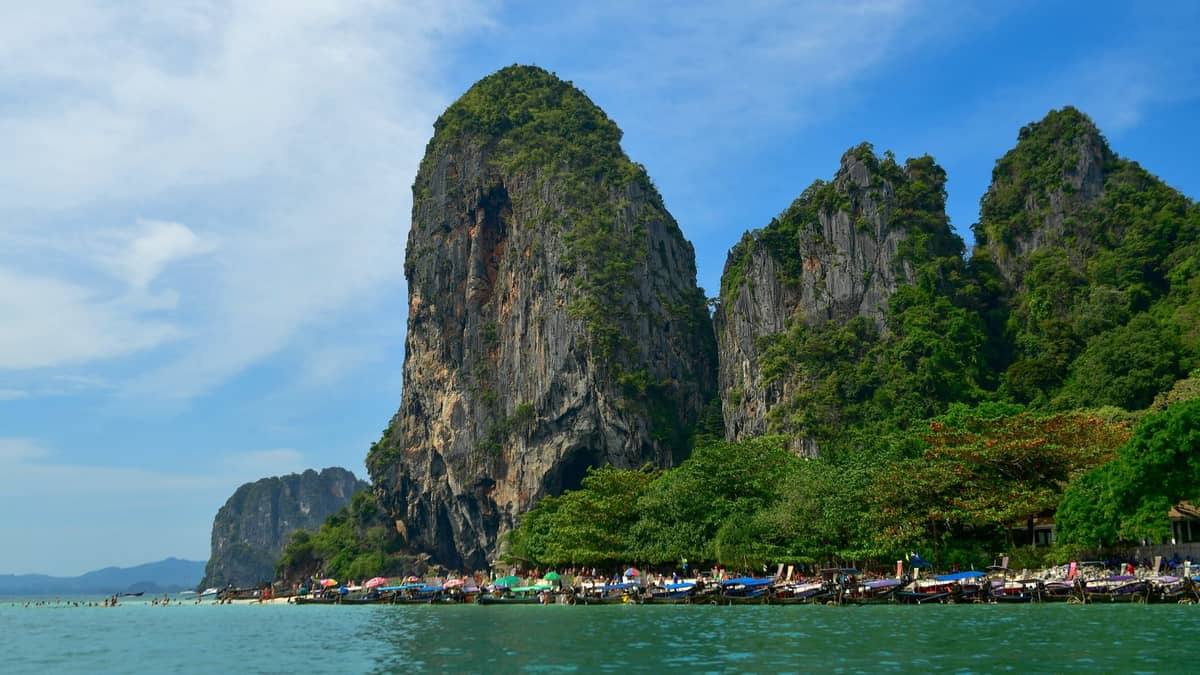
Railay is Krabi's most photogenic area and the one that surprises first-time visitors most: it looks like an island but is technically a peninsula. Thick jungle and sheer limestone karsts make road access impossible, so longtail boats from Ao Nang are the only way in. Shared boats run throughout the day for around ฿100–150 per person one way; private charters cost significantly more. After dark, service becomes infrequent, so plan your return before sunset unless you're staying overnight.
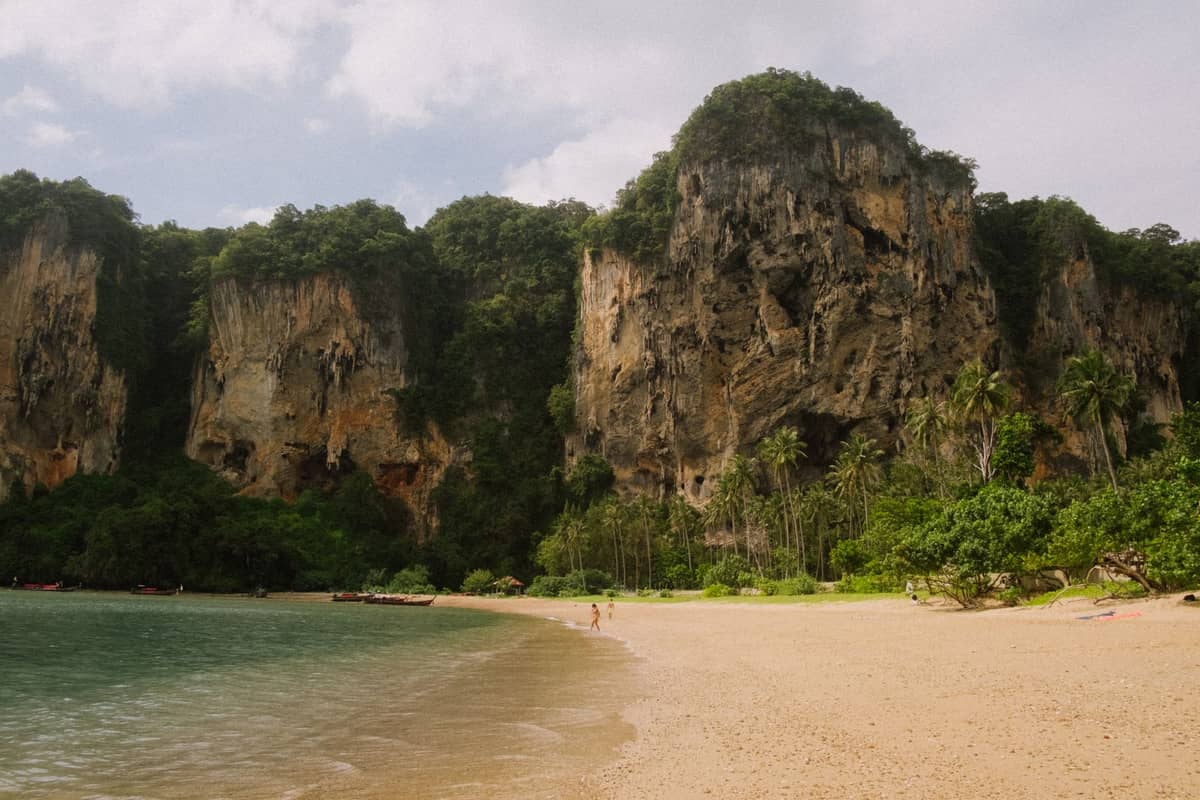
There are two main beaches on opposite sides of the peninsula. West Railay Beach has the postcard-worthy setting with calm water and a backdrop of limestone walls. East Railay Beach is muddier and less swimmable but is where the boats dock. Most visitors walk between the two in under ten minutes. The standout payoff is the short hike to Phra Nang Beach, consistently rated one of the finest beaches in Southeast Asia, with its powdery sand, turquoise water, and the atmospheric cave shrine at the cliff face.
✨ Pro tip
Arrive at Railay before 10:00 to beat day-trippers from Ao Nang. By midday, Phra Nang Beach fills up fast. If you're staying in Ao Nang, the 07:00–09:00 boats are quieter and the light is better for photos.
For those who want more than a beach day, Railay Viewpoint rewards a steep 20–30 minute scramble through jungle with panoramic views over both beaches and the surrounding karst landscape. The path is unmarked in places and gets slippery after rain, so wear shoes with grip rather than sandals. Rock climbing is also a major draw here — Railay has over 150 documented routes for all ability levels, and several operators on the beach offer beginner half-day sessions.
Island Hopping: Phi Phi, Four Islands, and Beyond
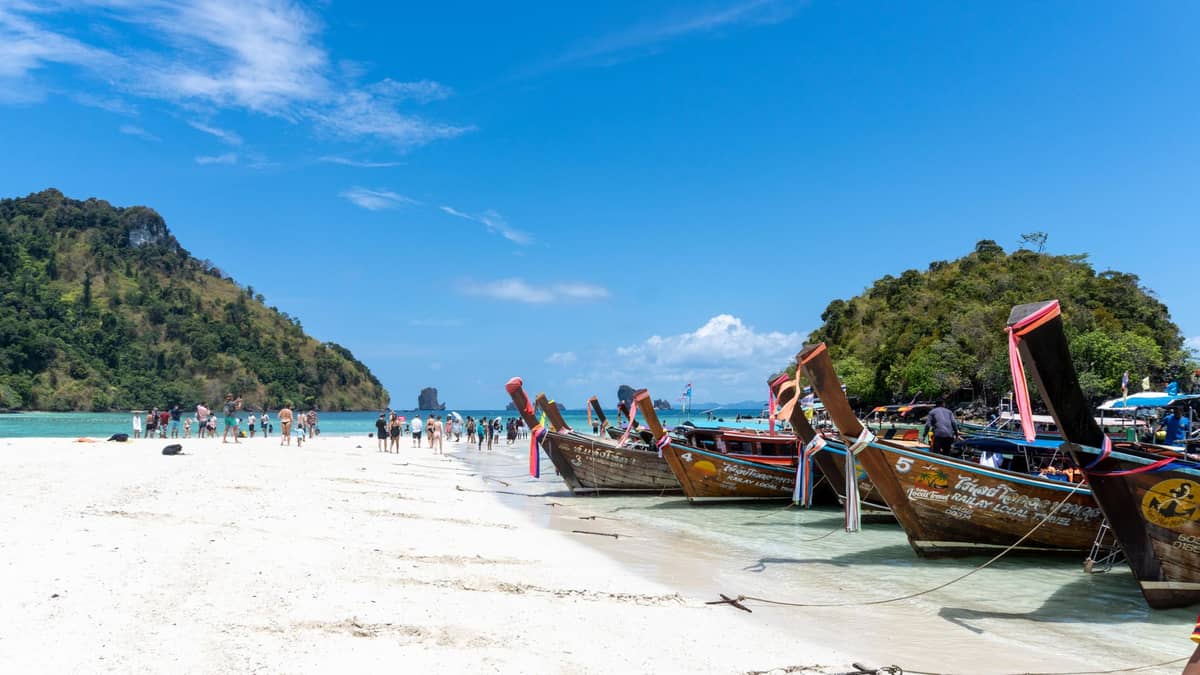
Krabi Province administers some of Thailand's most famous islands, and getting out on the water is the activity that defines most visits. The Four Islands day trip is the standard introduction, typically covering Phra Nang Beach, Chicken Island, Tup Island, and Poda Island by longtail or speedboat. Prices vary considerably by operator and boat type, and the national park entry fee may be charged separately at the pier — ask explicitly whether it's included when booking.
The Phi Phi Islands are another obvious draw. Maya Bay on Koh Phi Phi Leh is open for day visits but closes seasonally (currently reported as August 1 to September 30 for reef rehabilitation — verify with the national park before booking). Even outside closure periods, entry is time-limited and managed, so the experience is nothing like the pre-2018 free-for-all. Speedboats from Ao Nang take around 45 minutes; the journey is rougher in monsoon season and some departures are cancelled.
- Four Islands Tour Best for: first-timers wanting variety in one day. Mix of beaches and snorkeling. Note: park fee may be separate.
- Phi Phi Day Trip Best for: seeing Maya Bay and the iconic scenery. Go early — boats pile in by mid-morning. Check Maya Bay closure dates.
- Hong Island Less crowded than Phi Phi, with a stunning enclosed lagoon. Popular with snorkelers and kayakers.
- Koh Lanta A full island requiring an overnight stay to do justice. Long beaches, calmer vibe, better for families and longer trips.
- Koh Yao Noi / Koh Yao Yai Low-key, rice paddies, rubber plantations, and almost no party scene. Perfect if you want out of the resort circuit.
⚠️ What to skip
During the southwest monsoon (roughly May to October), seas on the Andaman Coast can be rough and some boat routes are suspended. Always check conditions with your operator 24 hours before departure, not just at the time of booking.
Inland Krabi: Jungle, Temples, and Natural Pools
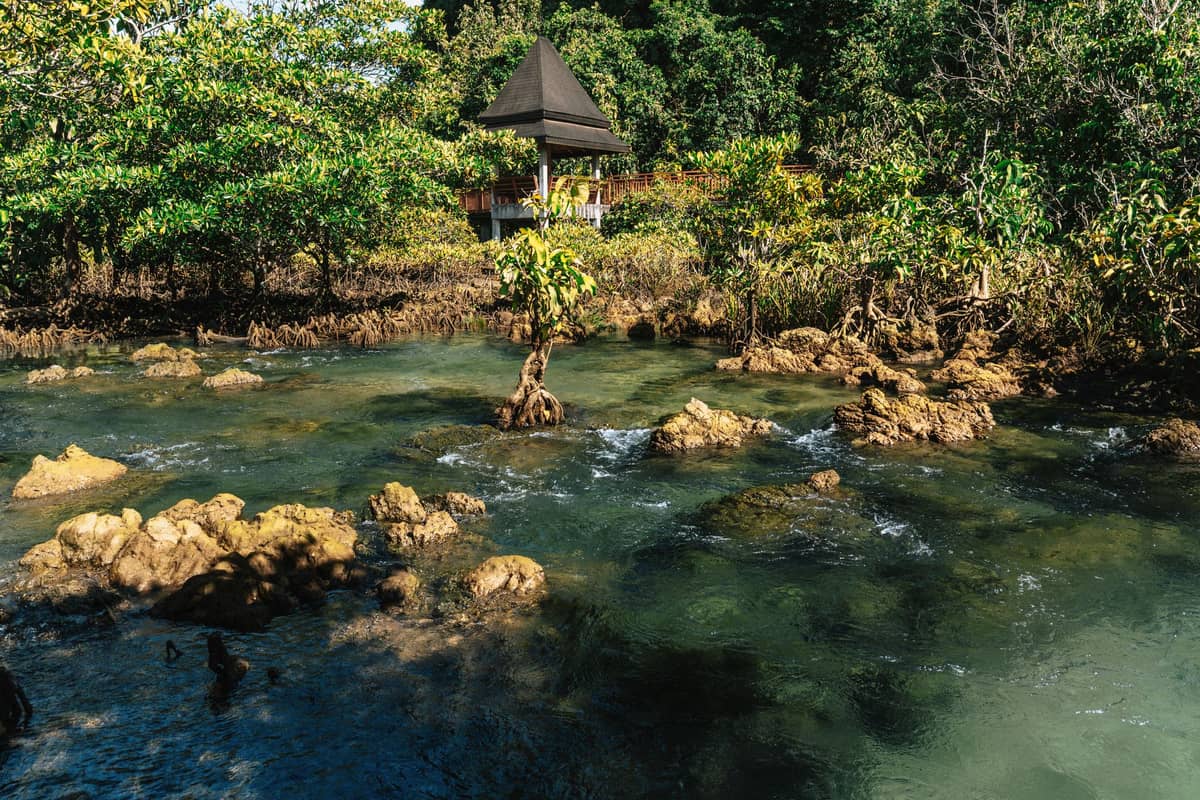
Most visitors spend their Krabi days pointing at the sea, which means the inland attractions are genuinely less crowded — particularly before 10:00 or after 14:00. The most rewarding combination is the classic inland loop through Emerald Pool, Khlong Thom Hot Springs, and Tiger Cave Temple.
The Emerald Pool sits inside Khao Pra-Bang Khram Wildlife Sanctuary in the Khlong Thom district, roughly 50–60 km southeast of Krabi Town. Entry fees are reported at around ฿200 for adults and ฿100 for children, but verify at the gate as these change. The water is a genuine turquoise-green fed by natural springs, and swimming is permitted in designated areas. Arrive before 09:00 on weekdays to have it close to yourself. Weekends and Thai public holidays see significant domestic visitor numbers.
The nearby hot springs (around ฿90–160 for foreign adults) offer a contrast: warm mineral water flowing through forested channels into a series of natural pools. The combination with Emerald Pool makes sense logistically since they're close together. Tiger Cave Temple, back near Krabi Town, requires climbing 1,237 steps to a hilltop shrine with panoramic province-wide views. The climb takes 30–45 minutes depending on fitness; Entry is free. Go early morning in cool weather, and dress modestly as it is an active temple.
💡 Local tip
For Tiger Cave Temple, start the climb no later than 07:30 in high season to avoid climbing in direct sun. Wear closed shoes with grip — the steps are steep and some sections have metal railings that get hot in the afternoon heat.
Adventure Activities: Rock Climbing, Kayaking, and Diving
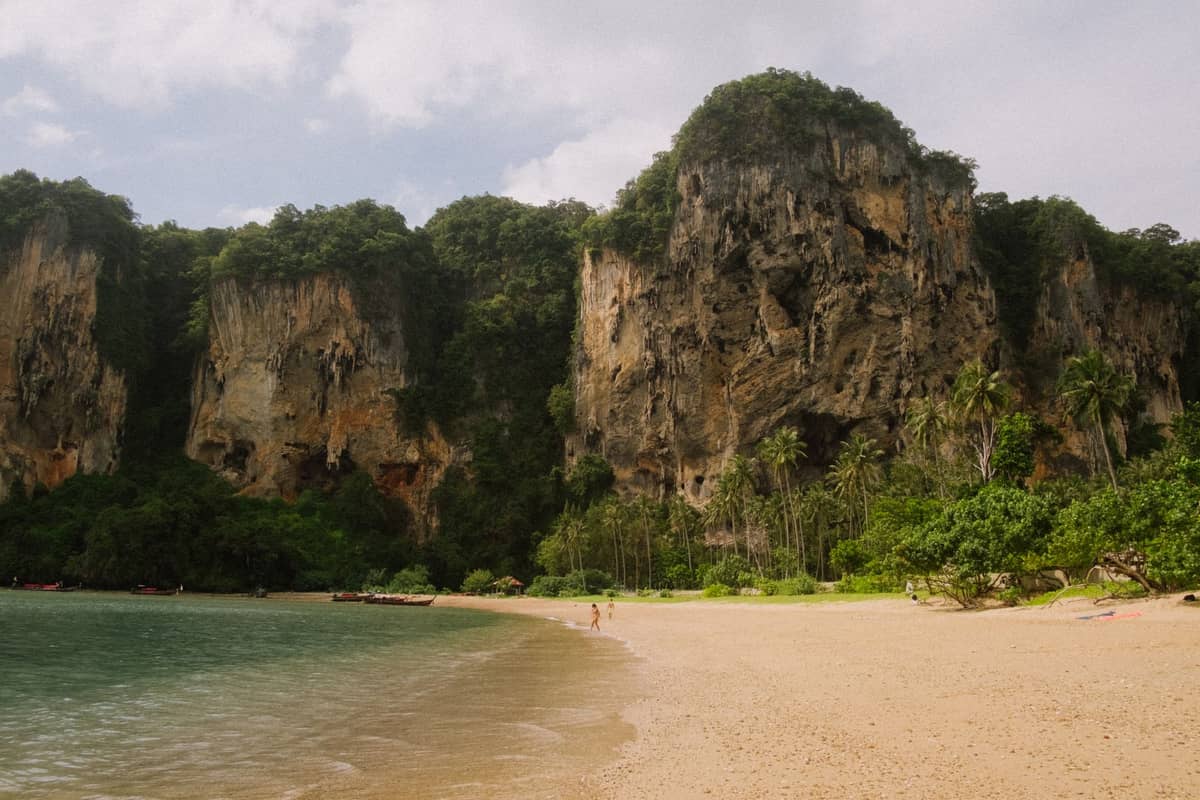
Krabi has one of the most concentrated clusters of sport rock climbing routes in Asia, concentrated at Railay and Tonsai Beach. Most routes are bolted limestone faces graded for beginners through experts. A half-day introduction with gear and a guide typically costs in the range of ฿1,000–1,500 per person, making it accessible for travelers who've never climbed before. See the dedicated rock climbing guide for Krabi for a breakdown of areas, grades, and operators.
Sea kayaking is best around the mangrove-lined river channels near Krabi Town and the more protected bays. Ao Tha Lane is a popular put-in point for guided kayak trips through mangroves and into sea caves accessible only at certain tide levels. Half-day tours typically run 3–4 hours and include a guide, which matters here because the cave entrances require timing with tidal windows. For scuba diving, Krabi's best sites are offshore around Koh Haa and Koh Rok, both more easily accessed from Koh Lanta. The Krabi diving guide covers site conditions, operators, and the best months for visibility.
Krabi Town: Markets, Food, and River Views
Krabi Town itself is understated compared to Ao Nang but worth at least an evening, especially if you're transiting or value local atmosphere over resort amenities. The Krabi Town Night Market and the weekend Walking Street run Friday through Sunday along Maharaj Road and offer a strong selection of Southern Thai food at local prices. Expect grilled seafood, massaman curry, mango sticky rice, and rotating stalls that disappear before midnight.
The town sits on the Krabi River, and the twin limestone hills of Khao Khanab Nam rise directly from the water at the river mouth. A short longtail boat trip from the town pier (typically arranged with drivers at the waterfront) takes you to the base of the hills, which contain prehistoric human remains and caves with stalactites. It's low-key, cheap, and genuinely interesting without the crowds of the bigger-name sites.
- Krabi Town Night Market (Fri–Sun, Maharaj Road): best for affordable Southern Thai food in a local setting.
- Khao Khanab Nam: twin limestone hills at the river mouth, accessible by longtail boat from the town pier.
- Wat Kaew Korawaram: central temple in Krabi Town with a striking white exterior, free to enter, dress modestly.
- Krabi Fossil Shell Beach (Susan Hoi): a 40-million-year-old shell cemetery beach, free to visit, about 17 km from Ao Nang.
Practical Logistics: Getting Around and Timing Your Activities
Krabi has no metro or passenger rail system. Getting between Krabi Town, Ao Nang, and the pier areas requires local songthaew (shared pickup trucks), taxis, or Grab. The airport sits around 9 km from Krabi Town; airport buses run to both Krabi Town and Ao Nang for approximately ฿100 and ฿150 respectively, though fares and schedules change, so verify before travel. For a full rundown of routes and options, the guide to getting around Krabi covers songthaew routes, boat transfers, and whether renting a scooter makes sense for your base.
Timing across all activities follows one consistent pattern: earlier is better. Boat tours fill fast, beach crowds peak late morning, and inland sites are significantly cooler before 09:00. If you're building a multi-day plan, the 3-day Krabi itinerary sequences activities to minimize doubling back and maximize the best conditions at each site. Budget travelers should also look at the Krabi on a budget guide for how to do the main activities without paying peak tour prices.
FAQ
What are the best things to do in Krabi for first-time visitors?
Prioritize Railay and Phra Nang Beach (longtail from Ao Nang, ฿100–150 one way), a Four Islands boat trip, and the inland combination of Emerald Pool and Khlong Thom Hot Springs. Add Tiger Cave Temple for an early morning climb. These four activities cover Krabi's main draws across beach, island, and inland experiences.
Is Krabi worth visiting during rainy season?
It depends on what you want. The southwest monsoon (roughly May to October) brings heavier rain and potentially rough Andaman seas, which can cancel or limit boat trips. Inland activities like Emerald Pool, Tiger Cave Temple, and the Krabi Town food scene are unaffected. Prices drop and crowds thin considerably. If beach-and-island activities are your main goal, wait for the dry season (December to March).
How do I get to Railay from Ao Nang?
Shared longtail boats depart from Ao Nang Beach and cost around ฿100–150 per person one way. They run throughout the day, mainly during daylight hours. There is no road access to Railay, so boats are the only option regardless of where you're staying. After dark, service becomes limited — check the last departure time with your hotel or the boat operators at the beach.
Is Maya Bay open year-round?
No. Maya Bay on Koh Phi Phi Leh closes seasonally for reef recovery. The reported closure window is August 1 to September 30, but you should check current notices from the Hat Noppharat Thara – Mu Ko Phi Phi National Park before booking any tour that includes it. Even when open, visitor numbers and timing are regulated.
What's the difference between Krabi and Ao Nang?
Krabi refers to the province (and its administrative center, Krabi Town). Ao Nang is a coastal resort area about 20 km from Krabi Town and is where most tourists stay. It's the main departure point for boat trips to Railay, the Four Islands, and Phi Phi. Krabi Town is quieter, cheaper, and better for night markets and local food but less convenient for beach and island activities.
Tickets & tours
Live prices and dates from our booking partner. If you book, we may earn a commission at no extra cost to you.
Planning a trip? Discover personalized activities with the Nomado app.