Monkey Beach, Koh Phi Phi: The Honest Guide to Ao Ling
Monkey Beach, known in Thai as Ao Ling or Yong Gasem Bay, is a short boat ride from Tonsai Bay on Koh Phi Phi Don. The 150-metre strip of sand is famous for its resident macaques, but the experience is more complicated than the photos suggest. Here is what you actually need to know before going.
Quick Facts
- Location
- Koh Phi Phi Don, Krabi Province, Thailand (Thai: อ่าวลิง / Ao Ling)
- Getting There
- Boat or kayak only from Tonsai Bay; no road access. Most visitors arrive on longtail tours or as part of an island-hopping trip.
- Time Needed
- 20–40 minutes on site; typically combined with a broader Phi Phi boat tour lasting 4–8 hours
- Cost
- Beach entry is free. Longtail boat charters and island-hopping tours vary in price — confirm current rates with operators at Tonsai Bay.
- Best for
- Wildlife watchers, snorkellers, and travellers on a Phi Phi island-hopping day trip
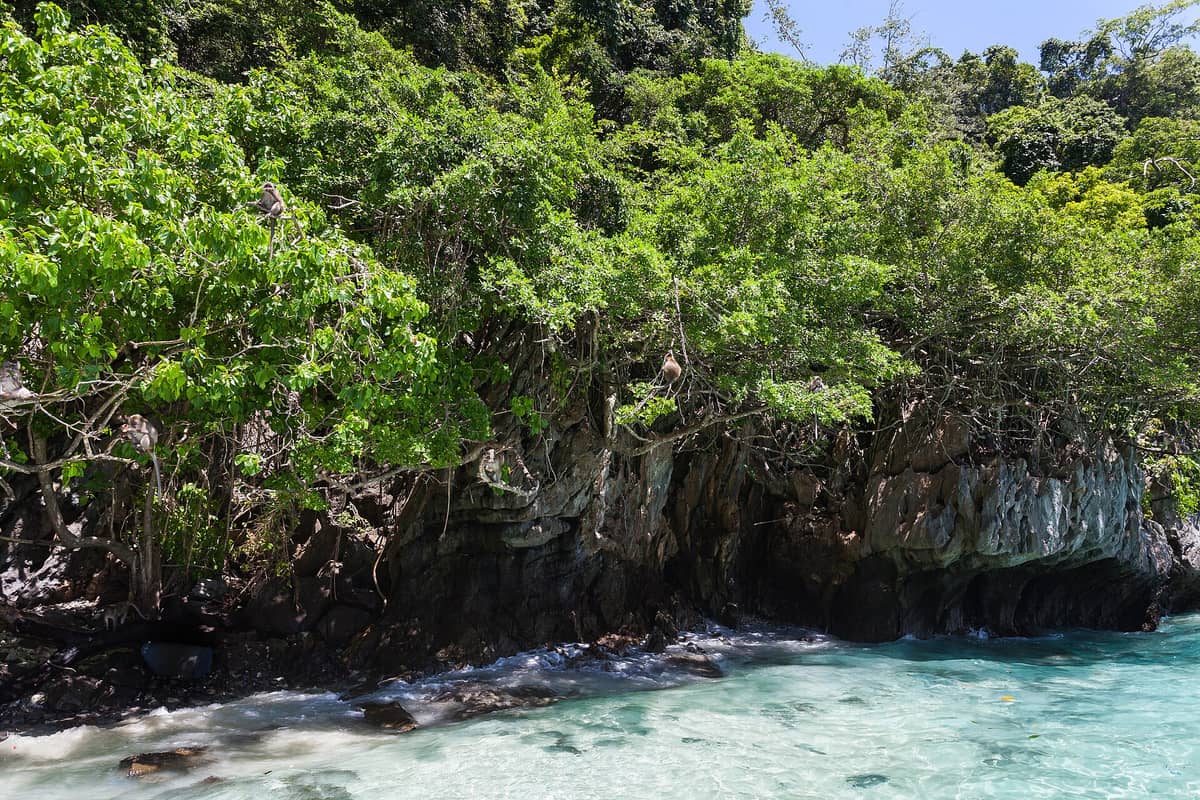
What Monkey Beach Actually Is
Monkey Beach, or Ao Ling in Thai, is a small bay on the northwestern shore of Koh Phi Phi Don. The beach itself is modest: roughly 150 metres of pale sand backed by dense tropical vegetation and limestone outcrops. What draws visitors is not the sand but the long-tailed macaques that descend from the forested slopes to forage along the shoreline, especially in the mornings.
The bay sits roughly 1.5 kilometres from the Tonsai pier, which means it is genuinely only accessible by sea. There is no trail connecting it to the main village, and the surrounding hillside is steep and thickly wooded. For most visitors, Monkey Beach appears as a scheduled stop on a longtail boat tour or a kayaking excursion rather than a standalone destination.
ℹ️ Good to know
Ao Ling is also referred to as Yong Gasem Bay in some local sources. If you are asking boat operators for directions, either name should work, but 'Monkey Beach' is universally understood.
The Wildlife: What to Expect and What to Know
The macaques here are the main draw, and they are very much present. In the early morning, groups of them move down to the beach edge, picking through debris, investigating anything left unattended, and occasionally wading into the shallows. The scene can be genuinely entertaining to watch. The animals have lost most of their wariness toward humans, which makes for easy observation but comes with real risks.
Do not feed the monkeys. This is not just a polite suggestion: feeding macaques has disrupted their foraging behaviour over time, made them more aggressive around boats and visitors, and created situations where animals snatch food, bags, sunglasses, and anything that resembles something edible. Bites and scratches from macaques carry health risks including rabies, and accessing post-exposure treatment from a small island is not straightforward. Keep food sealed and in your bag, and keep your distance.
⚠️ What to skip
Keep all food inside closed bags or on the boat. Monkeys have learned to associate tourists with food and will move quickly and deliberately toward anything that looks edible. Do not reach out to touch or hand-feed them.
The healthiest way to experience this beach is as a wildlife observation stop, not an interaction point. Watch from a short distance, photograph from where you stand, and let the animals behave naturally. That approach also tends to produce better photographs: candid shots of macaques foraging in shallow water or climbing limestone rocks are more interesting than posed encounters that stress the animals.
Tickets & tours
Live prices and dates from our booking partner. If you book, we may earn a commission at no extra cost to you.
Phi Phi archipelago and Krabi 4 Islands full‑day speedboat tour
From 0 €Instant confirmationFree cancellation3-Hour Private Sunrise Tour by Longtail Boat to Maya Bay from Phi Phi
From 95 €Instant confirmationFree cancellationPhi Phi's Extended Grand Odyssey by Speedboat
From 52 €Instant confirmationFree cancellationHigh-Speed Island Hopping Adventure with Phi Phi Island from Krabi
From 40 €Instant confirmationFree cancellation
How the Experience Changes Through the Day
The early morning, from around 7:00 to 9:30, is when Monkey Beach is at its most authentic. The macaques are active, the water is calmer, and the tour boat crowds have not yet built up. The light at this hour is also softer, which matters for photography against the pale sand and green hillside backdrop.
By late morning, particularly between 10:00 and 13:00, the bay can become congested. Longtail boats queue up, and the combination of engine noise, shouting, and visitor movement pushes the monkeys back into the tree line. The snorkelling, which is decent around the rocky edges of the bay, becomes harder to enjoy when there are multiple boats anchored in the same small cove.
Afternoon visits, especially after 14:00, are quieter again as some tours wrap up. However, the macaques tend to be less active in the heat of the afternoon and often retreat further up the slope. If your tour schedule gives you a choice, push for a morning arrival.
Getting There: Boats, Kayaks, and Tour Packages
Monkey Beach is included as a stop on most Phi Phi island-hopping tours departing from Ao Nang and from Tonsai pier on Phi Phi Don itself. If you are already based on Koh Phi Phi, you can charter a longtail boat directly from the beach in front of the village. The crossing takes roughly 15 minutes in calm conditions. Rates for longtail charters vary and should be confirmed with operators at the time of travel.
Sea kayaking to Monkey Beach is a realistic option for reasonably fit paddlers, and gives you more control over timing and how long you spend there. Several operators in the Tonsai area offer kayak rentals and guided kayaking tours that include the bay. For context on the broader paddling options around the islands, see the Krabi kayaking guide.
If you are travelling from the mainland and want to include Monkey Beach as part of a larger Phi Phi itinerary, most day-trip operators from Ao Nang include it as one stop among several. The beach itself is free to access; the cost is entirely in the boat transport.
💡 Local tip
Sea conditions around the Phi Phi Islands are generally most reliable between November and April. During the southwest monsoon season (May to October), some boat operators reduce services or avoid certain routes when swells increase. Verify current conditions with your operator before booking.
Snorkelling and the Water Around the Bay
The water off Monkey Beach is shallow and clear on calm days, with rocky outcrops on either side of the bay that support some coral growth. The snorkelling is modest rather than spectacular: you may see parrotfish, angelfish, and small reef species, but the reef health in this section of Phi Phi has been affected by boat traffic and visitor pressure over the years. Manage expectations accordingly.
If strong snorkelling and underwater scenery are your priority, other stops on the Phi Phi circuit offer more. Pileh Lagoon on Phi Phi Leh, and the waters around Bamboo Island tend to have better visibility and less boat congestion. Monkey Beach works best as a quick stop for the wildlife rather than as a dive or snorkel destination in its own right.
Who Should Think Twice Before Visiting
Monkey Beach is one of the more frequently visited stops on the Phi Phi circuit, and at peak hours it shows. If you find crowded, noisy boat landings stressful, a mid-morning visit during high season will be frustrating. The beach is small, the boats anchor close together, and the macaques retreat when things get loud.
Visitors with young children should be aware that the monkeys, while fascinating, can move quickly and unpredictably toward food or shiny objects. Keeping children close and ensuring snacks are stored out of sight is non-negotiable. The beach has no facilities: no toilets, no shade structures, no vendors. Everything you need, including water, sun protection, and any snacks, needs to come with you on the boat.
Wheelchair users and travellers with limited mobility should note that access is sea-only, involving boarding a longtail boat and wading or stepping onto a sandy beach. No step-free or adapted access infrastructure has been identified at this location.
Fitting Monkey Beach Into a Phi Phi Itinerary
Monkey Beach makes most sense as one stop among several rather than a standalone excursion. A typical Phi Phi day trip from Ao Nang combines it with Maya Bay, Pileh Lagoon, and a stop at Bamboo Island for swimming. If you are spending more than one day in the Phi Phi area, using a half-morning on a longtail that covers the northern bays including Monkey Beach, then spending the afternoon on the main beach or walking the island trails, is a logical way to structure the time.
For broader trip planning, the Krabi to Phi Phi day trip guide covers departure logistics, operator selection, and what else to expect from a full day on the islands.
Insider Tips
- Arrive at Monkey Beach before 9:30 if possible. The macaques are far more active, the light is better, and there are fewer boats competing for the same small anchorage.
- Bring a dry bag. Even a brief stop requires getting off the longtail into the shallows, and anything you carry ashore is at risk of getting splashed or grabbed. Keep cameras, phones, and snacks zipped inside something waterproof.
- Photograph from the water's edge rather than walking up toward the monkeys. They are used to people, but crowding them shortens the encounter. Stay low, stay patient, and the macaques will often approach naturally.
- If you are chartering a private longtail rather than joining a group tour, ask the operator to arrive at Monkey Beach before 9:00 and to stay long enough to let the initial crowd thin out. Most drivers are flexible if you communicate clearly.
- Do not leave anything on the boat that you would miss. Monkeys have been known to board longtails tied close to shore and investigate unattended bags.
Who Is Monkey Beach For?
- Wildlife enthusiasts who want to observe macaques in a natural coastal setting
- Snorkellers looking for a quick, accessible stop on a Phi Phi island circuit
- Photographers working in the early morning light around Phi Phi Don
- Travellers on a full-day Phi Phi tour who want variety between beach and wildlife stops
- Kayakers looking for a manageable half-day paddle from Tonsai Bay
Nearby Attractions
Other things to see while in Koh Phi Phi:
- Bamboo Island (Koh Mai Phai)
Bamboo Island, or Koh Mai Phai, is a small coral-fringed island in Hat Noppharat Thara–Mu Ko Phi Phi National Park, sitting just north of Phi Phi Don in the Andaman Sea. At roughly 0.5 km², it offers a long crescent of white sand and shallow turquoise water with noticeably fewer visitors than the Phi Phi main islands. Access is by boat only, making it a natural half-day escape for anyone already based in the Phi Phi area.
- Koh Phi Phi Don
Koh Phi Phi Don is the largest and only inhabited island in the Phi Phi group, sitting within Krabi Province roughly midway between the mainland and Phuket. It combines dramatic limestone cliffs, clear turquoise water, and a compact central village with a reputation that has grown considerably since the early 2000s. This guide tells you what the experience actually looks like, when to go, and whether it suits your style of travel.
- Koh Phi Phi Leh
Koh Phi Phi Leh is an uninhabited limestone island in Krabi Province, best known for Maya Bay. Striking from every angle and more controlled than you'd expect, it rewards visitors who understand what they're walking into.
- Maya Bay
Maya Bay on Koh Phi Phi Leh is one of Thailand's most photographed beaches, framed by sheer limestone cliffs and turquoise water. After a three-year ecological closure, it has reopened with strict visitor rules. Here is what the experience actually looks like today.
Planning a trip? Discover personalized activities with the Nomado app.