Koh Phi Phi Leh: The Island Behind the Legend
Koh Phi Phi Leh is an uninhabited limestone island in Krabi Province, best known for Maya Bay. Striking from every angle and more controlled than you'd expect, it rewards visitors who understand what they're walking into.
Quick Facts
- Location
- Phi Phi Islands, Krabi Province, Thailand (Andaman Sea)
- Getting There
- By boat from Koh Phi Phi Don or mainland ports (Ao Nang, Krabi Town, Phuket)
- Time Needed
- 1–3 hours at the island; most visitors come on half- or full-day tours
- Cost
- National park fee: ฿400 adults, ฿200 children (verify before travel; may change)
- Best for
- Snorkelers, photographers, film history enthusiasts, and nature lovers
- Official website
- portal.dnp.go.th
What Koh Phi Phi Leh Actually Is
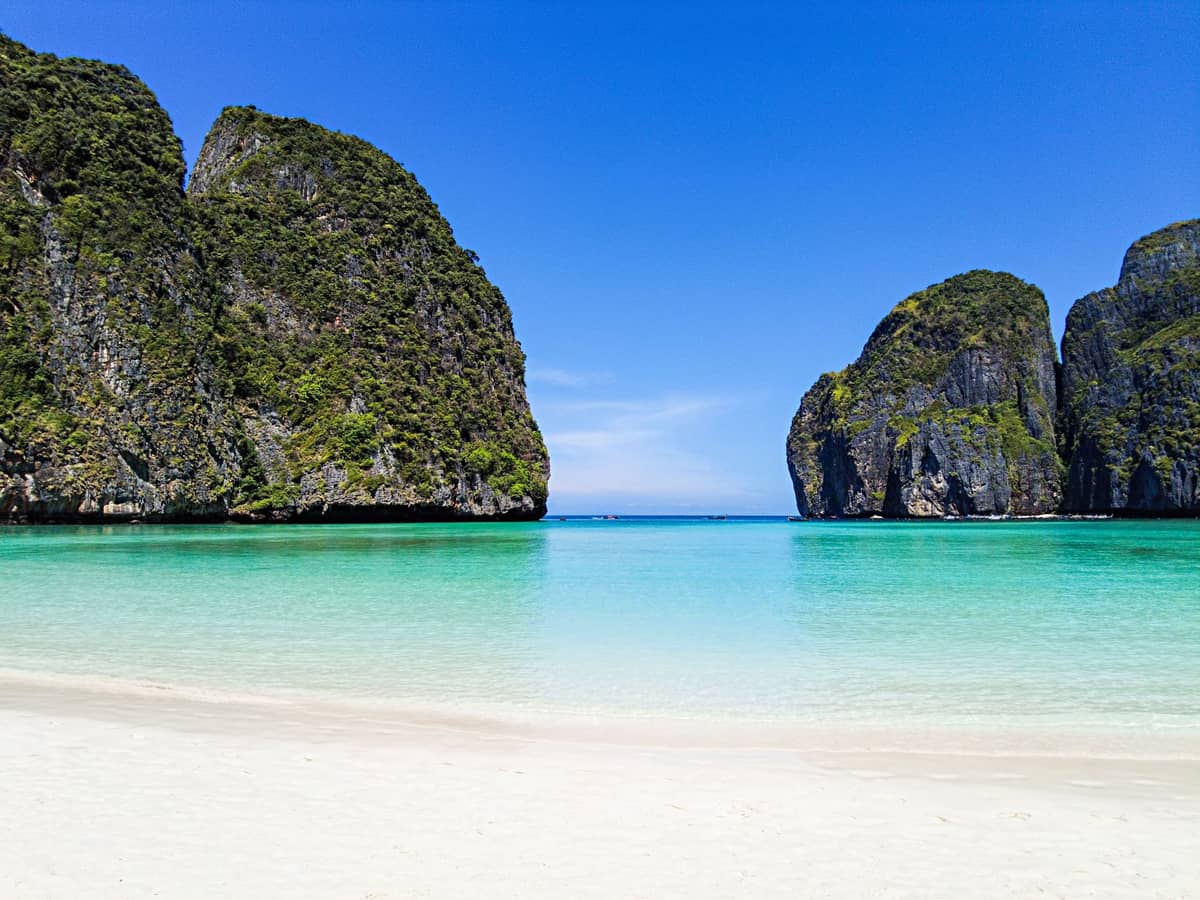
Koh Phi Phi Leh (Thai: เกาะพีพีเล) is the smaller, uninhabited twin of Koh Phi Phi Don, sitting in the Andaman Sea within Hat Noppharat Thara–Mu Ko Phi Phi National Park, Krabi Province. Unlike its neighbor, Phi Phi Leh has no villages, no resorts, no motorbikes, and no permanent population. What it does have is a collection of limestone cliffs, sea caves, and two bays of extraordinary clarity, the most famous of which became known worldwide when it served as the filming location for the 2000 film 'The Beach.'
That film-set fame very nearly destroyed what made the island special. By the late 2010s, Maya Bay was receiving thousands of visitors per day, and the coral beneath its turquoise shallows was badly degraded. Thailand's Department of National Parks responded with a full closure of Maya Bay in 2018, which lasted until January 2022. The reopening came with strictly enforced rules: visitor caps, a ban on swimming in the bay, a ban on anchoring boats in the bay, and an annual closure each year from 1 August to 30 September. The result is a place that still carries its reputation, but now has the management framework to at least partially back it up.
⚠️ What to skip
Maya Bay closes annually from 1 August to 30 September for ecological recovery. Confirm current dates and opening hours (reported as approximately 07:00–17:00 daily when open) directly with the national park or your tour operator before booking.
Arriving at the Island: What the Approach Feels Like
Most visitors reach Koh Phi Phi Leh by speedboat from Koh Phi Phi Don, a crossing that takes roughly 15–20 minutes depending on sea conditions. Day-trip boats from Ao Nang and Krabi Town also include it as part of longer itineraries, meaning you may arrive alongside a convoy of other vessels. The approach from the north gives you your first view of the island's defining feature: sheer limestone walls, their surfaces stained in rust, olive, and grey, rising directly from the sea. There's no gradual shoreline here. The cliffs simply begin.
Boats heading to Maya Bay don't enter the bay directly anymore. Visitors land at Loh Samah Bay on the island's south side, where a wooden walkway now guides foot traffic over the headland and down toward Maya Bay. The walk is short, perhaps 5 minutes, but over uneven terrain with some steps. There are no ramps or accessible infrastructure reported, so travelers with mobility limitations should consider this carefully before booking.
For context on the surrounding island landscape and boat logistics, the Koh Phi Phi Don page covers what to expect from the Phi Phi Islands as a base.
Tickets & tours
Live prices and dates from our booking partner. If you book, we may earn a commission at no extra cost to you.
Speedboat Tour to Koh Phi Phi and Bamboo from Lanta
From 46 €Instant confirmationFree cancellationPhi Phi archipelago and Krabi 4 Islands full‑day speedboat tour
From 0 €Instant confirmationFree cancellation3-Hour Private Sunrise Tour by Longtail Boat to Maya Bay from Phi Phi
From 95 €Instant confirmationFree cancellationPhi Phi's Extended Grand Odyssey by Speedboat
From 52 €Instant confirmationFree cancellation
Maya Bay: The Reality, Not the Postcard
Standing at the top of the headland before descending to Maya Bay, you get a view that no one who arrives by boat through the entrance gets: the bay below, cupped by walls of limestone on three sides, with the sea closing the fourth. The water is a shade of blue-green that looks overexposed in photographs but is genuinely that color in person, especially in the late morning when the sun clears the cliff tops and hits the surface directly.
Early arrivals, meaning those reaching Maya Bay before 09:00, encounter a beach with room to breathe, a relative quiet broken mostly by bird calls from the cliffs above, and water clear enough to see the sandy bottom without snorkeling equipment. By 10:30, the tide of day-trippers has usually arrived in force. The beach is small, perhaps 250 meters of sand, and feels crowded when a few hundred people share it. The afternoon brings a slight thinning as tours return to their home ports, but rarely a full respite.
Swimming is prohibited in Maya Bay, and boats are prohibited from entering the bay itself, which helps protect the water and shoreline. Snorkeling directly off Maya Bay's shore is not permitted; better snorkeling conditions are found at other spots around the island, particularly Pileh Lagoon.
💡 Local tip
To experience Maya Bay with the smallest crowds, target arrival before 09:00. This usually means staying overnight on Koh Phi Phi Don and booking an early-morning boat, rather than joining a full-day tour from the mainland.
Pileh Lagoon and the Island's Other Faces
Koh Phi Phi Leh is more than one bay. Pileh Lagoon sits on the island's eastern side, a semi-enclosed stretch of emerald water surrounded by limestone walls so high that only a narrow slot of sky is visible overhead. Boats enter through a gap in the rock and cut their engines, and the effect is immediate: the sound changes completely. Cliff swifts call from nesting sites above, the water makes small lapping sounds against the hull, and the color of the lagoon shifts between jade and teal depending on where the light falls.
Most tour itineraries that include Koh Phi Phi Leh stop at Pileh for 20–40 minutes, enough time to swim or snorkel in sheltered water. The lagoon is not open ocean, so waves are minimal and the experience suits less confident swimmers. The limestone walls also make it one of the more photogenic stops on any Phi Phi Islands tour, particularly in the hour after sunrise when the upper cliffs catch gold light before the sun drops into the lagoon itself.
A second cave site on the island, Viking Cave (Tham Phaya Nak), holds centuries-old boat paintings on its walls and remains an active site for bird's nest collection. Entry is typically not included on standard Maya Bay tours, and the cave is used as a working site by the families licensed to harvest the nests.
If you're building a fuller day around the Phi Phi Islands, the Krabi island hopping guide covers how to combine Phi Phi Leh with nearby stops efficiently.
Getting There: Practical Logistics
There is no public boat service to Koh Phi Phi Leh. Access is exclusively through private tours or chartered boats. The two main departure points for day trips are Koh Phi Phi Don and Ao Nang; boats also depart from Phuket, though travel time from Phuket is considerably longer. A trip based out of Phi Phi Don gives the advantage of shorter transit time and the ability to time arrival at Maya Bay ahead of mainland-based groups.
From Ao Nang, speedboat tours to the Phi Phi Islands typically last a full day and include multiple stops. These tours are widely available and usually include the national park fee in the stated price, but this is not universal; always confirm before booking what is included.
The national park entrance fee is currently reported at ฿400 for foreign adults and ฿200 for children. This fee applies to Maya Bay specifically and is collected on the island or, increasingly, prepaid through the booking platform. Do not assume your tour price includes it. Fees and policies have changed multiple times since the 2022 reopening, and further adjustments are possible.
ℹ️ Good to know
Koh Phi Phi Leh sits within Hat Noppharat Thara–Mu Ko Phi Phi National Park. The national park administration controls access rules, visitor caps, and closure periods. Check the DNP portal (portal.dnp.go.th) or contact your tour operator for the latest conditions before booking.
When to Go, and What Weather Does to the Experience
The dry season, roughly December through March, delivers the conditions Phi Phi Leh is known for: calmer sea crossings, good underwater visibility, lower humidity, and reliable sunshine during the late morning hours when the cliffs around Maya Bay frame the light well for photography. January and February tend to offer the clearest water and the most manageable conditions overall.
April sits in transition, and conditions can shift quickly. May through October brings the southwest monsoon to Krabi Province. Seas between the Phi Phi Islands and the mainland can be rough, some tour operators cancel departures, and visibility in the water drops with the increased swell stirring sediment. The mandatory closure of Maya Bay in August and September overlaps with the wettest part of the season, which softens the blow for travelers who miss it. Visiting in November means the weather is improving but not yet fully settled.
For a full breakdown of what each month looks like across Krabi Province, the best time to visit Krabi guide covers seasonal patterns in detail, including island access and sea conditions.
Who Should Think Twice Before Going
Koh Phi Phi Leh is not for everyone, and the most common source of disappointment is mismatched expectations. If you're expecting an empty beach or a private moment with one of Thailand's most iconic bays, you will almost certainly be disappointed unless you arrive very early. The island receives heavy boat traffic on peak days, and the concentration of visitors on a small beach with limited shade and no food vendors is physically demanding in the midday heat.
Travelers with mobility limitations face real obstacles: the walk from the landing area involves steps and uneven surfaces, and no accessible infrastructure has been reported on the island. Travelers who are principally interested in snorkeling quality may find better reef conditions at other sites in Krabi Province, since Maya Bay's coral has not fully recovered from its pre-closure damage. If you are already staying on Koh Phi Phi Don and have flexible timing, a visit is straightforward. If getting there requires a long day trip from the mainland, weigh the transit time against what you'll actually see.
Insider Tips
- Stay overnight on Koh Phi Phi Don rather than day-tripping from Ao Nang or Phuket. A 30-minute early-morning boat ride gets you to Maya Bay before the mainland groups arrive, and the light on the cliffs at 08:00 is genuinely different from anything you'll see at noon.
- The walk from Loh Samah Bay to Maya Bay passes a viewpoint over both bays at once. Most visitors rush through it. Stop here for 5 minutes before descending. You'll get a photograph that the beach itself doesn't allow.
- Bring reef-safe sunscreen only. The national park rules prohibit standard chemical sunscreen in the water, and enforcement is inconsistent but increasingly real. Vendors on Phi Phi Don stock mineral alternatives.
- Confirm the Maya Bay closure dates before booking anything. The annual August–September closure is fixed in policy but the exact edges of the dates have shifted in previous years. A call to your tour operator the week before travel is worthwhile.
- Pileh Lagoon is often treated as a brief boat stop, but if your tour allows it, ask to spend more time there rather than rushing to Maya Bay mid-morning. The lagoon is calmer, and the acoustics inside the limestone walls are unlike anything else in the Phi Phi Islands.
Who Is Koh Phi Phi Leh For?
- Photographers who plan timing around early-morning light and the viewpoint above Maya Bay
- Snorkelers and swimmers who want sheltered, clear water (especially at Pileh Lagoon)
- Travelers staying on Koh Phi Phi Don with flexible schedules and early-morning availability
- Film and travel history enthusiasts interested in how 'The Beach' location has changed
- Day-trippers from Ao Nang building a full Phi Phi Islands loop with multiple stops
Nearby Attractions
Other things to see while in Koh Phi Phi:
- Bamboo Island (Koh Mai Phai)
Bamboo Island, or Koh Mai Phai, is a small coral-fringed island in Hat Noppharat Thara–Mu Ko Phi Phi National Park, sitting just north of Phi Phi Don in the Andaman Sea. At roughly 0.5 km², it offers a long crescent of white sand and shallow turquoise water with noticeably fewer visitors than the Phi Phi main islands. Access is by boat only, making it a natural half-day escape for anyone already based in the Phi Phi area.
- Koh Phi Phi Don
Koh Phi Phi Don is the largest and only inhabited island in the Phi Phi group, sitting within Krabi Province roughly midway between the mainland and Phuket. It combines dramatic limestone cliffs, clear turquoise water, and a compact central village with a reputation that has grown considerably since the early 2000s. This guide tells you what the experience actually looks like, when to go, and whether it suits your style of travel.
- Maya Bay
Maya Bay on Koh Phi Phi Leh is one of Thailand's most photographed beaches, framed by sheer limestone cliffs and turquoise water. After a three-year ecological closure, it has reopened with strict visitor rules. Here is what the experience actually looks like today.
- Monkey Beach
Monkey Beach, known in Thai as Ao Ling or Yong Gasem Bay, is a short boat ride from Tonsai Bay on Koh Phi Phi Don. The 150-metre strip of sand is famous for its resident macaques, but the experience is more complicated than the photos suggest. Here is what you actually need to know before going.
Planning a trip? Discover personalized activities with the Nomado app.