Khlong Muang Beach: Krabi's Quieter Shoreline North of Ao Nang
Khlong Muang Beach (หาดคลองม่วง) stretches along Krabi's coastline between Ao Siao Beach to the south and Tubkaek Beach to the north. With soft sand, limestone karst views across the water, and a notably calmer atmosphere than nearby Ao Nang, it draws travelers who want a beach day without the noise of a resort strip.
Quick Facts
- Location
- Nong Thale Subdistrict, Mueang Krabi District, Krabi Province, Thailand
- Getting There
- By taxi or songthaew from Ao Nang (approx. 15–20 min north by road). No direct public bus service confirmed.
- Time Needed
- 2–4 hours for a beach visit; longer if staying at a resort on the bay
- Cost
- Free entry to the beach. Food and sunloungers at resort restaurants vary.
- Best for
- Couples, families wanting calm water, and travelers seeking limestone views without Ao Nang crowds
What Khlong Muang Beach Actually Is
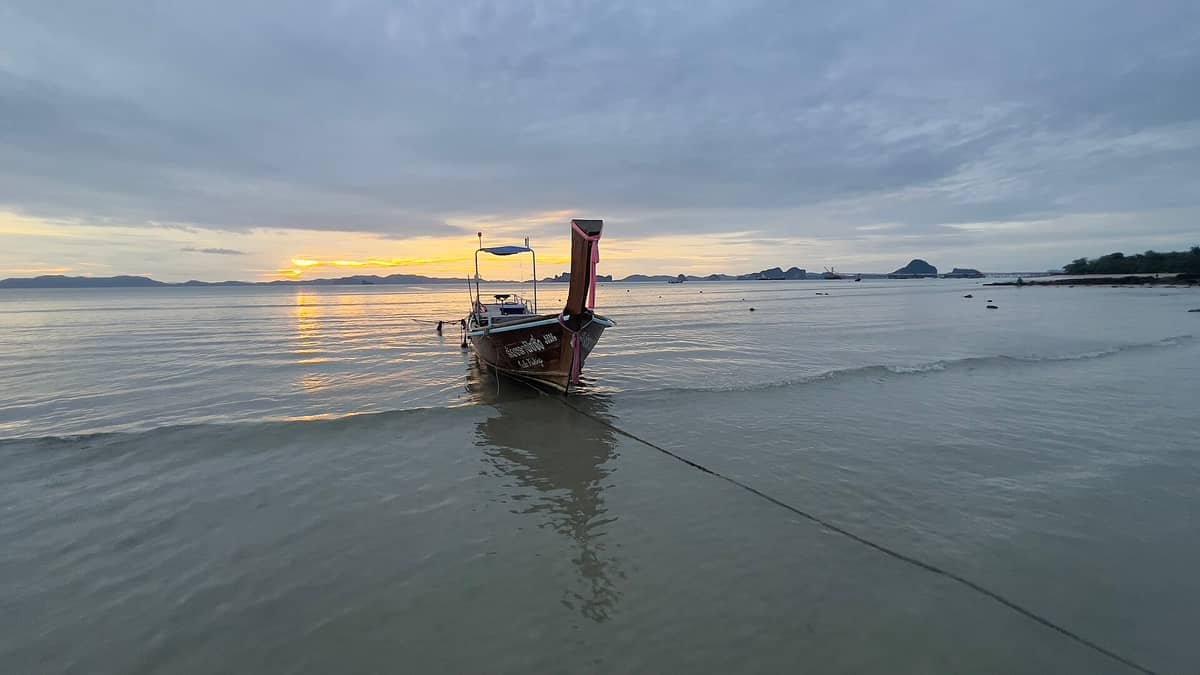
Khlong Muang Beach sits roughly 15 to 20 minutes north of Ao Nang by road, in Nong Thale Subdistrict. The beach runs between Ao Siao Beach to the south and Tubkaek Beach to the north, forming a long, gently curving bay. The Thai name, หาดคลองม่วง (Hat Khlong Muang), refers to the canal and mangrove area behind part of the beach, which gives the coastline a distinct character: on one side, open sea with limestone peaks rising in the distance; on the other, a quieter green interior of palms and vegetation.
Unlike Ao Nang Beach, which fronts a commercial strip of restaurants, tour offices, and convenience stores, Khlong Muang has a low-rise resort character. The development along the bay consists mainly of mid-range and upscale hotels set back from the sand, with a few open-air restaurants and beach bars. This means the beach itself is noticeably less crowded during most of the day, and vendors are far fewer in number.
ℹ️ Good to know
Khlong Muang Beach is a public beach with free access. You don't need to stay at one of the nearby resorts to use the beach, though sunlounger hire is typically managed by resort staff for guests.
The Beach Itself: Sand, Water, and What You'll See
The sand at Khlong Muang is pale and relatively fine, though it can have a slightly coarser texture in some sections compared to the powdery white found on the Phi Phi islands. During low tide, the beach widens noticeably, and shallow tidal flats extend into the water, making it good for wading. At high tide, the water comes closer to the vegetation line, and the sea takes on a cleaner greenish-blue color. Swimming is generally calmer here than at exposed beaches because the bay shape provides some natural shelter.
The view out to sea is the beach's strongest feature. Several limestone karst islands and formations are visible offshore, including the silhouette of peaks that define Krabi's landscape. At certain times of day, particularly early morning and late afternoon, the light cuts across these formations in a way that makes the view significantly more dramatic than at midday, when flat overhead light flattens everything out.
Photographers will get better images in the hour after sunrise or the 90 minutes before sunset. The peaks to the northwest catch warm light in the late afternoon, and the sea is usually calmer in the morning. For comparison, if you've visited Tubkaek Beach just to the north, the visual character is similar, though Khlong Muang has a longer stretch of sand and slightly more resort infrastructure along its edge.
Tickets & tours
Live prices and dates from our booking partner. If you book, we may earn a commission at no extra cost to you.
Eco-friendly kayaking journey to Khlong Nam Sai Lagoon
From 33 €Instant confirmationFree cancellationDaily Cooking Class at Thai Cookery School in Krabi
From 42 €Instant confirmationFree cancellation7 islands speedboat excursion from Krabi
From 41 €Instant confirmationFree cancellationSpeedboat Tour to Hong Island Archipelago from Krabi
From 34 €Instant confirmationFree cancellation
How the Beach Changes Throughout the Day
Early mornings at Khlong Muang are genuinely quiet. Resort guests tend to be the main presence before 9:00, and the light is at its most photogenic. The air carries a clean saltiness, with occasional calls from birds in the vegetation behind the beach. It's the best time to walk the full length of the sand without weaving around other people.
By mid-morning, day visitors begin arriving, and beach chairs in front of resort restaurants fill up. The peak crowding window runs roughly from 10:30 to 14:00, though even then, Khlong Muang's crowd density is low compared to Ao Nang. The midday heat between November and April reaches around 33–34°C, and with little shade on the open beach, staying in the water or retreating to a restaurant becomes the sensible choice.
Late afternoon is worth lingering for. Between 16:00 and 18:00, the light shifts, the temperature drops a few degrees, and the beach empties somewhat as people head back toward Ao Nang or to hotel rooms to clean up. This window is good for a long walk, particularly toward the northern end of the bay where the sand is less disturbed.
💡 Local tip
Come early or late. The 07:00–09:00 window and the 16:00–18:00 window offer the best light, the calmest water, and the fewest people. Midday heat between December and April is intense on open sand with no shade trees.
Getting to Khlong Muang Beach from Ao Nang
Khlong Muang Beach is not walkable from Ao Nang. The road distance is roughly 15 kilometers north by the main route, taking 20 to 30 minutes depending on traffic. The most straightforward options are a metered taxi, a Grab ride (availability varies), or a songthaew (shared pickup truck taxi) along the coastal road. Agree on the fare before you depart if using a non-metered vehicle, as prices on tourist routes are negotiated.
There is no confirmed regular public bus service directly to the beach. Travelers staying in Ao Nang typically arrange a taxi through their hotel, which is convenient but more expensive than a shared songthaew if you can find one heading that way. Renting a motorbike or scooter in Ao Nang is another option for those comfortable with Thai road conditions; the route is mostly straightforward on wider roads.
Krabi International Airport (KBV) is closer to Khlong Muang than it is to Ao Nang, so if you're flying in and your hotel is in this area, the airport taxi or transfer to the beach is actually shorter than to central Ao Nang. Check the Krabi airport transport guide for current fare estimates and options before you travel.
Weather and the Best Time to Visit
Krabi Province has a tropical climate with a southwest monsoon that typically runs from May through October. During this period, the sea at Khlong Muang can become choppy and the beach may accumulate debris after heavy rain. Accommodations along the bay are open year-round, but the experience is significantly better in the dry season, which generally runs from December through March. The best time to visit Krabi is between December and February, when humidity is lower, rain is infrequent, and sea conditions are most reliable for swimming.
April sits in a transitional period: the dry season is ending, temperatures peak at their hottest (daily highs approaching 34–35°C), and afternoon showers become more frequent. The beach is still usable in April, but the experience is less consistent. If you're visiting in the rainy season and the weather cooperates, Khlong Muang can look spectacular with dramatic cloud formations over the limestone peaks, but check conditions locally and don't plan water activities without flexibility in your schedule.
⚠️ What to skip
During the monsoon season (roughly May–October), sea conditions at Khlong Muang can deteriorate quickly. Some days are fine; others are not suitable for swimming. Always check with your accommodation or local beach staff before entering the water.
What Khlong Muang Beach Is Not
Khlong Muang is not a party beach, a snorkeling destination, or an action-sports hub. There are no significant coral reefs directly accessible from the shore. The beach has no nightlife scene, no beach clubs with DJs, and no rows of vendors selling inflatable toys. If those are what you're after, Ao Nang is a better base.
It also isn't a jumping-off point for island day trips in the same way that Ao Nang's piers are. If you want to reach Phra Nang Beach or book a Krabi island hopping tour, you'll need to get back to Ao Nang or arrange a private longtail from this area, which adds cost and complexity.
Travelers who are basing themselves in Ao Nang for a week and want a half-day change of scenery will find Khlong Muang a worthwhile excursion. Travelers who are staying specifically at one of the resorts along the bay will find the beach convenient and relaxed, with everything within a short walk. Solo budget travelers who want to maximize activities and social atmosphere might find the low-key nature of the area a bit flat.
Practical Notes Before You Go
Bring everything you need for a beach day. While resort restaurants along the bay sell food, drinks, and sunscreen, prices will be at resort rates. Convenience stores are not on the beach itself, so stock up before you leave Ao Nang if you're watching costs. A hat and high-SPF sunscreen are non-negotiable on this open, unshaded beach between 10:00 and 15:00.
Accessibility information is limited in available sources. No specific data confirms whether pathways to the beach have wheelchair access or whether resort facilities are adapted. If this is a factor, contact the specific resort you plan to visit directly before making arrangements.
There are no lockers or luggage storage facilities confirmed on the public beach. If you're coming as a day visitor rather than a resort guest, travel light and keep valuables secured. In an emergency, Thailand's Tourist Police can be reached at 1155.
Insider Tips
- The northern end of Khlong Muang Beach, toward Tubkaek, tends to be quieter than the central section in front of resort restaurants. Walk 10–15 minutes in that direction and you'll often find significantly more space.
- If you're renting a scooter from Ao Nang, the road to Khlong Muang passes some worthwhile scenery and takes you past local food stalls where prices are lower than at beach restaurants.
- Low tide in the morning expands the beach considerably and makes the walk along the full length much more pleasant. Check a local tide chart app before planning your day.
- The limestone peaks visible offshore look best in photographs taken from the water's edge, not from a standing position on the sand. Crouch down, include the wet sand reflection, and shoot during golden hour.
- If you want a meal with a proper sea view and don't mind resort pricing, several hotels along the bay have open-air beach restaurants that welcome non-guests for lunch.
Who Is Khlong Muang Beach For?
- Couples wanting a calm, scenic beach without the Ao Nang crowd
- Families with young children who need gentle, sheltered water
- Photographers targeting limestone karst seascape shots, especially at golden hour
- Travelers staying at one of the Khlong Muang resorts who want a quiet beach directly at hand
- Day-trippers from Ao Nang wanting a half-day change of pace
Nearby Attractions
Other things to see while in Ao Nang:
- Ao Nang Beach
Ao Nang Beach is the commercial heart of Krabi Province's coastline, a broad arc of sand backed by restaurants and boat piers that gives you direct access to some of Thailand's most spectacular islands. It is free, open around the clock, and works as both a destination and a staging point.
- Dragon Crest Mountain (Khao Ngon Nak)
Dragon Crest Mountain, known in Thai as Khao Ngon Nak, is a 3.7 km trail that climbs to a 565-metre summit above Tubkaek in Krabi Province. The reward at the top is one of the most expansive views in the region: a sweeping panorama of limestone karsts, jungle canopy, and the Andaman Sea stretching toward Koh Lanta. It is a proper hike requiring effort, preparation, and an early start.
- Four Islands (Koh Poda, Koh Kai, Koh Tup, Koh Mo & Thale Waek)
The Four Islands tour from Ao Nang covers Koh Poda, Koh Kai, Koh Tup, and Koh Mo, with the main draw being Thale Waek: a tidal sandbar that briefly connects three islands at low tide. It is one of Krabi's most photographed natural phenomena, and understanding the tides is essential to seeing it at its best.
- Hong Island (Koh Hong)
Hong Island, known in Thai as เกาะห้อง (Koh Hong), is a protected island in Than Bok Khorani National Park off the Krabi coast, reached by boat from Ao Nang. It combines a sheltered turquoise lagoon, a sandy beach framed by limestone karsts, and a short viewpoint climb into a half-day trip that holds up against the hype.
Planning a trip? Discover personalized activities with the Nomado app.