Tubkaek Beach: Krabi's Quieter Alternative to Ao Nang
Tubkaek Beach is a 1.6 km crescent bay in Mueang Krabi District, sitting roughly 16 km from Ao Nang and 39 km from Krabi International Airport. It offers unobstructed views of limestone karst formations, no entrance fee, and significantly fewer visitors than the main resort beaches — making it a useful destination for anyone who wants the scenery without the crowd.
Quick Facts
- Location
- Moo 3, Ban Ko Kwang, Nong Thale Subdistrict, Mueang Krabi District, Krabi Province
- Getting There
- No direct public transit; best reached by rental motorbike, car, or chartered songthaew from Ao Nang (approx. 16 km) or Krabi Town
- Time Needed
- 1.5 to 3 hours
- Cost
- No entrance fee
- Best for
- Karst scenery, photography, quiet beach time, couples, slow travelers
What Tubkaek Beach Actually Is
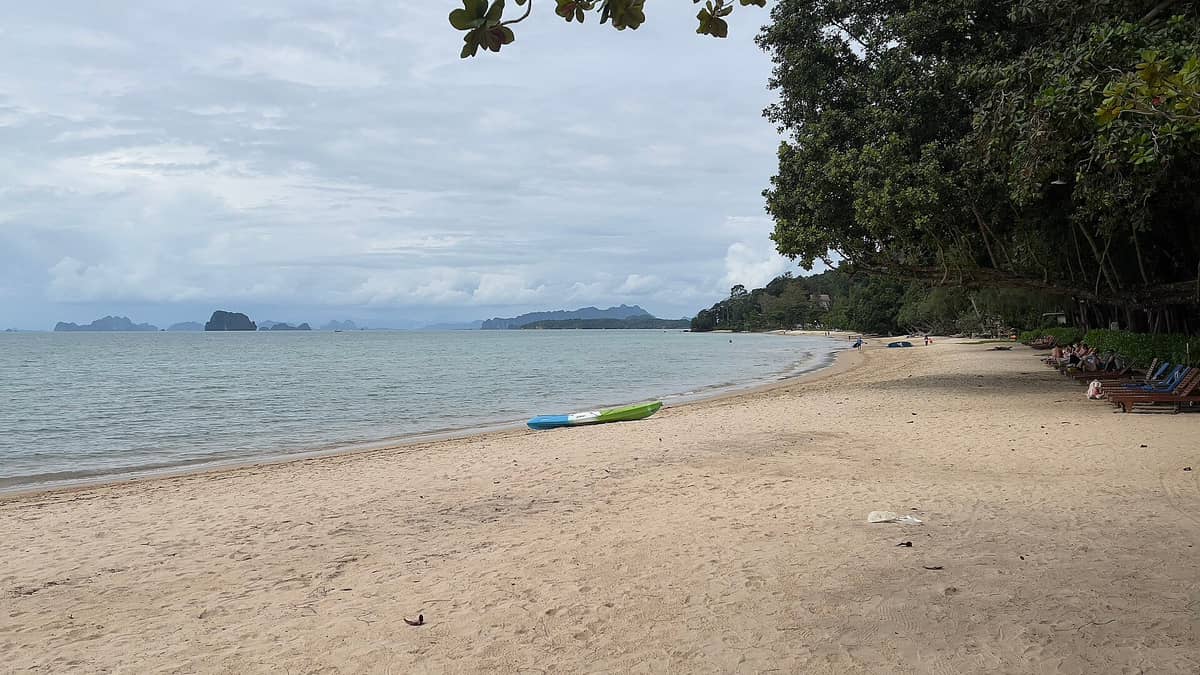
Tubkaek Beach, known in Thai as หาดทับแขก (Hat Thap Khaek), is a gently curved bay stretching approximately 1.6 km along the Andaman coastline in Nong Thale Subdistrict. Unlike the hotel-packed sands of Ao Nang or the boat-traffic spectacle of Railay, Tubkaek occupies a quieter register. The beach fronts a string of low-rise luxury resorts on its inland side, but the public shoreline remains accessible and uncongested for most of the year.
The defining visual feature here is the karst backdrop. Jagged limestone towers rise from the sea directly in front of the beach, their surfaces dark and textured against whatever sky the day provides. At low tide, the water retreats to reveal a shallow, sandy shelf that wades out gently — useful to know if you're swimming with children or simply want to stand knee-deep staring at the scenery for longer than is socially acceptable.
ℹ️ Good to know
Tubkaek Beach has no entrance fee and is open 24 hours. There are no ticket booths, barriers, or registration points. You simply arrive, find a stretch of sand, and stay as long as you like.
The View and Why It Changes by Hour
Morning is when Tubkaek earns the most photographic attention. Between roughly 6 and 8 AM, the light hits the karst formations at a low angle, casting deep shadows across their vertical faces and turning the water from grey to a pale aquamarine. The beach is almost empty at this hour. The sounds are mostly wind, water, and distant birds rather than anything human-made. The air carries a faint salt and seaweed smell that disappears once the heat of the day takes over.
By midday the light flattens and the heat becomes serious — temperatures in Krabi Province typically reach 31 to 34°C during the dry season. The water stays calm and clear enough for swimming, but shade is limited to whatever the resort properties provide along the rear of the beach. Bring your own shade strategy: a beach umbrella, a wide-brimmed hat, or the willingness to move.
Sunset at Tubkaek can be striking, though it depends on orientation and cloud cover. The beach faces roughly west-southwest, meaning the karst formations are silhouetted as the light drops. On clear evenings in the dry season, this produces the kind of image Krabi is internationally known for. On overcast evenings — more common during the shoulder months of April and November — you get a softer, diffused glow that has its own appeal but won't produce the dramatic shots many visitors are chasing.
Tickets & tours
Live prices and dates from our booking partner. If you book, we may earn a commission at no extra cost to you.
Daily Cooking Class at Thai Cookery School in Krabi
From 42 €Instant confirmationFree cancellation7 islands speedboat excursion from Krabi
From 41 €Instant confirmationFree cancellationSpeedboat Tour to Hong Island Archipelago from Krabi
From 34 €Instant confirmationFree cancellationPhi Phi archipelago and Krabi 4 Islands full‑day speedboat tour
From 0 €Instant confirmationFree cancellation
Getting to Tubkaek from Ao Nang and Krabi Town
Tubkaek sits approximately 16 km from Ao Nang and about 39 km from Krabi International Airport (KBV). There is no scheduled public bus that connects directly to the beach. The most practical options for independent travelers are a rental motorbike or car from Ao Nang, a Grab ride if one is available in the area (Grab operates in Krabi but coverage can be inconsistent outside the main resort zone), or a privately chartered songthaew negotiated from Ao Nang or Krabi Town.
If you are already based in Ao Nang, the drive north along Route 4034 takes around 25 to 35 minutes depending on traffic. The road passes through low-rise development and eventually opens up to coastal views before you reach the Tubkaek area. Most GPS apps navigate there reliably using the name Tubkaek Beach or Hat Thap Khaek.
💡 Local tip
If you're renting a motorbike, confirm your insurance coverage extends to this area before leaving. Helmet use is legally required in Thailand and roadside checks do occur on routes outside the resort core.
Swimming, Walking, and What the Beach Actually Offers
The 1.6 km length of sand is walkable end-to-end in about 20 minutes at a casual pace. The sand is pale and relatively coarse compared to the powdery texture found on some of Krabi's more famous island beaches, but it's clean and stable underfoot. At low tide, the beach widens noticeably and you can walk out into very shallow water while remaining close to shore.
Swimming conditions vary by season. During the dry season (roughly mid-November to early May), the Andaman side of Krabi Province generally sees calmer seas and better visibility. During the monsoon period from June to October, waves and currents can increase significantly, and some stretches of coastline in the area become unsuitable for casual swimming. There are no lifeguards stationed at Tubkaek Beach, so swimming judgment is entirely the visitor's own responsibility.
Tubkaek is not a beach for water sports infrastructure — there are no jet ski rentals or organized snorkeling tours operating from this stretch of sand. If you want structured aquatic activities, Ao Nang Beach is a better base for booking those, with numerous operators along its beachfront.
The Rainy Season Reality
Tubkaek can be visited year-round, but the experience shifts considerably between seasons. The monsoon months from June to October bring heavier rainfall, reduced visibility, and rougher sea conditions. The beach itself remains accessible — it is open 24 hours with no seasonal closure — but the reasons most people come (karst scenery, calm water, photography) are partially undermined when cloud cover is persistent and the sea is choppy. If you're planning a visit during the wetter months, read the Krabi rainy season guide before setting expectations.
The transition months of April and November can go either way. April tends to be hot and humid with occasional heavy showers, while November is often when conditions begin improving again. December through February consistently offer the clearest skies and calmest seas, making that window the most reliable time for the beach experience Tubkaek is best positioned to deliver.
⚠️ What to skip
There are no lifeguards at Tubkaek Beach. During the monsoon season (June–October), sea conditions can become hazardous without warning. Check local conditions before swimming and treat any red flags or rough surf seriously.
Photography and Practical Notes
The karst formations visible from Tubkaek — particularly those framing the bay to the south and west — are the primary compositional element for photography. A wide-angle lens captures the full sweep of the bay and sky. A longer focal length isolates individual rock formations and compresses the water between them. Early morning and the hour before sunset are the most useful times for both color quality and the absence of harsh shadows.
The beach lacks permanent food and drink facilities on the public sand, so bring water and snacks if you are spending a full afternoon. Sealed bottled water is recommended throughout Krabi Province; tap water is not reliably potable. The nearest concentration of restaurants and convenience stores is back toward Ao Nang, though the resort properties along the beach may have their own dining. For a broader picture of how Tubkaek fits into a multi-day itinerary, the Krabi 3-day itinerary maps it alongside other stops in the area.
No verified information on wheelchair-accessible facilities at Tubkaek Beach is available. The sand surface itself creates natural challenges for wheeled mobility aids, and there are no confirmed paved paths or boardwalks in place along the public beach area.
Who This Beach Suits and Who It Doesn't
Tubkaek works well for travelers who want limestone karst scenery without the boat-trip overhead. It is particularly suited to those staying along the northern Ao Nang corridor who want a beach day that doesn't require booking an excursion. Couples, photographers, and anyone who prioritizes quiet over convenience tend to get the most from it. For families with children who need shallow, protected water and nearby facilities, the gentler setup at Nopparat Thara Beach may serve better.
Travelers who want a full-day beach experience with food stalls, water sports operators, beach bars, and easy connectivity to boat tours will find Tubkaek underwhelming. The beach's low-infrastructure character is genuinely its selling point for the right visitor and a frustration for the wrong one. It is also not the place to come if you need to assess the experience against Krabi's most photogenic beaches — this is not a white-sand tropical showpiece. It is a handsome, calm bay with exceptional karst scenery and very little else, and that is exactly sufficient for what it is.
Insider Tips
- Arrive before 7 AM if you want the karst formations in directional morning light without another person in frame. By 9 AM the resort guests start appearing and the beach fills at a moderate pace.
- The beach is technically fronted by resort properties along much of its length, but the waterline itself is public. Walk past any resort-branded sun loungers and you are in open public space.
- Low tide reveals a much wider sandy shelf and makes it easier to wade out toward the karst formations for closer photography. Check a tide table for the day before planning your timing.
- There is no shade infrastructure on the public beach itself. A lightweight travel umbrella or a long-sleeve UV shirt is more practical than relying on natural shade, which is minimal.
- If you are combining Tubkaek with other stops, Khlong Muang Beach is a short distance further north and has a slightly different character — worth comparing before choosing where to spend more time.
Who Is Tubkaek Beach For?
- Photographers targeting karst landscapes without island-hopping logistics
- Couples wanting a quiet beach with strong scenery and minimal crowds
- Travelers based in Ao Nang looking for a half-day escape from the resort zone
- Slow travelers who prefer sitting with a view over filling an itinerary
- Dry-season visitors (December to February) wanting calm Andaman waters
Nearby Attractions
Other things to see while in Ao Nang:
- Ao Nang Beach
Ao Nang Beach is the commercial heart of Krabi Province's coastline, a broad arc of sand backed by restaurants and boat piers that gives you direct access to some of Thailand's most spectacular islands. It is free, open around the clock, and works as both a destination and a staging point.
- Dragon Crest Mountain (Khao Ngon Nak)
Dragon Crest Mountain, known in Thai as Khao Ngon Nak, is a 3.7 km trail that climbs to a 565-metre summit above Tubkaek in Krabi Province. The reward at the top is one of the most expansive views in the region: a sweeping panorama of limestone karsts, jungle canopy, and the Andaman Sea stretching toward Koh Lanta. It is a proper hike requiring effort, preparation, and an early start.
- Four Islands (Koh Poda, Koh Kai, Koh Tup, Koh Mo & Thale Waek)
The Four Islands tour from Ao Nang covers Koh Poda, Koh Kai, Koh Tup, and Koh Mo, with the main draw being Thale Waek: a tidal sandbar that briefly connects three islands at low tide. It is one of Krabi's most photographed natural phenomena, and understanding the tides is essential to seeing it at its best.
- Hong Island (Koh Hong)
Hong Island, known in Thai as เกาะห้อง (Koh Hong), is a protected island in Than Bok Khorani National Park off the Krabi coast, reached by boat from Ao Nang. It combines a sheltered turquoise lagoon, a sandy beach framed by limestone karsts, and a short viewpoint climb into a half-day trip that holds up against the hype.
Planning a trip? Discover personalized activities with the Nomado app.