Dragon Crest Mountain (Khao Ngon Nak): Krabi's Best Viewpoint Hike
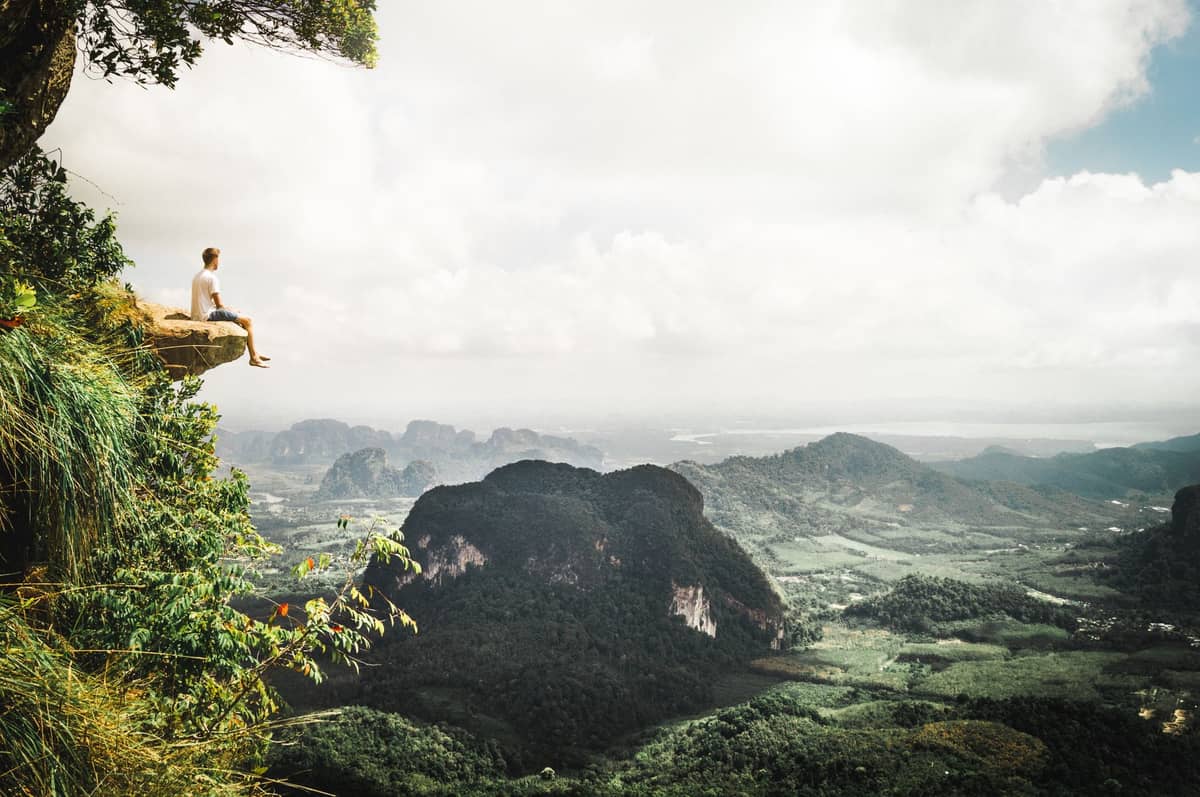
Dragon Crest Mountain, known in Thai as Khao Ngon Nak, is a 3.7 km trail that climbs to a 565-metre summit above Tubkaek in Krabi Province. The reward at the top is one of the most expansive views in the region: a sweeping panorama of limestone karsts, jungle canopy, and the Andaman Sea stretching toward Koh Lanta. It is a proper hike requiring effort, preparation, and an early start.
Quick Facts
- Location
- Ban Thap Kaek (Tubkaek), Nong Thale, Mueang Krabi District, Krabi Province
- Getting There
- Taxi or songthaew from Ao Nang or Krabi Town to the trailhead
- Time Needed
- 3–5 hours return, depending on fitness
- Cost
- Foreign adults ฿200, foreign children ฿100; Thai adults ฿40, Thai children ฿20 (as of Nov 2025, verify locally)
- Best for
- Hikers, photographers, early risers seeking panoramic Andaman views
What Dragon Crest Mountain Actually Is
Dragon Crest Mountain, the English translation of Khao Ngon Nak (เขาหงอนนาค), sits in the Nong Thale district of Krabi, roughly 17 km from Ao Nang. The name refers to the jagged ridgeline visible from below, which resembles the spined crest of a dragon in Thai mythology. At 565 metres above sea level, the summit is not extreme by global hiking standards, but the trail is unrelentingly steep in places and the tropical heat and humidity make it a genuine physical challenge.
The trail runs approximately 3.7 km one way through dense jungle on the slopes of a limestone massif. You gain almost all of the elevation in that single direction, with very little flat walking. Roots, rocks, and sections of fixed rope mark the upper portions of the trail. The payoff is a summit viewpoint that opens up in every direction: Tubkaek Beach far below, Koh Lanta in the distance, and an unbroken sweep of karst formations stretching inland.
ℹ️ Good to know
Trail entry closes at 2:00 p.m. daily. With a 3–5 hour return journey, this means you should aim to start no later than 8:30–9:00 a.m. Arriving at the trailhead by 7:30–8:00 a.m. is strongly advisable during the dry season when the trail fills quickly.
The Trail: What to Expect from Trailhead to Summit
The trailhead sits at the end of a road in Ban Thap Kaek. A small registration and fee point marks the start, where rangers record your details and collect the entry fee. Beyond the gate, the trail begins in moderate shade under a closed-canopy forest. The first kilometre is the gentlest section: a wide path with tree roots forming natural steps and the sound of insects and occasional birds overhead. The air carries the scent of damp earth and crushed leaf litter.
The middle section of the trail becomes noticeably harder. The gradient increases, the path narrows, and the footing becomes more technical. Fixed ropes appear on several steep rock faces, not as a precaution but as a genuine necessity. You use your hands as much as your feet on these sections. Grip gloves are not required but are appreciated by some hikers. Take the roped sections slowly and allow others to descend before you climb.
The final approach to the summit ridge is the most dramatic part of the hike. The jungle thins, limestone outcrops push through the soil, and the first glimpses of sky appear through the canopy. When the full viewpoint opens up, the contrast is stark: you step from enclosed jungle into open air with a 180-degree panorama. The wind at the top is noticeably cooler than on the trail below, and the silence after the exertion of climbing is striking.
Tickets & tours
Live prices and dates from our booking partner. If you book, we may earn a commission at no extra cost to you.
Daily Cooking Class at Thai Cookery School in Krabi
From 42 €Instant confirmationFree cancellation7 islands speedboat excursion from Krabi
From 41 €Instant confirmationFree cancellationSpeedboat Tour to Hong Island Archipelago from Krabi
From 34 €Instant confirmationFree cancellationPhi Phi archipelago and Krabi 4 Islands full‑day speedboat tour
From 0 €Instant confirmationFree cancellation
The View and Why It Earns the Effort
The summit viewpoint at Dragon Crest Mountain delivers something most of Krabi's coastal attractions cannot: genuine elevation and geographical context. From 565 metres, you can see how the limestone karsts are distributed across the landscape, how the coastline curves south toward Koh Lanta, and how the Andaman Sea fades from turquoise to deep blue at the horizon. On clear mornings, the visibility extends to the Phi Phi Islands.
The quality of light changes significantly depending on when you reach the top. Early arrivals, between 9:00 and 10:00 a.m., often catch a layer of mist sitting in the valleys between karst formations, which burns off gradually over the following hour. Midday light is harsh and flat for photography but offers the longest visibility. Photographers should aim to arrive at the summit before 10:30 a.m. for the most textured light. If you are planning multiple Krabi viewpoints, compare this with the more accessible but very different perspective at Tiger Cave Temple, which has 1,237 steps but reaches a similar elevation.
Timing, Seasons, and Weather Realities
The dry season in Krabi runs broadly from December to March, with January and February the most reliably clear months. This is the optimal window for Dragon Crest Mountain: trails are dry, visibility is good, and the heat, while still significant, is less oppressive than in April or May. Hiking in December is a particularly good option given Krabi's weather patterns in that period.
The southwest monsoon season runs from approximately May through October. During this period the trail becomes slippery, the fixed rope sections turn genuinely hazardous, and cloud frequently obscures the summit view. The hike is not recommended in wet conditions, and some visitors have reported the trail being temporarily closed after heavy rain. For more detail on seasonal conditions across Krabi, see the guide to Krabi in the rainy season.
April sits in a shoulder period: it is drier than full monsoon but hotter than January or February, with daytime temperatures reaching 33–34°C. Hikers who attempt this trail in April should carry significantly more water and plan to start at first light.
⚠️ What to skip
The trail involves steep rock sections with fixed ropes. Wet conditions make these sections genuinely dangerous. Do not attempt the hike if it has rained heavily in the previous 24 hours, even during the dry season. Wear closed-toe shoes with grip soles; flip-flops are not suitable.
Getting to the Trailhead
There is no direct public transport to the Dragon Crest Mountain trailhead. From Ao Nang, the most straightforward option is a taxi or songthaew (shared pickup truck transport) to Ban Thap Kaek in Nong Thale. The journey takes roughly 20–30 minutes depending on traffic. Negotiate and agree the fare before departing, and confirm the driver understands the destination is the Khao Ngon Nak trailhead specifically, not just Tubkaek Beach.
An alternative approach uses a longtail boat to Tubkaek Beach, from which the trailhead is accessible on foot. This route adds charm but also time and coordination. Grab is reported as available in Krabi, though pickup reliability at the trailhead for the return journey is not guaranteed. Arrange a return pick-up time with your driver before they leave, or confirm you can call them when you descend.
Practical Preparation: What to Bring and Wear
Water is the single most important thing to carry. A minimum of 1.5 litres per person is reasonable for a fit hiker in cooler months; 2 litres or more is advisable in warmer conditions. There are no water sources or vendors on the trail itself. A small amount of food, sunscreen, insect repellent, and a light rain jacket if there is any cloud cover complete the basics.
- Footwear: closed-toe shoes or trail runners with grip soles. Sandals and flip-flops are not suitable for the rope sections.
- Clothing: lightweight, moisture-wicking fabric. Long trousers reduce scratches from undergrowth on the upper trail.
- Sun protection: once on the exposed summit ridge, shade is minimal. Hat and sunscreen are necessary.
- Camera or phone: the summit view is extensive and the hike passes several photogenic limestone formations.
- Cash: the entry fee is collected at the trailhead. Bring small Thai baht notes.
Accessibility is limited to fit hikers. The steep gradient, uneven terrain, rope sections, and overall distance make this trail unsuitable for young children, visitors with limited mobility, or anyone with knee or hip problems. This is not a casual viewpoint walk. Travellers looking for dramatic scenery without the exertion should consider the viewpoints accessible from the Railay area instead.
Who Should Skip This Hike
Dragon Crest Mountain is not for everyone, and there is no shame in that assessment. If your Krabi trip is centred on beach time, boat trips, and low-effort sightseeing, this hike may not fit the itinerary. The same is true if you are travelling with young children, anyone with mobility concerns, or if you are visiting during the rainy season. Krabi offers extraordinary scenery from sea level: Phra Nang Beach and the boat-accessible lagoons around Railay deliver dramatic limestone scenery without requiring a strenuous climb.
Experienced hikers who have already done Tiger Cave Temple in Krabi Town may find the early sections of Dragon Crest Mountain comparatively underwhelming before the trail steepens. The middle and upper sections, however, are genuinely more rugged and rewarding than anything Tiger Cave offers in terms of terrain. The two hikes serve different purposes and attract different types of visitors.
Insider Tips
- Register your name at the trailhead before setting out. Rangers note your entry time and it provides a basic safety record. If you are hiking solo, tell someone at your accommodation where you are going and when you expect to return.
- The rope sections are single-file. If you encounter a group descending, wait at the base of the rope section and let them come down fully before you climb. This is both courteous and safer for everyone.
- Clouds often build over the summit between 11:00 a.m. and 1:00 p.m. even in dry season. If you want a clear view rather than a wall of white mist, reaching the top before 10:30 a.m. significantly improves your odds.
- The descent takes longer than most first-time hikers expect. Wet rock, steep gradients, and tired legs slow the return considerably. Budget at least 1.5 hours for the descent and do not start the summit push if you cannot be back at the trailhead before 4:00 p.m.
- Longtail boats from Ao Nang to Tubkaek Beach offer a scenic beach visit, but they do not provide direct access to the inland trailhead. Arrange any return boat pickup time before the driver leaves, as there is no guaranteed boat service waiting at the beach.
Who Is Dragon Crest Mountain (Khao Ngon Nak) For?
- Fit hikers looking for a genuine physical challenge with a panoramic payoff
- Photographers wanting elevated views of Krabi's karst landscape and Andaman coastline
- Travellers spending 4–5 days in Krabi who want one activity that contrasts with beach and boat time
- Solo hikers and small groups comfortable with fixed-rope trail sections
- Visitors in the dry season (December to February) seeking clear-sky summit views
Nearby Attractions
Other things to see while in Ao Nang:
- Ao Nang Beach
Ao Nang Beach is the commercial heart of Krabi Province's coastline, a broad arc of sand backed by restaurants and boat piers that gives you direct access to some of Thailand's most spectacular islands. It is free, open around the clock, and works as both a destination and a staging point.
- Four Islands (Koh Poda, Koh Kai, Koh Tup, Koh Mo & Thale Waek)
The Four Islands tour from Ao Nang covers Koh Poda, Koh Kai, Koh Tup, and Koh Mo, with the main draw being Thale Waek: a tidal sandbar that briefly connects three islands at low tide. It is one of Krabi's most photographed natural phenomena, and understanding the tides is essential to seeing it at its best.
- Hong Island (Koh Hong)
Hong Island, known in Thai as เกาะห้อง (Koh Hong), is a protected island in Than Bok Khorani National Park off the Krabi coast, reached by boat from Ao Nang. It combines a sheltered turquoise lagoon, a sandy beach framed by limestone karsts, and a short viewpoint climb into a half-day trip that holds up against the hype.
- Khlong Muang Beach
Khlong Muang Beach (หาดคลองม่วง) stretches along Krabi's coastline between Ao Siao Beach to the south and Tubkaek Beach to the north. With soft sand, limestone karst views across the water, and a notably calmer atmosphere than nearby Ao Nang, it draws travelers who want a beach day without the noise of a resort strip.
Planning a trip? Discover personalized activities with the Nomado app.