Koh Jum (Ko Jum): Krabi's Slow-Travel Island Between the Crowds
Koh Jum, also known as Ko Pu, sits in Krabi Province between Krabi Town and Koh Lanta, drawing travelers who want beaches and jungle without the resort-town energy. Reached by local boat from Laem Kruat Pier, it rewards patience over planning. This guide covers what the island actually delivers, how to get there, and who it suits best.
Quick Facts
- Location
- Krabi Province, Thailand — between Krabi Town and Koh Lanta
- Getting There
- Local boat from Laem Kruat Pier; fare varies by service and should be confirmed before travel
- Time Needed
- Minimum 1 overnight; 2–4 nights to settle into the pace
- Cost
- No island admission fee; boat fare applies each way
- Best for
- Slow travelers, couples, anyone needing a break from high-traffic islands
What Koh Jum Actually Is
Ko Jum, spelled เกาะจำ in Thai and sometimes called Ko Pu (เกาะปู), is a mid-sized island in Krabi Province that has so far avoided the development that reshaped its neighbors. It sits in the Andaman Sea roughly midway between Krabi Town and Koh Lanta, close enough to both that it functions as a logical stop on a longer southern Thailand route, but far enough from either to feel genuinely removed.
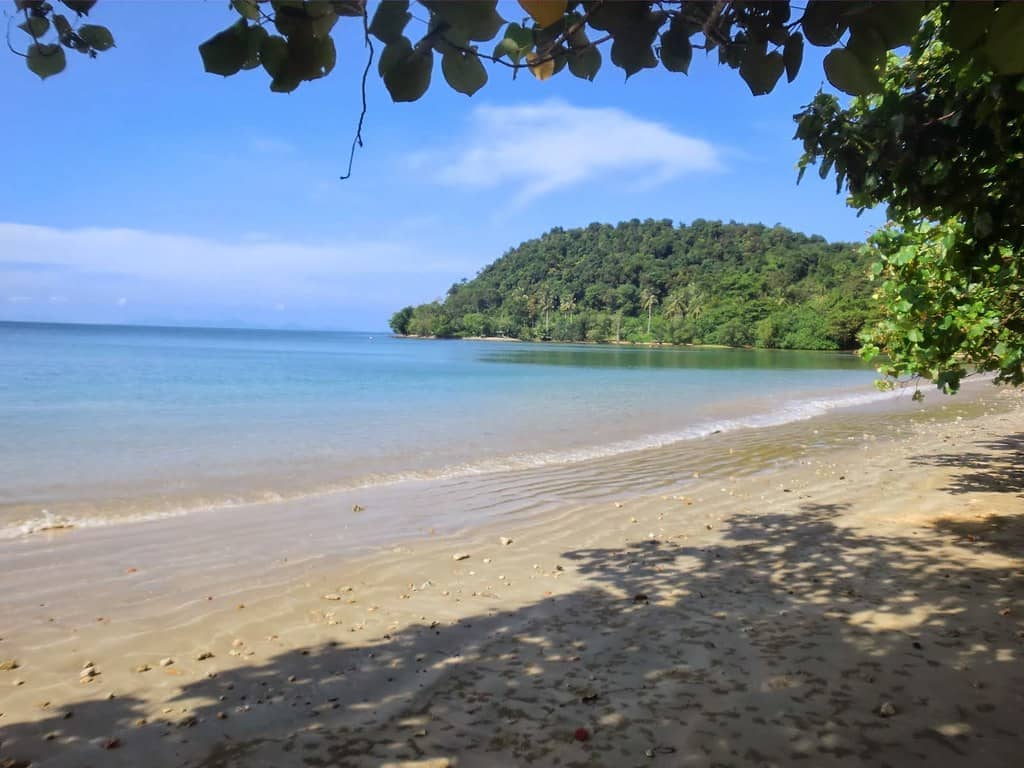
The island has no main street lined with tour agencies, no beach clubs, and no high-season crowds that force early reservations. What it has is forested interior terrain, a handful of beaches spread across its coastline, a modest local fishing community, and a collection of small guesthouses and bungalow operations that cater to travelers who arrived here on purpose. The atmosphere is low-key to a degree that some find restoring and others find dull — that distinction matters when deciding whether to go.
ℹ️ Good to know
Koh Jum has no fixed island entrance fee. You pay for the boat crossing from Laem Kruat Pier — fares vary by service and can change. Confirm at the pier before boarding.
Getting to Koh Jum: The Boat from Laem Kruat
The standard approach is by local boat from Laem Kruat Pier on the Krabi Province mainland. Laem Kruat is not a well-signed destination from Krabi Town or Ao Nang, so the first practical challenge is getting yourself to the pier. Most travelers arrange a songthaew or private transfer, or join a guesthouse transfer if their accommodation offers one. From Koh Lanta, boat connections also exist during the main season, making Koh Jum a realistic intermediate stop if you're traveling between the two.
Boats land at the island's principal arrival point, Mutu Pier. The crossing itself is short by Andaman island standards — under an hour in most conditions — but schedules are not fixed to the precision of a ferry timetable. Morning departures are typical, and services can thin out or stop during rough weather. During the southwest monsoon (roughly May through October), sea conditions can make crossings uncomfortable or impossible on some days. If your travel window falls in the rainy season, build in flexibility.
For a broader overview of island-hopping logistics across Krabi Province, the Krabi island hopping guide covers ferry routes, timing, and how to sequence multi-island trips efficiently.
⚠️ What to skip
Boat schedules, ferry operators, and fares at Laem Kruat Pier are not fixed and can change seasonally. Verify departure times and prices directly with your accommodation or at the pier before making plans around a specific crossing.
Tickets & tours
Live prices and dates from our booking partner. If you book, we may earn a commission at no extra cost to you.
Full-day Koh Rok and Koh Haa from Koh Lanta
From 47 €Instant confirmationFree cancellationKoh Kradan and Four Islands Boat Tour from Koh Lanta Yai
From 52 €Instant confirmationFree cancellationMuay Thai introductory group class for beginners in Koh Lanta
From 14 €Instant confirmationFree cancellationMuay Thai introductory private class for beginners in Koh Lanta
From 45 €Instant confirmationFree cancellation
The Island's Pace: Morning to Evening
Mornings on Koh Jum are genuinely quiet. The beaches face west along much of the coastline, which means morning light is soft and indirect — good for walking rather than photographing sunrises. The air is cooler before 9am, and the sound is mostly water and birds rather than longtail engines. Local fishing boats head out early, and the beach in front of smaller guesthouses often sits completely empty until mid-morning.
By afternoon, the heat becomes a real factor. Temperatures in Krabi Province average around 31–34°C during the day year-round, and Koh Jum's limited shade coverage on its beaches means the middle of the day pushes most visitors into hammocks, guesthouse common areas, or the water. Sunsets, however, are the island's most reliable daily event. The west-facing beaches catch the last light cleanly, without buildings or other islands blocking the view in most spots.
Evenings are minimal in the best sense. A few small restaurants and beach bars operate near the main accommodation clusters, but there is no nightlife strip and no noise after a certain hour. If that sounds limiting, it probably is for you. If it sounds exactly right, Koh Jum will deliver.
Beaches and Interior: What You'll Find on the Ground
Koh Jum's beaches are not manicured. The sand is generally coarse rather than powdery, and rocky sections appear along parts of the shoreline, particularly at low tide. This is not the polished tropical-postcard experience of some more developed Krabi beaches. What it offers instead is space — you will rarely share a stretch of beach with more than a handful of people, even during the dry-season peak.
The island's interior is covered in dense forest and rises toward higher ground in the north, which locals often call Ko Pu. This elevated section is largely undeveloped and rewards visitors who are comfortable walking on informal trails in humid conditions. There are no maintained hiking paths with waypoints or park infrastructure comparable to Khao Phanom Bencha on the mainland. Views from the higher ground do exist, but reaching them requires effort and local guidance.
If you want developed trails and viewpoints with some infrastructure, Khao Phanom Bencha National Park on the Krabi mainland is a more organized option for jungle hiking.
Snorkeling directly from Koh Jum's beaches is possible but modest compared to the reef systems around Koh Lanta's outer islands. The island itself is not primarily a snorkeling destination. Day trips to better reef sites can sometimes be arranged locally, but options are limited compared to what Koh Lanta or Ao Nang can organize.
The Local Community and Cultural Context
Koh Jum has a permanent local population, including fishing families who have lived on the island for generations. Small villages sit alongside the tourism accommodation, and the dynamic between these two parts of island life is more visible here than on more tourist-saturated islands. Morning markets and fishing activity are genuine, not staged, and treating the local community with ordinary respect — dressing appropriately away from the beach, keeping noise reasonable — matters more on a quiet island where both groups share the same limited space.
The island has no large temple complex or major cultural site that functions as a formal attraction. The experience of the community is ambient rather than curated. That said, observing the rhythm of working fishing boats, informal markets, and village life gives Koh Jum a texture that purely resort-oriented islands lack.
Weather, Seasonality, and When to Go
December through February is the most reliably dry period across Krabi Province, with lower humidity, clearer skies, and calmer sea conditions. This is when Koh Jum is most accessible and most comfortable. March and April are still manageable, though temperatures climb and the sea can become choppier toward the end of April.
The southwest monsoon arrives roughly in May and continues through October. During this period, boat services from Laem Kruat reduce, accommodation options thin out as some guesthouses close for the season, and the island takes on a different character entirely. Some travelers prefer the off-season quiet and lower prices, but this requires realistic expectations about service availability and sea conditions. The guide to visiting Krabi in rainy season explains what to expect across the province during this period.
💡 Local tip
For the most straightforward visit, arrive in December, January, or February. Book accommodation before you travel — not because the island fills up the way Phi Phi or Railay does, but because the number of operating guesthouses is small enough that choices become limited late.
Practical Notes: Accessibility, Connectivity, and What to Bring
Koh Jum has limited infrastructure by design. ATMs are not reliably available on the island — bring sufficient Thai baht in cash before you arrive. The same applies to medications, sunscreen, and any specific food requirements. The small shops on the island cover basics, but at limited selection and higher prices than mainland towns.
Mobile signal varies across the island and is weaker in some accommodation areas. Wi-Fi is offered at many guesthouses but should not be relied on for consistent remote work. The island's electricity supply is generally stable at resorts and established guesthouses, but bungalow operations may use generators with limited hours. Ask your accommodation specifically.
Wheelchair accessibility across the island is not established. Pier landings involve stepping between boat and dock, and paths between accommodation and beaches are typically unpaved. The island is not suited to travelers with significant mobility limitations based on current infrastructure.
Tap water is not safe to drink. Use sealed bottled water or water confirmed safe by your accommodation — this applies across Thailand and Koh Jum is no exception.
If budget management across your Krabi trip is a priority, the Krabi budget travel guide covers where spending is unavoidable and where it can be cut.
Insider Tips
- Confirm your guesthouse's boat transfer arrangement before arrival — many accommodations on Koh Jum will coordinate your pickup from the pier, which saves confusion at Mutu Pier if you're arriving for the first time.
- Bring more cash than you think you need. The island has no reliable ATM access, and card payments are not widely accepted outside of mid-range resorts.
- The northern part of the island (the Ko Pu section) is less developed and sees fewer visitors than the southern clusters. If you want even more space, look for accommodation on that end — though transfers will be longer from the pier.
- Low tide significantly changes some beaches, exposing rock and reducing swim-friendly areas. Ask locally about tide timing if your visit is tied to swimming or photography.
- Guesthouses and small resorts on Koh Jum often close entirely between roughly June and September. Contact your intended accommodation directly to confirm they are open during your travel dates, especially outside the dry season.
Who Is Koh Jum For?
- Couples and solo travelers looking for unhurried beach time without resort-town energy
- Anyone using Koh Jum as a midpoint stop between Krabi Town and Koh Lanta
- Travelers who prioritize quiet, space, and a low footprint over nightlife and activities
- Visitors who want a small-island experience without the crowds of Phi Phi or the infrastructure of Koh Lanta
- Photographers and nature observers who work well without organized tour structures
Nearby Attractions
Other things to see while in Koh Lanta:
- Kantiang Bay
Kantiang Bay sits near the southern tip of Koh Lanta Yai, backed by forested hills and flanked by limestone headlands. The beach is free, uncrowded compared to Koh Lanta's northern stretches, and rewards visitors who make the effort to get there with a genuinely peaceful atmosphere and clear water.
- Khlong Chak Waterfall
Khlong Chak Waterfall sits deep inside Mu Ko Lanta National Park on Ko Lanta Yai, reached by a trail that weaves through dense jungle and crosses a stream multiple times. It rewards patient hikers with a shaded, 8-metre cascade and a natural pool, well away from the island's beach crowds.
- Klong Dao Beach
Stretching nearly 3 kilometres along Koh Lanta Yai's west coast, Klong Dao Beach is one of the island’s longest and most well-developed beaches. Wide, calm, and easy to reach from Saladan Pier, it offers something that rarer shores often don't: comfort without sacrifice.
- Klong Nin Beach
Klong Nin Beach runs for roughly 2.4 km along the west coast of Koh Lanta Yai, offering calm waters, affordable beachside restaurants, and dramatically low crowds compared to Thailand's more famous shores. It rewards travelers who prioritize atmosphere over facilities.
Planning a trip? Discover personalized activities with the Nomado app.