Koh Haa (Five Islands): Krabi's Premier Underwater Wilderness
Koh Haa is a group of five uninhabited limestone islands inside Mu Ko Lanta National Park, accessible only by boat from Koh Lanta. The islands are best known for exceptional diving and snorkeling, with underwater caves, coral-covered walls, and clear water that draws serious divers and day-trippers alike.
Quick Facts
- Location
- Mu Ko Lanta National Park, Krabi Province, Thailand (offshore from Koh Lanta)
- Getting There
- By boat only; day trips depart from Koh Lanta piers (approx. 45–60 min by speedboat)
- Time Needed
- Full day (most tours run 7–8 hours including travel)
- Cost
- National park entry fee applies (reported ~฿400 for foreign adults; verify before travel); day tour prices vary by operator
- Best for
- Divers, snorkelers, underwater photographers, and travelers seeking uncrowded island scenery
- Official website
- portal.dnp.go.th/Content/nationalpark?contentId=927
What Is Koh Haa?
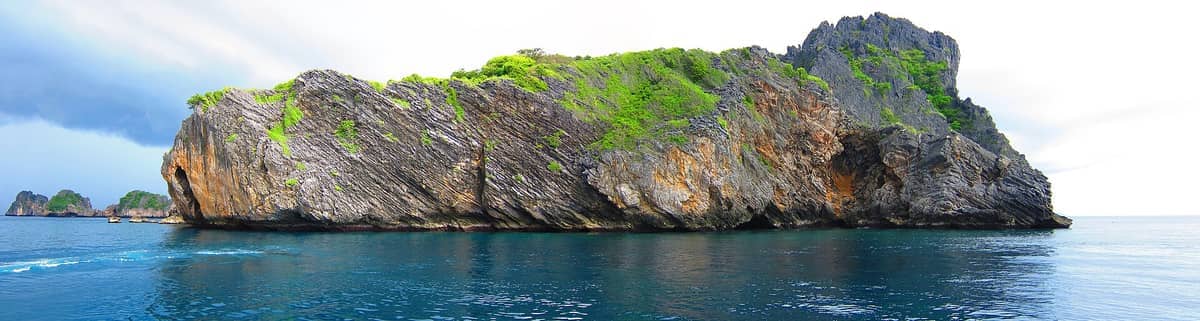
Koh Haa translates directly from Thai as 'Five Islands,' and the name describes exactly what you get: five compact limestone islands grouped tightly together in the Andaman Sea, southwest of Koh Lanta. The cluster sits within Mu Ko Lanta National Park, which means the surrounding waters are protected, the coral is in comparatively good health, and the islands themselves are off-limits to development. There are no beach bars here, no sunbeds to rent, and no resorts. What there is instead is some of the clearest water in Krabi Province.
The appeal of Koh Haa is almost entirely underwater. Above the surface, the islands are dramatic enough: sheer karst cliffs dropping straight into the sea, narrow channels between the limestone outcrops, and a sheltered lagoon at the center of the group. But it is below the waterline where the islands earn their reputation. The walls drop to considerable depth and are covered in hard and soft corals. There is a partially submerged cave system accessible even to snorkelers at the right tide level. Visibility on a calm day is frequently exceptional by Andaman standards.
ℹ️ Good to know
Koh Haa and the surrounding offshore islands within Mu Ko Lanta National Park are reported to close annually from approximately 16 May to 15 November due to rough Andaman Sea conditions during the southwest monsoon. Verify current access status with your operator or the Department of National Parks before booking.
The Underwater Experience: What Divers and Snorkelers Actually See
The site is divided informally among operators into several zones corresponding to different underwater features. The lagoon in the center of the group offers the shallowest water and the most sheltered conditions, making it suitable for beginner snorkelers and for groups with children. The visibility here, even in the shallows, is often 10–15 meters on a clear dry-season day, and the sandy floor reflects light in a way that gives the water a luminous pale blue-green color.
The cave is the feature that sets Koh Haa apart from most other snorkeling spots in Krabi. At low tide, a partially submerged cave opens at the base of one of the limestone islands. Snorkelers can swim into a dimly lit chamber where the ceiling rises above the waterline and the only light filters in from the entrance behind them. Sound changes noticeably inside: the slap of the water against the cave walls echoes, and the noise of boat engines disappears. It is a completely different sensory environment from the open lagoon outside.
For certified divers, the deeper outer walls offer ledges and overhangs sheltering resting leopard sharks (during the season), barrel sponges, and occasional reef manta rays in the channel between islands. Koh Haa is frequently included in liveaboard itineraries as well as single-day dive charters from Koh Lanta.
Koh Lanta-based dive operators are your primary access point for Koh Haa dives. If you are comparing marine sites, it is worth reading the full Krabi diving guide before committing to a specific operator or itinerary.
Tickets & tours
Live prices and dates from our booking partner. If you book, we may earn a commission at no extra cost to you.
Full-day Koh Rok and Koh Haa from Koh Lanta
From 47 €Instant confirmationFree cancellationKoh Kradan and Four Islands Boat Tour from Koh Lanta Yai
From 52 €Instant confirmationFree cancellationMuay Thai introductory group class for beginners in Koh Lanta
From 14 €Instant confirmationFree cancellationMuay Thai introductory private class for beginners in Koh Lanta
From 45 €Instant confirmationFree cancellation
Getting There: Boats, Timing, and What to Expect
There is no public ferry to Koh Haa. Access is exclusively through organized tours or chartered boats departing from Koh Lanta, typically from the piers around Saladan or along the island's west coast. Speedboats cover the distance in roughly 45 to 60 minutes depending on sea conditions and the exact departure point; longtail boats take considerably longer and are rarely used for Koh Haa specifically. Most full-day snorkeling and diving tours depart by 8:00–9:00 in the morning and combine Koh Haa with one or two other sites, often returning by mid to late afternoon.
The journey itself can be rough if the sea is even moderately choppy. The boats used for speedboat tours are open fiberglass vessels, and a 45-minute crossing at speed over two-foot swells is not comfortable for people who are prone to seasickness. Bring medication if that is a concern, and take it before boarding, not after you start feeling unwell.
Koh Lanta is a logical base for a Koh Haa trip. If you are still deciding where to stay in Krabi Province, the Koh Lanta travel guide covers accommodation options, getting to the island, and what else to do while you are there.
💡 Local tip
Book your Koh Haa tour a day in advance during peak season (December–February). Spots on speedboats fill up, and last-minute bookings sometimes end up on slower, more crowded vessels.
Best Time to Visit: Season, Tides, and Time of Day
The window for visiting Koh Haa is essentially the dry season: November through April, with December through February being the most reliable months for calm seas and good underwater visibility. The southwest monsoon brings rough water and strong currents to this part of the Andaman, and the islands fall within the national park's seasonal closure period, reported as approximately mid-May through mid-November. Travel operators on Koh Lanta will know if conditions are borderline.
Within the open season, morning visits consistently produce better underwater conditions. Afternoon winds tend to pick up, reducing visibility slightly and making the boat ride back to Koh Lanta less comfortable. Most organized tours are structured accordingly, with in-water time concentrated in the morning and early afternoon.
The cave snorkel is tide-dependent. At high tide the entrance can be very low, making it harder (or impossible) to enter without ducking fully underwater. Experienced guides will time the cave visit to match the tide. If you are booking independently and the operator does not mention tides when discussing the itinerary, ask directly.
If you are planning a broader island-hopping trip out of Koh Lanta, compare the marine sites covered in the Krabi island hopping guide to understand how Koh Haa fits alongside other destinations like Koh Rok and Koh Ngai.
Practical Details: Fees, Gear, and What to Bring
Entry to the marine area requires payment of the national park fee. A secondary source reports this at approximately ฿400 per foreign adult for offshore marine sites within Mu Ko Lanta National Park, though this amount was not independently verified against the official fee schedule as of early 2025. In practice, the fee is almost always collected by the tour operator as part of the booking or paid at a ranger station on the water. Verify the current amount directly with your operator or the Department of National Parks before travel.
Snorkeling gear is included in most day-tour packages departing from Koh Lanta. The quality varies: cheap masks with poor seals make a real difference to the experience when you are trying to look at coral. If you own a mask that fits you well, bring it. Fins are generally provided and adequate. Wetsuits or rash guards are not strictly necessary for thermal comfort in the dry season, but a rash guard protects against sunburn during surface intervals and provides light protection if you bump against coral.
- Reef-safe sunscreen only: standard chemical sunscreens are harmful to coral and are actively discouraged in national park marine areas
- Cash in Thai baht for the national park fee if not pre-paid through your operator
- A dry bag for phones and cameras on the boat crossing
- Water and snacks, though most tours provide lunch
- Motion sickness medication if you are susceptible, taken before departure
⚠️ What to skip
There are no facilities on the islands themselves: no toilets, no shade structures, no freshwater. Everything you need for the day must come with you on the boat. Sunburn on open water is significantly faster than on land, even on overcast days.
Accessibility and Who Should Reconsider This Trip
No verified information is available on step-free or mobility-impaired access to Koh Haa. Boarding the speedboat from a pier typically requires stepping over a low railing onto a rocking vessel, and entry into the water is usually by rolling backward or stepping off the side of the boat. Anyone with significant mobility limitations should speak directly with the operator before booking to understand exactly what the boarding and in-water process involves.
Travelers who are not comfortable in open water, who cannot swim confidently, or who are easily motion-sick will likely find the experience more stressful than enjoyable. Koh Haa is genuinely impressive, but its appeal is almost entirely aquatic. If being in the water is not your thing, the boat ride out and back and an hour floating in a life vest above coral does not constitute a satisfying full day. Consider whether a different type of excursion from Koh Lanta might be a better use of your time.
If you prefer land-based nature, Mu Ko Lanta National Park also protects inland forest areas and has hiking trails worth exploring.
Photography at Koh Haa
Underwater photography at Koh Haa is rewarding but requires some planning. The cave interior is the most dramatic subject, but it is also the most technically demanding: you are shooting into a space lit only by indirect natural light from the entrance, which means wide apertures, higher ISOs, and a camera housing that can manage wet hands and a narrow entry corridor. A basic waterproof phone case or single-use waterproof camera captures the general atmosphere but will not do justice to the contrast between the dark cave ceiling and the lit water below.
In the open lagoon, the light between 9:00 and 11:00 is best for surface-level snorkeling shots: the sun is high enough to penetrate the water without the harsh shadows of midday, and the pale sandy floor bounces light back up in a way that makes coral colors pop. The limestone cliffs above water photograph well in the early morning when they catch warm directional light; by midday they read as flat white and overexposed against the sky.
Insider Tips
- Ask your operator specifically which boat they will use. Some companies advertise small-group tours but subcontract to larger, cheaper operators with crowded vessels. A boat with 25+ people significantly degrades the cave snorkeling experience.
- The lagoon between the five islands acts as a natural calm zone even when the outer sea is moderately choppy. If conditions look borderline on departure, the lagoon snorkeling is usually still possible even when the open-water dive sites are not.
- If you want to snorkel the cave without a crowd, arrive at the site as early in the morning as possible. By 10:30, multiple boats are often anchored at the cave entrance simultaneously and the experience inside becomes congested.
- Combine Koh Haa with Koh Rok on the same liveaboard or multi-day itinerary rather than treating them as separate day trips from Koh Lanta. The two sites are relatively close to each other and the combined underwater scenery covers different reef types.
- The national park fee is non-negotiable and goes toward park maintenance. Be skeptical of operators advertising a total price that seems too low; some omit the fee from their quoted rate and collect it separately on the day, which can catch travelers off guard.
Who Is Koh Haa For?
- Certified divers looking for Andaman wall dives with good marine life density
- Snorkelers who want a genuine underwater cave experience without needing scuba equipment
- Underwater photographers with waterproof camera setups
- Travelers based on Koh Lanta seeking a full-day marine excursion
- Anyone who prioritizes uncrowded, protected marine environments over developed beach tourism
Nearby Attractions
Other things to see while in Koh Lanta:
- Kantiang Bay
Kantiang Bay sits near the southern tip of Koh Lanta Yai, backed by forested hills and flanked by limestone headlands. The beach is free, uncrowded compared to Koh Lanta's northern stretches, and rewards visitors who make the effort to get there with a genuinely peaceful atmosphere and clear water.
- Khlong Chak Waterfall
Khlong Chak Waterfall sits deep inside Mu Ko Lanta National Park on Ko Lanta Yai, reached by a trail that weaves through dense jungle and crosses a stream multiple times. It rewards patient hikers with a shaded, 8-metre cascade and a natural pool, well away from the island's beach crowds.
- Klong Dao Beach
Stretching nearly 3 kilometres along Koh Lanta Yai's west coast, Klong Dao Beach is one of the island’s longest and most well-developed beaches. Wide, calm, and easy to reach from Saladan Pier, it offers something that rarer shores often don't: comfort without sacrifice.
- Klong Nin Beach
Klong Nin Beach runs for roughly 2.4 km along the west coast of Koh Lanta Yai, offering calm waters, affordable beachside restaurants, and dramatically low crowds compared to Thailand's more famous shores. It rewards travelers who prioritize atmosphere over facilities.
Planning a trip? Discover personalized activities with the Nomado app.