Mu Ko Lanta National Park: Where Koh Lanta's Wild Side Begins
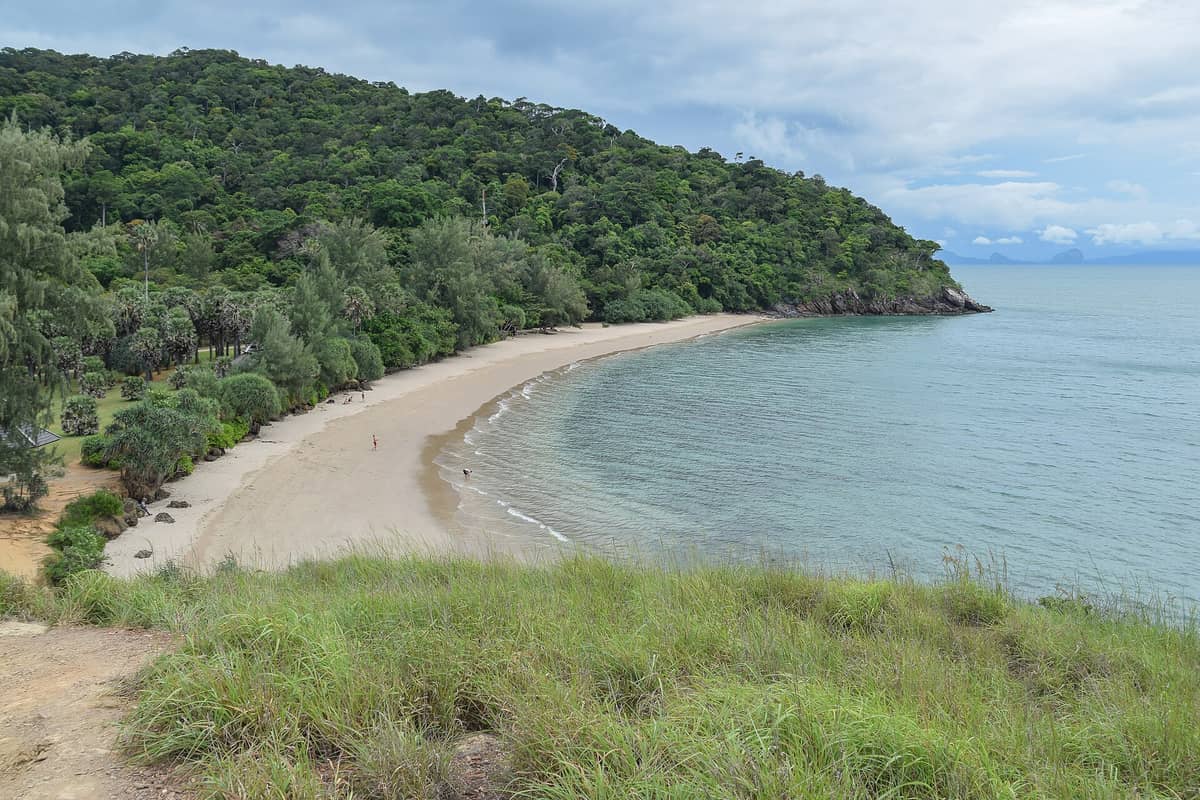
Mu Ko Lanta National Park protects 16 islands and 134 square kilometres of coral reefs, mangroves, and forested coastline at the southern end of Koh Lanta Yai. The park headquarters sits on a dramatic headland, reachable by road, while its outer islands are accessible only by boat and closed entirely during the monsoon season.
Quick Facts
- Location
- Laem Ta Nod, southern tip of Ko Lanta Yai, Ko Lanta District, Krabi Province
- Getting There
- Drive or hire a songthaew south along Ko Lanta Yai's west coast to the park headquarters; outer islands by boat only
- Time Needed
- 2–3 hours for the headquarters area; full day for outer island trips
- Cost
- Foreign adults ฿200, children aged 3–14 ฿100; Thai adults ฿40, children ฿20
- Best for
- Snorkellers, nature walkers, lighthouse seekers, and anyone wanting to escape Koh Lanta's busier beaches
- Official website
- portal.dnp.go.th/Content/nationalpark?contentId=927
What Mu Ko Lanta National Park Actually Is
Mu Ko Lanta National Park (Thai: อุทยานแห่งชาติหมู่เกาะลันตา) was established on 15 August 1990 and is administered by Thailand's Department of National Parks (DNP). The park spans approximately 134 km² and encompasses 16 islands, the largest of which is the southern portion of Ko Lanta Yai itself. The protected area takes in coastal forest, mangrove channels, rocky headlands, fringing coral reefs, and open sea between islands.
Unlike mainland parks where you walk through a single contained zone, Mu Ko Lanta is fundamentally a maritime park. The headquarters at Laem Ta Nod, on Ko Lanta Yai's southernmost cape, is the only section accessible by road. Everything else, including the park's most celebrated snorkelling and diving islands, requires a boat. This distinction matters enormously when planning your visit.
ℹ️ Good to know
Park headquarters hours: daily 08:30–16:30. Most outer islands within the park are closed from approximately 16 May to 31 October each year due to monsoon weather and rough seas. Confirm current access with the park before booking any boat trips.
The Headquarters at Laem Ta Nod: What You'll See on Foot
The road from Koh Lanta's main strip narrows and quietens considerably as you approach the park entrance. The air changes too, picking up the heavier, saltier character of open water. At the entrance gate you pay your admission, and from there a path leads to the lighthouse that sits on the headland above the Andaman Sea.
The lighthouse itself is compact and colonial in character, painted white, and positioned high enough to give an unobstructed view south over the islands that make up the rest of the park. On a clear dry-season morning the visibility stretches out over layers of sea colour, from the pale green shallows near the rocks to deep blue offshore. At this hour the site is typically quiet, sometimes just a handful of visitors and the sound of frigate birds overhead.
As the day progresses, particularly between 10:00 and 14:00, day-trippers from the resorts further north begin arriving, and the headland path becomes noticeably more crowded. If you come late afternoon, around 15:00 to 16:00, the crowds thin again and the light is warmer, though you need to factor in the 16:30 closing time.
The surrounding forest holds some short walking trails through the coastal vegetation. These are not long or strenuous routes, but they reward slower walkers: look for monitor lizards on the rocks near the water and dusky langur monkeys in the canopy above the path. The rocks themselves, especially at lower tide, carry barnacled texture and the sound of water drawing in and out of crevices.
💡 Local tip
Wear shoes with grip rather than sandals for the lighthouse path. Some sections cross uneven rock and can be slippery after morning humidity or light rain.
Tickets & tours
Live prices and dates from our booking partner. If you book, we may earn a commission at no extra cost to you.
Full-day Koh Rok and Koh Haa from Koh Lanta
From 47 €Instant confirmationFree cancellationKoh Kradan and Four Islands Boat Tour from Koh Lanta Yai
From 52 €Instant confirmationFree cancellationMuay Thai introductory group class for beginners in Koh Lanta
From 14 €Instant confirmationFree cancellationMuay Thai introductory private class for beginners in Koh Lanta
From 45 €Instant confirmationFree cancellation
The Outer Islands: The Park's Real Draw
The outer islands within the park's boundaries are what most snorkellers and divers come to Koh Lanta to reach. Several of these islands have coral reefs in genuinely good condition, with visibility in the dry season reaching 15–20 metres on calm days. The islands that fall within or adjacent to the park's zone, including Ko Haa, Ko Rok Nok, and Ko Rok Nai, are among the most respected dive sites in Krabi Province.
Ko Haa in particular is known for a series of submerged chambers and swim-throughs that attract experienced divers. For a broader overview of what's possible underwater in this area, the Krabi diving guide covers the main sites, conditions, and operator considerations across the region.
Ko Rok, further south and closer to Ko Lanta's coordinate axis, features white sand beaches backed by forest and coral gardens shallow enough for snorkellers. It appears frequently on Krabi snorkelling itineraries precisely because the reef begins in accessible depths.
Access to the outer islands is entirely by boat, typically arranged through tour operators in Ban Sala Dan (the northern ferry village on Ko Lanta Yai) or through your accommodation. These are day trips, not independent excursions, and departure times are dictated by sea conditions and operator schedules. The outer islands sit within the park boundary, so your national park admission fee may be collected by the tour operator or at a ranger check point during the journey.
When to Visit: The Seasonal Reality
The park's inner area at the headquarters is accessible year-round during opening hours. The outer islands are a different matter. The DNP closes most of the smaller islands from around 16 May to 31 October to allow ecosystems to recover during the monsoon period and to protect visitors from dangerous sea conditions.
The optimal window for the full park experience, including boat access to the outer islands, is roughly November through April. December through February tends to offer the calmest seas and clearest underwater visibility. If you are visiting Koh Lanta outside this window, it is worth reading the guide to Krabi in the rainy season to calibrate expectations for what remains accessible.
⚠️ What to skip
Do not book outer island boat trips more than a day in advance during shoulder months (April and November). Sea conditions can change quickly, and operators may cancel with short notice. Always check cancellation policies before paying.
The headquarters area at Laem Ta Nod is workable year-round if you accept that the monsoon season brings heavy humidity, irregular rain, and overcast skies. The walk to the lighthouse can still be done, the landscape is green and dramatic, but the views over the Andaman are less likely to reward you with clear, far-reaching sightlines.
Getting to the Park and Getting Around
Ko Lanta Yai is reached from the mainland or from Krabi Town by ferry. From Ban Sala Dan, the island's main arrival point in the north, the park headquarters is roughly 25–30 km south along the west coast road. The road passes through the island's interior communities and beach areas before descending to the southern cape.
Renting a scooter is the most common independent option for reaching the headquarters. If you are not comfortable on a scooter, songthaews (shared pickup trucks serving as taxis) are available from Ban Sala Dan, though you will need to negotiate the fare in advance for a point-to-point trip this far south. For context on how Koh Lanta sits within the larger Krabi travel network, the Krabi to Koh Lanta guide covers ferry schedules and transfer options.
There is no public bus service running the length of Ko Lanta Yai to the park. Taxis from resorts are an option but can be expensive for the return trip if the driver is unwilling to wait. Plan your return logistics before you leave, especially given the 16:30 closing time at the headquarters.
💡 Local tip
If you are based at one of the southern beaches on Ko Lanta Yai, such as Kantiang Bay, the park headquarters is significantly closer and the logistics become much simpler.
Photography, Wildlife, and the Park's Quieter Side
The lighthouse headland offers the most photogenic perspectives at sunrise or in the hour before the park closes, when the low-angle light catches the water and the rocky coastline below. Midday shooting is flat and contrasty, and the sea often appears washed out in direct sun. A polarising filter makes a meaningful difference for shots over the water.
Wildlife sightings at the headquarters are not guaranteed but are fairly consistent for a few species. Dusky langurs are seen regularly in the trees near the path. Monitor lizards, sometimes over a metre in length, patrol the rocks and scrub near the shore. Birdlife includes resident sea eagles and migratory species during transitional months. The mangrove channels in the park's edges, best viewed by kayak or longtail where operators offer access, support different species including kingfishers and mudskippers.
For travellers interested in the park's marine ecosystems in more detail, Ko Haa is worth researching separately as a dive destination in its own right.
Who Should Manage Expectations
Mu Ko Lanta National Park is not a theme park or a curated visitor experience. The headquarters area is small, the facilities are basic, and if you have come primarily to see a dramatic natural landscape with minimal effort, the lighthouse walk delivers that. But it will not take more than two hours, and there are no cafes, restaurants, or interpretive centres within the park grounds as of the latest available information.
Travellers who are primarily interested in beach time are better served by Koh Lanta's main beaches. Those with mobility limitations should be aware that the lighthouse path involves uneven terrain and that the available information does not confirm step-free or wheelchair-accessible routes within the park. Visitors expecting a forest trekking experience comparable to Khao Phanom Bencha or the interior national parks on the mainland will find the headquarters section underwhelming in scope.
If you are building a wider itinerary around Koh Lanta, the five-day Krabi itinerary offers a framework for combining the park with other island and mainland destinations.
Insider Tips
- Arrive at the headquarters right when it opens at 08:30. The light is better, the wildlife is more active, and you will likely have the lighthouse area largely to yourself before the day-trip crowd arrives.
- If your accommodation is in the southern third of Ko Lanta Yai, consider visiting the park in the late afternoon rather than building a long half-day trip from the north. The 16:30 close is firm.
- Outer island boat trips that include Ko Rok or Ko Haa are sold by many operators, but the quality of the snorkelling equipment and the size of the group vary significantly. Ask specifically how many passengers are on the boat and whether soft coral sites are included, not just beach stops.
- The park admission fee (฿200 for foreign adults as of 2026) is sometimes bundled into tour operator pricing for outer island trips. Ask before paying twice. If visiting the headquarters independently by scooter, you pay at the entrance gate.
- The road to the park passes Klong Dao, Klong Nin, and other west coast beaches on Ko Lanta Yai. Combining the park visit with a beach stop on the way back makes for a natural full-day loop rather than a dedicated out-and-back trip.
Who Is Mu Ko Lanta National Park For?
- Snorkellers and divers targeting Krabi Province's best reef systems via the outer islands
- Travellers who want to see the preserved, undeveloped end of Ko Lanta away from resort infrastructure
- Wildlife watchers interested in langurs, sea eagles, and monitor lizards in a coastal forest setting
- Photographers looking for dramatic headland and sea views in good morning or late-afternoon light
- Day-trippers from Ko Lanta looking for a half-day excursion that doesn't require getting on a long-haul boat
Nearby Attractions
Other things to see while in Koh Lanta:
- Kantiang Bay
Kantiang Bay sits near the southern tip of Koh Lanta Yai, backed by forested hills and flanked by limestone headlands. The beach is free, uncrowded compared to Koh Lanta's northern stretches, and rewards visitors who make the effort to get there with a genuinely peaceful atmosphere and clear water.
- Khlong Chak Waterfall
Khlong Chak Waterfall sits deep inside Mu Ko Lanta National Park on Ko Lanta Yai, reached by a trail that weaves through dense jungle and crosses a stream multiple times. It rewards patient hikers with a shaded, 8-metre cascade and a natural pool, well away from the island's beach crowds.
- Klong Dao Beach
Stretching nearly 3 kilometres along Koh Lanta Yai's west coast, Klong Dao Beach is one of the island’s longest and most well-developed beaches. Wide, calm, and easy to reach from Saladan Pier, it offers something that rarer shores often don't: comfort without sacrifice.
- Klong Nin Beach
Klong Nin Beach runs for roughly 2.4 km along the west coast of Koh Lanta Yai, offering calm waters, affordable beachside restaurants, and dramatically low crowds compared to Thailand's more famous shores. It rewards travelers who prioritize atmosphere over facilities.
Planning a trip? Discover personalized activities with the Nomado app.