Krabi Elephant Sanctuary: An Honest Guide to an Ethical Elephant Experience
Set in the Nong Thale area outside Krabi Town, Krabi Elephant Sanctuary offers an afternoon program designed around observation and natural interaction rather than riding or performance. Here is what the experience actually involves, what it costs, and how to decide if it belongs in your itinerary.
Quick Facts
- Location
- 165 Moo 4, NongTalay, Mueang Krabi, Krabi 81000, Thailand
- Getting There
- Hotel pickup included from Krabi City and Ao Nang
- Time Needed
- Approximately 5 hours door to door (pickup at 13:00, drop-off around 18:00)
- Cost
- THB 2,500 per adult / THB 2,000 per child (ages 2–9) / Free under 2 (verify before booking)
- Best for
- Families, animal welfare advocates, travelers seeking low-impact wildlife encounters
- Official website
- krabielephantsanctuary.com
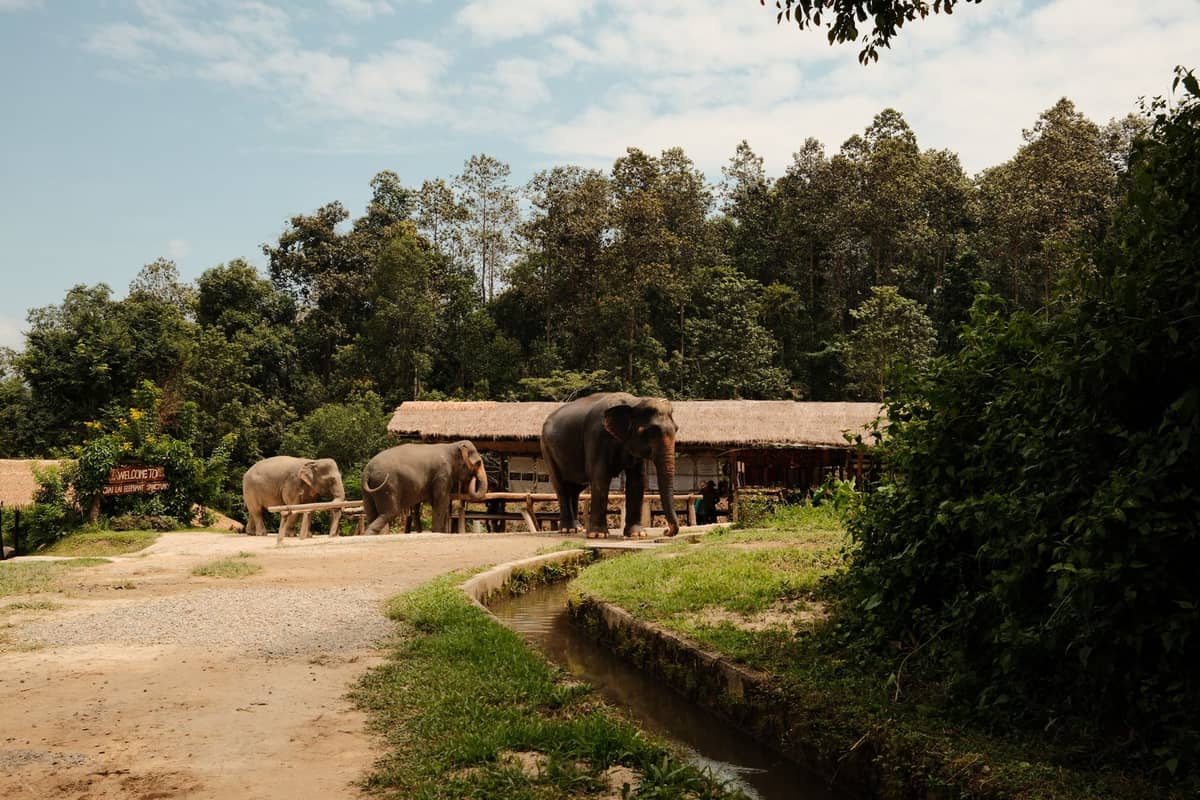
What Kind of Place Is This, Exactly?
Krabi Elephant Sanctuary operates at 165 Moo 4 in the Nong Thale district, The name 'Krabi Elephant Sanctuary' is used by more than one operator in the province, so when booking, confirm the address and check that you are dealing with the operator at this specific location rather than a similarly named alternative.
The program is built around watching elephants behave on their own terms: grazing, bathing, and moving through their environment without being directed for tourist entertainment. There is no riding, no circus-style performance, and no hooks. For travelers who have done their research on elephant tourism ethics in Thailand, this positioning is meaningful — it represents a shift away from the practices that dominated the industry for decades.
ℹ️ Good to know
The name 'Krabi Elephant Sanctuary' is shared by more than one operator in Krabi Province. The details on this page refer specifically to the operator at 165 Moo 4, Nong Thale. Confirm the address when booking to avoid confusion.
The Afternoon Program: What You Actually Do
The program runs on a fixed daily schedule. Hotel pickup from Krabi Town and Ao Nang accommodation begins at 13:00, and drop-off is around 18:00, giving you approximately five hours from door to door. The core time at the sanctuary itself is shorter once transit is factored in, so expectations should be calibrated accordingly — this is not a full-day excursion.
At the site, visitors typically observe the elephants in a natural setting, prepare food for them, and watch them bathe. The interaction is supervised and guided throughout. You are given context about each elephant's background, which tends to shift the experience from passive tourism toward something closer to genuine learning. Groups are kept small by design, which means the elephants are not subjected to continuous crowds, and visitors get more direct engagement with guides.
Nong Thale is an agricultural and semi-rural area, not a manicured theme park. The surroundings are functional rather than scenic in a postcard sense: expect red-clay ground underfoot during dry months and genuinely muddy conditions after rain. Wear shoes you do not mind ruining, and bring a change of clothes if you plan to wade during the bathing segment.
💡 Local tip
Wear closed shoes with grip and clothes you can get muddy. Light long trousers are practical — they protect against insects and scrub without adding excessive heat. Sandals and flip-flops are a poor choice around large animals on uneven ground.
Tickets & tours
Live prices and dates from our booking partner. If you book, we may earn a commission at no extra cost to you.
Daily Cooking Class at Thai Cookery School in Krabi
From 42 €Instant confirmationFree cancellation7 islands speedboat excursion from Krabi
From 41 €Instant confirmationFree cancellationSpeedboat Tour to Hong Island Archipelago from Krabi
From 34 €Instant confirmationFree cancellationPhi Phi archipelago and Krabi 4 Islands full‑day speedboat tour
From 0 €Instant confirmationFree cancellation
Understanding the Ethical Context
Thailand's elephant tourism industry has a complicated history. For much of the twentieth century, working elephants in the logging industry were retrained into tourism roles when commercial logging was banned in 1989, leading to a rapid expansion of riding camps and shows. Many of those practices involved training methods widely criticized by animal welfare organizations. Sanctuaries and ethical camps emerged partly as a response to this, though the term 'sanctuary' is not regulated in Thailand, and it has been applied inconsistently across the industry.
Choosing where to spend your money matters in this context. Look for operations that can articulate where their elephants came from, how they are housed overnight, what veterinary care they receive, and what 'no riding' actually means in practice rather than marketing. When booking with Krabi Elephant Sanctuary, ask these questions directly. Responsible operators welcome them.
For broader context on animal welfare considerations when planning your Krabi trip, the things to do in Krabi guide covers wildlife experiences alongside other activities across the province.
Getting There and Practical Logistics
The included hotel pickup from Krabi Town and Ao Nang is the most convenient option and removes the need to navigate rural roads independently. Arrange pickup at the time of booking rather than on the day. If your accommodation is outside the standard pickup zones, contact the operator in advance to confirm whether alternative arrangements are available.
Krabi has no metro or passenger rail system. Independent travelers arriving by taxi should arrange transport in advance, as availability in Nong Thale can be inconsistent. A metered or negotiated taxi from Krabi Town is a fallback. From Krabi International Airport (KBV), allow roughly 50 minutes by road, depending on traffic and exact route.
If you are combining the sanctuary with other Krabi Town sightseeing, the Khao Khanab Nam twin limestone caves and the Wat Kaew Korawaram temple are both within a short drive of the town center and can fill a morning before your 13:00 pickup.
⚠️ What to skip
Confirm your pickup point and hotel name with the operator at the time of booking. If your accommodation is in an area not covered by the standard shuttle, you may need to arrange your own transport to a designated meeting point.
Weather, Timing, and What Changes by Season
Krabi has a tropical climate, with a rainy season roughly from May through October. The sanctuary program runs daily regardless of season, but the experience changes meaningfully with the weather. In the dry months, the ground is often firmer and the air less humid; afternoon heat can still be significant.
Visiting during the rainy season is not a reason to skip the sanctuary entirely — elephants are not weather-dependent in the way that a beach day is, and many travelers find the lush, green landscape during the wet season more atmospheric than the dry-season landscape. That said, mud will be a genuine factor, the light for photography is less cooperative, and afternoon thunderstorms can arrive quickly. Bring a compact rain cover for your camera and a dry bag for anything you cannot afford to get wet.
For a fuller breakdown of how the seasons shape a Krabi itinerary, see the best time to visit Krabi guide.
Photography and What to Bring
The afternoon schedule includes travel to the sanctuary before meeting the elephants, so the 13:00 pickup is not the start of the on-site photography session. Later afternoon light may be warmer and softer, but timing depends on the schedule and weather.
A zoom lens with a range of 70 to 200 mm gives you the flexibility to photograph elephants at distance without crowding them, while a wider lens captures environmental context. Avoid flash entirely around animals. A waterproof case or dry bag is worth carrying at the bathing segment, as water tends to travel further than anticipated.
- Closed, grip-sole shoes — sandals are unsuitable
- Light, long trousers for insect protection
- Sunscreen and insect repellent
- Reusable water bottle — the afternoon heat is significant
- Compact rain cover or dry bag for electronics
- Small cash for any optional purchases; card acceptance at the site is not confirmed
Accessibility and Who Should Consider Alternatives
The operator's published pages do not specify wheelchair access, mobility aids, or other accessibility provisions. The terrain at Nong Thale is uneven — compacted earth rather than paved paths — which is likely to present significant challenges for visitors with limited mobility. Contact the operator directly before booking to discuss your specific requirements rather than assuming either that access is possible or that it is impossible.
Travelers with a very limited time window in Krabi may find that the five-hour door-to-door commitment leaves too little room alongside other priorities. The afternoon-only program also means it cannot be combined with boat-based activities that typically run in the morning and return by early afternoon. If your Krabi schedule is concentrated on island hopping or beach days, this experience requires deliberate scheduling rather than easy drop-in.
Families planning a longer visit to the province may find it easier to integrate the sanctuary into a multi-day schedule. The Krabi with kids guide has practical suggestions for building an itinerary that balances beach time with inland activities.
Insider Tips
- Book directly through the official website at krabielephantsanctuary.com and confirm the address is 165 Moo 4, NongTalay — this eliminates confusion with similarly named operators in the province.
- The bathing segment typically takes place in the late afternoon when light is better for photography and temperatures have dropped slightly. Position yourself on the shaded bank early rather than scrambling for space when the elephants arrive.
- Pack a spare shirt in a dry bag. Clothes that seemed sensible in the morning — particularly anything pale or light-colored — tend not to survive the bathing segment intact.
- Children aged 2 to 9 receive a discounted rate, but under-2s attend free. The program is slow-paced enough for young children, but keep them close during elephant feeding moments — even well-habituated elephants are large animals.
- Prices listed are in Thai baht. At the time of writing they were THB 2,500 per adult, but verify directly with the operator before booking — prices and inclusions can change without notice on third-party listing sites.
Who Is Krabi Elephant Sanctuary For?
- Travelers who want wildlife contact without supporting riding or performance-based shows
- Families with children old enough to follow safety instructions and stay composed around large animals
- Animal welfare advocates who want to spend their tourism money at operations that reflect their values
- Slow travelers with a flexible Krabi itinerary who can dedicate an afternoon without conflicting commitments
- Photographers interested in candid animal behavior rather than posed or staged shots
Nearby Attractions
Other things to see while in Krabi Town:
- Ao Tha Lane & Mangrove Forest
Ao Tha Lane, also listed officially as Tha Lane Bay, is a tidal bay in Khao Thong Subdistrict where dense mangrove forest meets sheer karst cliffs. The only meaningful way to explore it is by kayak, paddling through narrow channels where the canopy closes overhead and the water turns dark green. It is quieter and less commercialized than most of Krabi's headline attractions.
- Huai To Waterfall
Huai To Waterfall (Nam Tok Huai To) is a multi-tiered cascade tucked inside Khao Phanom Bencha National Park, roughly 20 km north of Krabi Town. A short forest walk leads through dense tropical vegetation to a series of pools fed by cool mountain water, making it one of the most accessible natural retreats on the Krabi mainland.
- Khao Khanab Nam Caves
Two sheer limestone towers rising roughly 100 metres above the Krabi River, Khao Khanab Nam is the geological signature of Krabi Town. A short long-tail boat ride from Chao Fah Pier leads into cave chambers that served as a Japanese military camp in World War II and contain fossilised remains estimated to be millions of years old.
- Khao Phanom Bencha National Park
Khao Phanom Bencha National Park is Krabi's inland rainforest reserve, protecting steep limestone peaks, a dramatic five-tier waterfall, and dense jungle habitat roughly 20 km north of Krabi Town. It rewards early risers with cool air, birdsong, and cascading water, but trails beyond the lower falls require preparation and a degree of fitness.
Planning a trip? Discover personalized activities with the Nomado app.