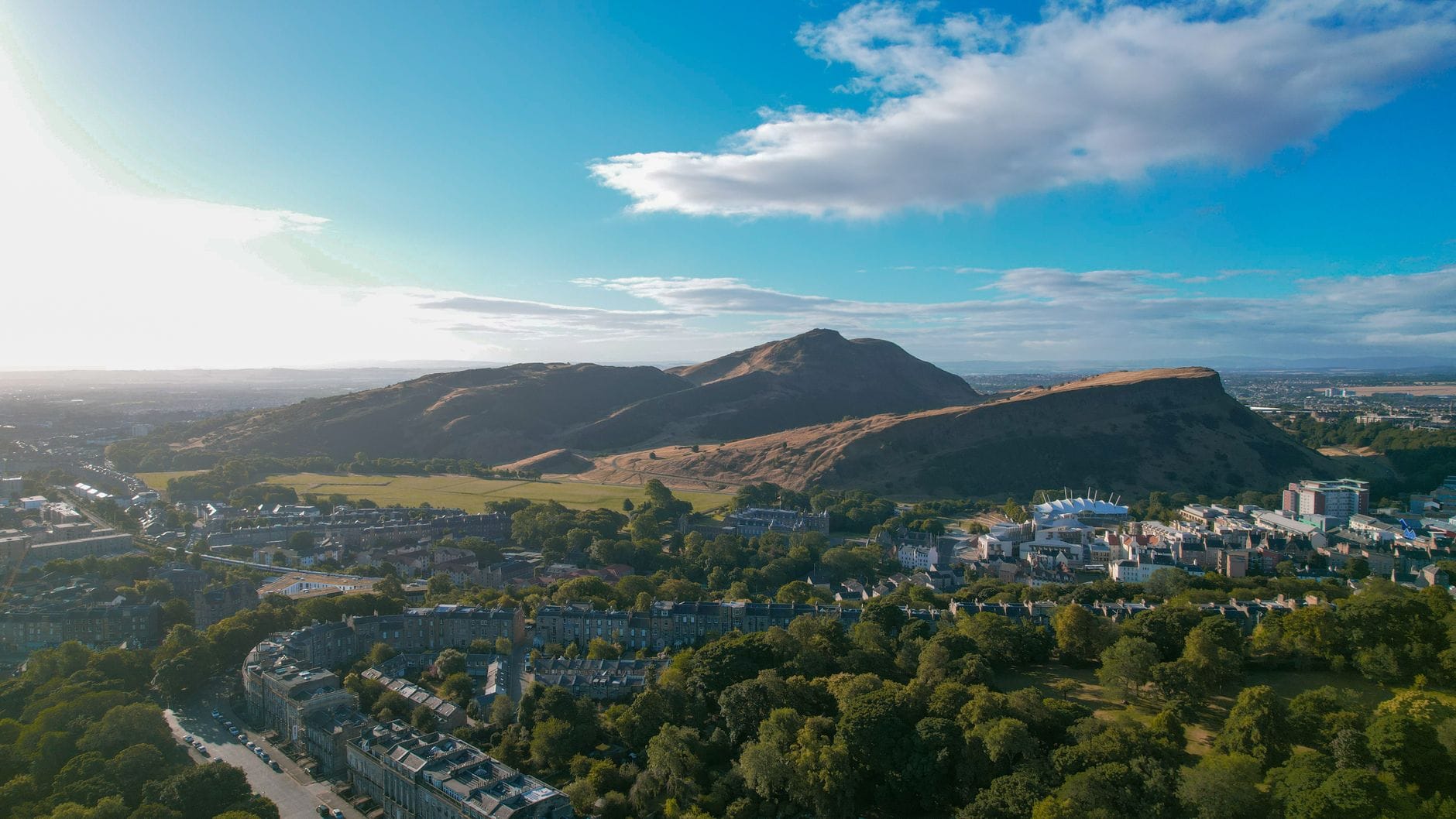
Holyrood and Canongate occupy the eastern end of Edinburgh's Royal Mile, where the city's medieval street pattern meets royal palaces, volcanic parkland, and Scotland's modern parliament. This is the quieter, more historic end of the Old Town, shaped by centuries of royal and ecclesiastical power.
Holyrood and Canongate form the royal and political heart of Edinburgh's eastern Old Town, where the Royal Mile descends from the castle ridge to terminate at the Palace of Holyroodhouse and the crags of Holyrood Park. It is the end of the mile where the stone is oldest, the stories are densest, and the crowds thin out just enough for the history to breathe.
Orientation
Holyrood and Canongate make up the lower, eastern section of Edinburgh's Old Town. The Canongate is the final stretch of the Royal Mile, running roughly from the World's End area, where the old city wall once stood near St Mary's Street, all the way down to the gates of Holyrood Palace. The Holyrood zone itself clusters around the foot of that descent: the Palace, the ruins of Holyrood Abbey, the Scottish Parliament building on Horse Wynd, and the boundary of Holyrood Park.
To the north, the slope drops toward Canongate's closes and Calton Road, which runs parallel and connects toward Waverley station. To the south, the terrain rises sharply into the volcanic geology of Holyrood Park. The western boundary is informal but generally understood as the junction with High Street around the Netherbow, the site of the old city gate. To the east, the neighbourhood ends at the perimeter wall of Holyrood Park, beyond which the area transitions toward the residential streets of Abbeyhill.
Edinburgh Waverley, the main rail station, is roughly one kilometre from the Scottish Parliament, making the walk uphill toward the castle or downhill to Holyrood very walkable for most visitors. The neighbourhood connects naturally to New Town via Calton Hill to the northeast, and to the Southside via the Pleasance or The Meadows, though those routes involve climbing over or around the ridge.
Character & Atmosphere
The Canongate has a quieter, more residential personality than the tourist-saturated stretch of the Royal Mile closer to the castle. The stone tenements lining the street are genuine Old Town architecture, with narrow closes cutting off on both sides. Some of those closes, when you peer into them, feel unchanged from the 17th century. The kerb-level activity is more local than the upper mile: a small post office, a pharmacy, a community notice board on the Canongate Kirk.
Mornings here are genuinely quiet by Edinburgh city-centre standards. The coaches haven't arrived yet, the closes are empty, and if the light is right in spring or autumn, the long low sun catches the sandstone and basalt in a way that makes the street look sepia. By mid-morning, tour groups begin moving down the Royal Mile from the castle, and the Canongate gets busier as they descend. The Parliament building draws its own stream of visitors after opening time.
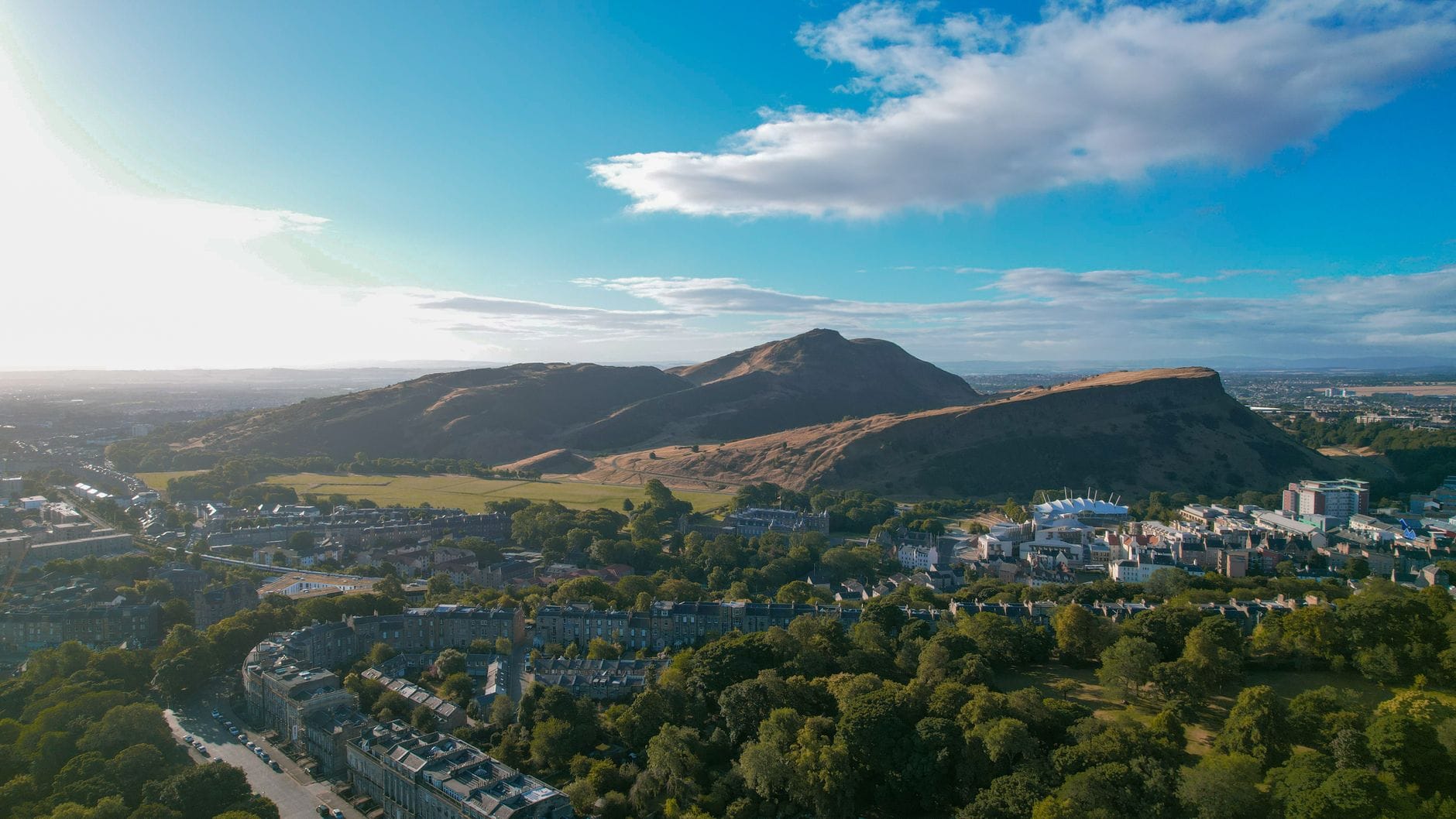
Holyrood itself has a slightly different atmosphere from Canongate proper. The foot of the Royal Mile is wide and open rather than enclosed, with the Palace gates on one side and the angular, ambitious architecture of the Scottish Parliament on the other. It functions partly as a civic space, and on days when the Parliament is sitting and the Holyrood cameras are outside, it feels like the centre of political Scotland. In the evenings, once the Palace and Parliament have closed to the public, the area empties quickly. The tourists head back up the mile, and Holyrood becomes almost silent, with the dark rock of Arthur's Seat rising above the last lamp posts.
💡 Local tip
Visit the foot of the Royal Mile early on a weekday morning. By 8am, the closes around Canongate are empty, the Canongate Kirk's courtyard is peaceful, and the Parliament forecourt is quiet enough to properly look at Enric Miralles's extraordinary building without crowds.
History & Context
The Canongate was originally a separate burgh from Edinburgh, established in the 12th century under the authority of the Augustinian canons of Holyrood Abbey. 'Canongate' literally means the canons' road. It was a burgh of regality, governed by the abbey rather than the Edinburgh town council, which meant it operated under different laws and retained its own distinct identity until its formal incorporation into Edinburgh in 1856. The aristocracy and court figures who needed to be close to Holyrood Palace built their townhouses here rather than in Edinburgh proper.
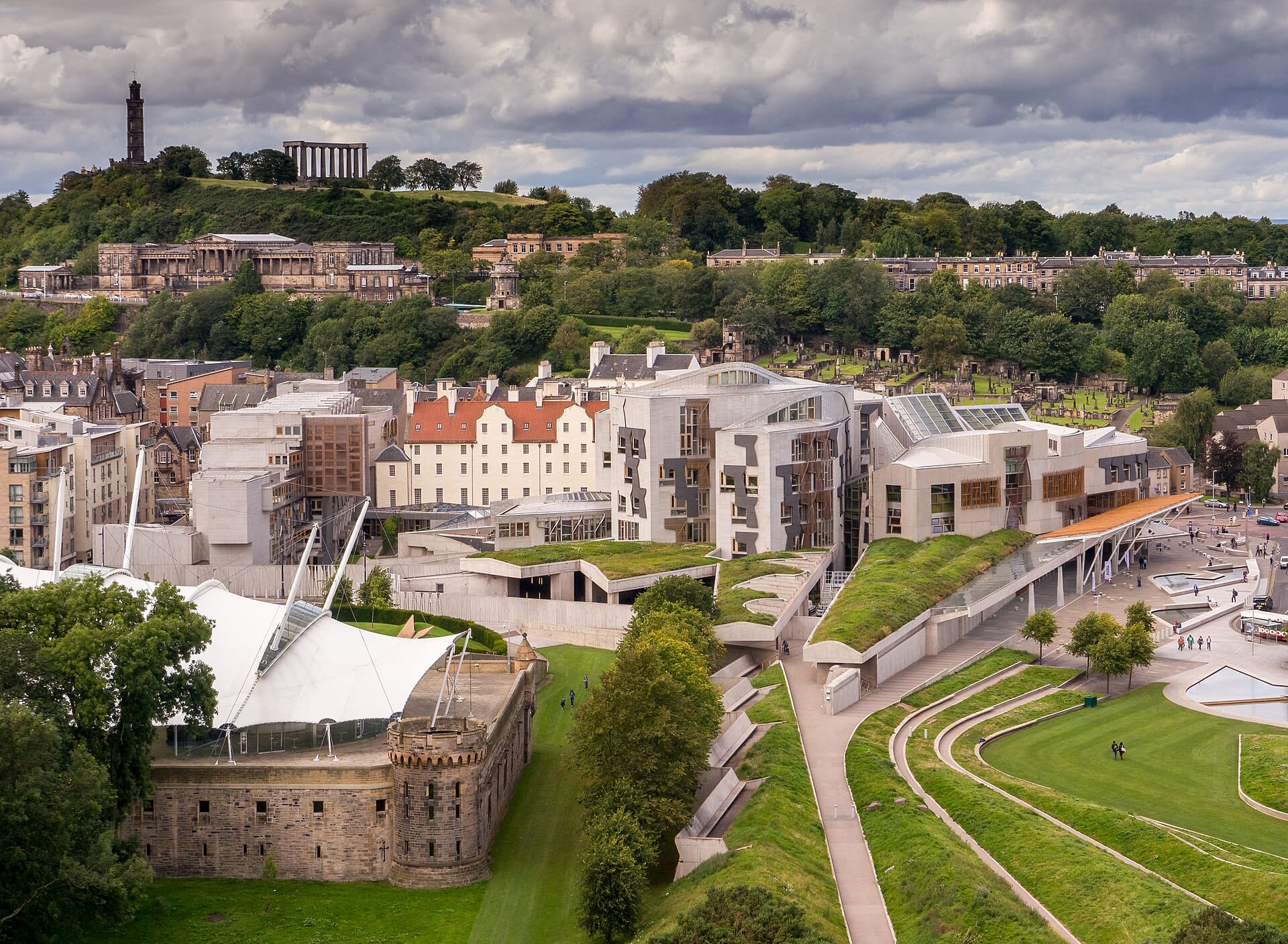
Holyrood itself developed as an industrial quarter beyond the city walls. From the 16th century onward, brewing became the dominant industry in the area, exploiting the proximity to clean water sources coming off the volcanic hills. The Holyrood Brewery, which operated for centuries, was one of the last remnants of that industrial past before the area's transformation following the Parliament's construction in the late 1990s and early 2000s. The Parliament building, designed by Catalan architect Enric Miralles and completed in 2004, deliberately references the local landscape in its forms: upturned boats, leaves, the texture of the Salisbury Crags.
Both Holyrood and Canongate sit within Edinburgh's Old Town UNESCO World Heritage Site, recognised for the preserved medieval street pattern and the layered architecture spanning six centuries. This context matters for understanding why the area looks the way it does: it is not a theme park recreation of a historic street, it is the actual thing, which means some buildings are in better repair than others, and the social history is complex and not always picturesque. The closes and courts off the Canongate hold stories of overcrowding, plague, and poverty alongside the noble residents. Visitors interested in that social depth should look at Gladstone's Land further up the mile, which provides strong context for how the tenement system worked.
What to See & Do
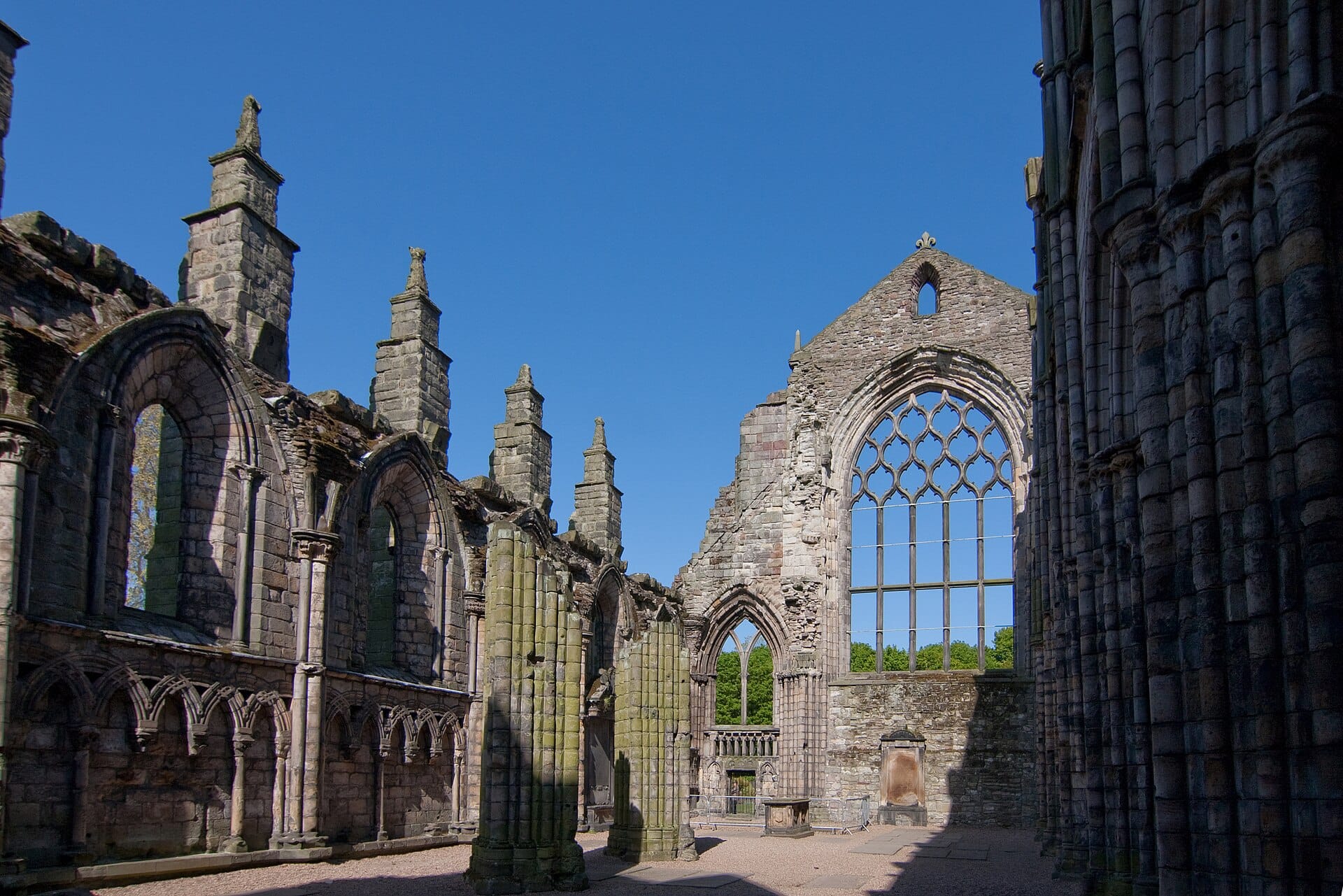
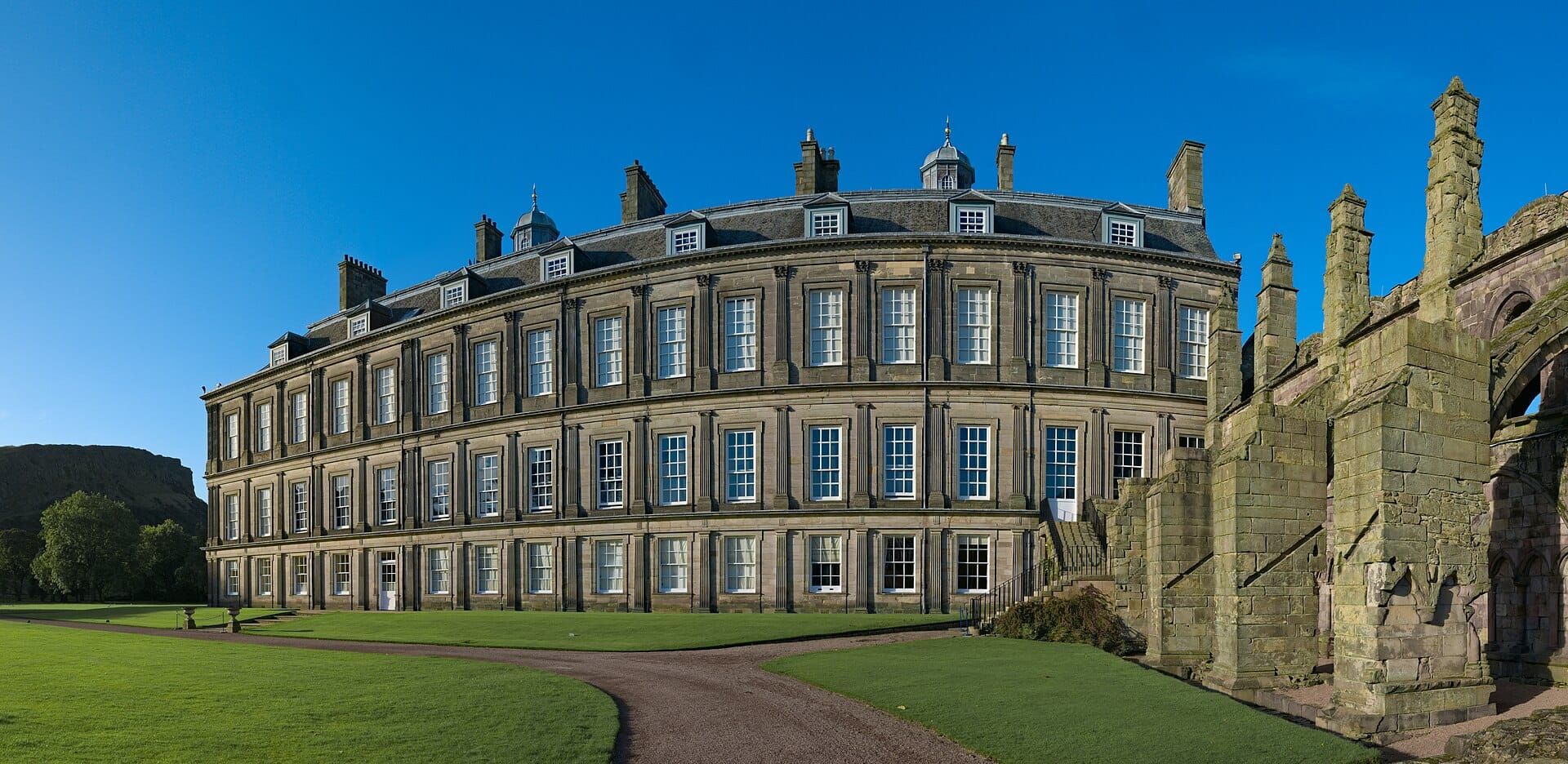
The Palace of Holyroodhouse is the primary draw at the foot of the Royal Mile. It is the official Scottish residence of the monarch, which means it has genuine royal function rather than being simply a museum. The State Apartments are open to visitors when the Palace is not in official use, and the ruined nave of Holyrood Abbey, accessible from within the Palace grounds, is one of Edinburgh's most haunting spaces: open to the sky, the stonework eroded but still soaring, with the Salisbury Crags rising behind it.
The Scottish Parliament building on Horse Wynd is worth visiting independently of any political interest. It is architecturally significant at an international level, and free guided tours are available when Parliament is in recess. The Canongate Wall on the exterior of the Parliament features inscriptions from Scottish literature and history embedded into the stonework, functioning as a kind of public poem running along the street.
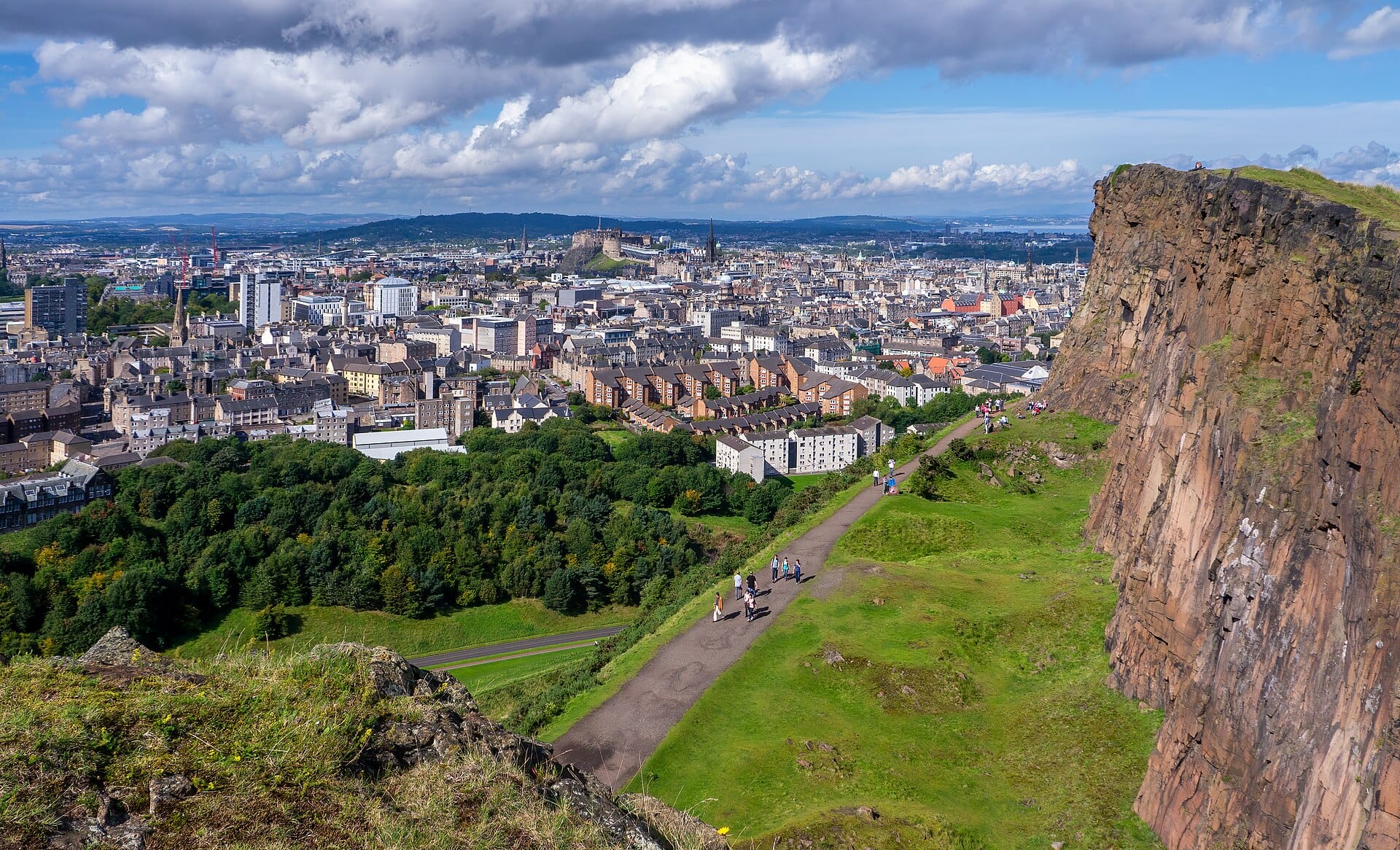
Immediately behind the Palace and Parliament, Holyrood Park is a 260-hectare royal park within the city boundary. The ascent to Arthur's Seat, the ancient volcanic summit at 251 metres, begins from the park's entrance near the Palace. The walk to the top takes around 45 minutes to an hour depending on your route and fitness, and the 360-degree views over Edinburgh, the Firth of Forth, and the Lothians are unmatched. The Salisbury Crags offer a shorter walk with similarly dramatic scenery, and the cliff face itself played a significant role in James Hutton's development of modern geology.
Canongate Kirk and its kirkyard, where several notable Scots are buried including economist Adam Smith
The Museum of Edinburgh on the Canongate, charting the city's history from pre-Roman times to the modern era
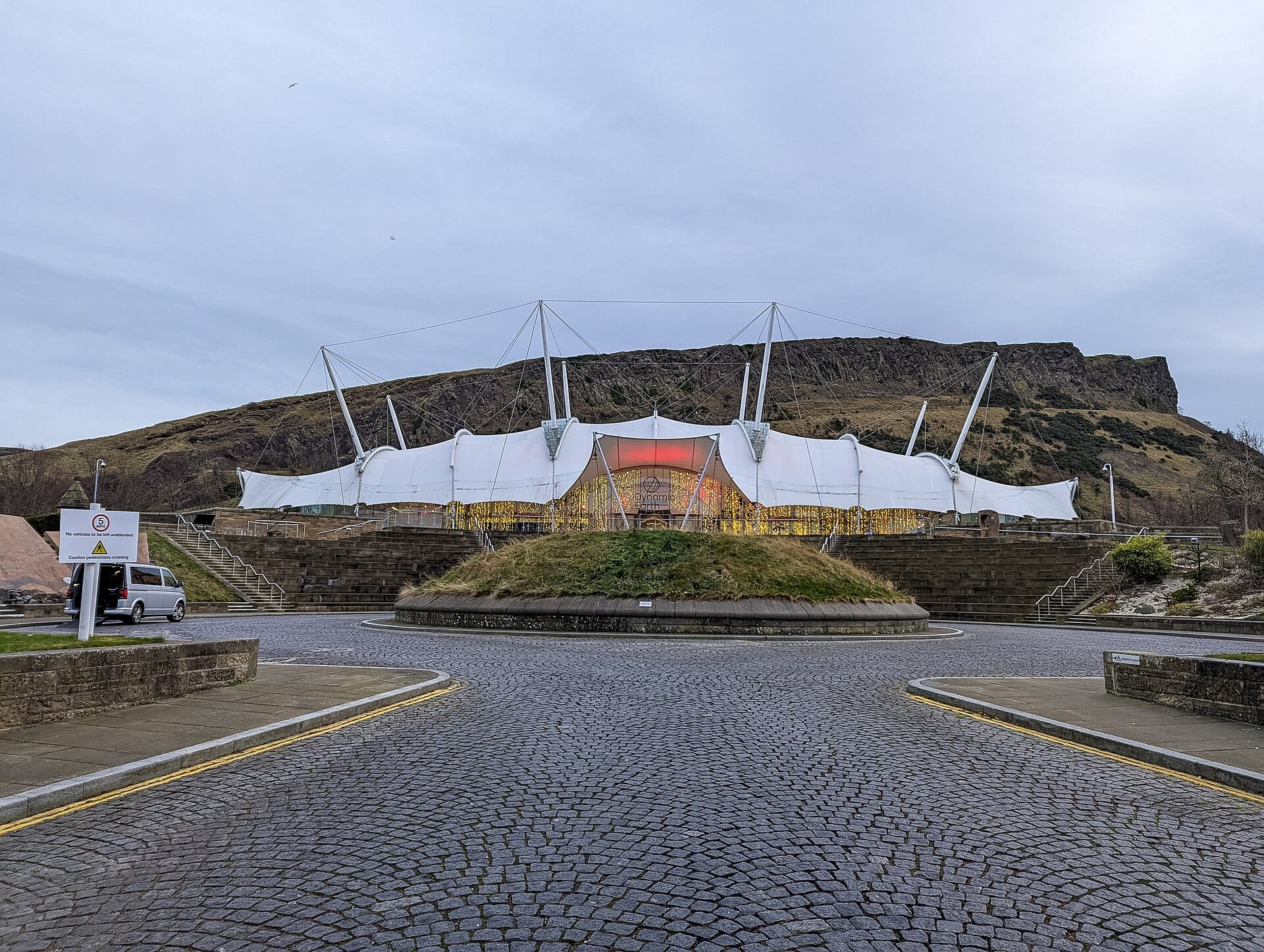
Our Dynamic Earth, the science centre dedicated to Earth's geological and natural history, aimed primarily at families
The People's Story Museum in the Canongate Tolbooth, focused on the lives of ordinary Edinburgh residents across the centuries
The closes and courts off the Canongate, including Bakehouse Close and Dunbar's Close Garden, a 17th-century-style walled garden that is free to enter
ℹ️ Good to know
Dunbar's Close Garden, tucked off the Canongate down a narrow pend, is one of the most overlooked spaces in central Edinburgh. It is a small formal garden modelled on 17th-century designs, with clipped hedges and a sense of enclosure that makes the city noise disappear. Admission is free and it is rarely crowded.
During the Edinburgh Festival period in August, the Canongate and Holyrood become part of the wider festival geography. The Royal Edinburgh Military Tattoo takes place on the Castle Esplanade above, and the Fringe spills performances into venues along the mile. For more on navigating this period, the Edinburgh Fringe guide covers venue locations, ticketing, and logistics in detail.
Eating & Drinking
The eating and drinking landscape on the Canongate and around Holyrood is more selective than the upper Royal Mile, where tourist-oriented cafes and pubs cluster thickly. That is not always a disadvantage. The further east you walk from the castle, the more the options shift toward places that serve the Parliament staff, local residents, and a more destination-conscious visitor.
Several pubs along the Canongate have genuine age and character. The Canongate has historically been a drinking street, and a handful of its pubs retain wood panelling, cask ales, and the kind of afternoon quiet that makes them good places to break a walking day. The area around Holyrood Road, running parallel to and just south of the Royal Mile, has developed a small cluster of more contemporary options including coffee shops and casual restaurants that benefit from proximity to the Parliament.
For a broader overview of where to eat across the city, including price ranges and neighbourhood comparisons, the Edinburgh food guide provides a useful framework. Visitors looking for a broader bar and pub crawl context should consult the Edinburgh nightlife guide, as the Canongate is not a nightlife district in the conventional sense: it closes down early and does not have the density of Cowgate or Grassmarket.
⚠️ What to skip
Avoid eating at any venue on the Royal Mile that places its menu on an A-frame board at the door with photos. These are almost universally aimed at tourists passing through and represent poor value compared to places a street or two off the main drag. Walk down a close or across to Holyrood Road and the quality-to-price ratio improves immediately.
Getting There & Around
Edinburgh Waverley station is the most convenient rail arrival point. From Waverley, the Canongate is reachable in about 15 to 20 minutes on foot: exit the station onto Waverley Bridge, walk along the North Bridge or Cockburn Street to the Royal Mile, and turn east (downhill). The descent is steady and the route is straightforward. This walk also gives a sense of the Old Town's topography.
Lothian Buses operate several routes along or near the Royal Mile. Check current Lothian Buses timetables and maps for services stopping near the Scottish Parliament on Canongate, as routes and numbers change over time. The city has no underground system, but the tram line from the airport now continues through the city centre to Newhaven, with the nearest stops to the Royal Mile in the New Town about 15–20 minutes on foot or a short bus ride away.
Once you are in Holyrood and Canongate, walking is the only practical way to move around. The closes off the Royal Mile are pedestrian-only, Holyrood Park is car-free on its main internal loop during certain periods, and the Parliament area is best navigated on foot. For broader guidance on moving around Edinburgh including bus and tram details, the getting around Edinburgh guide covers all transport modes with current network information.
Where to Stay
Holyrood and Canongate are not primary hotel districts. Accommodation is limited and tends toward boutique guesthouses, apartments, and a small number of hotels on or just off the Royal Mile. The advantage of staying here is immediate access to the eastern Old Town, Holyrood Park, and the Palace without the heavy foot traffic of the upper Royal Mile near the castle. The disadvantage is that evening entertainment and broader dining options require a walk. Visitors prioritising location for the Festival period should consult the where to stay in Edinburgh guide for a neighbourhood-by-neighbourhood comparison.
For those who want to be in the Old Town but find the upper Royal Mile too noisy, staying on or near the Canongate offers a genuine compromise. You are still within the UNESCO heritage area, still a short walk from the major attractions, but the street quietens meaningfully after 9pm in a way that the area around the Grassmarket or the castle does not.
Practical Notes
The Palace of Holyroodhouse is closed to the public during royal residences and certain state events, typically in late June and early July. Check the official Royal Collection Trust website before building your visit around it. Entry is paid, and timed entry tickets are available in advance, which is advisable in peak season.
Arthur's Seat and Holyrood Park are open year-round and free. The hill can be slippery after rain and the weather on the summit can be significantly colder and windier than at the foot. Proper footwear matters: the path involves loose rock and steep sections. Sunrise walks to Arthur's Seat have become popular, requiring a pre-dawn start from Holyrood but rewarding with views over a city that is not yet awake.
Visitors with an interest in Edinburgh's deeper history should consider pairing a visit here with a walk along the Water of Leith Walkway or a trip to Leith, the port district that developed in parallel with the Old Town and has its own distinct character. The two areas share a historical relationship through trade and governance that the short distance between them somewhat obscures.
TL;DR
Holyrood and Canongate form the eastern end of Edinburgh's Old Town Royal Mile, from the World's End junction down to the Palace of Holyroodhouse and Holyrood Park.
Best suited to history-focused visitors, walkers planning to climb Arthur's Seat, and those who want Old Town character without the densest tourist crowds.
Key draws include the Palace of Holyroodhouse, the Scottish Parliament building, Holyrood Abbey ruins, Arthur's Seat, and the authentic closes and kirkyard of the Canongate.
Not a nightlife area: the Canongate quietens significantly after dark, and dining options are more limited than elsewhere in the Old Town.
Edinburgh Waverley station is the practical arrival point, around 15 to 20 minutes on foot downhill, with Lothian Bus service 35 stopping directly at the Parliament on the Canongate.
Three days is the ideal amount of time to explore Edinburgh's core. This itinerary covers the Royal Mile, Arthur's Seat, New Town, Leith, and everything in between — structured day by day so you make the most of every hour.
Edinburgh stands out when it comes to museums. Many of the city's finest collections are completely free, covering Scottish history, fine art, medical oddities, and everything in between. This guide covers the best museums in Edinburgh, grouped by theme, with practical advice on what's worth your time.
Edinburgh is a city that rewards visitors in every season, but the right time to go depends entirely on your priorities. This guide breaks down weather, crowd levels, festival dates, and price patterns so you can pick the visit that suits you, not the crowds.
Edinburgh is one of Europe's most dramatic cities to look at, and luckily most of its best viewpoints are free. This guide covers every major panorama in the city, from the summit of Arthur's Seat to a little-known staircase that frames the castle perfectly.
Edinburgh sits at the centre of one of Europe's most rewarding travel regions. Within a few hours in any direction, you can reach Highland glens, medieval university towns, royal castles, and coastal wildlife reserves. This guide breaks down the best day trips from Edinburgh by transport, cost, and realistic time commitment.
Edinburgh Airport (EDI) is the main gateway into Scotland's capital, sitting around 13 km west of the city centre. This guide covers how to get into Edinburgh quickly and affordably, what to expect on arrival, and how to plan around peak-period delays.
Edinburgh's Christmas market is one of the UK's largest festive events, spreading across multiple city-centre locations from mid-November through early January. This guide covers dates, opening hours, what costs money, where to go, and how to get the most out of your visit.
Edinburgh's food scene runs deeper than tourist menus on the Royal Mile. This guide covers the essential Scottish dishes, where to eat them by neighbourhood, what things actually cost, and how to avoid the common traps that catch first-time visitors.
Edinburgh is one of Europe's most naturally romantic cities, with castle silhouettes, candlelit closes, and wild hilltops all within walking distance of each other. This guide covers the best experiences for couples, from dramatic viewpoints and atmospheric history tours to gin distilleries and peaceful riverside walks.
The Edinburgh Festival Fringe is the world's largest performing arts festival, taking over Scotland's capital every August with thousands of shows across hundreds of venues. This guide covers everything from buying tickets and choosing venues to booking accommodation and navigating the city during peak season.
Edinburgh has one of the darkest, most layered histories of any city in Europe, and it shows. This guide covers the underground vaults, haunted kirkyard, and eerie historic sites that make Edinburgh's ghost tour scene genuinely compelling, with practical advice on where to go and what to expect.
J.K. Rowling wrote much of the Harry Potter series in Edinburgh's Old Town cafés, and the city's medieval streets, graveyards, and Gothic architecture left a clear mark on the wizarding world. This guide covers every key location, the best guided and self-guided tour options, and the myths worth ignoring before you go.
Edinburgh rewards those who look beyond the Royal Mile. From a cobbled mews that stops people in their tracks to a medieval castle with almost no queue, these are the spots locals love and most visitors miss entirely.
August is Edinburgh's most extraordinary and most chaotic month. The city hosts the world's largest performing arts festival, a spectacular military tattoo, and an internationally renowned arts programme, all at once. This guide covers what to expect, how to plan, and how to avoid the common pitfalls.
December transforms Edinburgh into one of Europe's most atmospheric winter destinations. From the Christmas market in Princes Street Gardens to the multi-day Hogmanay festival welcoming the New Year, this guide covers every event, practical detail, and local tip you need to make the most of a winter visit.
Edinburgh stands out for luxury travel. From landmark 5-star hotels along Princes Street to Michelin-starred restaurants in Leith, this guide covers where to stay, eat, and what to do when budget is not the constraint.
Edinburgh's nightlife is more layered than most visitors expect. This guide covers where to drink, dance, and catch live music across the city's main districts — from the medieval streets of Cowgate to the Georgian bars of George Street — with practical timing advice, venue picks, and seasonal warnings.
Edinburgh has a reputation for being expensive, but a large share of its best attractions are completely free. This guide breaks down real costs for accommodation, food, transport, and sightseeing — with practical advice on where to spend and where to save.
Edinburgh rewards even a single day with extraordinary depth. This itinerary moves you through the Old Town's greatest hits, up to the best viewpoints, and into the New Town for a final flourish — structured so you can adapt it to your pace, the weather, and whether you want history, views, or both.
Edinburgh's best shopping isn't on Princes Street. From Victoria Street's art-filled boutiques to Stockbridge's independent collective, this guide covers every area worth your time and money, plus the markets, practical tips, and honest warnings that other guides skip.
The journey from Edinburgh to Inverness covers around 155 miles through some of Scotland's most dramatic scenery. This guide breaks down every transport option — train, bus, car, and more — with practical advice on fares, timings, and how to make the most of the route.
Two great Scottish cities, 50 miles apart and connected by one of the UK's most frequent rail links. This guide breaks down exactly what each city does better, where your money goes further, and whether you actually need to choose at all.
Edinburgh is one of Europe's most walkable cities, with a compact Old Town, dramatic volcanic landscapes, and centuries of history packed into every close and wynd. This guide covers the best walking tours in Edinburgh, from guided ghost walks through the underground vaults to self-guided routes along the Royal Mile, Water of Leith, and beyond.
Edinburgh is one of Britain's great family destinations, with a compact Old Town full of hands-on museums, free green spaces, and enough drama and history to keep kids genuinely hooked. This guide covers the best activities for families, from rainy-day museum classics to outdoor adventures on an extinct volcano.
Edinburgh stands out for free attractions. World-class national museums, sweeping hilltop viewpoints, royal parks, historic kirkyards, and free-entry galleries mean you can spend several full days in the city without spending a penny on entry fees. This guide covers the best of them.
Edinburgh is one of Europe's most walkable capital cities, but knowing when to walk, when to catch a bus, and when to splash out on a taxi makes a real difference. This guide covers every transport option in the city, from Lothian Buses and the tram line to airport transfers and cycling, with practical advice on what to use and what to skip.
Edinburgh is one of Europe's great walking cities, with an ancient volcano, dramatic crags, riverside paths, and rolling hills all within reach of the city centre. This guide covers the best hikes and walks in and around Edinburgh, from a 30-minute stroll to a full-day hill walk in the Pentlands.
The London to Edinburgh train route is one of Britain's great rail journeys, covering about 393 miles in as little as 4 hours. This guide covers journey times, realistic ticket prices, the best booking strategies, and exactly what to expect when you arrive in Scotland's capital.
Edinburgh packs more into one city than almost anywhere in Britain: a medieval castle, royal palaces, world-class free museums, volcanic hilltops, and one of the planet's most famous festivals. This guide cuts through the noise with prices, booking advice, seasonal tips, and honest opinions on what's worth your time.
Choosing where to stay in Edinburgh shapes your entire trip. This guide breaks down every major neighbourhood by character, price range, and practicality, so you can book with confidence rather than guesswork.