Palace of Holyroodhouse: Scotland's Royal Palace at the End of the Royal Mile
The Palace of Holyroodhouse is the British monarch's official residence in Scotland, a working royal palace with over 500 years of history. Sitting at the foot of the Royal Mile with Arthur's Seat rising behind it, the palace offers a rare combination of royal ceremony, dramatic architecture, and dark historical intrigue.
Quick Facts
- Location
- Canongate, The Royal Mile, Edinburgh EH8 8DX — eastern end of the Old Town
- Getting There
- 20-minute walk from Edinburgh Waverley station down the Royal Mile; local buses stop along Canongate
- Time Needed
- 1.5 to 2.5 hours for a thorough visit
- Cost
- Adults from £22, Young persons (18–24) £13, Children (5–17) £10, Under-5s free (2026 prices; verify current rates)
- Best for
- History enthusiasts, royal family followers, architecture lovers, and first-time Edinburgh visitors
- Official website
- www.rct.uk/visit/palace-of-holyroodhouse
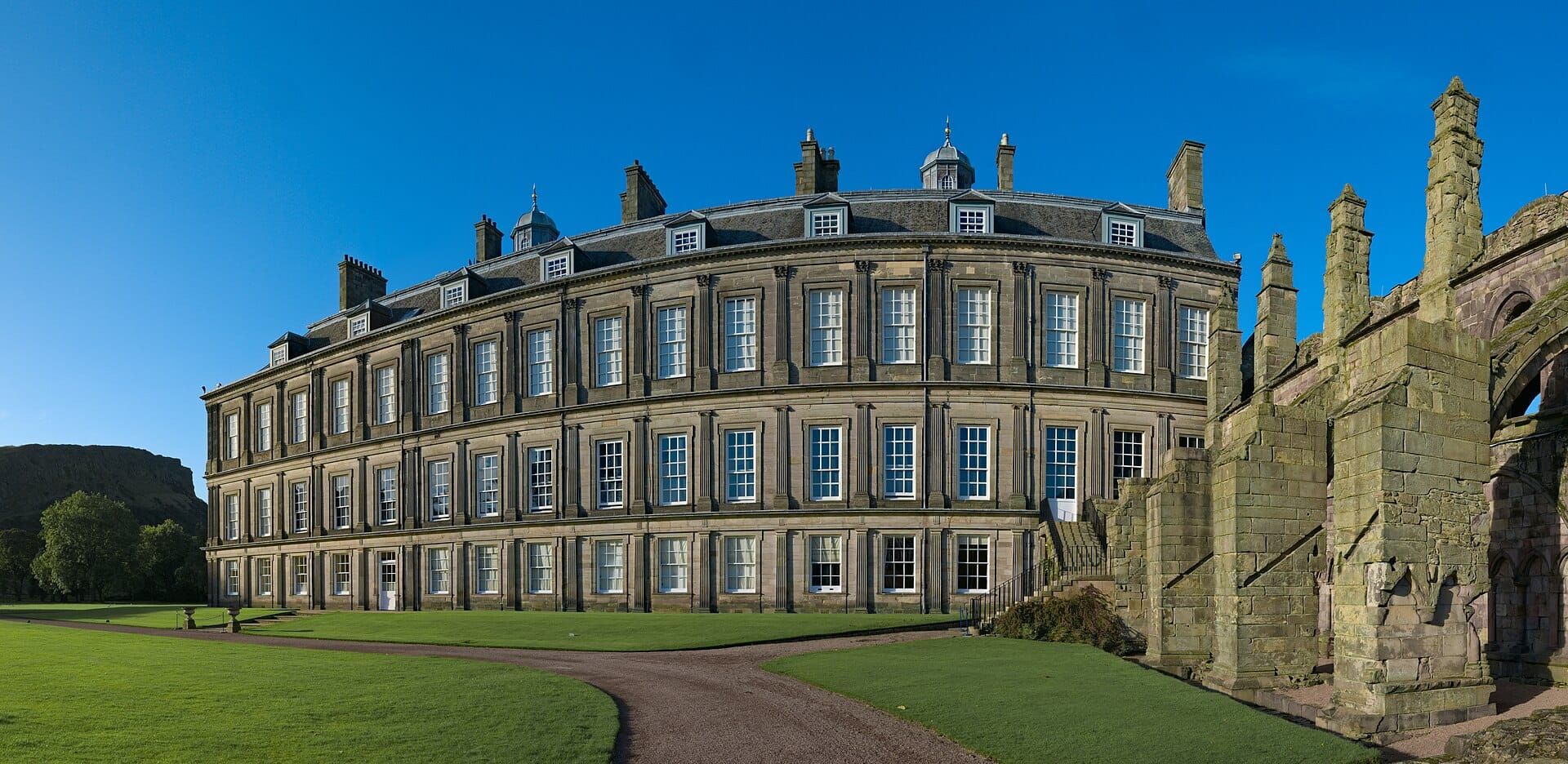
What the Palace of Holyroodhouse Actually Is
The Palace of Holyroodhouse is not a museum that happens to look like a palace. It is a working royal residence, the official home of the British monarch whenever the Crown is in Scotland. That distinction matters to how you experience it. The rooms you walk through are not reconstructions or period displays managed by a heritage body. They are furnished royal apartments, maintained and used by the Royal Household, opened to the public when the Court is not in residence.
The palace complex sits at the very foot of the Royal Mile in the Canongate area of Edinburgh's Old Town, framed on one side by the modern steel and oak of the Scottish Parliament building and on the other by the volcanic crags of Holyrood Park. The juxtaposition is one of the most striking in any European capital: 16th-century royal stonework between a 21st-century democratic institution and a wild 650-acre landscape that looks almost untouched.
The palace is a Category A listed building, the highest level of protection in Scotland's heritage classification system. For context on the wider neighbourhood and the historic street leading up to it, the Holyrood and Canongate area rewards exploration before or after your palace visit.
Five Centuries of Scottish Royal History
Holyroodhouse has served as the principal royal residence in Scotland since the 16th century. The site began as an Augustinian abbey founded in 1128, and the palace grew from guest lodgings attached to that abbey into a full royal court. The current palace architecture dates primarily from the 16th century, though it was substantially rebuilt and extended in the 1670s under Charles II.
The most dramatic episode in the palace's history unfolded in 1566, when Mary Queen of Scots witnessed the murder of her private secretary David Rizzio in her own supper room. The spot is still marked today. That act of courtly violence, carried out by a group that included Mary's husband Lord Darnley, is one of those historical moments that feels surprisingly tangible when you're standing in the small, low-ceilinged chamber where it happened. The sense of physical confinement adds weight to what you know about the event.
Later chapters include Bonnie Prince Charlie holding court here during the Jacobite rising of 1745, and the state visits of successive monarchs who used the palace to formally engage with Scotland. It remains the venue for the King's ceremonial week in Scotland, usually in late June or early July, when the palace closes to visitors.
⚠️ What to skip
The palace closes during Royal Week (usually late June or early July) The palace closes during Royal Week (usually late June or early July) and for other state events. Always check the Royal Collection Trust website before booking travel or tours around your palace visit. Always check the Royal Collection Trust website before booking travel or tours around your palace visit.
Tickets & tours
Live prices and dates from our booking partner. If you book, we may earn a commission at no extra cost to you.
What You'll See Inside
The visitor route takes you through the State Apartments, the 16th-century tower where Mary Queen of Scots once lived, and the Great Gallery. Each section has a distinct feel.
The State Apartments are ceremonial spaces on a grand scale: the Throne Room, the Dining Room, and a sequence of drawing rooms decorated with Brussels tapestries, painted ceilings, and portraits from the Royal Collection. The scale and formality here is deliberate. These are rooms designed to project power, and they do. The ceilings in particular are worth slowing down for: ornate plasterwork commissioned for Charles II's renovation, each panel carefully detailed.
The Great Gallery is a long room running almost the full width of the palace, hung with about 97 portraits of Scottish and English kings and queens painted by Jacob de Wet II in the 1680s. They were commissioned to assert the Stuart dynasty's deep Scottish roots. Art historians note that de Wet had limited reference material for the earlier monarchs and painted many of them with similar faces. Knowing that, the row of kings becomes curiously compelling rather than tedious.
Mary Queen of Scots' apartments occupy the oldest part of the palace, the 16th-century tower that predates the main building's renovation. The rooms are low, intimate, and noticeably darker than the State Apartments. The supper room where Rizzio was murdered is here, and the audio guide devotes serious time to it. The contrast between the grandeur of the ceremonial floors and the claustrophobic quality of these older chambers is one of the most effective things about the visitor experience.
💡 Local tip
The audio guide is included in the ticket price and is genuinely worth using. It provides context that the room labels alone cannot convey, particularly in Mary's apartments and the Great Gallery.
The Ruins of Holyrood Abbey
Admission to the palace includes access to the ruins of Holyrood Abbey, which stands in the palace grounds. The nave dates from the 12th and 13th centuries, and though the roof was removed in the 18th century, the remaining walls and carved stonework give a strong sense of the original scale and ambition of the building.
The abbey ruins are often undervisited relative to the palace interior, which is a mistake. On a clear day, the open sky through the roofless nave, with the stone tracery of the great east window still standing, is one of Edinburgh's most atmospheric sights. For more on this remarkable ruin, see the dedicated page on Holyrood Abbey.
Visiting by Time of Day and Season
Opening hours are 09:30 to 18:00 from April through October, with last admission at 16:30. From November through March the palace closes earlier at 16:30, with last admission at 15:15. The palace is closed on 24, 25 and 26 December.
The first 90 minutes after opening tend to be the quietest. Tour groups typically arrive mid-morning, and the State Apartments can feel crowded between 11:00 and 14:00 during peak summer months. Arriving at 09:30 gives you a noticeably more spacious experience in the key rooms. In the afternoon, numbers thin again after 15:30, but you need to allow yourself enough time before last admission.
Winter visits have a different quality. The light inside the palace is lower and the rooms feel more enclosed, which actually suits the darker historical material well. Crowds are significantly smaller from November through February, and the exterior of the palace against the bare winter crags of Arthur's Seat behind it is photogenic in a way that lush summer greenery can actually obscure.
August is the most crowded month across all of Edinburgh due to the festivals. If your trip overlaps with the Fringe, book palace tickets in advance and aim for the opening slot. For full context on visiting the city during that period, the guide to Edinburgh in August covers logistics and crowds in detail.
Getting There and Practical Notes
The palace is at the eastern terminus of the Royal Mile, about a 20-minute walk from Edinburgh Waverley station. The walk itself is worthwhile: you pass St Giles' Cathedral, the closes and wynds of the medieval Old Town. Several local bus routes run along Canongate, which is useful if you'd rather not walk the full length in wet weather.
If you're arriving from the west of the city or from the New Town, the walk down the Royal Mile is the most direct and context-rich route. The getting-around guide covers bus routes and transit options in detail.If you're arriving from the west of the city or from the New Town, the walk down the Royal Mile is the most direct and context-rich route. The guide to getting around Edinburgh covers bus routes and transit options in detail.
Accessibility: The Royal Collection Trust provides step-free access to most visitor areas and maintains dedicated accessibility information on their website. Visitors with specific access requirements are advised to contact the venue or the Royal Collection Trust directly before their visit to confirm current provisions.
Photography is permitted in some areas of the palace interior, though specific rooms may restrict it. Check with staff on entry. The exterior forecourt and the abbey ruins offer the best unobstructed photography. For a view that puts the palace in its full landscape context, the upper slopes of Arthur's Seat or Salisbury Crags behind the palace give a perspective that few visitors think to seek out. Check with staff on entry. The exterior forecourt and the abbey ruins offer the best unobstructed photography. For a view that puts the palace in its full landscape context, the upper slopes of Arthur's Seat or Salisbury Crags behind the palace give a perspective that few visitors think to seek out.
ℹ️ Good to know
Tickets can be purchased on arrival or in advance through the Royal Collection Trust website. Pre-booking is recommended during July and August and on weekends throughout the year.
Honest Assessment: Is the Ticket Price Worth It?
At £20 for an adult, the Palace of Holyroodhouse is one of Edinburgh's more expensive individual attractions. The question of value depends significantly on your interest level. If royal history, Scottish political history, and the physical space where those histories played out genuinely interest you, the price is fair. The audio guide is thorough, the rooms are authentic rather than reconstructed, and the included abbey ruins add a layer that extends the visit meaningfully.
If you're coming primarily because it's on a checklist and have limited interest in royal or Scottish history, you may find it less engaging than Edinburgh Castle, which offers a wider variety of experiences at a similar price point. Travelers who prefer outdoor exploration over interiors should note that Holyrood Park, which surrounds the palace, is free and offers some of Edinburgh's best walking. The palace itself will not satisfy visitors looking for a primarily outdoor or active experience.
For families weighing how to allocate time and money across Edinburgh's paid attractions, the Edinburgh with kids guide offers useful comparative guidance.
Insider Tips
- Book the first entry slot at 09:30 if visiting between May and September. The State Apartments feel entirely different without tour groups filling the corridors, and you can linger in Mary's apartments without being shuffled along.
- The palace closes during Royal Week, typically late June or early July, but the exact dates shift each year and are often announced with limited notice. Check the Royal Collection Trust website within a week of your planned visit if you're travelling in that window.
- After your palace visit, walk directly into Holyrood Park rather than back up the Royal Mile. Even a short walk toward Salisbury Crags gives you a rear view of the palace against its full natural backdrop that most visitors never see.
- The Great Gallery's 110 royal portraits are more interesting if you know going in that many of the earlier kings were essentially invented by the painter. Ask a room steward about it — most are happy to expand on the story.
- Winter visits from November through February offer the quietest experience and, on overcast days, a genuinely atmospheric quality in the older tower rooms that suits the palace's more sombre history.
Who Is Palace of Holyroodhouse For?
- History enthusiasts with a specific interest in Scottish or British royal history
- Architecture visitors interested in 16th and 17th-century royal interiors and Category A listed buildings
- First-time Edinburgh visitors completing the full Royal Mile from Edinburgh Castle to Holyroodhouse
- Travellers who want to understand the living relationship between the British Crown and Scotland
- Those combining the palace with a walk in Holyrood Park or a climb of Arthur's Seat on the same day
Nearby Attractions
Other things to see while in Holyrood & Canongate:
- Arthur's Seat
Rising around 250 metres above the city, Arthur's Seat is an extinct volcano sitting at the heart of Edinburgh, free to climb year-round. It rewards the effort with unobstructed views across the Scottish capital, the Firth of Forth, and the Lothian hills. This is not a polished tourist attraction — it is raw, windswept, and genuinely spectacular.
- Dynamic Earth
Dynamic Earth is an interactive science centre at the foot of Salisbury Crags, telling the 4.5-billion-year story of the planet through immersive galleries and planetarium shows. It sits beside the Scottish Parliament and pairs well with Holyrood Park nearby. Strong on family appeal, it rewards those who take time to work through each zone rather than rush.
- Holyrood Abbey Ruins
Founded by King David I in 1128, Holyrood Abbey stands as one of Scotland's most atmospheric medieval ruins. The roofless nave, with its soaring Gothic arches open to the Edinburgh sky, is accessed through the Palace of Holyroodhouse and offers a rare encounter with raw, unadorned history at the foot of Arthur's Seat.
- Holyrood Park
Holyrood Park is a 260-hectare sweep of volcanic rock, grassland, and lochs sitting right at the edge of Edinburgh's Old Town. Free to enter at any hour, it holds Arthur's Seat, the Salisbury Crags, and Duddingston Loch inside a boundary set by a royal decree in 1541. Few capital cities have anything like it.
Planning a trip? Discover personalized activities with the Nomado app.