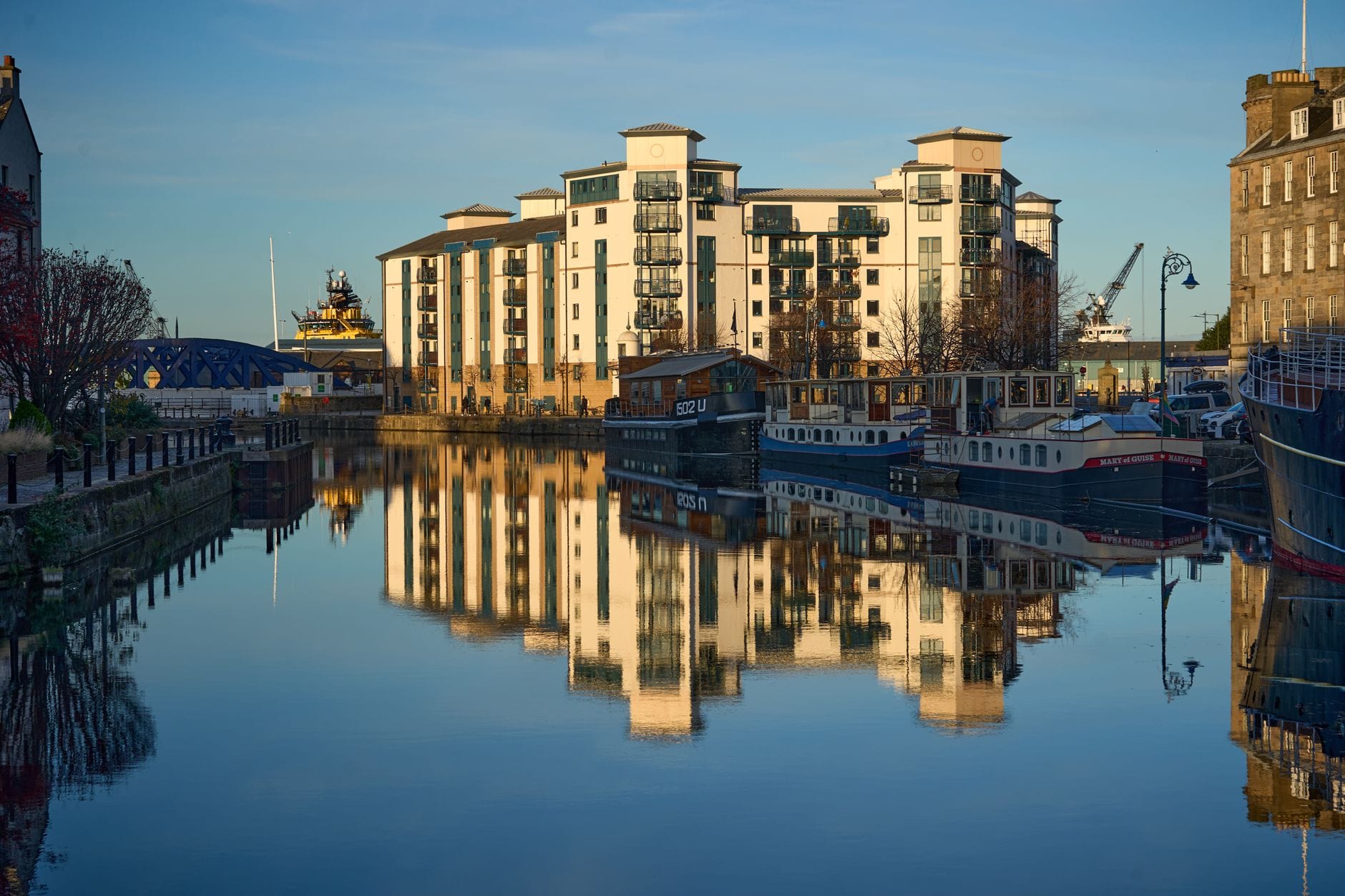
Leith is Edinburgh's port district, sitting at the mouth of the Water of Leith on the Firth of Forth. Once a fiercely independent town, it was absorbed into Edinburgh in 1920 but has never fully let go of its separate identity. Today it combines working-class heritage, creative regeneration, and one of Scotland's best restaurant scenes into something that feels distinctly unlike the rest of the city.
Leith is the part of Edinburgh that Edinburgh didn't want you to find first, and that tension is exactly what makes it worth seeking out. Scotland's historic gateway port, incorporated into the city against local wishes in 1920, Leith has spent the intervening century doing things its own way: rougher around the edges than the Old Town, more locally rooted than the New Town, and home to a food and drink scene that stands out.
Orientation
Leith sits roughly 3 kilometres north of Edinburgh's city centre, stretching from the southern shore of the Firth of Forth back through a dense grid of Victorian tenements and commercial streets. The Water of Leith, the river that winds down through Stockbridge and Dean Village before reaching the sea, enters the Firth here, and the area around its final stretch, known as the Shore, forms the heart of the neighbourhood as most visitors experience it.
The traditional boundary between Leith and Edinburgh proper sits around Pilrig, roughly where Leith Walk crosses into the older city grid. Locals will tell you the Boundary Bar marks the psychological divide. From there, Leith Walk, a long, straight, shop-lined thoroughfare, runs all the way north to Leith's own commercial centre around Leith Links and Constitution Street. The docks extend westward from the Shore toward Granton, and the neighbourhood sprawls east toward Seafield.
Understanding Leith's geography means understanding its relationship to the neighbourhoods it connects to. Stockbridge lies upstream along the Water of Leith, sharing some of Leith's village-within-a-city feeling without the port-town edge. The New Town is the natural southern anchor, connected by tram and bus along Leith Walk. Most visitors find themselves moving between these three areas naturally as they explore the northern half of the city.
Character & Atmosphere
Leith operates on a different frequency from the rest of Edinburgh. Walk down Leith Walk at 8am on a weekday and you get the real picture: bakeries pulling shutters up, Polish delicatessens stacking shelves, tradespeople grabbing coffee before heading to the docks, and the occasional cluster of revellers still filtering home from the previous night. This is a working street in a working neighbourhood, and the range of people using it at any given hour reflects that.
By midday, the Shore comes into its own. The stretch of cobbled road and pedestrian path running alongside the Water of Leith's last few hundred metres is lined with restaurant and bar terraces that fill up fast in any weather approximating fine. The light here in the afternoon, reflecting off the water and the pale stone of former warehouses, has a particular quality that draws photographers and people who don't realise they're being photographers. It is the most conventionally picturesque part of Leith, but it doesn't feel staged.
After dark, the Shore and the streets immediately around it become genuinely lively in a way that feels organic rather than manufactured for tourism. The bars here are loud, locally patronised, and open late. Further north toward the docks and east toward Leith Links, the streets quieten considerably and feel more residential. First-time visitors should be aware that parts of Leith, particularly toward the outer docks and some of the streets further east, feel significantly less polished than the Shore area. This is not a reason to avoid the neighbourhood, but it is worth calibrating expectations: Leith is not a curated experience.
ℹ️ Good to know
Leith has undergone significant regeneration since the 1990s but retains genuine economic and social diversity. The neighbourhood is safe for visitors by any reasonable standard, but the area around the outer docks at night is best avoided if you are unfamiliar with the city. Stick to the Shore and Constitution Street after dark and you will find plenty to occupy you.
What to See & Do
The single most significant attraction in Leith is the Royal Yacht Britannia, moored permanently at the Ocean Terminal shopping centre at the western end of the docks. The former royal family's floating residence has been open to visitors since 1998 and remains consistently excellent: the audio tour is detailed, the ship itself is remarkably preserved, and the combination of state rooms and below-decks crew quarters gives a genuinely layered picture of life on board. Book in advance, particularly in summer.
Beyond Britannia, Leith rewards slower exploration more than attraction-ticking. The Shore itself is the core experience: walk along the Water of Leith from the mouth back upstream, cross the old swing bridges, and look at the former warehouses and merchant buildings that have been converted into restaurants and offices. Trinity House, a former mariners' welfare organisation with an extraordinary collection of maritime artefacts, occasionally opens to the public as Trinity House Maritime Museum and is worth checking for visiting hours. Lamb's House, one of Leith's oldest surviving buildings, is associated with the landing of Mary, Queen of Scots in 1561, though it is not regularly open to visitors.
Leith Links, the large open park to the east of Constitution Street, has a legitimate claim to being among the earliest sites of organised golf in the world, with records of the game being played here in the 15th century. Today it is a well-used local park with good walking and occasional events. The Links connect toward Portobello, Edinburgh's seaside suburb, which is reachable on foot in about 25 minutes along the coast.
Royal Yacht Britannia: allow 2-3 hours, book ahead
The Shore waterfront: best walked at low tide when the riverbanks are exposed
Leith Links: free, open daily, historically significant for golf
Trinity House: check for public opening days
Ocean Terminal: useful for transport connections and practical shopping
💡 Local tip
The Water of Leith Walkway connects Leith all the way upstream through Stockbridge, Dean Village, and Roseburn. Walking even the lower section from the Shore back toward the New Town takes about 45 minutes and is one of the city's best free walks, following the river through a corridor of trees entirely removed from traffic.
If Leith forms part of a wider Edinburgh itinerary, it pairs naturally with a morning at the Royal Botanic Garden Edinburgh in Inverleith, which sits just south of the neighbourhood boundary, or with an afternoon walking the Water of Leith Walkway back into the city centre.
Eating & Drinking
Leith's food scene is the best argument for staying, or at least eating, north of Princes Street. The Shore and the streets immediately around it have accumulated a concentration of serious restaurants that would be notable anywhere in Scotland. The neighbourhood has a long history of fishing and trade that created a genuine local appetite for seafood, and several of the Shore's restaurants trade on this with menus that reflect the proximity to the North Sea.
The price range runs broadly from mid-range to expensive at the waterfront restaurants, with cheaper and more casual options along Leith Walk itself. Constitution Street and the side streets around it offer a mix of independent cafés, sandwich shops, and the kind of no-frills Scottish pub that exists primarily to serve its own regulars rather than visitors. These are worth seeking out precisely because they are not performing for an audience.
The bar scene along the Shore is dense and lively, with a good mix of traditional pubs and more recent wine bar and cocktail formats. Most bars stay open until at least midnight on weekends. Leith has also become a focus for Edinburgh's craft beer and gin culture: the area around the docks has seen several small producers set up in recent years, and bar menus tend to reflect local provenance with some seriousness.
For a broader picture of where Leith fits into Edinburgh's wider food landscape, the Edinburgh food guide covers the city's eating scene by type and price range. If you are travelling on a tighter budget, the stretch of Leith Walk between Pilrig and Leith's own town centre offers some of the most affordable and genuinely diverse food in the city, reflecting the neighbourhood's significant Eastern European, South Asian, and African communities.
💡 Local tip
Weekend brunch on the Shore is popular to the point of queues forming at the better-known spots. Arriving before 10am or after 1pm dramatically improves your chances of a table without a wait.
Getting There & Around
Leith Walk is the spine of transport between the city centre and Leith, and it is served by several Lothian Buses routes running frequently throughout the day and evening. The journey from Princes Street to the foot of Leith Walk takes around 15 to 20 minutes by bus depending on traffic. Edinburgh's tram line, which runs from the airport through the city centre, extended to Newhaven (just west of Leith's Shore area) in 2023, making tram access from the city centre and the airport significantly more practical than it previously was. The Newhaven tram stop is roughly a 10-minute walk from the Shore.
Walking from the eastern end of Princes Street to the Shore takes around 35 to 40 minutes on foot down Leith Walk, which is a straightforward and interesting route past shops, cafés, and the gradually changing character of the street as it moves north. Cycling is practical along much of the route. Taxis and ride-hailing services operate across Leith without difficulty.
Within Leith itself, most points of interest are walkable from the Shore. Ocean Terminal and the Royal Yacht Britannia are about 20 minutes on foot west from the Shore, or reachable by local bus from Leith Walk. For practical guidance on navigating Edinburgh's public transport network, the getting around Edinburgh guide covers bus, tram, and taxi options across the city.
Where to Stay
Leith is not Edinburgh's primary hotel district, but accommodation options have grown alongside the neighbourhood's regeneration. Staying here makes most sense for travellers who prioritise food, local atmosphere, and a base that feels removed from the heaviest tourist concentrations around the Royal Mile and Princes Street. The trade-off is that major sights like Edinburgh Castle and the Old Town require a bus ride or a 40-minute walk.
The Shore area and Constitution Street have the most appealing context for accommodation, with the waterfront restaurants and bars within easy walking distance. A handful of boutique hotels and a growing number of self-catering apartments have established themselves in converted warehouse and tenement buildings. Budget options are more limited in Leith itself, though Leith Walk has some guesthouses and hostels that offer reasonable value with good bus connections into the centre.
For a full comparison of Edinburgh's neighbourhoods as bases for different types of trip, the where to stay in Edinburgh guide weighs up Leith against the Old Town, New Town, and Southside in detail.
Leith During the Festivals
During August, when the Edinburgh Festival Fringe takes over much of central Edinburgh, Leith operates as a pressure valve. Fringe venues extend into the neighbourhood, particularly around Leith Links and the Shore, and the restaurant scene absorbs significant overflow from visitors who have given up on finding a table anywhere closer to the Royal Mile. The neighbourhood feels less chaotic than the Old Town while still benefiting from the energy of the festival period.
Leith also runs its own programme of local events across the year, including markets and community festivals that reflect its distinct identity. The Edinburgh in August guide covers how the festival period affects the entire city, including the less-discussed northern neighbourhoods.
TL;DR
Leith is Edinburgh's port district, sitting 3km north of the city centre at the mouth of the Water of Leith on the Firth of Forth, with tram and bus connections via Leith Walk.
The Shore waterfront is the neighbourhood's heart: cobbled, lined with serious restaurants and bars, and most rewarding in the afternoon and evening.
The Royal Yacht Britannia at Ocean Terminal is Leith's flagship attraction and one of Edinburgh's best, requiring 2-3 hours and advance booking.
The food and drink scene here is among Edinburgh's strongest, with particular depth in seafood and a bar culture that draws locals rather than tourists.
Best for: travellers who want to eat well, experience a lived-in Edinburgh neighbourhood, and are happy to take a bus to the main sights rather than walk from the door.
Three days is the ideal amount of time to explore Edinburgh's core. This itinerary covers the Royal Mile, Arthur's Seat, New Town, Leith, and everything in between — structured day by day so you make the most of every hour.
Edinburgh stands out when it comes to museums. Many of the city's finest collections are completely free, covering Scottish history, fine art, medical oddities, and everything in between. This guide covers the best museums in Edinburgh, grouped by theme, with practical advice on what's worth your time.
Edinburgh is a city that rewards visitors in every season, but the right time to go depends entirely on your priorities. This guide breaks down weather, crowd levels, festival dates, and price patterns so you can pick the visit that suits you, not the crowds.
Edinburgh is one of Europe's most dramatic cities to look at, and luckily most of its best viewpoints are free. This guide covers every major panorama in the city, from the summit of Arthur's Seat to a little-known staircase that frames the castle perfectly.
Edinburgh sits at the centre of one of Europe's most rewarding travel regions. Within a few hours in any direction, you can reach Highland glens, medieval university towns, royal castles, and coastal wildlife reserves. This guide breaks down the best day trips from Edinburgh by transport, cost, and realistic time commitment.
Edinburgh Airport (EDI) is the main gateway into Scotland's capital, sitting around 13 km west of the city centre. This guide covers how to get into Edinburgh quickly and affordably, what to expect on arrival, and how to plan around peak-period delays.
Edinburgh's Christmas market is one of the UK's largest festive events, spreading across multiple city-centre locations from mid-November through early January. This guide covers dates, opening hours, what costs money, where to go, and how to get the most out of your visit.
Edinburgh's food scene runs deeper than tourist menus on the Royal Mile. This guide covers the essential Scottish dishes, where to eat them by neighbourhood, what things actually cost, and how to avoid the common traps that catch first-time visitors.
Edinburgh is one of Europe's most naturally romantic cities, with castle silhouettes, candlelit closes, and wild hilltops all within walking distance of each other. This guide covers the best experiences for couples, from dramatic viewpoints and atmospheric history tours to gin distilleries and peaceful riverside walks.
The Edinburgh Festival Fringe is the world's largest performing arts festival, taking over Scotland's capital every August with thousands of shows across hundreds of venues. This guide covers everything from buying tickets and choosing venues to booking accommodation and navigating the city during peak season.
Edinburgh has one of the darkest, most layered histories of any city in Europe, and it shows. This guide covers the underground vaults, haunted kirkyard, and eerie historic sites that make Edinburgh's ghost tour scene genuinely compelling, with practical advice on where to go and what to expect.
J.K. Rowling wrote much of the Harry Potter series in Edinburgh's Old Town cafés, and the city's medieval streets, graveyards, and Gothic architecture left a clear mark on the wizarding world. This guide covers every key location, the best guided and self-guided tour options, and the myths worth ignoring before you go.
Edinburgh rewards those who look beyond the Royal Mile. From a cobbled mews that stops people in their tracks to a medieval castle with almost no queue, these are the spots locals love and most visitors miss entirely.
August is Edinburgh's most extraordinary and most chaotic month. The city hosts the world's largest performing arts festival, a spectacular military tattoo, and an internationally renowned arts programme, all at once. This guide covers what to expect, how to plan, and how to avoid the common pitfalls.
December transforms Edinburgh into one of Europe's most atmospheric winter destinations. From the Christmas market in Princes Street Gardens to the multi-day Hogmanay festival welcoming the New Year, this guide covers every event, practical detail, and local tip you need to make the most of a winter visit.
Edinburgh stands out for luxury travel. From landmark 5-star hotels along Princes Street to Michelin-starred restaurants in Leith, this guide covers where to stay, eat, and what to do when budget is not the constraint.
Edinburgh's nightlife is more layered than most visitors expect. This guide covers where to drink, dance, and catch live music across the city's main districts — from the medieval streets of Cowgate to the Georgian bars of George Street — with practical timing advice, venue picks, and seasonal warnings.
Edinburgh has a reputation for being expensive, but a large share of its best attractions are completely free. This guide breaks down real costs for accommodation, food, transport, and sightseeing — with practical advice on where to spend and where to save.
Edinburgh rewards even a single day with extraordinary depth. This itinerary moves you through the Old Town's greatest hits, up to the best viewpoints, and into the New Town for a final flourish — structured so you can adapt it to your pace, the weather, and whether you want history, views, or both.
Edinburgh's best shopping isn't on Princes Street. From Victoria Street's art-filled boutiques to Stockbridge's independent collective, this guide covers every area worth your time and money, plus the markets, practical tips, and honest warnings that other guides skip.
The journey from Edinburgh to Inverness covers around 155 miles through some of Scotland's most dramatic scenery. This guide breaks down every transport option — train, bus, car, and more — with practical advice on fares, timings, and how to make the most of the route.
Two great Scottish cities, 50 miles apart and connected by one of the UK's most frequent rail links. This guide breaks down exactly what each city does better, where your money goes further, and whether you actually need to choose at all.
Edinburgh is one of Europe's most walkable cities, with a compact Old Town, dramatic volcanic landscapes, and centuries of history packed into every close and wynd. This guide covers the best walking tours in Edinburgh, from guided ghost walks through the underground vaults to self-guided routes along the Royal Mile, Water of Leith, and beyond.
Edinburgh is one of Britain's great family destinations, with a compact Old Town full of hands-on museums, free green spaces, and enough drama and history to keep kids genuinely hooked. This guide covers the best activities for families, from rainy-day museum classics to outdoor adventures on an extinct volcano.
Edinburgh stands out for free attractions. World-class national museums, sweeping hilltop viewpoints, royal parks, historic kirkyards, and free-entry galleries mean you can spend several full days in the city without spending a penny on entry fees. This guide covers the best of them.
Edinburgh is one of Europe's most walkable capital cities, but knowing when to walk, when to catch a bus, and when to splash out on a taxi makes a real difference. This guide covers every transport option in the city, from Lothian Buses and the tram line to airport transfers and cycling, with practical advice on what to use and what to skip.
Edinburgh is one of Europe's great walking cities, with an ancient volcano, dramatic crags, riverside paths, and rolling hills all within reach of the city centre. This guide covers the best hikes and walks in and around Edinburgh, from a 30-minute stroll to a full-day hill walk in the Pentlands.
The London to Edinburgh train route is one of Britain's great rail journeys, covering about 393 miles in as little as 4 hours. This guide covers journey times, realistic ticket prices, the best booking strategies, and exactly what to expect when you arrive in Scotland's capital.
Edinburgh packs more into one city than almost anywhere in Britain: a medieval castle, royal palaces, world-class free museums, volcanic hilltops, and one of the planet's most famous festivals. This guide cuts through the noise with prices, booking advice, seasonal tips, and honest opinions on what's worth your time.
Choosing where to stay in Edinburgh shapes your entire trip. This guide breaks down every major neighbourhood by character, price range, and practicality, so you can book with confidence rather than guesswork.