The Royal Yacht Britannia: Inside the Queen's Floating Palace
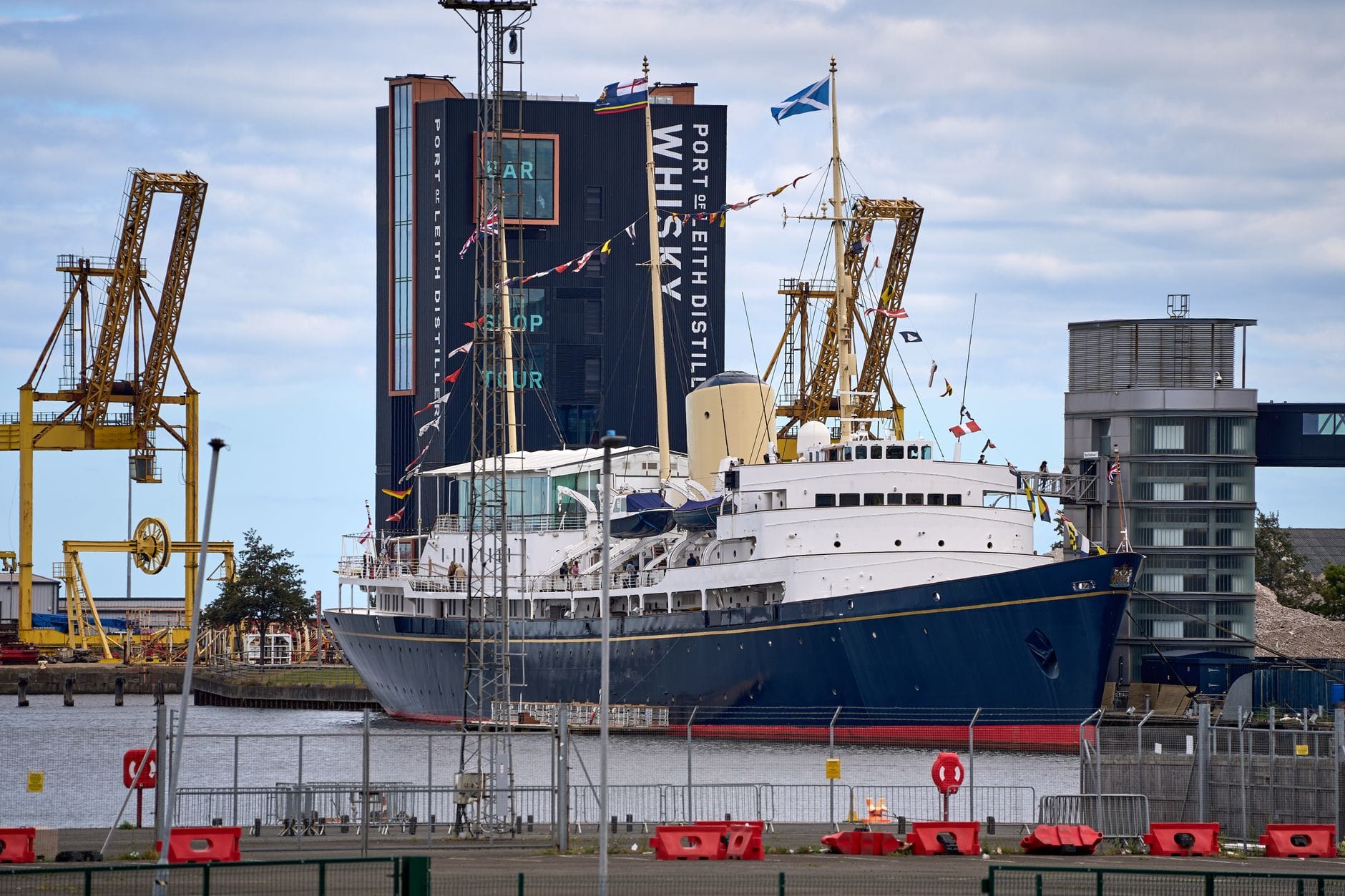
Permanently berthed at Ocean Terminal in Leith, The Royal Yacht Britannia offers a rare look inside the vessel that served the British Royal Family for over four decades. From the formal State Dining Room to the surprisingly modest royal bedrooms, it is one of Edinburgh's most genuinely absorbing attractions.
Quick Facts
- Location
- Ocean Drive, Leith, Edinburgh EH6 6JJ (via Ocean Terminal Shopping Centre, 2nd floor)
- Getting There
- Direct tram from Edinburgh city centre to Ocean Terminal (via the Newhaven extension), then a very short walk; also served by local bus routes
- Time Needed
- 2 to 3 hours for a thorough visit; allow extra time at peak season
- Cost
- Paid entry; check the official website for current seasonal prices before visiting
- Best for
- History and royal family enthusiasts, families with older children, and anyone curious about mid-20th century naval design
- Official website
- www.royalyachtbritannia.co.uk
What Is the Royal Yacht Britannia?
Her Majesty's Yacht Britannia (HMY Britannia) served the British Royal Family from 1954 to 1997, covering over one million nautical miles on more than 600 official voyages. It was the setting for state visits, royal honeymoons, and diplomatic receptions across six continents. When the government announced it would not be refitted for further service, there was a very public debate, and the decision to decommission the vessel moved Queen Elizabeth II to tears during the farewell ceremony in Portsmouth.
Since 1998, Britannia has been permanently moored at Ocean Terminal in Leith, Edinburgh's historic port district. It is now one of Scotland's most visited paid attractions and holds the unusual distinction of being a working piece of royal history you can walk through, sit inside, and understand in real physical detail rather than behind a rope or a glass screen.
💡 Local tip
Book tickets online before you visit. On busy weekends and during the Edinburgh festival season, time-slots can fill up and the gangway queue moves slowly. The official website at royalyachtbritannia.co.uk lists current pricing and availability.
Getting There: Leith and the Tram Route
Britannia sits in Leith, Edinburgh's former industrial port, about two miles north of the city centre. The most straightforward route from central Edinburgh is the tram, which runs from the city centre to Newhaven, with the walk to Ocean Terminal taking under ten minutes from the stop. Local buses also connect the area, and taxis or ride-hailing services are straightforward options if you are travelling with luggage or young children.
Entry to the yacht is via the second floor of Ocean Terminal Shopping Centre, which sits directly alongside the berth. The shopping centre itself is useful if you arrive early: there is a café on the upper level with views over the dock, and the car park is reasonably priced for visitors driving in.
Leith is worth a couple of extra hours if you have them. The neighbourhood has transformed significantly over the past two decades, with independent restaurants and bars concentrated along The Shore. Coming to Britannia and then walking the waterfront for lunch or dinner is a natural pairing.
Tickets & tours
Live prices and dates from our booking partner. If you book, we may earn a commission at no extra cost to you.
Edinburgh Royal Mile Self-Guided Audio Tour
From 5 €Instant confirmationFree cancellationPrivate guided walking tour of Edinburgh
From 225 €Instant confirmationFree cancellationSecrets of the Royal Mile walking tour of Edinburgh
From 23 €Instant confirmationFree cancellationRoyal Mile Walking Tour with Edinburgh Castle Entry Tickets
From 55 €Instant confirmationFree cancellation
The Visit: Deck by Deck
The self-guided audio tour (included with admission) is narrated by former Royal Yacht crew members, which changes the experience considerably. Instead of a scripted museum voice, you hear stories from the people who polished the decks and served at state dinners. The audio commentary is available in multiple languages.
The tour moves through five main decks. The State Apartments on the upper levels are the most visually striking: the State Dining Room is set as if ready for a formal dinner, with the original crockery, crystal, and a table that could seat 56 guests. The drawing room, furnished with pieces personally chosen by the Royal Family, has the quiet formality of a country house rather than anything overtly lavish. First-time visitors are often surprised by how understated the décor is throughout. This was a deliberate choice: Britannia was designed to project understated British taste rather than ostentatious wealth.
The royal bedrooms are among the most revealing spaces on the tour. Queen Elizabeth's and Prince Philip's cabins are modest in size and furnished simply, with single beds and practical fittings that would not look out of place on a well-maintained private yacht. The contrast between the formal entertaining spaces and the private living quarters says something real about how the Royal Family chose to live when away from public scrutiny.
Lower decks show the working side of the ship: the engine room, the crew's quarters, and the laundry facilities. The crew lived under strict rules, including a standing instruction to walk silently past royal cabins. There were over 200 crew members onboard during working voyages, and their below-deck spaces are noticeably more functional and compact than the upper-deck elegance.
ℹ️ Good to know
The Britannia is closed on 25 December and 1 January. Opening hours are seasonal and last-entry times vary by date. Always check the official website before travelling, as hours change throughout the year.
How the Experience Changes by Time of Day
Morning visits, particularly on weekdays, offer the most comfortable experience. The narrow companionways and cabins feel genuinely cramped when large tour groups are moving through simultaneously, so the difference between an 11am Tuesday visit and a 2pm Saturday visit is significant. The audio commentary keeps most visitors on a loose schedule, but groups do bunch up around the more photogenic spaces like the State Dining Room and the Sun Deck.
The Sun Deck, the uppermost accessible deck, provides open views over the Firth of Forth and the Leith docklands. On a clear morning, the light on the water is particularly good for photography, and you get a sense of how the yacht would have looked arriving into a port under its own power. By early afternoon in summer, the deck gets crowded and the natural light becomes harsher.
Late afternoon, as the crowds thin toward last entry, the atmosphere on the lower decks becomes noticeably quieter. The engine room, which tends to feel like a checkbox stop for families with children, reveals more of its detail when you have a few minutes to stand still inside it. The smell of old machinery oil is faint but present, a small sensory reminder that this was a functioning working vessel, not a replica.
Historical and Cultural Context
Britannia was not just transport: it was soft power. During the Cold War and the process of decolonisation, the yacht served as a floating embassy and a venue for delicate diplomatic meetings. It hosted US presidents, heads of state from across the Commonwealth, and corporate guests at trade events. For the Royal Family, it was also the setting for honeymoon cruises, including those of Princess Anne, Prince Charles and Princess Diana, and Prince Andrew and Sarah Ferguson. Understanding this dual role, simultaneously a private family retreat and an instrument of foreign policy, makes the tour considerably more interesting than a simple look around a well-preserved ship. For context on other significant royal and political landmarks nearby, the Palace of Holyroodhouse and the Scottish Parliament are both worth visiting on the same Edinburgh trip.
The decommissioning in 1997 came at the end of a Conservative government, and the decision not to fund a replacement became a political flashpoint. The farewell ceremony in Portsmouth, at which the Queen was visibly moved, was extensively covered and remains one of the more human moments in the public record of her reign. This context is handled sensitively in the onboard exhibition materials.
Practical Notes for Visitors
Wear comfortable flat shoes. The decks have metal ridges for grip and narrow metal staircases between levels. High heels are not practical and in some areas may not be permitted for safety reasons. Compact cameras and phones photograph well throughout the interior, though lighting is dim in the lower decks and cabins. A wide-angle lens or phone with a good low-light mode is useful.
Children under about 8 may find the audio tour format slow, but the engine room, the crew quarters, and the sheer physical presence of the ship tend to hold their attention. The attraction has a dedicated Royal Deck Tea Room onboard, serving light meals and drinks with a view of the dock. There is also a well-stocked gift shop near the exit, stocking Royal Warrant products and Britannia-branded items.
Accessibility: the official site notes that the tour is not suitable for wheelchairs or mobility scooters and only some areas are accessible, so visitors with specific accessibility requirements should contact the attraction directly before booking.
⚠️ What to skip
The audio tour content is primarily in English, with versions in other languages available. If language accessibility matters for your group, confirm available languages when booking. The ship is also genuinely cold in winter: the interior is not heated to the same standard as a modern building, and the upper decks are fully exposed to Firth of Forth winds.
Is It Worth the Ticket Price?
For anyone with an interest in 20th-century British history, royal family history, or naval design, the answer is straightforwardly yes. The quality of preservation, the depth of the audio commentary, and the range of spaces you can access make Britannia one of the more genuinely immersive museum experiences in Edinburgh. It compares favourably with other paid attractions in the city and offers something quite different from the castle-and-closes circuit of the Old Town.
That said, if royal history leaves you cold and your primary interest is contemporary culture, street life, or outdoor scenery, the ticket price may feel harder to justify. The experience is not interactive in a modern museum sense: it is observational, text-heavy in places, and paced around the audio guide rather than hands-on exploration. Visitors who rush through in under 90 minutes often feel they have missed the detail that makes the visit worthwhile.
Insider Tips
- Book the first entry slot of the day, ideally on a weekday. The State Dining Room and royal cabins feel entirely different when you are one of six people in the space rather than twenty.
- Pause on the Sun Deck before starting the interior tour. On a clear day you can see across the Firth of Forth toward Fife, and the external profile of the yacht gives you a sense of scale that the interior tour does not replicate.
- The crew exhibition on the lower decks contains some of the most compelling stories on the ship: the daily routine rules, the silent passages past royal cabins, and the social hierarchy among 200 crew members sharing a small vessel. Most visitors rush past it heading for the engine room.
- Combine with a walk along The Shore in Leith afterward. The waterfront has a concentration of independent restaurants and a different character to the city centre, and the fifteen-minute walk from Ocean Terminal along the Water of Leith estuary is pleasant on a dry day.
- The Binnacle Café onboard serves decent coffee and light meals with dock views. It is worth using as a mid-visit break rather than rushing through the whole tour without stopping.
Who Is The Royal Yacht Britannia For?
- Royal family and 20th-century British history enthusiasts
- Families with children aged 9 and above who have an interest in ships or history
- Architecture and design visitors interested in mid-century naval interiors
- Visitors combining a Leith waterfront afternoon with a cultural anchor
- Couples looking for an unhurried, conversation-rich attraction away from the main tourist circuit
Planning a trip? Discover personalized activities with the Nomado app.