Where to Stay in Edinburgh: The Complete Area Guide
Choosing where to stay in Edinburgh shapes your entire trip. This guide breaks down every major neighbourhood by character, price range, and practicality, so you can book with confidence rather than guesswork.
Tickets & tours
Live prices and dates from our booking partner. If you book, we may earn a commission at no extra cost to you.
TL;DR
- Old Town is the best base for first-time visitors: major sights are walkable and the atmosphere is unmatched, but expect to pay a premium and put up with late-night noise on weekends.
- New Town offers calmer streets, Georgian architecture, and competitive hotel rates, making it a smart alternative that is still central, especially near Princes Street and the Scottish National Gallery.
- Budget travellers can stay centrally: Premier Inn, Yotel, and pod-style hostels mean you do not need to retreat to the outskirts to save money.
- August is by far the most expensive and crowded month due to the Edinburgh Festival Fringe and the Royal Edinburgh Military Tattoo. Book at least three to four months ahead or choose shoulder season instead.
- Leith, Stockbridge, and Haymarket each suit different priorities: food culture, local residential feel, and budget transport links respectively.
How Edinburgh's Neighbourhoods Are Laid Out

Edinburgh is compact and hilly. The city centre splits broadly into two contrasting halves: the medieval Old Town, which runs along the volcanic ridge from Edinburgh Castle down to the Palace of Holyroodhouse, and the Georgian New Town, which was planned and built from the late 18th century onwards on the flatland to the north. Waverley train station sits in the valley between them, making it an excellent orientation point.
Beyond the centre, Leith stretches north to the waterfront, Stockbridge occupies a village-like dell to the northwest, and Haymarket sits just west of the main core around its own rail hub. Staying within roughly 15 minutes walk of the Scottish National Gallery on The Mound is a practical definition of 'city centre' for most visitors. Everything described in this guide falls within that radius or a short bus ride of it.
ℹ️ Good to know
Edinburgh has no underground (metro) system. Getting around relies on Lothian Buses, the airport tram line, and your own feet. The good news: the centre is walkable in a way that few European capital cities are. Choosing a central hotel saves money on transport and is almost always worth a small premium on the room rate.
Old Town: Best for First-Timers and History Lovers
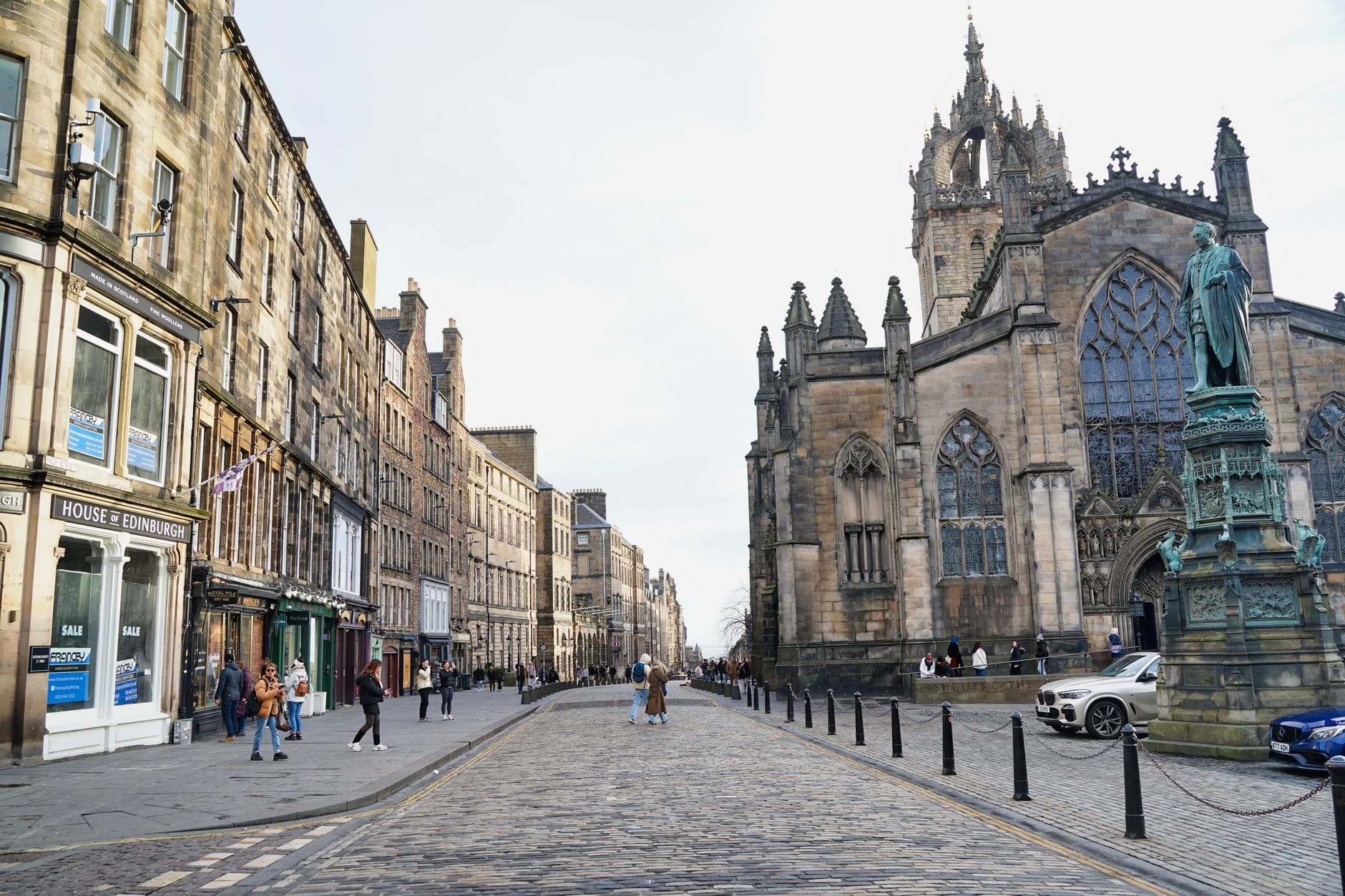
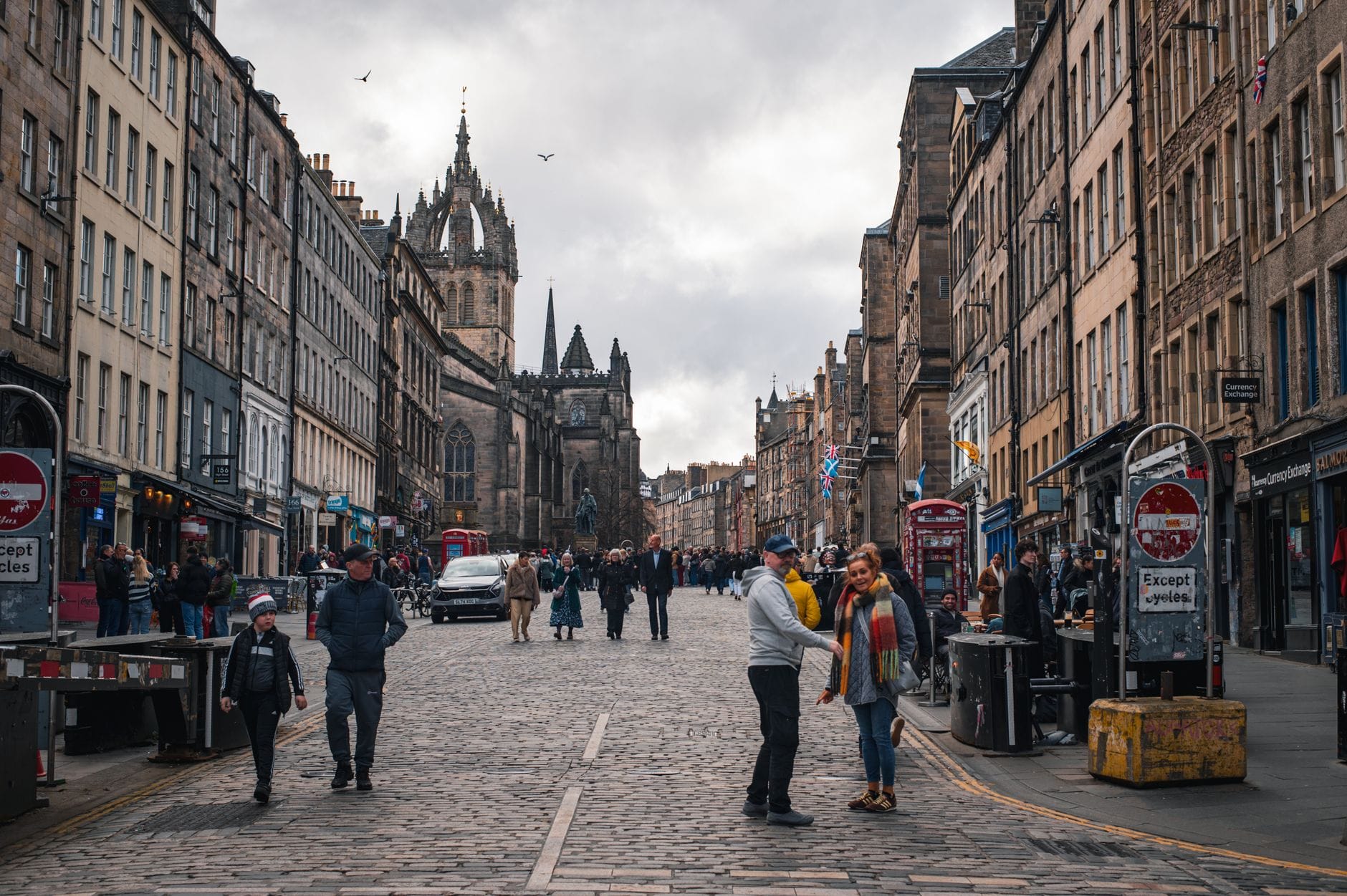
Old Town is where most visitors picture Edinburgh: cobbled closes, the Royal Mile, Edinburgh Castle looming overhead, and centuries of history crammed into a few dense streets. Staying here puts you within walking distance of St Giles' Cathedral, the National Museum of Scotland, Greyfriars Kirkyard, and the underground Edinburgh Vaults. For a first visit, the convenience is hard to overstate.
The tradeoffs are real, though. The Royal Mile corridor can be relentlessly touristy during summer, and weekend nights bring significant noise from bars and stag parties until the early hours. Rooms tend to run at the higher end of the Edinburgh price scale, with mid-range hotels typically starting around £150 per night and boutique options often hitting £200-£300+. If you want atmosphere over budget, Old Town delivers. If you want a quiet night's sleep at a fair price, consider New Town instead.
- Best for First-time visitors, history enthusiasts, travellers who want to walk everywhere without planning routes
- Price range Mid to high: roughly £150-£350+ per night for most hotels; budget hostels also exist on the back streets
- Watch out for Weekend noise on the Royal Mile and Grassmarket, and inflated prices during August and Hogmanay
- Notable accommodation style Boutique hotels in converted closes, independent guesthouses, and heritage properties like The Witchery by the Castle
New Town: The Underrated Central Option
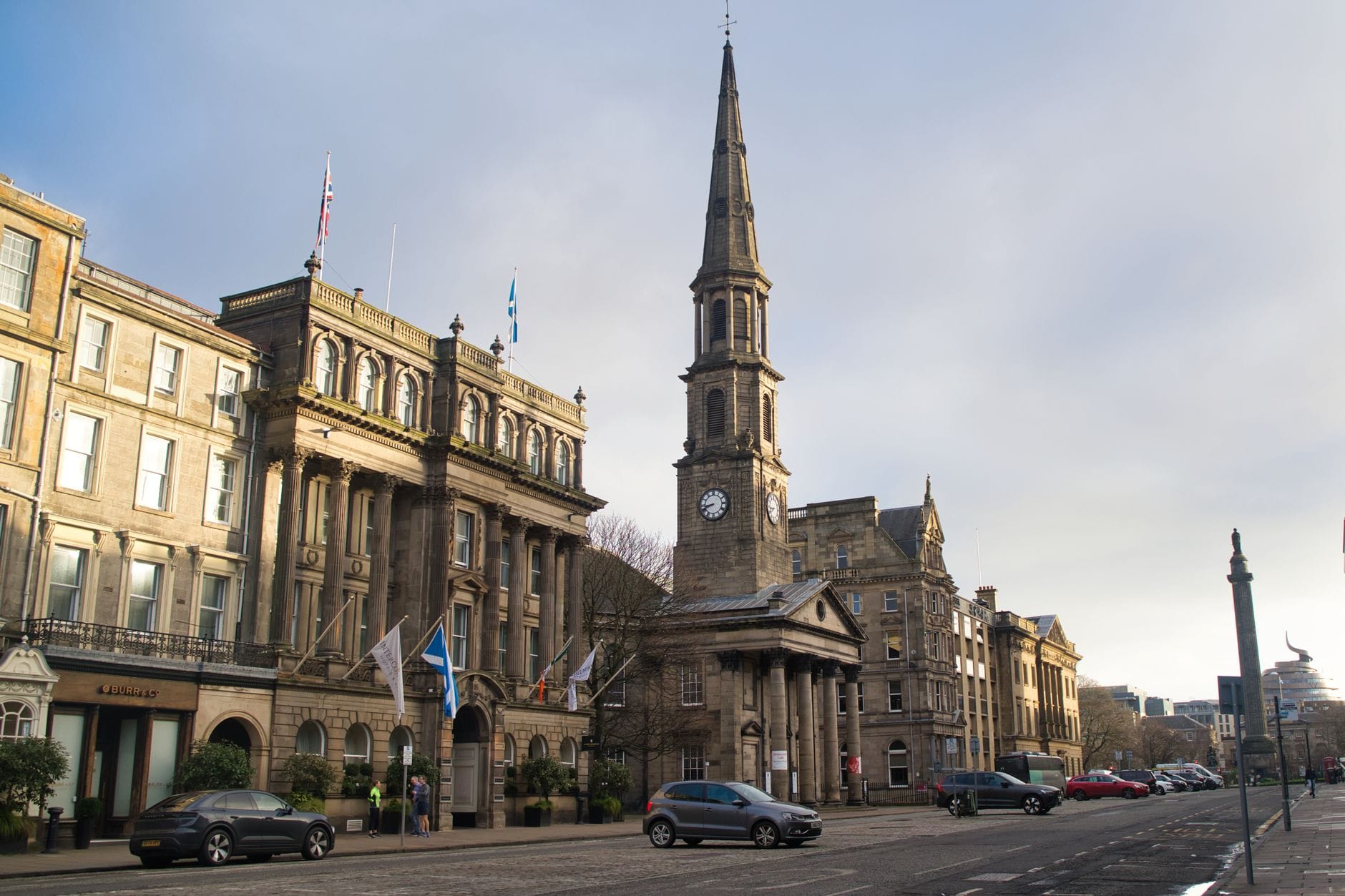
New Town is where locals and repeat visitors often gravitate, and it deserves more credit as a base than it typically gets. The neighbourhood is defined by wide Georgian streets, landmark squares like Charlotte Square, and some of the best shopping in Scotland along Princes Street and George Street. It is still entirely central: Waverley station is at the southern edge, and most Old Town sights are a 10-15 minute walk uphill.
Hotels here tend to be slightly less expensive than equivalent Old Town properties for comparable quality, and the streets are noticeably quieter after dark. The Balmoral, at the east end of Princes Street directly above Waverley, is Edinburgh's most iconic luxury address and starts at significant cost per night. More accessible options cluster around Haymarket Road, Frederick Street, and around the Scottish National Portrait Gallery at the east end of New Town. The average hotel rate across central Edinburgh runs roughly £130-£200 per night, and New Town tends to sit at the lower end of that range outside August.
💡 Local tip
If you are arriving by train at Waverley, hotels in New Town are slightly more convenient than Old Town ones: you emerge from the station onto Princes Street rather than having to climb up the steep closes. Factor this in if you are travelling with luggage.
Leith, Stockbridge, and Beyond: Character Neighbourhoods Worth Considering
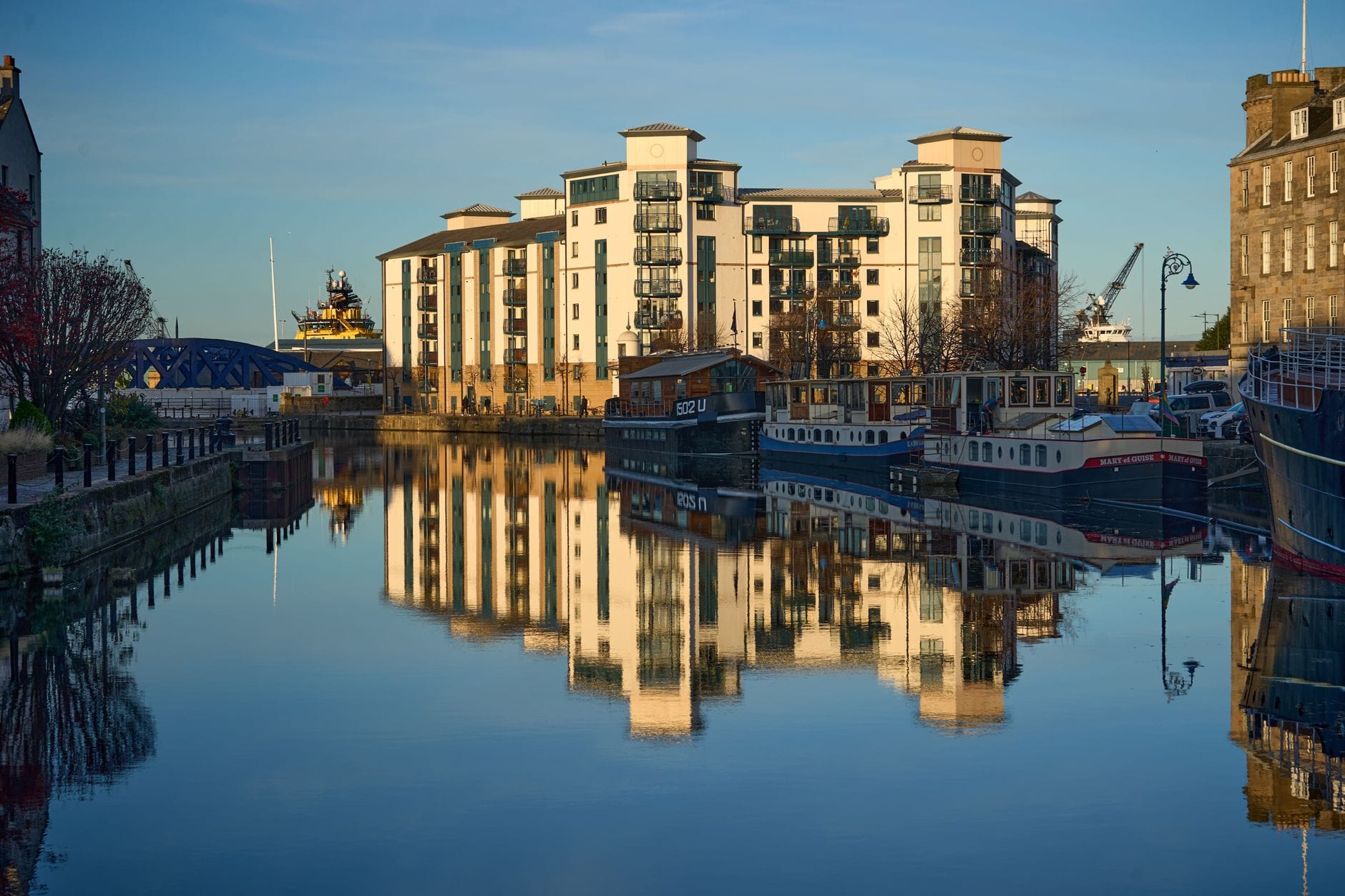
For travellers on a second or third visit who want a less tourist-facing experience, three neighbourhoods stand out. Leith has genuinely changed in character over the past two decades. Once Edinburgh's working port, it now has some of the city's best restaurants concentrated on The Shore and Leith Walk, a strong independent bar scene, and the Royal Yacht Britannia moored at its waterfront. It is about 3-4 km from Princes Street, manageable by bus or a 40-45 minute walk.
Stockbridge sits about 15 minutes walk northwest of New Town and offers something genuinely different: a residential feel, independent cafes and delis, the Stockbridge Sunday Market, and easy access to the Royal Botanic Garden Edinburgh. Boutique guesthouses and self-catering apartments dominate here rather than large hotels. It is a good fit for travellers who want a slower pace and a neighbourhood feel rather than a doorstep-to-castle location.
Haymarket, just west of the city centre around its own rail station, functions mainly as a value-oriented alternative for visitors who want central prices without paying central rates. Several budget chain hotels cluster here. It is genuinely walkable to Princes Street (about 20-25 minutes) and has direct tram access to the airport, which makes it practical for early departures or late arrivals. It lacks neighbourhood character but compensates with convenience and price.
- Leith: best for food lovers, The Shore dining scene, and Royal Yacht Britannia visitors
- Stockbridge: best for a quieter residential base with boutique accommodation and access to the Botanic Garden
- Haymarket/West End: best for budget travellers, Haymarket rail users, and anyone catching early trams to Edinburgh Airport
- Marchmont and Bruntsfield: student-heavy southside areas with local cafes and the Meadows park nearby, primarily suited to longer stays or self-catering
Seasonal Pricing and When to Book
Edinburgh has sharper seasonal price swings than most UK cities. August is the extreme outlier: the Edinburgh Fringe and the Royal Edinburgh Military Tattoo run simultaneously, making it the busiest and most expensive month by a significant margin. Hotels across all areas book out months in advance, and rates in Old Town can double or triple compared with the same room in October. If visiting in August, booking three to four months ahead is the floor, not the ceiling.
The second price spike falls over Hogmanay (New Year), when Edinburgh's Hogmanay celebrations bring large crowds and premium rates. The Christmas market period from late November into December also pushes demand up, though less dramatically than either August or Hogmanay. May, June, and September offer what many experienced Edinburgh visitors consider the best balance: reasonable weather, manageable crowds, and hotel rates that have not yet hit their summer ceiling. For budget travellers, October through March (excluding Hogmanay) offers the lowest rates of the year.
⚠️ What to skip
Do not assume you can book a central Edinburgh hotel two weeks out in August and find anything reasonable. During the Fringe, even budget chains sell out at elevated rates. If you have missed the booking window, look seriously at Haymarket, Leith, or even South Queensferry as bases, and budget for daily bus or tram trips into the centre.
Accommodation Types and What to Expect at Each Price Point
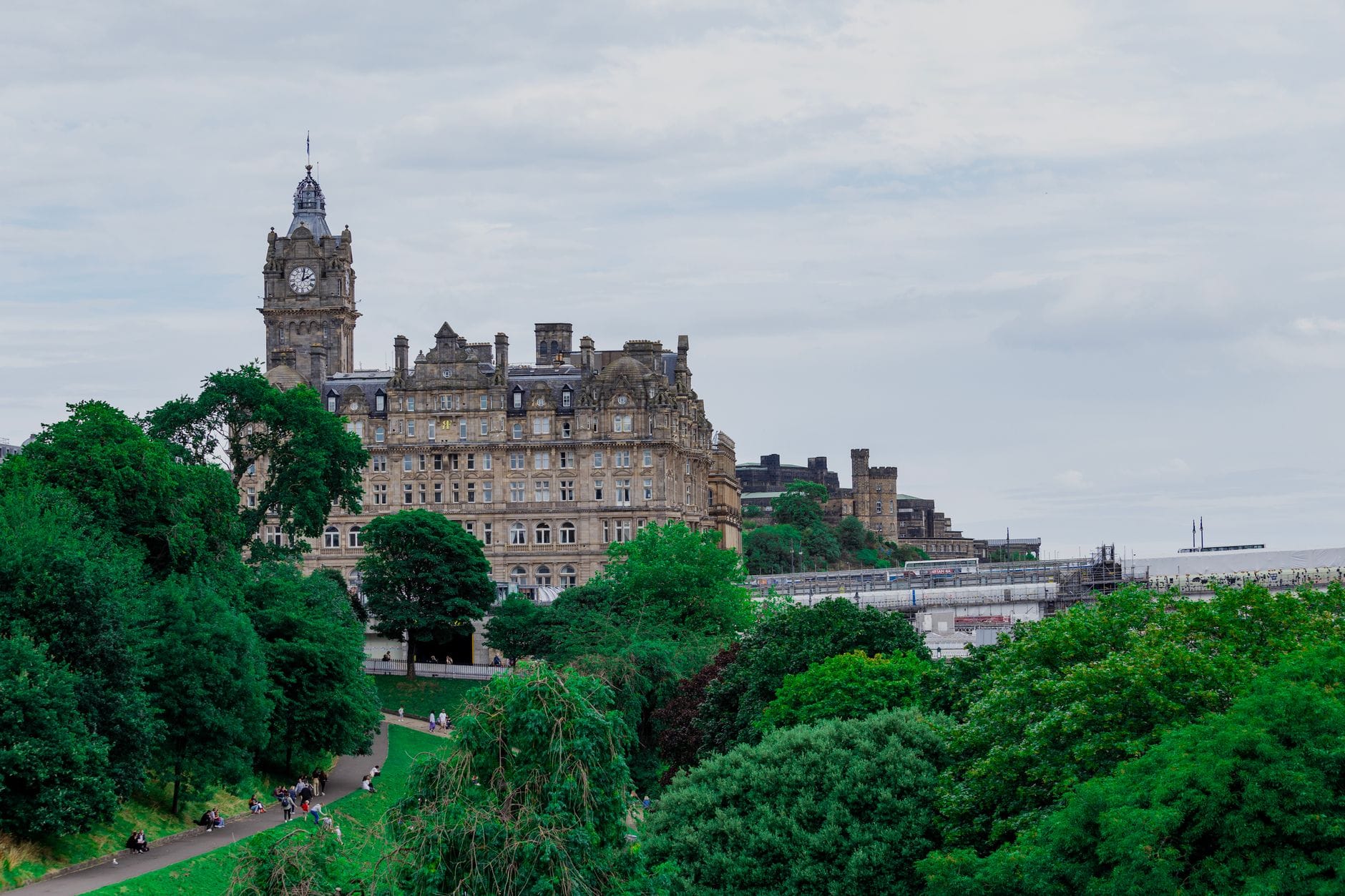
Edinburgh's accommodation range covers the full spectrum, and the city does several categories particularly well. At the top end, the Balmoral and properties like the Gleneagles Townhouse set a genuinely high standard. Boutique hotels in converted historic buildings, including some operating within Old Town closes, offer character that generic chain hotels cannot match. Mid-range international chains (Marriott, Hilton, Novotel, IHG brands) are well represented around New Town and Haymarket, providing reliable quality at more predictable prices.
Budget travellers have better central options than most cities of comparable cost. Pod hotels, Yotel, Point A, and multiple Premier Inn locations operate within 20 minutes walk of the Royal Mile. Edinburgh also has a solid hostel scene, mostly in Old Town, with several well-reviewed properties offering private rooms as well as dorms. Self-catering apartments via Airbnb or dedicated agencies are popular for stays of three nights or more, particularly in Stockbridge, Bruntsfield, and Leith, where longer-stay pricing starts to make better financial sense than hotels.
- Luxury (£300+/night) The Balmoral, The Witchery by the Castle, Gleneagles Townhouse, Fingal Hotel (converted lighthouse tender vessel in Leith)
- Mid-range (£120-£250/night) Novotel Edinburgh Centre, DoubleTree by Hilton, Hotel du Vin, Kimpton Charlotte Square
- Budget (under £120/night) Premier Inn Edinburgh City Centre, Point A Hotel, Yotel Edinburgh, Moxy Edinburgh Fountainbridge
- Self-catering / alternative Serviced apartments in Leith and Stockbridge; hostel private rooms in Old Town from around £50-£90 per night
✨ Pro tip
Prices listed are indicative ranges based on typical shoulder-season rates. Edinburgh hotel pricing is highly dynamic and can vary significantly by date, event, and booking platform. Always check rates directly with the hotel and compare against booking platforms, as the gap between the two can be substantial in either direction.
For context on planning your time around accommodation, see our 3-day Edinburgh itinerary and the best time to visit Edinburgh guide, which covers seasonal trade-offs in detail.
FAQ
What is the best area to stay in Edinburgh for first-time visitors?
Old Town is the standard recommendation for first-timers, and it earns that status: Edinburgh Castle, the Royal Mile, Greyfriars Kirkyard, and the National Museum of Scotland are all within a short walk. The tradeoff is that it is the most expensive area and the noisiest at weekends. If budget is a concern, New Town is equally central, noticeably quieter, and often 10-20% cheaper for comparable hotel quality.
Are there good Edinburgh airport hotels for early flights or late arrivals?
Edinburgh Airport (EDI) is about 13 km west of the city centre. Several hotels sit within a short drive of the terminal, including chain options that cater specifically to transit passengers. That said, the airport tram runs directly into Haymarket and St Andrew Square (for New Town), and the journey takes around 30–35 minutes depending on your stop. For most stays of one night before or after a flight, an airport hotel makes sense; for anything longer, staying in Haymarket or New Town and taking the tram is more practical and gives you access to the city.
How far in advance should I book Edinburgh accommodation?
For August (Fringe season) and Hogmanay (New Year), three to four months minimum is the practical starting point. Properties in Old Town and New Town sell out in peak periods, sometimes further ahead than that. For shoulder months like May, June, September, and October, two to four weeks ahead is usually sufficient for mid-range hotels, though leaving it too late will close off the best-value options. Budget chains tend to hold availability longer but at increasingly poor rates.
Is Leith a safe and convenient area to stay in Edinburgh?
Leith has changed significantly and is now one of Edinburgh's most interesting areas for food and drink. The Shore area around the Water of Leith is genuinely pleasant and safe for visitors. It is a 20-30 minute bus ride from the Royal Mile (buses are frequent and reliable on Leith Walk), or a walkable 35-40 minutes if you are not hauling luggage. It suits visitors who want a neighbourhood feel over constant tourist infrastructure, and tends to offer more competitive accommodation pricing than equivalent Old Town properties.
Can I find affordable Edinburgh accommodation in the city centre?
Yes, despite Edinburgh's reputation as an expensive city, budget options genuinely exist in the centre. Premier Inn has multiple city-centre locations, Point A Hotel sits close to the Royal Mile, and Yotel operates near Haymarket. Pod hotels and well-run hostels with private rooms can bring the cost below £80-£90 per night outside peak season. The misconception that you need to stay outside the centre to save money is not accurate: it is worth checking city-centre budget chains before defaulting to a peripheral location.
Tickets & tours
Live prices and dates from our booking partner. If you book, we may earn a commission at no extra cost to you.
Planning a trip? Discover personalized activities with the Nomado app.