Edinburgh Castle: What to Expect Before You Visit
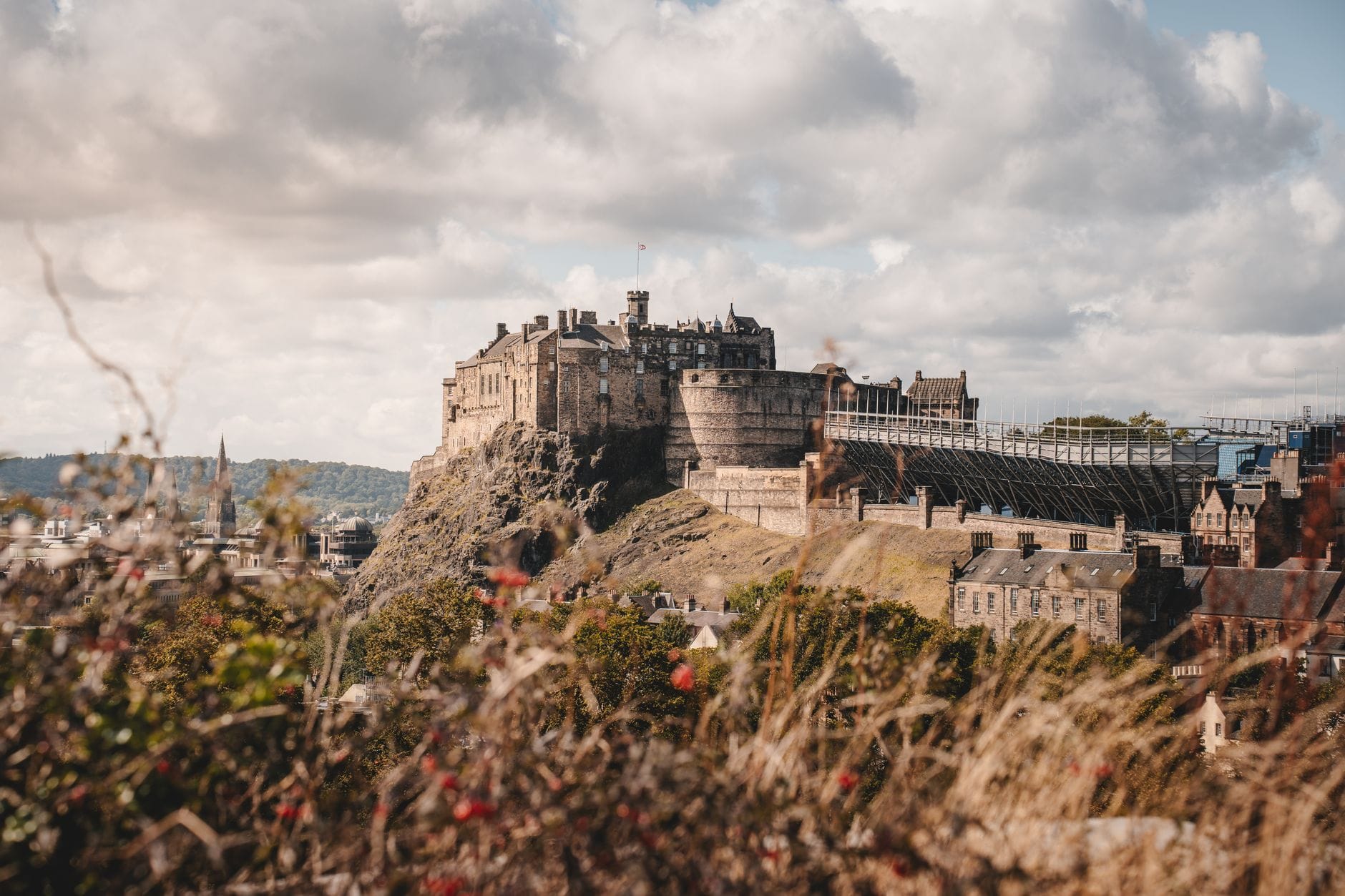
Edinburgh Castle dominates the Old Town skyline from its perch atop a 135-metre volcanic crag. From the city's oldest building to the Scottish Crown Jewels, here is everything you need to decide whether it deserves a half-day of your trip.
Quick Facts
- Location
- Castlehill, Edinburgh Old Town, at the top of the Royal Mile
- Getting There
- 7-min walk from Edinburgh Waverley station; local buses stop near Victoria Street (~5-min walk)
- Time Needed
- 2.5 to 4 hours for a thorough visit
- Cost
- Paid entry; prices vary by category — check edinburghcastle.scot for current rates
- Best for
- History enthusiasts, first-time Edinburgh visitors, families with older children
- Official website
- www.edinburghcastle.scot
What Edinburgh Castle Actually Is
Edinburgh Castle is not a single building. It is a fortress complex built across centuries on top of Castle Rock, a volcanic plug that rises roughly 443 feet (135 metres) above sea level. Layers of military construction, royal apartments, a 12th-century chapel, and a Scottish National War Memorial occupy the same cramped summit, giving the site an almost disorienting density of history within a relatively small footprint.
A royal castle has stood here since at least the reign of Malcolm III in the 11th century, and documentary evidence places a castle on the rock by 1103. St Margaret's Chapel, built by King David I in honour of his mother, Queen Margaret, who died in 1093, is considered Edinburgh's oldest surviving building. Standing at the very top of the complex, it is small enough to feel intimate, yet its continued use as an active chapel for christenings and small ceremonies gives it a living quality many ancient structures lack.
The castle sits at the western end of the Royal Mile, the spine of Edinburgh's Old Town. Almost everything significant in the historic city unfolds downhill from here, which makes the castle both a logical starting point and a useful geographic anchor for the rest of your day.
💡 Local tip
The castle opens at 9:30am daily. Arriving within the first 30 minutes significantly reduces queuing at the Crown Room, which holds the Honours of Scotland and draws the largest crowds by mid-morning.
The Experience by Time of Day
Early morning visits carry a noticeably different atmosphere. The esplanade, the wide ceremonial forecourt in front of the gatehouse, is quiet enough that you can hear jackdaws calling from the battlements. The stone underfoot is damp and dark, and the city spread below the walls is still losing its overnight mist over the Firth of Forth. This is also the window when photographic light is most cooperative: soft, directional, without the flat glare of midday.
By 11am on any day between April and October, and sharply around the Fringe period in August, the esplanade fills fast. School groups move in organized lines toward the Crown Room. Tour groups gather beneath the statue of Robert the Bruce. The cobbled lanes within the complex become genuinely difficult to navigate at a relaxed pace, and the Great Hall fills to capacity. If you want to study the hammer-beam roof or the armour collections without being jostled, an early start is not optional, it is necessary.
Late afternoon, roughly from 3:30pm onward, the crowds thin considerably as coach tours depart and families with young children begin heading back toward the city. The light at this hour, especially in summer, turns warm and low, illuminating the western battlements directly. The views toward the Pentland Hills and over the New Town take on a different character at this time, softer and more cinematic than the sharp morning panoramas.
⚠️ What to skip
The One O'Clock Gun fires Monday through Saturday (not Sundays or certain public holidays). If you are standing near Mills Mount Battery when it fires, expect a single extremely loud blank round from a 105mm artillery piece. It is startling even when you know it is coming.
Tickets & tours
Live prices and dates from our booking partner. If you book, we may earn a commission at no extra cost to you.
What to Prioritise Inside the Castle
The Crown Room in the Royal Palace holds the Honours of Scotland: the crown, sceptre, and sword of state, which together form the oldest surviving set of crown jewels in the British Isles. They date from the 15th and 16th centuries and were hidden under the floorboards of Kinneff Church for eleven years during Cromwell's occupation before being returned and then locked in a chest at the castle for over a century. The Stone of Destiny (the sandstone coronation seat returned from Westminster Abbey in 1996) is normally kept with the Honours when not in use for ceremonies; confirm the current display location before you visit, as it has also been exhibited at Perth Museum. Both rooms require patience: single-file queuing through narrow corridors is standard, and there is no rushing the experience once you are inside.
The Scottish National War Memorial, built into the north side of the castle after World War One, is architecturally and emotionally distinct from the rest of the complex. The building by Robert Lorimer is sombre, precise, and genuinely moving. The shrine room at the centre contains the Rolls of Honour for Scottish soldiers killed in both World Wars and subsequent conflicts. Many visitors overlook it in favour of the Crown Jewels and the views, which is a mistake. Allow at least 20 minutes here.
The Great Hall is the largest indoor space, built in the early 16th century under James IV. Its wooden hammer-beam roof is the most significant medieval interior in the castle. The room now displays a collection of historic arms and armour, some ceremonial, some functional, from across several centuries. The scale of the roof is best appreciated by standing at the far end of the room and looking back toward the dais.
St Margaret's Chapel, mentioned earlier, is easy to miss because it is small and sits at the very top of the complex. Push through to find it. The round-arched Romanesque windows and the simplicity of the interior are in direct contrast to the heavy military architecture surrounding it. The castle also offers exceptional views from the battlements toward Arthur's Seat to the east and across the New Town rooflines to the north.
Historical and Cultural Context
Understanding Edinburgh Castle requires understanding Castle Rock itself. The rock is the core of a 340-million-year-old volcano, shaped by glacial movement during the last Ice Age into its distinctive steep-sided form. Its sheer northern and southern faces made it naturally defensible from the earliest human occupation. Archaeological evidence suggests the rock was occupied as far back as the Bronze Age, around 900 BCE.
The castle's role in Scottish history is not decorative. It was besieged repeatedly, including during the Wars of Scottish Independence in the 13th and 14th centuries, and changed hands between Scottish and English forces multiple times. The Lang Siege of 1571 to 1573, when forces loyal to Mary Queen of Scots held out against the Confederate Lords, caused severe damage to the castle's medieval fabric. The Half Moon Battery, one of the most recognizable features of the castle skyline today, was built over the ruins of David's Tower following that siege.
The castle is managed by Historic Environment Scotland and continues to be an active military base, housing the headquarters of the Scottish Division and the castle garrison. It operates alongside the Royal Edinburgh Military Tattoo, the annual performance event staged on the esplanade each August, which uses the castle facade as its dramatic backdrop. During Tattoo season, sections of the esplanade are used for stage construction, which affects the approach and some photography angles.
Practical Information for Your Visit
The castle opens at 9:30am daily. Closing times vary by season, so check the official site at edinburghcastle.scot before you visit. Tickets are available online and at the gate, but online booking is strongly advisable in summer months to avoid both sold-out sessions and the physical queuing at the entrance. Prices are tiered by adult, child, and concession categories, with Historic Environment Scotland members entering free.
Getting there on foot from Edinburgh Waverley station takes around seven minutes uphill along the North Bridge and Lawnmarket route. Local bus services stop close to Victoria Street, which is approximately a five-minute walk from the esplanade. There is no dedicated car park at the castle, and Old Town parking is limited and expensive. Most visitors are better served by arriving on foot or by public transport.
Accessibility is one area where the castle faces genuine constraints. The site is built on a steep volcanic crag with cobbled surfaces, steps, and significant inclines throughout. Mobility support and wheelchair access provisions exist but are limited by the historic fabric of the site. The official accessibility guide on the castle's website sets out exactly which areas can be reached and what assistance is available. Review this before visiting if mobility is a consideration.
ℹ️ Good to know
There is a cafe inside the castle complex. It is convenient but not exceptional. If you prefer more choice, the Royal Mile immediately outside the esplanade has a dense concentration of cafes and restaurants at every price point.
For context on what surrounds the castle and how to link your visit into a wider day, the Edinburgh one-day itinerary lays out a logical sequence that pairs the castle with the Royal Mile's other major sites.
Honest Assessment: Is It Worth the Ticket Price?
Edinburgh Castle is Scotland's most visited paid attraction, and that comes with real downsides. The queues are significant, the crowds in peak season are dense, and the ticket price is one of the steeper single-attraction charges in the UK. Some visitors, particularly those who have visited many European castle complexes, find the interior exhibitions more rudimentary than the price implies.
That said, the castle is largely irreplaceable in context. No other site gives you simultaneous access to the Crown Jewels, a 12th-century chapel, a serious war memorial, genuine medieval interiors, and panoramic views across the entire city. If Scottish history has any meaning to you, or if this is your first visit to Edinburgh, the castle justifies its cost. If you are a repeat visitor who has already seen the Honours of Scotland, the surrounding area offers strong alternatives: the Palace of Holyroodhouse at the other end of the Royal Mile, or the underrated Greyfriars Kirkyard a short walk away.
Visitors with no particular interest in military history, royal regalia, or medieval architecture may find the atmosphere suffocating rather than atmospheric, and might be better served by spending equivalent time at the National Museum of Scotland, which is free to enter and covers much of the same historical ground in a more digestible format.
If you are exploring Edinburgh with children, note that the castle can be engaging for older children with a genuine interest in history, but very young children may find the queuing, cobbles, and enclosed spaces frustrating. The Edinburgh with kids guide suggests ages and alternatives worth considering alongside a castle visit.
Insider Tips
- Book tickets online in advance, especially from June through August. The Crown Room queue alone can add 45 minutes to an unplanned visit during peak season.
- St Margaret's Chapel holds a small flower ceremony each week, maintained by the St Margaret's Chapel Guild. Visiting on the right day means you may find fresh flowers inside, which adds genuine warmth to the austere interior.
- The view from Mills Mount Battery toward the New Town is less photographed than the eastern battlements but arguably more interesting: you see the full Georgian grid of the New Town laid out below, with the Firth of Forth and the hills of Fife behind it.
- The Scottish National War Memorial is frequently bypassed by visitors rushing between the Crown Jewels and the esplanade exit. It is one of the finest pieces of early 20th-century commemorative architecture in Scotland and should not be reduced to a passing glance.
- If you visit during the Edinburgh Festival Fringe in August, expect the esplanade and surrounding streets to be considerably more crowded than normal, and be aware that Tattoo rehearsals may affect evening access and some sightlines from street level.
Who Is Edinburgh Castle For?
- First-time visitors to Edinburgh wanting the definitive overview of Scottish royal and military history
- History enthusiasts with a specific interest in the Wars of Scottish Independence or Scottish crown history
- Photographers seeking early-morning panoramic views of the city from the battlements
- Families with children aged 10 and above who have an interest in castles, armour, or Scottish history
- Visitors attending the Royal Edinburgh Military Tattoo, for whom the castle provides essential context
Nearby Attractions
Other things to see while in Old Town:
- Camera Obscura & World of Illusions
Perched at the top of the Royal Mile beside Edinburgh Castle, Camera Obscura & World of Illusions combines a Victorian optical instrument with five floors of hands-on illusions and a rooftop view over the Old Town. It is one of Edinburgh's most distinctive indoor attractions, best suited to curious minds of all ages.
- The Edinburgh Dungeon
The Edinburgh Dungeon is a live-actor walk-through experience covering 1,000 years of Scotland's darkest history, staged beneath the Old Town streets. Theatrical, loud, and deliberately unsettling, it suits thrill-seekers and older children more than museum-goers expecting quiet reflection.
- Edinburgh Farmers' Market
Every Saturday morning, Castle Terrace fills with around 40 to 60 stalls selling Scottish produce directly from the people who grow, rear, and make it. Edinburgh Farmers' Market has been running since around 2000 and is widely regarded as one of the largest weekly farmers' markets in Scotland by stall count. Entry is free, and the market wraps up by 2pm sharp.
- Edinburgh Festival Fringe
Every August, the Edinburgh Festival Fringe transforms the Scottish capital into the world's largest performing arts festival. Spread across hundreds of venues from grand theatres to pub back rooms, it draws thousands of performers and hundreds of thousands of visitors over three weeks. Here is how to make sense of it.
Planning a trip? Discover personalized activities with the Nomado app.