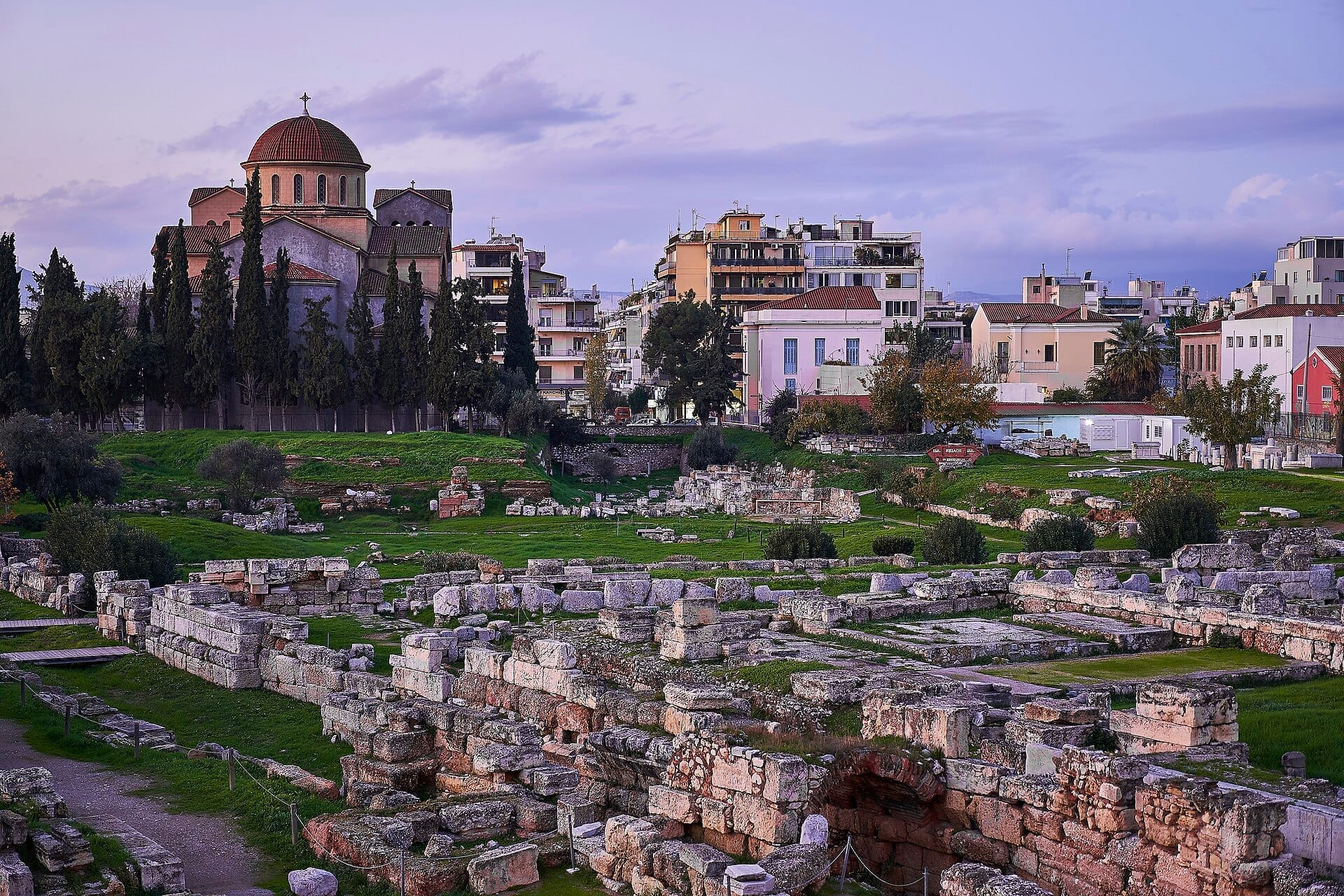
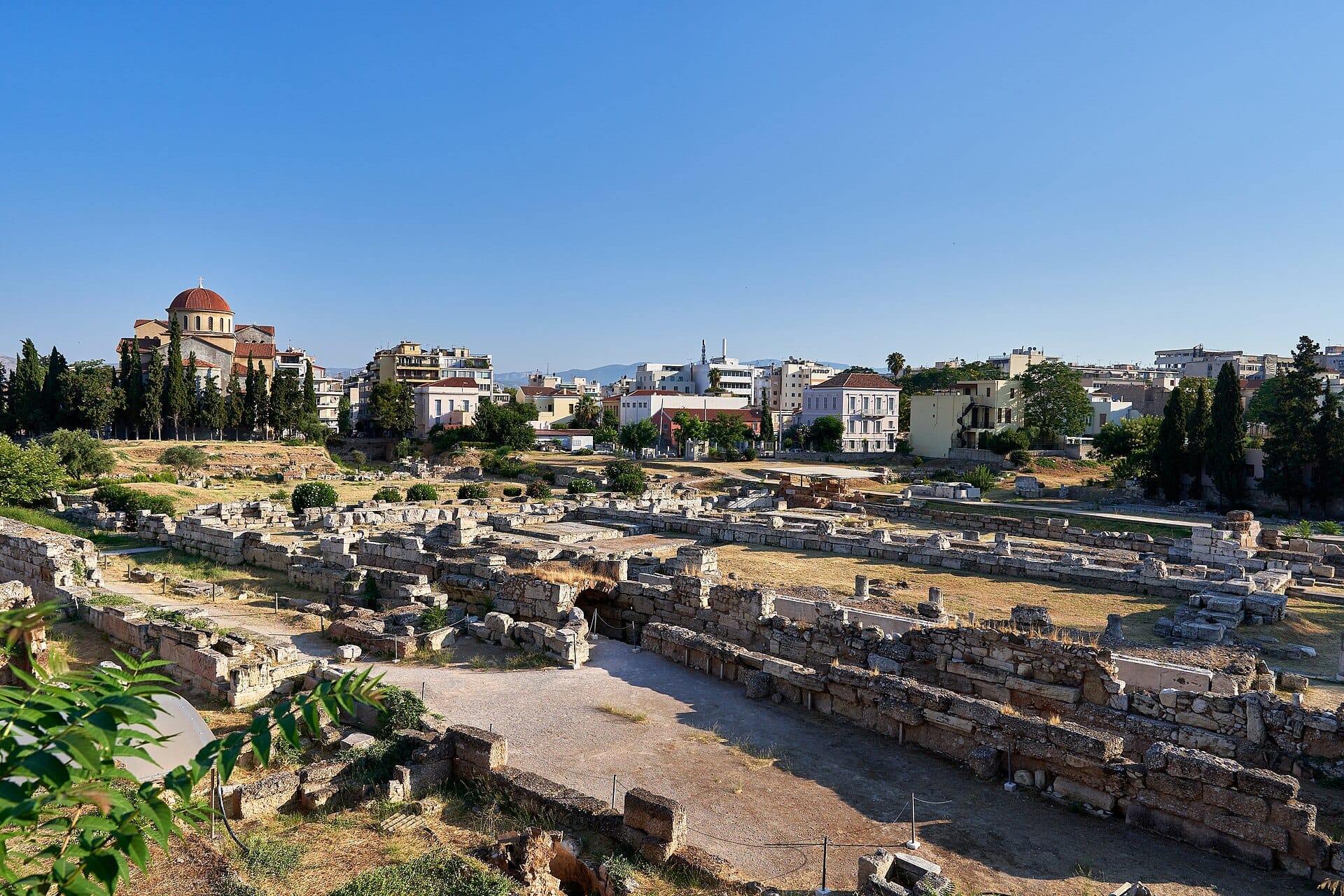
Gazi and Kerameikos sit side by side in central Athens, where a 19th-century gasworks complex has been reborn as a cultural campus and the city's most energetic after-dark district. Just steps away, one of antiquity's most important cemeteries lies preserved beneath open sky. Few Athens neighborhoods pack this range of experience into such a compact area.
Gazi and Kerameikos occupy the western edge of central Athens, where the bones of the ancient city lie directly beneath one of its most active nightlife quarters. The old gasworks, decommissioned in 1984 and reopened as the Technopolis cultural complex, gave Gazi its identity and its name, and the glow from the repurposed gas towers still anchors the neighborhood's main square after dark.
Orientation
Gazi and Kerameikos are adjacent neighborhoods in the western part of central Athens, roughly 1.5 kilometers from Syntagma Square and about 800 meters west of Monastiraki. The two names are often used interchangeably by locals and visitors, but they describe slightly different zones. Gazi is centered on Pireos Avenue and the Technopolis complex, with the Eleonas metro station (Line 3, Blue Line) sitting at its core. Kerameikos, as a residential and archaeological district, stretches eastward along Ermou Street toward Thiseio.
The neighborhood's boundaries are roughly: Pireos Avenue to the west, Ermou Street to the south (which continues as the pedestrianized walkway linking Monastiraki to Thiseio), Kerameikou Street to the north, and the edge of Psyrri and Thiseio to the east. Metaxourgio lies immediately north of Gazi across Konstantinoupoleos Street, and its character shifts noticeably in that direction: quieter, more residential, and less polished. Knowing this boundary matters if you are choosing accommodation, since a hotel described as 'Kerameikos' can be anywhere from the archaeological site to a block from the nightclub strip.
For a wider sense of how Gazi fits into the Athens map, the Monastiraki neighborhood sits about a 15-minute walk east along Ermou, while Psyrri occupies the triangle immediately to the northeast. Thisio, with its café-lined promenade and views up to the Acropolis, begins just south of the archaeological site.
Character & Atmosphere
In the morning, Gazi is almost serene. The main square around the Technopolis gates is quiet enough that you can hear pigeons on the old iron gasometer structures. Café tables are just being set out along the side streets, and the few people around are either walking dogs or heading to work. The industrial bones of the neighborhood are most visible at this hour: the brick chimneys, the rusting pipes painted in primary colors, the wide cobbled forecourt of Technopolis. It looks like a city that is just remembering what it is.
By late afternoon, the pace shifts. The restaurants and bars along the streets radiating from the central square begin filling from around 7pm. The Technopolis courtyards may have an outdoor cinema, a food market, or a live music event depending on the season. Summer evenings bring the most dramatic transformation: the streets become genuinely crowded by 10pm, and the area is unmistakably a going-out district rather than a residential one. The noise level rises considerably, and it stays that way until well past midnight, often until 4 or 5am on weekends.
The neighborhood draws a notably mixed crowd. Gazi has historically been one of Athens' most openly gay-friendly districts, and that culture remains visible and central to its character, particularly around the bars and clubs nearest the Technopolis square. At the same time, the area has become broadly popular with Athenians of all backgrounds, young international visitors, and increasingly with tourists staying in the growing number of boutique hotels in the area. The result is a neighborhood that feels genuinely alive rather than preserved for visitors, though the balance is shifting as prices and tourist footfall increase.
⚠️ What to skip
Noise is a real consideration if you are a light sleeper. Hotels and apartments within a block of the Technopolis square and the main bar streets will be significantly affected by nightlife noise on Thursday, Friday, and Saturday nights. Check the exact address before booking, and read recent reviews specifically for noise.
What to See & Do
The Kerameikos Archaeological Site at Ermou 148 is the neighborhood's most significant historical asset and one of the most underrated ancient sites in Athens. This was the city's principal burial ground from the 11th century BCE through the Roman period, and the quality of the surviving grave markers, stelae, and stone sculptures is exceptional; however, the archaeological site and its on-site museum are currently closed to the public due to ongoing infrastructure upgrade works.
The site also contains remains of the Sacred Gate and the Dipylon Gate, which were the main ceremonial entrances to ancient Athens. The Panathenaic Way, the route taken by processions to the Acropolis, passed through here. Standing at the gate foundations with the city around you, it is possible to map the ancient topography onto the modern one in a way that very few sites in Athens allow.
Technopolis City of Athens occupies the former Athens Gas Works, which operated from 1862 to 1984. The conversion of the site into a cultural complex preserved the industrial architecture, and today the gasometers, engine rooms, and storage tanks form the backdrop for concerts, exhibitions, film screenings, and festivals. The complex also houses the Maria Callas Museum and a permanent exhibition on the history of gas in Athens. The Skywalk, a raised walkway offering views over the rooftops and the gas infrastructure, is worth the short detour.
Kerameikos Archaeological Site and Museum (Ermou 148): ancient necropolis, Sacred Gate, Dipylon Gate, and on-site finds museum
Technopolis City of Athens: industrial cultural campus with rotating exhibitions, concerts, outdoor cinema in summer, and the Maria Callas Museum
The gas tower 'skywalk': elevated walkway with city views over the Technopolis complex
Street art and murals: the streets around Gazi and toward Metaxourgio have some of the densest concentrations of commissioned and independent street art in Athens
Pireos Avenue galleries: several contemporary art galleries have established themselves on or near Pireos Avenue, particularly in repurposed industrial spaces
Gazi is also a logical staging point for walking to nearby sites. The Ancient Agora is about a 15-minute walk east, and the Temple of Hephaestus, one of the best-preserved ancient Greek temples anywhere, sits on the western edge of the Agora visible from the Thiseio end of the pedestrian walkway.
💡 Local tip
The Kerameikos Archaeological Site is currently closed to the public due to infrastructure upgrade works; when open, it is often quieter early in the morning, and the light in the first two hours after opening is ideal for photographs of the stone markers.
Eating & Drinking
The food scene in Gazi leans toward the convivial rather than the gastronomic. The neighborhood has a high density of mezedes restaurants, grill houses, and bars serving food alongside their drinks programs. Portions are generally large, prices are mid-range by Athens standards, and the settings tend toward the informal: outdoor tables on cobbled streets, exposed brick interiors, and the kind of places where the music gets louder as the evening progresses. This is a good neighborhood to eat later than you might at home, since the kitchen culture here aligns with the nightlife culture.
The streets immediately around the Technopolis square and along Voutadon, Dekeleon, and the surrounding lanes are where most of the action is concentrated. You will find everything from casual souvlaki spots to more considered tavernas serving updated Greek cuisine, and a growing number of wine bars that focus on natural and Greek producers. The neighborhood is not the place to look for fine dining in the classical sense, but several restaurants are doing genuinely interesting things with Greek ingredients in an approachable format.
For coffee during the day, the Gazi area has good options ranging from traditional Greek kafeneions to specialty coffee shops that have followed the neighborhood's gentrification. If you are planning a longer food-focused day in the area, the Athens Central Market (Varvakios Agora) is about a 20-minute walk northeast on Athinas Street and worth combining with a morning in the neighborhood.
Bars in Gazi span a wide range: from small cocktail bars with carefully curated spirits lists to large clubs that carry on until sunrise. The neighborhood's reputation as a nightlife destination is well-earned and long-established. Thursday through Saturday nights are significantly busier than the rest of the week. If you want to eat dinner here without the full late-night energy, arriving before 9pm gives you a calmer version of the neighborhood.
ℹ️ Good to know
Greek dinner service runs late by northern European and American standards. Kitchens in Gazi routinely take orders until midnight or later on weekends. Do not be surprised if a restaurant that appears quiet at 8pm is packed by 10pm: this is normal rhythm, not a sign that the place is unpopular.
Getting There & Around
The Eleonas metro station on Line 3 (Blue Line) is the primary transit connection for Gazi, and it is one of the most convenient in central Athens. Line 3 connects directly to Syntagma (one stop east, about 2 minutes), Monastiraki (two stops, switching point for Line 1), and continues west toward Egaleo. Critically for airport arrivals, Line 3 is also the airport line: trains from Athens International Airport (Eleftherios Venizelos) run directly to Eleonas station, making this neighborhood unusually accessible for travelers arriving by air. Journey time from the airport to Eleonas is approximately 45 minutes. Verify current fares and schedules on the OASA or Athens Metro websites before travel, as these are subject to change.
The neighborhood is also well-connected on foot to several adjacent areas. Walking east along Ermou Street (the pedestrianized section begins closer to Monastiraki, but the road itself is manageable) brings you to Monastiraki in about 15 minutes. Walking south from the archaeological site along the pedestrian promenade of Dionysiou Areopagitou puts you near the Acropolis Museum in under 25 minutes. The Thiseio metro station (Line 1, Green Line) is also accessible by foot in about 10 minutes walking south through the archaeological park area, providing an alternative route.
Several bus lines serve Pireos Avenue along the western edge of the neighborhood, connecting Gazi to Omonia Square to the north and Piraeus to the southwest. For late-night return trips when the metro has stopped (Athens Metro typically runs until around midnight, with extended hours on some nights and seasons: verify current schedules), taxis and ride-hailing apps including Beat are readily available in the neighborhood, especially around the Technopolis square where demand is high.
For practical guidance on navigating Athens more broadly, the getting around Athens guide covers metro lines, ticketing, and transport options across the city.
Safety & Practical Notes
Gazi itself, particularly around the Technopolis complex and the main bar streets, is well-populated in the evenings and generally comfortable to walk around. The presence of crowds, working establishments, and regular foot traffic until late creates the kind of ambient safety that comes with active streets. Standard precautions apply: keep an eye on bags in crowded areas, and be aware of your surroundings when walking back to accommodation late at night through quieter streets.
The picture is more nuanced at the edges of the neighborhood. The streets north of Gazi toward Metaxourgio and the area immediately around some blocks of Kerameikou Street have a rougher character, reflecting the legacy of a former red-light district in this part of the city. This does not mean these streets are dangerous, but they feel significantly different from the restaurant strip and warrant more awareness, particularly late at night and when walking alone. The closer you stay to the Technopolis square and the main eating and drinking streets, the more straightforward the experience.
For broader safety context across Athens neighborhoods, the Athens safety tips guide provides useful orientation.
Where to Stay
Gazi and Kerameikos have seen a significant increase in boutique hotels and design-focused apartments over the past decade, driven by the neighborhood's nightlife reputation and its metro connectivity. For travelers who prioritize nightlife access and do not mind a later-starting day, staying here puts you at the center of the action without needing taxis home. For families, early risers, or travelers whose primary focus is ancient sites and museums, the noise and the late-night atmosphere make this a less obvious choice.
The best-positioned accommodation for combining access to both the cultural and archaeological sides of the neighborhood is closest to the Kerameikos metro station and Ermou Street, where you get the connectivity without the worst of the late-night noise. Properties on or immediately adjacent to the main bar streets around Voutadon and the Technopolis square will be louder. Check whether your shortlisted property has effective soundproofing and read guest reviews from Thursday-to-Sunday stays specifically.
If you are undecided about which Athens neighborhood suits your travel style, the where to stay in Athens guide compares all the main areas, including Gazi, Koukaki, Plaka, and Kolonaki, with honest assessments of who each neighborhood is best suited to.
Gazi & Kerameikos: Quick Verdict
TL;DR
Best for: nightlife, contemporary culture, and travelers who want ancient history and after-dark energy within a short walk of each other
The Kerameikos Archaeological Site is genuinely world-class and consistently overlooked; once it reopens after current upgrade works, arriving here early in the morning is a smart choice for avoiding crowds and seeing ancient Athens from a different angle.
The metro connection on Line 3 (Blue Line) makes this one of the easiest neighborhoods to reach directly from Athens Airport, which counts for airport-weary arrivals
Not ideal for: light sleepers, families with young children, or travelers whose schedule runs on early mornings and early nights; the neighborhood's energy is skewed decisively toward the evening and night hours
The edges of the neighborhood toward Metaxourgio require more awareness after dark; staying close to the Technopolis square and the main restaurant streets keeps the experience straightforward
Three full days is the right amount of time to cover Athens at a comfortable pace, from the Acropolis and its world-class museum to the ancient Agora, Monastiraki, Kolonaki, and beyond. This guide breaks it all down day by day, with booking tips, honest crowd warnings, and the practical details most itineraries skip.
Twenty-four hours in Athens is enough to cover the Acropolis, the Acropolis Museum, the historic neighborhoods of Plaka and Monastiraki, and a spectacular sunset viewpoint. This itinerary is built around realistic walking distances, smart timing, and clear guidance on what to skip when time is short.
Athens holds one of the densest concentrations of ancient history on earth. This guide covers the city's major archaeological sites and museums, from the Acropolis and Ancient Agora to lesser-known gems like Kerameikos, with practical tips on tickets, timing, and what to expect at each.
Athens is one of the best cities in Europe to eat well without spending much. This guide covers the essential dishes, where to find them, realistic prices for 2026, and how to avoid the tourist traps that line the most photographed streets in the city.
Athens rewards those who wander beyond the obvious. From a Cycladic island village clinging to the Acropolis rock to a thermal lake on the coast, these are the experiences that make the city feel like yours. This guide covers the lesser-known sites, quiet hills, and local haunts that most visitors walk straight past.
Summer in Athens means intense heat, peak crowds, and some of the longest days in Europe. This guide breaks down what each month actually looks like, how to handle the heat, and how to get the most out of your visit in June, July, or August.
Athens nightlife runs on its own schedule, with dinners starting at 10pm and clubs peaking between 3 and 5am. This guide covers every major district, the best bars and clubs, what things cost, how to dress, and how to navigate the city after dark like a local.
Athens is one of Europe's most affordable capitals, with free archaeological sites, cheap street food, and an excellent public transport network. This guide breaks down exactly what things cost, when to go for the best deals, and how to stretch every euro without missing anything important.
Athens is generally a safe city for tourists, but petty theft, taxi scams, and a few neighborhood considerations are worth knowing before you arrive. This guide covers the real risks, the overhyped ones, and exactly how to stay out of trouble.
Athens rewards shoppers who know where to look. This guide breaks down the city's best markets, shopping streets, and neighborhoods by type, with practical advice on timing, pricing, and what's actually worth buying versus what to skip.
Athens is one of Europe's most walkable capitals, with millennia of history packed into a compact city center. This guide covers the best guided walking tours, self-guided routes, practical logistics, and clear advice on timing, pricing, and what to avoid.
Athens is far more family-friendly than most travelers expect. From interactive museum programs and funicular rides to free outdoor ceremonies and canal kayaking, this guide covers the best activities for children of all ages, honest pricing breakdowns, and practical logistics for navigating Athens with kids.
Athens holds one of the densest concentrations of world-class museums anywhere in Europe. This guide covers every major collection, from the Acropolis Museum's Parthenon sculptures to the Benaki's sweep of Greek history, with practical advice on what to prioritise and when to go.
Athens rewards visitors year-round, but the experience changes dramatically by season. This guide breaks down every month by weather, crowd levels, and cost so you can plan around what actually matters to you.
Athens rewards those who look up, and out. The city's hills, ancient rock outcrops, rooftop bars, and clifftop temples frame the Parthenon, the Saronic Gulf, and the sprawling Attic basin from every angle. This guide covers the best viewpoints in Athens, from completely free hilltop climbs to spectacular paid experiences.
Athens sits at the center of one of Europe's richest regions for day tripping. Within a few hours you can stand at the Oracle of Delphi, swim off a car-free Saronic island, or walk through a Bronze Age citadel. This guide covers the best day trips from Athens, organized by type and travel time.
Athens is one of Europe's most rewarding cities on a tight budget. From ancient hilltop views and marble stadiums to flea markets and ceremonial guards, this guide covers the best free experiences in the Greek capital, plus the specific days when even major paid sites open their gates for nothing.
Athens has one of the most affordable and well-connected urban transport networks in Southern Europe. This guide covers everything from metro fares and airport express buses to taxi flat rates, tram routes, and the ticketing mistakes that catch most first-time visitors off guard.
Athens rewards visitors who go beyond the obvious. This guide covers the best things to do in Athens Greece, from ancient sites and world-class museums to rooftop bars, coastal escapes, and neighborhood walks, with practical advice on tickets, timing, and what to skip.
Choosing where to stay in Athens shapes your entire trip. This guide breaks down every major neighbourhood by walkability, noise level, price range, and proximity to the sights that matter, so you can book with confidence rather than guesswork.