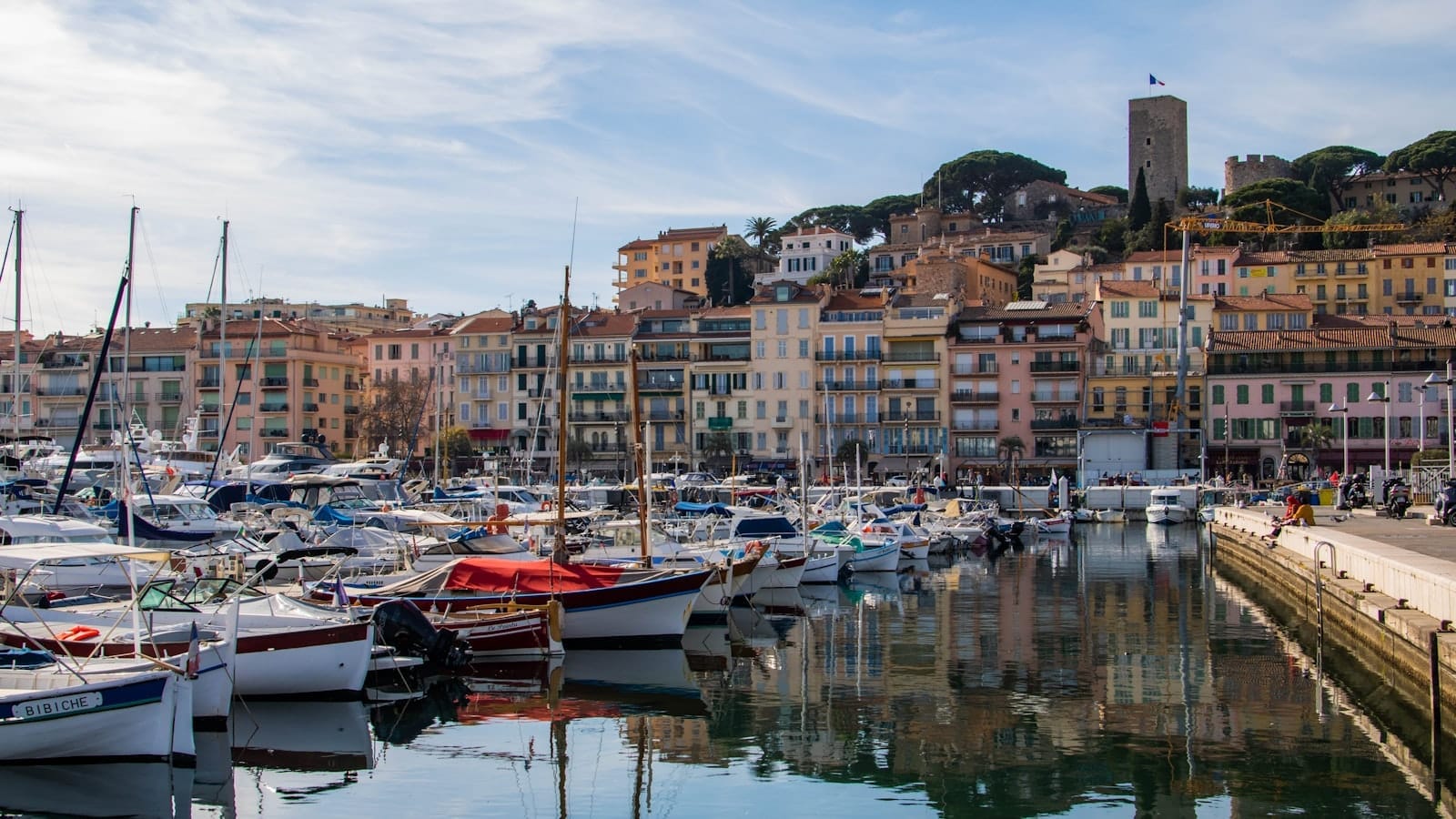
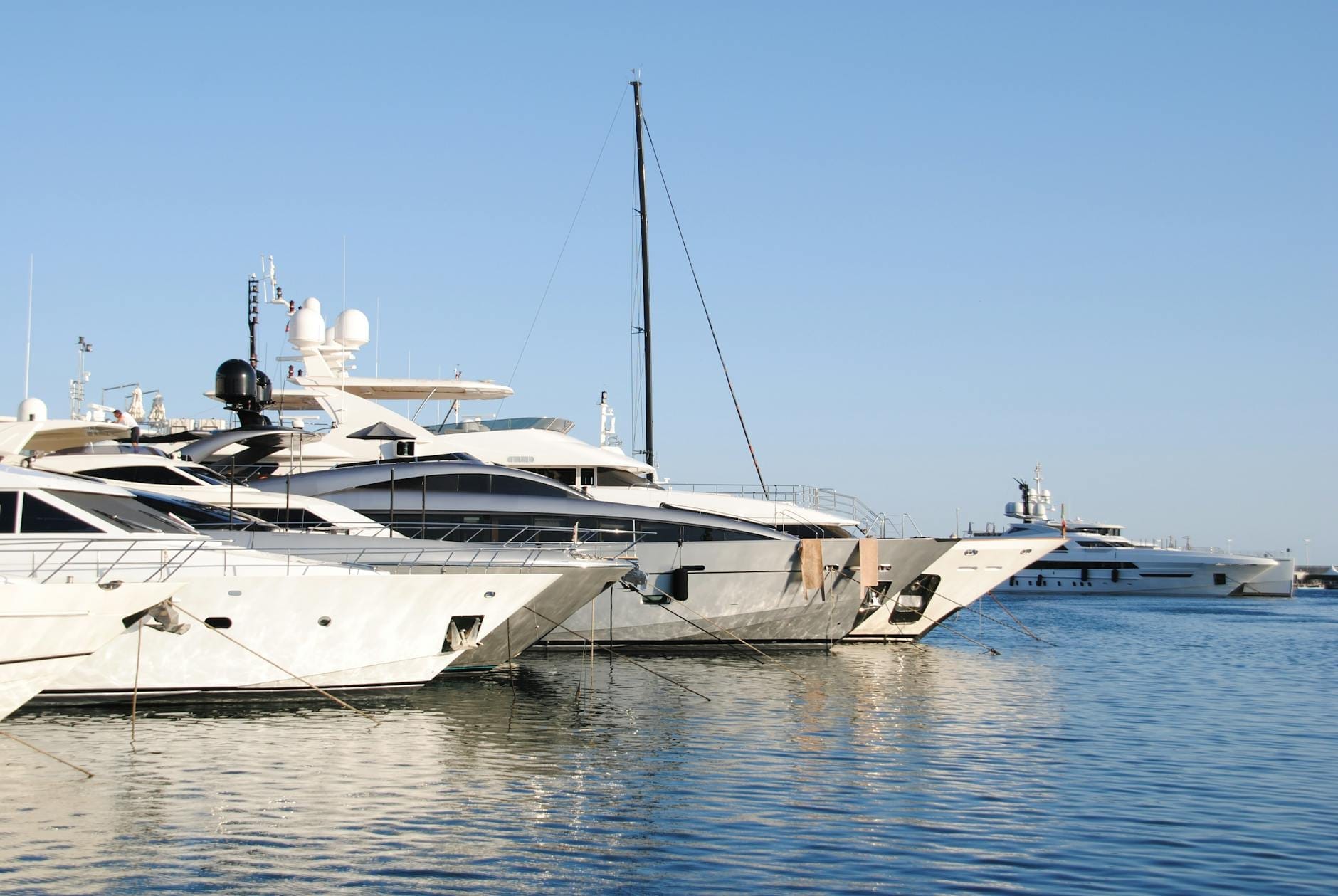
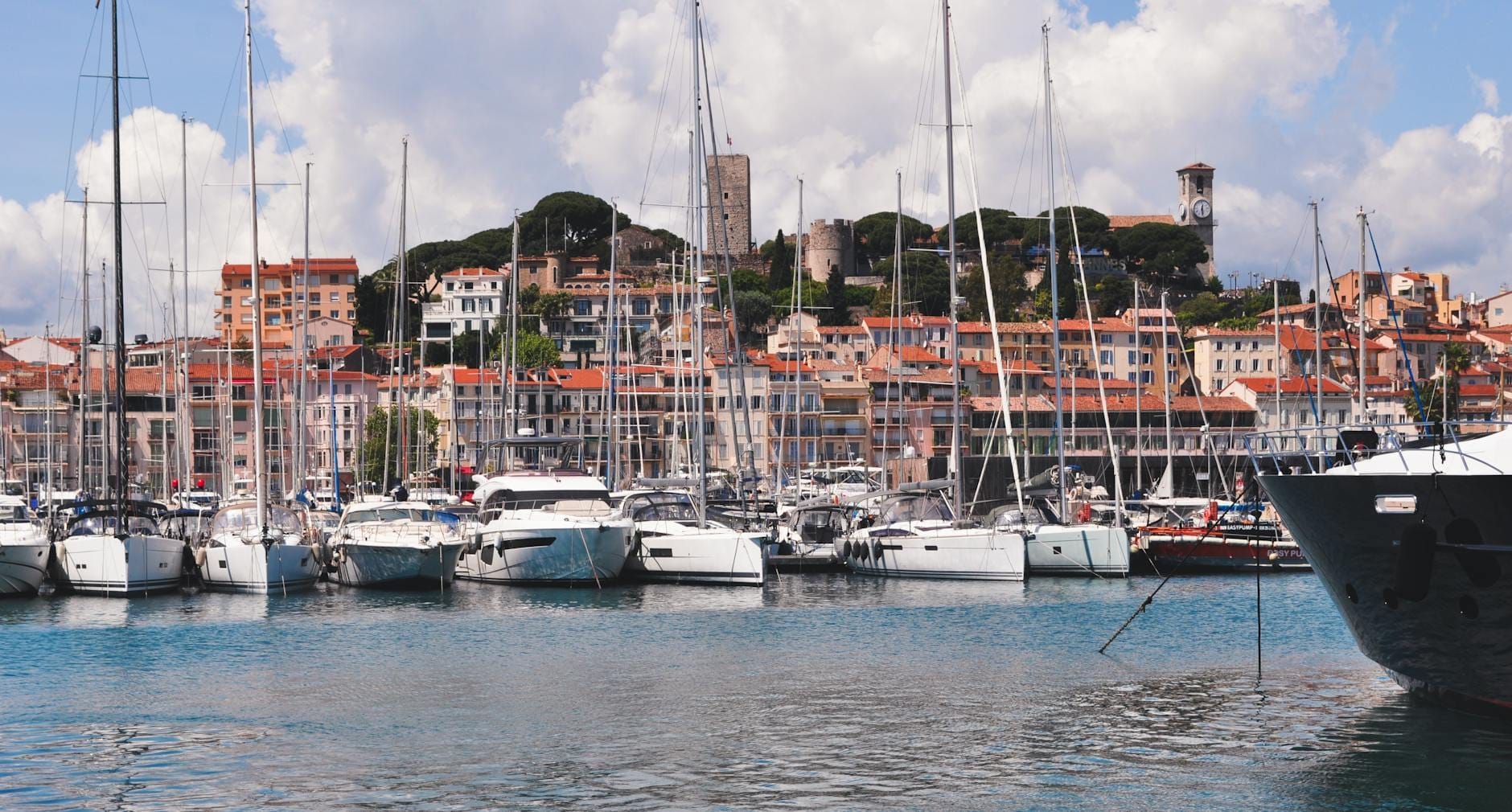
The Vieux Port is the historic heart of Cannes, where around 600 to 650 yacht berths frame a working marina at the foot of the Le Suquet hill. Sitting between the Palais des Festivals and the old town, it is the area where the city's fishing-village origins and its glamorous present overlap in a single, walkable waterfront stretch.
The Vieux Port is where Cannes makes the most sense. Stand on Quai Saint-Pierre at dusk with the Le Suquet hill rising behind you and a forest of yacht masts in front, and you understand immediately why this small coastal city became one of the most famous resort destinations in the world. It is neither the most exclusive part of Cannes nor the most photogenic, but it is the most honest.
Orientation: Where the Old Port Sits
The Vieux Port occupies the western curve of the Bay of Cannes, roughly between the Palais des Festivals et des Congrès to the east and the steep slopes of Le Suquet to the west. Its defining edge is Quai Saint-Pierre, the historic wharf opened in 1838 that runs along the southern side of the marina basin. The Jetée Albert-Edouard, a long pier extending into the bay, forms the port's seaward boundary and is one of the better vantage points in the city for looking back at the whole Cannes skyline.
The marina holds around 600 to 650 berths, making it one of two main marinas in Cannes. The Pantiero esplanade sits within the port complex and serves as the event ground for major nautical gatherings throughout the year. Just inland from the quay, a dense grid of streets climbs toward the train station to the north and transitions into the retail corridor of Rue d'Antibes roughly 500 meters away.
To the west, the ground rises sharply into Le Suquet, the medieval old town perched above the port. The two areas are physically adjacent but feel like different eras of the same city. The Vieux Port is flat, open, and oriented toward the water; Le Suquet is narrow, shaded, and turned inward. Together they form the oldest inhabited part of Cannes, predating La Croisette's famous boulevard culture by centuries.
ℹ️ Good to know
The Vieux Port is a tender port for cruise ships: large vessels anchor offshore in the Bay of Cannes and ferry passengers directly to the quay by tender boat. If you arrive by cruise, your first steps in Cannes will be here.
Character and Atmosphere Through the Day
The Vieux Port runs on a distinct rhythm that changes completely depending on when you visit. Early mornings on Quai Saint-Pierre are genuinely quiet by Riviera standards. The smell of saltwater and diesel from the marina is strongest before the sun has warmed the stone, and the only sounds are ropes straining against cleats and the occasional creak of a hull. Dog walkers, sailors checking their rigging, and a few restaurant owners setting up terraces are your main company.
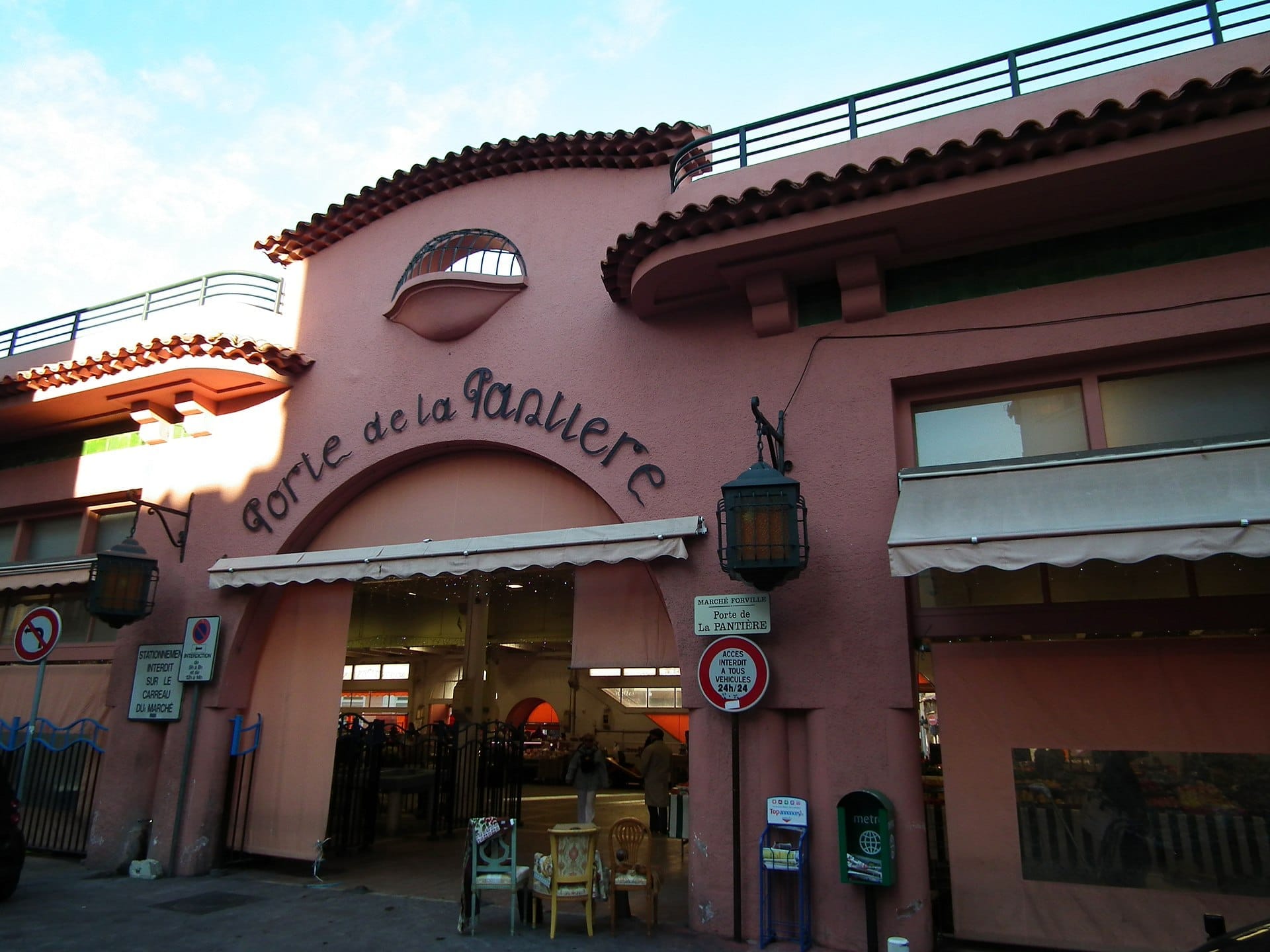
By mid-morning the area fills with purpose. The Marché Forville, a covered market just a short walk north of the port, draws both locals and visitors from around 7am. The overflow energy spills back toward the quay, with people carrying baguettes and market bags past the boat brokerages and chandleries that line the port's rear streets. This is the most authentically local hour in this part of Cannes.
Afternoons shift toward spectacle. In summer, the yachts in the marina grow increasingly large and increasingly improbable, and the quayside becomes a slow parade of people photographing them. The light on the water between 4pm and 6pm is particularly striking, with the Le Suquet hill catching warm orange tones while the bay shimmers below. Restaurant terraces on the quay fill steadily from around 7pm, and by 9pm in peak season the whole waterfront is busy with foot traffic.
In July and August, a weekly night market occupies Quai Saint-Pierre, adding craft stalls, food vendors, and considerable noise to evenings that are already busy. The atmosphere is festive but crowded. If you are staying nearby and value quiet evenings, this is worth factoring into your decision.
⚠️ What to skip
During the Cannes Film Festival in May and the Cannes Yachting Festival in September, the Vieux Port area is significantly more crowded and noticeably more expensive. Access to parts of the Pantiero esplanade may be restricted during major events. Book accommodation and restaurants well in advance if your visit overlaps with either.
What to See and Do
The most important thing the Vieux Port offers is access. The ferry departures for the Îles de Lérins leave from the quay, and spending a morning on Sainte-Marguerite or an afternoon on Saint-Honorat is one of the best day activities available from Cannes. The crossing takes around 15 minutes to Sainte-Marguerite, and tickets are purchased at the ferry kiosks along the Allées de la Liberté, just east of the main port basin.
Walk the Jetée Albert-Edouard for an unobstructed view back across the marina toward Le Suquet
Browse the morning market at Marché Forville, about five minutes' walk northwest via Rue Louis Blanc or nearby streets
Take the ferry from the quay to Sainte-Marguerite or Saint-Honorat islands
Watch the sunset from Quai Saint-Pierre facing west toward Le Suquet
Visit the Pantiero esplanade during the Cannes Yachting Festival in September for the largest in-water boat show in Europe
Walk uphill from the port into Le Suquet to reach the Tour du Suquet and Notre-Dame de l'Espérance church
The Vieux Port waterfront itself rewards slow walking rather than any single destination. The mix of working fishing boats, mid-range sailboats, and occasionally enormous superyachts in the same harbor is unusual and illustrates Cannes' persistent tension between its everyday fishing-town past and its festival-city present. The boat yard infrastructure, the chandleries, and the boatmen's cafés on the north side of the basin give the port a functional quality that the more manicured spaces of La Croisette deliberately lack.
From the port it is a ten-minute walk east along the waterfront to the Red Carpet Steps at the Palais des Festivals, and from there to the beginning of La Croisette. This makes the Vieux Port a natural starting point for a west-to-east walking tour of the entire Cannes seafront. See the Cannes walking tour guide for a structured route that covers the port, Le Suquet, and the Croisette in a single morning.
Eating and Drinking Around the Port
The dining scene on and around Quai Saint-Pierre skews heavily toward seafood, which makes complete sense given the location. Restaurants line the quayside with uninterrupted views over the marina, and the density of competition keeps quality reasonably honest. Bouillabaisse, grilled sea bass, moules marinières, and platters of local shellfish are the defaults on most menus. Prices for a full sit-down meal with wine run from around €35 to €70 per person at quayside restaurants, with the higher end reserved for places positioning themselves toward the yachting crowd.
The streets running north from the quay toward Rue du Commandant André and Rue Félix Faure offer a more varied and generally cheaper eating landscape: pizza by the slice, crêperies, brasseries serving steak-frites, and a handful of Tunisian and North African spots that reflect the diversity of the neighborhood's resident population. These streets are considerably less photogenic than the quayside, but they are where local Cannois actually eat on a Tuesday evening.
For context on the broader Cannes food scene and what to prioritize, the what to eat in Cannes guide covers regional specialties, price expectations, and the difference between tourist-trap menus and genuinely good local cooking. The short version for the Vieux Port area: choose places where the menu is handwritten or regularly changed, avoid any restaurant with photographs of food in the window, and do not skip the socca if you see it offered as a starter.
💡 Local tip
The Allées de la Liberté, a tree-lined square immediately east of the marina basin, hosts a morning market (often flowers and local produce) on many days and an antiques and bric-a-brac market on weekends. It is also where the ferry ticket booths for the Lérins Islands are located — combine both in a single early-morning visit before the day heats up.
Getting There and Around
Gare de Cannes, the main railway station, sits approximately 600 to 800 meters north of the waterfront. On foot, walking south from the station down Rue des Serbes or Rue d'Antibes brings you to the port area in under 10 minutes. The station is served by SNCF TER regional trains running the coastal line between Marseille and Ventimiglia, with Nice about 30 to 40 minutes away and the journey costing around €6 to €8. From Nice Côte d'Azur Airport (IATA: NCE), approximately 27 kilometers east, the regional bus line 81 runs directly to Cannes in around 45 to 60 minutes.
Cannes has no metro or tram network. Local buses are run by the Palmbus network, with several lines serving the seafront and the Palais des Festivals area immediately adjacent to the Old Port. For most visitors staying centrally, the Vieux Port is within comfortable walking distance of the main sights. A full overview of transport logistics, including how to get from Nice Airport to the port area, is covered in the getting around Cannes guide.
Taxis have a stand near the Palais des Festivals, a five-minute walk east of the marina. Uber operates in Cannes but supply can be inconsistent during peak event periods when demand spikes across the city. For cruise passengers arriving by tender, the quay is your arrival point: the Palais des Festivals, La Croisette, and Le Suquet are all reachable on foot within 15 minutes.
To reach the Îles de Lérins, ferries depart from the Allées de la Liberté quayside throughout the day. The crossing to Sainte-Marguerite Island takes approximately 15 minutes, and to Saint-Honorat Island about 20 minutes. Check the ferry timetables on arrival as they vary seasonally.
Where to Stay
Staying in or immediately around the Vieux Port gives you a central position that works well for almost any type of Cannes visit. The area is compact enough that La Croisette, Le Suquet, the train station, and Marché Forville are all within a 10 to 15-minute walk. Hotels here range from two-star business-style properties on the back streets north of the quay to more characterful boutique options closer to the waterfront.
The trade-off is noise. Quayside rooms facing the marina can be loud in summer evenings, particularly during the night market weeks in July and August, and during major events the whole neighborhood operates at a higher volume for days at a time. If you are a light sleeper or plan to be in Cannes primarily during the Film Festival, ask specifically for an interior-facing room, or consider properties one or two streets back from the water.
For travelers prioritizing luxury and the full Cannes seafront experience, the grand hotels are located east of the port along La Croisette, including the landmark Hôtel Carlton. The Vieux Port area suits travelers who want central access and authentic local texture over branded prestige. For a broader comparison of neighborhoods and accommodation options across the city, see the where to stay in Cannes guide.
Is the Vieux Port Right for You?
The Vieux Port is not a quiet escape. It is the operational heart of a city that handles several major international events every year, and the infrastructure built around those events shapes the neighborhood's character even in the months between them. The Pantiero esplanade exists partly because this stretch of waterfront is one of the most valuable event-hosting real estate in the south of France. That energy is part of what makes it interesting, but it also means the area is never truly off.
What the Vieux Port does better than any other part of Cannes is place you at the intersection of everything. The ferry to the islands, the old town on the hill, the film festival venue, the morning market, and the beginning of the famous boulevard are all within a short walk. For first-time visitors trying to understand the city, or for anyone following the 2 days in Cannes itinerary, this is the logical base. For visitors who have already seen the main sights and want a quieter, more residential experience, areas further east toward La Californie or west toward La Bocca may suit better.
TL;DR
The Vieux Port is Cannes' central marina district, sitting between the Palais des Festivals and the Le Suquet hill, with ferry access to the Lérins Islands from the quay.
Best for: first-time visitors, cruise passengers, anyone who wants walkable access to the main Cannes sights in a single base.
The area is lively and crowded in summer, significantly more so during the Cannes Film Festival (May) and the Cannes Yachting Festival (September).
Food on the quayside skews toward seafood at mid-to-upper price points; more affordable and local dining is found on the back streets heading north toward Rue d'Antibes.
Not ideal for travelers seeking peace and quiet: summer evenings, the weekly night market in July and August, and regular major events make this one of the busier corners of the city.
Two days is genuinely enough to cover the best of Cannes, from the famous seafront promenade to the medieval hilltop quarter and the islands just offshore. This itinerary cuts through the noise with a practical, day-by-day plan, honest timing estimates, and the local details that make the difference between a rushed visit and a memorable one.
Cannes is a year-round destination, but each season delivers a completely different experience. This guide breaks down the weather, crowd levels, hotel prices, and key events by season so you can choose the timing that actually fits your trip.
Cannes has around 7 kilometres of coastline and far more beach variety than its Film Festival image suggests. This guide covers every type of beach experience: free public stretches, glamorous private clubs on the Croisette, and the wild coves of the Lérins Islands just offshore.
The Cannes Film Festival is the world's most prestigious cinema event, but it's also one of the most misunderstood. This guide breaks down exactly who can attend, how accreditation works, what ordinary visitors can experience, and how to plan logistics around the festival dates.
Cannes has a reputation for luxury, but visiting on a budget is entirely realistic if you know when to go, where to eat, and how to get around. This guide breaks down the real costs, the genuine free experiences, and the practical moves that keep your spending in check without missing what makes Cannes worth the trip.
Cannes, France offers far more than film festival glamour when it comes to retail. This guide covers the city's two main shopping corridors, the best local markets, neighborhood finds, VAT refund tips for non-EU visitors, and straightforward advice on what to skip.
Monaco is one of the most rewarding day trips from Cannes, and it is easier to reach than most visitors expect. This guide covers every transport option, the key sights to prioritise, timing advice for cruise passengers, and what to skip if your day is short.
Two iconic cities, one coastline, very different experiences. This guide breaks down the real differences between Cannes and Nice across beaches, budget, transport, atmosphere, and events — so you can choose the one that fits your trip, or figure out how to do both.
Cannes is compact enough to explore entirely on foot, yet layered enough to reward a full day of walking. This guide covers the best self-guided route through the city, from the medieval hilltop of Le Suquet to the glamour of La Croisette, with practical tips on timing, stops, and what to skip.
Everything you need to know about getting around Cannes, from arriving via Nice Côte d'Azur Airport to navigating the city on foot, by bus, train, taxi or bike. Includes fares, routes, parking tips and regional connections along the French Riviera.
Cannes has a reputation for exclusivity that puts many travelers off before they even book a train ticket. This guide cuts through the glamour to answer the real question: what does Cannes offer the average visitor, what does it actually cost, and when should you go?
Just 15 minutes by ferry from Cannes, the Lérins Islands offer a striking contrast to the Riviera's glamour: pine forests, a royal fortress, and a monk-owned vineyard. Here is everything you need to plan a visit, from ferry operators and current fares to what is worth your time on each island.
Cannes is far more than a film festival backdrop. This guide covers the best things to do in Cannes, France, from historic hilltop walks and island escapes to seafront promenades, local markets, and practical planning tips for every season.
Cannes is far more than film festivals and luxury hotels — it sits at the heart of one of France's richest culinary traditions. This guide covers the essential dishes, where to find them, what to pay, and which traps to avoid when eating your way through the French Riviera.
Choosing where to stay in Cannes shapes your entire trip. This guide covers every major neighborhood, the full range of accommodation types from the iconic Hotel Martinez to budget picks near the train station, and clear advice on when to book and what to avoid.