Vieux Port de Cannes: The Old Port Waterfront
The Vieux Port de Cannes sits at the foot of the historic Le Suquet quarter, where superyachts now moor alongside fishing boats on the same quay that opened in 1838. Free to explore at any hour, it is the working heart of Cannes and the departure point for the Lérins Islands.
Quick Facts
- Location
- Jetée Albert Edouard, 06400 Cannes (between the Vieux-Port basin and the Palais des Festivals; Le Suquet lies on the opposite western side of the port)
- Getting There
- 10-minute walk from Gare de Cannes; Palmbus city lines stop near the port. The Palais des Festivals is roughly 5 minutes on foot along the waterfront.
- Time Needed
- 30–90 minutes for a waterfront stroll; longer if you stop for lunch or catch a ferry to the Lérins Islands
- Cost
- Free public access at all times
- Best for
- Morning walkers, boat-watchers, photographers, ferry connections to the Îles de Lérins
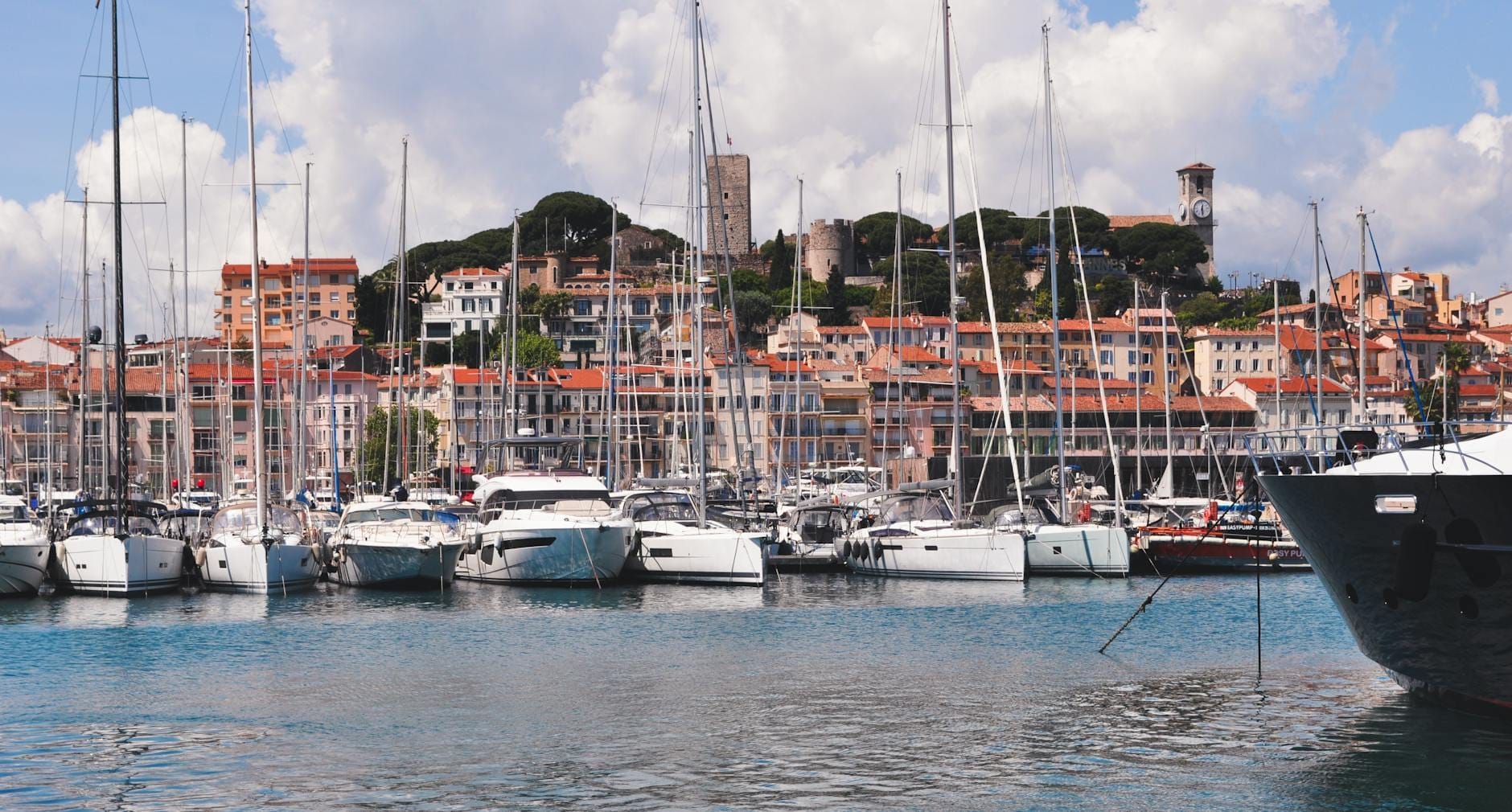
What the Vieux Port Actually Is
The Vieux Port de Cannes is the city's original harbour, a working marina that accommodates around 720 to 730 berths for vessels ranging from small fishing boats up to superyachts of about 140 metres. It sits directly below Le Suquet, the old town quarter, with the hill's ochre-toned buildings stacking up behind the quayside in a way that makes every photograph look almost too composed to be real.
The promenade along the port is open around the clock with no entry fee and no barriers. There is nothing to queue for, nothing to book. You simply walk the quays, read the boat names, watch the light change on the water, and let the place do its work. For a city so often associated with velvet ropes and festival glamour, this unpretentious stretch of waterfront can come as a genuine surprise.
Public facilities including showers and toilets are available in the port area. The quayside is largely flat and accessible for people using wheelchairs or pushchairs, though nearby streets climbing toward Le Suquet involve steep gradients.
History: From Roman Stopover to Superyacht Marina
The site's history goes back considerably further than its current marina infrastructure. During the Roman period, this stretch of coast served as an important staging point between the mainland and the Lérins Islands, which lie just offshore. The islands had already drawn monastic settlers by the fifth century, and the port area was part of the route that connected them to the wider Mediterranean world.
The Quai Saint-Pierre, the principal wharf of the Vieux Port, was formally opened in 1838 at the base of Le Suquet. At that point Cannes was still a small fishing and trading town, far removed from the resort city it would become following the arrival of the railway in 1863. The quay served fishermen and small traders, and the catch from those boats supplied the market stalls that still operate today a short walk away at the Marché Forville.
Today the port is managed as a full-service modern marina by IGY Marinas, with capacity for superyachts with drafts of up to about five metres. During the Cannes Film Festival and the Cannes Lions festival, the basin fills with charter yachts and floating hospitality decks. Outside those periods, the mix reverts to private sailboats, day-trip ferries heading to Sainte-Marguerite Island, and the occasional traditional wooden fishing vessel that still operates out of the port.
Tickets & tours
Hand-picked options from our booking partner. Prices are indicative; availability and final rates are confirmed when you complete your booking.
Private tour of Eze and Monaco from Cannes port
From 696 €Instant confirmationFree cancellationPrivate Provence full day trip from Cannes port
From 424 €Instant confirmationFree cancellationPrivate trip to Cannes and Grasse from Cannes port
From 424 €Instant confirmationFree cancellationPrivate half day trip to Antibes from Cannes port
From 424 €Instant confirmationFree cancellation
How the Port Changes Through the Day
Early morning is the most honest hour at the Vieux Port. By 7am the quay smells of diesel, salt water, and coffee drifting from the first cafés opening their shutters along the Quai Saint-Pierre. A handful of fishing boats may be returning or heading out. The light at that hour is soft and directional, hitting the hulls of moored vessels and the stone face of Le Suquet in a way that midday sun entirely flattens. For photographers, this window between sunrise and 9am is the one worth setting an alarm for.
💡 Local tip
Photographers: come between 7am and 9am for soft light and empty quays, or return in the 30 minutes after sunset when the port lights reflect off the water without the harsh shadows of midday.
By mid-morning the ferry kiosks open and the quay becomes a purposeful place, with queues forming for island boats and restaurant staff setting out chairs. The lunch hour is busy, with locals and tourists occupying the terrace tables that line the waterfront. In peak summer this is when the port feels most crowded, and the heat radiating off the stone can be intense.
Evenings bring a different quality entirely. The restaurants fill, boat lights flicker across the basin, and the terrace of the Quai Saint-Pierre becomes an unhurried place to eat fish and watch the sky over the Lérins Islands shift through orange into grey. This is when the port functions at its most social, and the contrast with the serene early morning is striking enough to justify two separate visits if time allows.
Walking the Quays: A Practical Orientation
The main visitor promenade runs along the Quai Saint-Pierre on the western side of the basin. This is where the restaurants concentrate, where the ferry departure points are located, and where most people naturally gravitate. The atmosphere here is animated without being overwhelming outside the major festival weeks.
The eastern side of the port connects toward the Palais des Festivals et des Congrès and the beginning of La Croisette. Walking this direction takes roughly five minutes and brings you from the working waterfront into Cannes' more polished institutional face. It is a short transition but a marked one in terms of atmosphere.
At the northern end of the port, the streets climb into Le Suquet. The gradient increases quickly. Within a few minutes of walking uphill you reach the medieval lanes of the old town, the covered market at Marché Forville, and eventually the clock tower of the Tour du Suquet. That short vertical climb is one of the more rewarding detours in Cannes, and it starts directly from the port.
ℹ️ Good to know
Ferry departures for the Îles de Lérins (Sainte-Marguerite and Saint-Honorat islands) leave from the Vieux Port. Crossings take approximately 15–20 minutes to Sainte-Marguerite. Check current schedules and fares at the quayside kiosks, as they vary seasonally.
The Lérins Ferry Connection
The Vieux Port area is the departure point for boats to the Îles de Lérins, and for many visitors this functional role is its most important one. Both Sainte-Marguerite and Saint-Honorat are accessible in under twenty minutes by regular ferry, making the port an essential transit point even for travellers not particularly interested in the waterfront itself.
Sainte-Marguerite is the larger island, known for the Fort Royal where the Man in the Iron Mask was reportedly imprisoned. Saint-Honorat is quieter, home to an active Cistercian monastery whose monastic community dates back to the early Middle Ages and still produces wine sold on the island. If you plan to visit either island, arriving at the port by 9am on a summer day will put you on an early crossing before the queues build.
What to Eat and Drink Along the Quay
The restaurant strip along the Quai Saint-Pierre leans heavily toward seafood, as you would expect given the port's history. Grilled fish, bouillabaisse, and plateaux de fruits de mer dominate most menus. Quality varies considerably, and the closer a restaurant is to the most photogenic section of the quay, the more it may rely on foot traffic rather than repeat custom. A short walk away, the streets climbing into Le Suquet offer smaller restaurants where prices are often lower and menus more focused.
For provisions and market shopping, the Marché Forville is a few minutes' walk north of the port. It is open most mornings and supplies much of what you will later see on the menus of the surrounding restaurants. Picking up fruit, cheese, or bread here in the morning before a ferry crossing to the islands is a reliable strategy.
⚠️ What to skip
Restaurants directly on the Quai Saint-Pierre cater heavily to tourist traffic during peak season. Compare menus and check whether prices include service before sitting down. Tipping is not obligatory in France as service is legally included in the bill, though rounding up is common for good service.
Weather, Seasons, and When to Visit
The port is open in all weather and is technically worth seeing in any season. In winter, with average daytime temperatures around 11 to 13°C, the quays are quiet, the light is clean, and the superyacht berths are mostly empty. The atmosphere has an unguarded quality that peak season entirely removes.
High summer (July and August) brings average maximum temperatures of around 26 to 27°C and the largest crowds. During the Cannes Film Festival in May, the port transforms: charter yachts fill the basin, hospitality events colonise the quay, and access to some areas may be restricted. If your goal is a relaxed waterfront walk, the periods from late April to mid-May or September to October offer the most comfortable combination of weather and manageable crowds. For more seasonal context, see the guide to the best time to visit Cannes.
Rainfall peaks in autumn, particularly October and November. A wet day at the port is not without its own appeal — the restaurants are warm and uncrowded, the stone quay darkens in the rain, and the hills above Le Suquet can disappear into low cloud in a way that feels more atmospheric than inconvenient. Pack a light waterproof between October and March.
Insider Tips
- The best unobstructed view of the port with Le Suquet behind it is not from the quayside itself but from the eastern edge of the basin, near the Palais des Festivals end. From here you can frame the entire scene with the old town rising in the background.
- Ferry kiosks on the quay sell tickets on the day, but on summer mornings the first two or three crossings to Sainte-Marguerite can sell out quickly. Arriving before 9am or checking whether advance booking is available gives you more flexibility.
- The public toilets and shower facilities in the port area are free and well-maintained — useful to know before a long walk or a ferry crossing.
- During the Cannes Film Festival (typically mid-May), sections of the quay near the Palais des Festivals are heavily securitised and access is restricted. If you are visiting specifically for the waterfront ambience, the week before or after the festival is considerably more relaxed.
- The Quai Saint-Pierre has metered parking along its length, but spaces disappear early in summer. Walking from the train station or using a Palmbus service is more reliable than driving to the port.
Who Is Vieux Port Waterfront For?
- Travellers catching a morning ferry to the Îles de Lérins who want to start the day with a coffee on the quay first
- Photographers looking for classic Cannes compositions combining boats, old town architecture, and Mediterranean light
- Visitors who want to understand the historical and working character of Cannes beyond La Croisette's luxury facade
- Families wanting a free, open, and flat space to walk with children before deciding on the day's next activity
- Off-season travellers in autumn or winter who want the French Riviera without the summer crowds or prices
Nearby Attractions
Other things to see while in Vieux Port (Old Port):
- Cannes Yacht Marina (Port Canto)
Port Pierre Canto, inaugurated in the 1960s as the first private leisure marina built in France, anchors the eastern end of La Croisette with around 600 berths and a backdrop of open sea facing the Îles de Lérins. Free to enter on foot, it rewards an easy stroll with close-up views of serious yachts, a calm promenade away from the Croisette crowds, and direct sightlines toward Sainte-Marguerite island.
- Marché Forville
Marché Forville is Cannes' principal covered food market, operating since 1934 at the base of the Le Suquet old town. Spanning 3,000 square metres, it draws local chefs, fishermen, and morning shoppers in equal measure — and remains free to enter every morning of the week in summer during market hours.
- Midi Beach (Plage du Midi)
Stretching along Boulevard Jean Hibert west of the Old Port, Plage du Midi is the public beach that locals actually use. No velvet ropes, no reservation fees, just sand, sea, and a view toward the Îles de Lérins. It rewards visitors who know when to show up.