Palais des Festivals et des Congrès: Cannes' Cinema Heart
The Palais des Festivals et des Congrès is the concrete anchor of Cannes' global identity. Home to the world's most famous film festival since 1983, it sits at the western tip of La Croisette where the city's glamour and its working waterfront converge. Whether you visit during the festival frenzy of May or the quieter months when you can actually breathe, this building rewards attention.
Quick Facts
- Location
- 1 Boulevard de la Croisette, 06400 Cannes, France
- Getting There
- 10-15 min walk from Gare de Cannes train station; taxi ranks at the building entrance
- Time Needed
- 30 min for exterior visit; around 1 hour for guided interior tour
- Cost
- Exterior and forecourt free; guided tours available for a small fee (check Cannes Tourism for current tariffs)
- Best for
- Film history enthusiasts, architecture buffs, photography, conference delegates
- Official website
- www.palaisdesfestivals.com
What Is the Palais des Festivals?
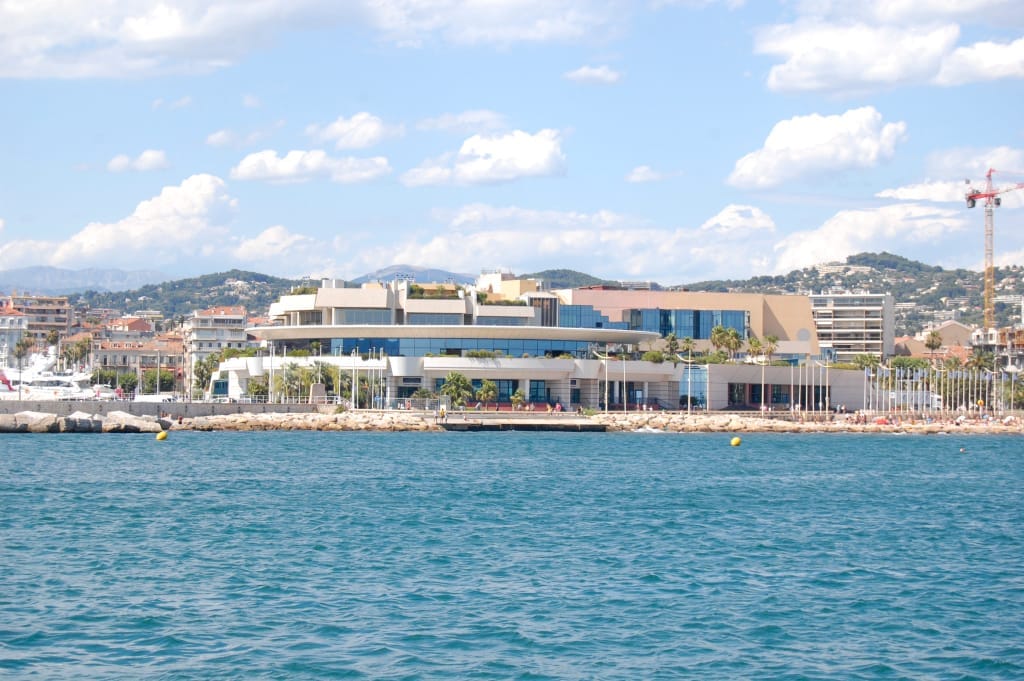
The Palais des Festivals et des Congrès de Cannes is a large-scale convention and entertainment complex occupying a prime position at the western end of La Croisette, right where the seafront boulevard meets the Vieux Port. The current Palais was inaugurated in 1983, it was designed by architects Sir Hubert Bennett and François Druet. The Cannes Film Festival first used this building in 1983, and the two have been inseparable ever since.
The scale is substantial: 30,000 m² of usable space, five theatres, 40 rooms, and three multi-purpose areas. It operates year-round as one of Europe's busiest congress and trade-fair venues, hosting events ranging from the MIPIM real estate summit to Cannes Lions, the international advertising festival. The film festival is the most famous of the building's annual residents, but for 10 or 11 months of the year, the Palais is a working convention centre rather than a red-carpet stage.
ℹ️ Good to know
The building's exterior and forecourt, including the famous handprint Walk of Fame, are freely accessible at any time. Access to the interior depends entirely on whatever event is currently in progress. Guided tours that take you inside require advance booking through the Cannes Tourist Office.
The Red Carpet Steps: What You Actually See
The most visited feature of the Palais des Festivals is the broad external staircase on the building's south face, facing the sea. These are the steps — officially called the Montée des Marches — that every director, actor, and jury member climbs during the film festival, flanked by crowds behind security barriers and photographed by hundreds of press photographers. Outside festival season, the steps are open and ungated. You can walk up them freely, turn around, and look out across the Baie de Cannes toward the Îles de Lérins on the horizon.
The forecourt in front of the steps contains the Walk of Fame, where hand and footprints of film industry figures have been cast in cement slabs over the years, similar in concept to the Hollywood Walk of Fame but more restrained in scale. Names worth looking for include those of directors and actors who have received the Palme d'Or over the decades. For a deeper look at the red carpet's cultural weight, the dedicated guide to the red carpet steps covers the full context.
The building's architecture is unashamedly functional, even blunt. Locals have nicknamed it 'le bunker' with a mixture of affection and resignation. The concrete-and-glass facade has none of the Belle Époque elegance of the grand hotels further along La Croisette, and it was controversial when it replaced an older casino on the same site. From a purely visual standpoint, it is the least photogenic major landmark in Cannes. What it lacks in architectural grace it compensates for entirely in symbolic weight.
Tickets & tours
Hand-picked options from our booking partner. Prices are indicative; availability and final rates are confirmed when you complete your booking.
Cannes, Antibes and St Paul de Vence half-day private tour
From 60 €Instant confirmationFree cancellationBoat & snorkeling trip to the Esterel Calanques from Cannes
From 75 €Instant confirmationFree cancellationCannes, Antibes and Saint Paul de Vence shared tour from Nice
From 65 €Instant confirmationFree cancellationCannes food tour with full meal
From 105 €Instant confirmationFree cancellation
How the Experience Changes by Time of Day
Early morning, between 7 and 9 a.m., the forecourt is almost empty. The light from the east catches the surface of the Baie de Cannes and reflects softly off the building's glass sections. Street-cleaning vehicles work the surrounding pavement. This is the best time for unobstructed photographs of the steps and for quietly examining the hand-print slabs without negotiating around tour groups.
By mid-morning, tourist groups begin arriving, and the steps become a backdrop for photographs. The area around the main entrance sees a steady movement of convention delegates and event staff during congress periods. By midday in summer, the forecourt can be uncomfortably warm; there is almost no shade on the south-facing plaza. The smell of salt air from the sea is consistent throughout the day, occasionally mixed with the exhaust of idling chauffeur-driven cars near the drop-off zone.
Late afternoon and evening, particularly in spring and early autumn, are the most atmospheric times to visit. The building is lit externally after dark, and the backdrop of the bay at dusk makes for far better photography than midday. During the film festival in May, the evening screenings draw crowds to the barriers outside from early afternoon; the atmosphere is intense, with local spectators alongside accredited press and industry visitors, all hoping for a glimpse of someone famous on the steps.
💡 Local tip
For the best photographs of the steps with the bay behind you, come before 9 a.m. or in the hour before sunset. Midday sun creates harsh shadows on the concrete and the plaza fills with tour groups. If you want the bay in the background, stand near the base of the steps and shoot upward — the angle isolates the staircase against the sky.
The Guided Tour: What Happens Inside
When guided tours are available (scheduled through the Cannes Tourist Office and subject to event bookings in the building), they last approximately one hour and take small groups through the interior spaces, including the main auditorium, the Grand Auditorium Louis Lumière. This is the 2,300-seat theatre where the major competition screenings take place. Sitting in those seats, or simply standing in the space, connects the visit to decades of film history in a way that no exterior view can.
Tours are booked in advance through the Cannes Tourist Office and must be booked in advance. The tour involves a significant number of stairs throughout the building, which can be challenging for visitors with mobility limitations. Precise current prices and tour availability should be verified directly with the Cannes Tourist Office or the official Palais website before your visit, as schedules shift depending on the congress calendar.
If the Palais itself is locked due to a private event, the area immediately around it still offers plenty. The Vieux Port waterfront is a two-minute walk to the west, and the eastern stretch of La Croisette begins directly at the building's front door, with the grand hotel facades visible within the first few hundred metres.
The Cannes Film Festival Connection
The Festival de Cannes takes place each May, usually over 12 days. The 2026 edition is currently scheduled for 12 to 23 May 2026, though dates should be confirmed on the official festival website as they approach. During the festival, the entire character of the Palais and its surroundings transforms completely. The steps are carpeted in red, security is tight, and the forecourt becomes the most photographed piece of pavement in France. Accreditation for the official screenings is restricted to industry professionals and press; the public cannot simply buy tickets to attend competition screenings.
What visitors without accreditation can do is watch the arrivals from behind the public barriers on either side of the red carpet, which is a genuinely charged experience during major screenings. The surrounding streets, La Croisette, and the Vieux Port fill with film-industry activity: press junkets in hotels, market screenings in nearby venues, and outdoor screenings for the public. The complete Cannes Film Festival guide covers how to experience the festival as a non-accredited visitor.
⚠️ What to skip
During the film festival and major congresses like MIPIM and Cannes Lions, access to the forecourt and steps may be restricted or managed by event security. The surrounding streets also become extremely crowded. Hotel rates across the city spike significantly. Plan and book well in advance if visiting during any of these periods.
Getting There and Around the Area
The Palais des Festivals sits at the junction of La Croisette and the Vieux Port area, making it one of the easiest landmarks in Cannes to reach on foot from almost anywhere in the city centre. From Gare de Cannes, the main railway station, the walk takes roughly 10 to 15 minutes heading south toward the sea, then west along the waterfront. Licensed taxi ranks are located directly outside the main entrance.
From Nice Côte d'Azur Airport (IATA: NCE), the most cost-effective options are the regional bus line 81 (approximately 45 to 60 minutes, around €5 to €10 one-way, subject to change) or the TER regional train from Nice-Ville station to Gare de Cannes (approximately 30 to 40 minutes, around €6 to €8 one-way). A taxi or ride-hailing service from the airport runs approximately 30 to 45 minutes and typically costs considerably more; check current estimates in-app. For full transport detail, the guide to getting around Cannes covers all options.
Cannes has no metro or tram network. Within the city, the Palmbus network covers the main routes, but the Palais is close enough to most central hotels that walking is the most practical choice. Cannes-Mandelieu Airport (IATA: CEQ), roughly 5 to 6 kilometres to the west, serves private and business aviation rather than scheduled commercial flights.
Context: Where the Palais Fits in Cannes
Understanding the Palais des Festivals is easier if you understand its position in the city. It sits at the hinge point between two very different Cannes: to the east, La Croisette stretches for roughly two kilometres, lined with luxury hotels, private beach concessions, and high-end boutiques. To the west, the Vieux Port and the hillside old town of Le Suquet represent an older, less performative version of the city, with covered markets, neighbourhood restaurants, and the medieval watchtower of the Tour du Suquet above everything.
The Palais was built to consolidate Cannes' position as a major international conference destination, not just a film festival city. That ambition succeeded: the building hosts over 50 major international events each year. For most of those events, tourists have no reason to enter. But the building's outdoor spaces, the steps, the forecourt, and the connection to the seafront, function as genuine public space for most of the year. The Cannes walking tour passes the Palais as a natural centrepiece, connecting the port to the grand hotel strip in a single route.
Insider Tips
- The hand-print slabs on the Walk of Fame are easy to miss if you walk straight to the steps. Slow down and look at the forecourt pavement before heading up — the slabs are scattered across the plaza, not lined up in a single row.
- If you want to photograph the steps completely empty, arrive before 8 a.m. Even in peak summer, the forecourt is quiet at that hour. By 10 a.m. it fills quickly with tour groups and day-trippers from Nice and Monaco.
- Guided tours are only available when no major event occupies the building. The Palais publishes its event calendar on its official site. Cross-check your travel dates against the congress calendar before deciding whether to book a tour — there will be weeks where interior access is simply not possible.
- During the film festival in May, the public red-carpet viewing barriers on the sides of the Montée des Marches are first-come, first-served. Positions near the barriers begin filling from early afternoon for evening screenings. Bring water; standing in direct sun on the forecourt for two or three hours in May warmth is genuinely tiring.
- The building itself is sometimes called 'le bunker' by locals — a name that captures both its appearance and a mild local ambivalence about its dominance of the waterfront. If you want to understand what Cannes looked like before this building arrived, seek out photographs of the old Palm Beach Casino and the Palais Croisette that previously occupied parts of this stretch.
Who Is Palais des Festivals et des Congrès For?
- Film history enthusiasts who want to stand on one of cinema's most recognisable stages
- Architecture and urban design observers curious about how a brutalist congress centre became a global cultural symbol
- Photographers who want the iconic red-carpet steps as a backdrop, particularly at dawn or dusk
- Visitors attending one of the many international conferences, trade fairs, or festivals hosted year-round
- Travellers doing a full La Croisette walk who want to understand the western anchor of the boulevard before heading east
Nearby Attractions
Other things to see while in La Croisette:
- Boulevard de la Croisette
Boulevard de la Croisette is Cannes' defining address: a roughly 3-kilometre sweep of palm-shaded walkway running along the Baie de Cannes from the Vieux Port to Port Canto. Free to walk at any hour, it anchors the city's luxury hotels, private beach clubs, and the Palais des Festivals — and looks completely different depending on when you show up.
- Carré d'Or (Golden Square)
The Carré d'Or, or Golden Square, is Cannes' compact luxury district wedged between Rue d'Antibes and La Croisette. Four streets pack in high-end boutiques, aperitivo bars, fine dining, and some of the city's most sought-after nightlife, all within easy walking distance of the Palais des Festivals.
- Centre d'Art La Malmaison
Reopened in January 2025 after a major renovation, Centre d'Art La Malmaison brings contemporary art into one of the most historically layered buildings on Boulevard de la Croisette. With 600 m² of exhibition space, free rooftop terrace access during opening hours, and admission from €6.50 (€3.50 reduced), it offers real cultural depth just steps from the sea.
- Carlton Cannes, a Regent Hotel
Standing at 58 Boulevard de la Croisette since 1911, the Carlton Cannes is the most recognisable building on the French Riviera's most famous seafront boulevard. With its twin Belle Époque domes, a private beach, and a history entwined with the Cannes Film Festival, it draws visitors whether they're booked into a suite or simply curious enough to step inside the lobby.