Centre d'Art La Malmaison: Cannes' Belle Époque Art Centre on the Croisette
Reopened in January 2025 after a major renovation, Centre d'Art La Malmaison brings contemporary art into one of the most historically layered buildings on Boulevard de la Croisette. With 600 m² of exhibition space, free rooftop terrace access during opening hours, and admission from €6.50 (€3.50 reduced), it offers real cultural depth just steps from the sea.
Quick Facts
- Location
- 47 Boulevard de la Croisette, 06400 Cannes (approx. 800 m east of the Palais des Festivals)
- Getting There
- City buses run along Boulevard de la Croisette; taxis stop at the entrance. From Gare de Cannes, about a 10-minute walk along the seafront for most visitors.
- Time Needed
- 45–90 minutes for the exhibitions; add 30 minutes for the rooftop café
- Cost
- €6.50 full price; €3.50 reduced; free for under-18s, students, job seekers, and people with disabilities; free on the first Sunday of the month from November to March
- Best for
- Contemporary art lovers, architecture enthusiasts, and anyone wanting a cultural break from the beach
What La Malmaison Actually Is
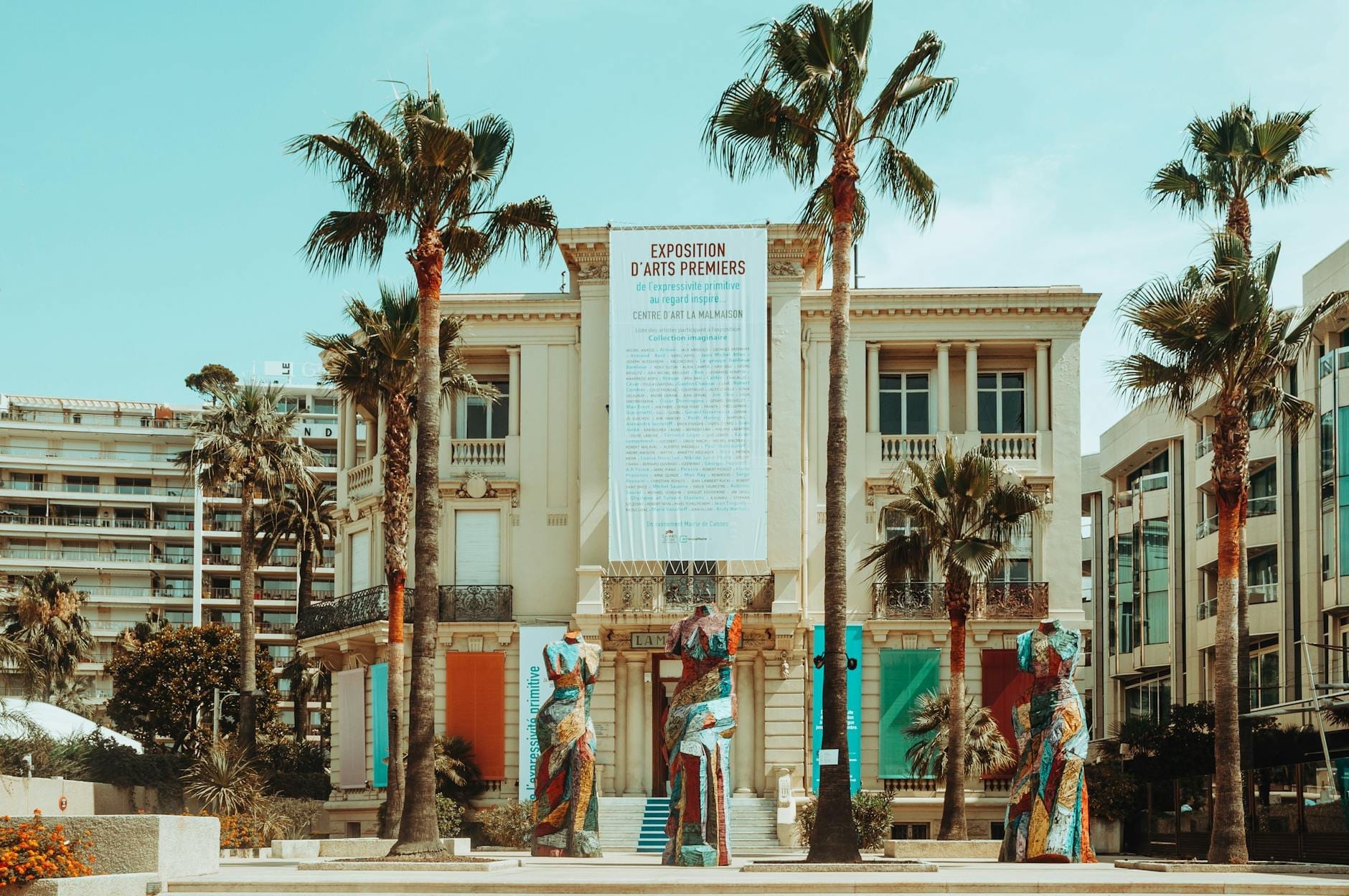
Centre d'Art La Malmaison is a municipal contemporary art centre housed in a Belle Époque villa on the seafront. The building dates to 1863, when it was constructed as an annex to the Grand Hôtel by the architect Laurent Vianay. It was enlarged in 1901 at the instigation of Grand Duke Michael of Russia, who used it as a base for a pioneering local golf club. For much of the 20th century it served various cultural functions before reopening on 31 January 2025 following an extensive renovation that nearly tripled its exhibition footprint to around 600 m².
The result is a venue that manages to feel both serious and relaxed: white-walled galleries with polished concrete floors on one side, and through the tall windows, the palm-lined Croisette and the blue arc of the Bay of Cannes on the other. The contrast between what is on the walls and what is outside the glass is part of the experience.
La Malmaison sits midway along La Croisette, making it a natural pause point if you are walking the full length of the boulevard. It is not a large institution by international standards, but the programming quality is consistent, and the building itself justifies a visit even outside of a major show.
ℹ️ Good to know
La Malmaison is closed on Mondays year-round, and closes entirely between early January and mid-February for installation work. Check the current exhibition schedule before visiting, as the centre operates on temporary shows with no permanent collection on display.
The Building: Architecture Worth Reading Closely
From the outside, La Malmaison reads as a classic Riviera villa from the late 19th century: ochre render, wrought-iron balconies, shuttered windows, and a roofline that steps back from the street in the manner typical of the Second Empire period. What the 2025 renovation added is less visible from the pavement: structural reinforcement, expanded underground service areas, and a reworked interior circulation that allows the ground and first floors to function as a single flowing exhibition sequence.
The rooftop terrace is the renovation's most immediately rewarding addition. From up here, the view sweeps across the Croisette's double row of palms toward the Îles de Lérins on clear days, and westward toward the Esterel hills turning red in the afternoon light. A rooftop café operates here, serving light homemade food during opening hours. Access to the rooftop terrace is free via the main entrance during the centre’s opening hours, meaning you do not need to buy an exhibition ticket to use the café or take in the view.
💡 Local tip
Arrive at the rooftop between 16:30 and 17:30 on a clear afternoon in spring or autumn. The light catches the bay at a low angle, and the Croisette below is active without being overcrowded. The café does not take reservations, so early arrival secures a table.
Tickets & tours
Hand-picked options from our booking partner. Prices are indicative; availability and final rates are confirmed when you complete your booking.
Cannes, Antibes and St Paul de Vence half-day private tour
From 60 €Instant confirmationFree cancellationBoat & snorkeling trip to the Esterel Calanques from Cannes
From 75 €Instant confirmationFree cancellationCannes, Antibes and Saint Paul de Vence shared tour from Nice
From 65 €Instant confirmationFree cancellationCannes food tour with full meal
From 105 €Instant confirmationFree cancellation
The Exhibition Experience: What to Expect Inside
La Malmaison has no permanent collection. Every show is temporary, typically running for several months, and the programming leans toward 20th-century and contemporary French and international artists. Past exhibitions have included retrospectives of painters associated with the School of Nice and survey shows of European modernism. The specific works change, but the curation tends to be coherent rather than sprawling, which suits the scale of the space.
The ground floor galleries are the largest and handle the main body of any exhibition. The rooms are proportioned generously for the building's age, with ceiling heights that accommodate large-format work without crowding. The first floor tends to host supporting material: archival photographs, preparatory sketches, or smaller works that require closer attention. Lighting throughout is controlled and calibrated to the works, not to the architecture, which means the Belle Époque detailing recedes into the background rather than competing with the art.
Crowds are moderate during the week and noticeably higher on Saturday afternoons, particularly in July and August. If you visit during the Cannes Film Festival in May, expect a more eclectic mix of visitors than usual, as the centre draws in accredited guests alongside regular tourists. The galleries are quiet enough for genuine looking, which is not always guaranteed in this city during peak season.
Opening Hours and Practical Logistics
Standard hours (Jan–Jun and Sep–Jun): Tuesday to Sunday, 10:00 to 13:00 and 14:00 to 18:00; Monday closed. July and August: daily 10:00 to 19:00. The centre was closed to the public from 5 January to 18 February 2026 for installation. Hours can change between exhibitions — check the official Cannes site before visiting. Last admission is 30 minutes before closing.
The centre is closed entirely from 5 January to 18 February 2026 for installation of new exhibitions, and may close briefly at other points in the year between shows. If your visit falls outside peak season, confirm the current status via the official city website before heading over.
- Full admission: €6.50
- Reduced admission (ages 18–25, Cannes Pass Culture holders, Cannes Seniors Le Club members, groups of 10 or more): €3.50
- Free: under-18s, students, job seekers, people with disabilities and one accompanying person
- Free entry: first Sunday of each month from November to March for all visitors
- Large luggage is not permitted inside the galleries
How the Experience Changes by Time of Day
Morning visits, particularly Tuesday to Friday, offer the most peaceful conditions. The galleries between 10:00 and 11:30 are often close to empty, which allows you to spend time with individual works without distraction. The light from the Croisette side enters at a low angle through the tall windows, which creates a warm wash across the walls that shifts noticeably as the morning progresses.
Afternoons from 14:00 bring more foot traffic, especially after school groups arrive mid-week during term time. Saturday afternoons in high season are the busiest single period. If you are visiting with children or as part of a group, the afternoon sessions are still manageable, just expect to share the space more actively.
The rooftop café functions as a useful anchor for timing your visit. Come for the exhibitions first, then move to the terrace for coffee or a light lunch. From there it is a short walk east toward the Carlton hotel and the more formal end of the Croisette, or west back toward the Palais des Festivals and the Old Port.
Getting There and Nearby Context
The address is 47 Boulevard de la Croisette. City buses operated by Palmbus serve the Croisette; check the current network map at palmbus.fr for the most accurate stop locations. Taxis drop directly outside. From Gare de Cannes, the walk takes roughly 10 minutes along the seafront, passing the Palais des Festivals and the beach concessions. Parking along the Croisette itself is extremely limited; if you are arriving by car, use the underground car parks near the Palais des Festivals and walk.
The centre sits within a concentrated stretch of cultural and architectural interest. The red carpet steps of the Palais des Festivals are 800 metres west. The Marché Forville is a 20-minute walk away, useful for provisioning a picnic before heading to the beach. If you are spending a full day on the Croisette, La Malmaison fits logically into the mid-morning or early afternoon window before the beach concessions fill up.
Photography, Accessibility, and Practical Limitations
Photography rules vary by exhibition and are governed by the rights of individual works. As a general rule, personal photography without flash is tolerated in many shows, but always confirm with staff at the entrance for the current exhibition. The rooftop offers unrestricted photography and is the most reliably photogenic part of the building.
The renovated building has improved accessibility significantly compared to the pre-2025 configuration, but visitors with mobility requirements should check directly with the centre for current provisions, as the historic building structure imposes some limitations.
A note on expectations: La Malmaison is a compact venue with a rotating programme. If the current show does not align with your interests, the visit will feel short. The €6.50 full admission is fair for what it offers, but this is not a museum where you can spend a half-day regardless of the show. Check what is on before you go. The rooftop access being free is a genuine bonus and worth the trip even if the current exhibition does not excite you.
⚠️ What to skip
The centre closes entirely from 5 January to 18 February 2026 for installation. If you are visiting Cannes in winter, confirm the venue is open before making it part of your itinerary. During the Film Festival in May, the surrounding area on the Croisette becomes very congested; allow extra time for the walk from the Palais des Festivals end.
Is It Worth Your Time?
For travellers who want more than beach and shopping from their Cannes visit, La Malmaison is one of the most straightforward ways to spend an hour productively on the Croisette. The building's history connects to the Belle Époque era when Russian aristocracy and European high society shaped the character of the French Riviera. The contemporary programming connects that past to current artistic practice in France. And the rooftop view, free to access, is better than most you will find in this city without paying for a hotel bar. If you are putting together a Cannes itinerary, it pairs naturally with a walk through Le Suquet and the Vieux Port on the same morning.
Visitors with no interest in contemporary visual art and limited time in Cannes may prefer to prioritise the Île Sainte-Marguerite or the Old Town over La Malmaison. The venue is small enough that if art is not on your agenda, an hour feels like enough and you will not leave feeling shortchanged.
Insider Tips
- Rooftop access via the café terrace is free even without an exhibition ticket during opening hours. If you are short on time or the current show does not interest you, go straight to the rooftop for the view over the Bay of Cannes and the Croisette.
- The first Sunday of each month from November to March offers free entry for everyone, no eligibility checks. This is the single best time to visit if you are flexible and watching costs.
- During the Cannes Film Festival in May, La Malmaison sometimes coordinates its programming with festival themes. Check the exhibition calendar before your trip if you are visiting during that period.
- The midday closure (13:00–14:00) applies during the current exhibition schedule, with the centre generally open 10:00–13:00 and 14:00–18:00. Do not arrive just before 13:00 expecting a full visit; plan for a morning session ending at 13:00 or an afternoon session starting at 14:00.
- Large bags and luggage are not permitted in the galleries for security reasons. If you are arriving from your hotel with luggage, leave bags at the front desk or use a left-luggage service near the Gare de Cannes before visiting.
Who Is Centre d'Art La Malmaison For?
- Travellers who want cultural depth alongside the standard Croisette experience
- Architecture enthusiasts interested in Belle Époque Riviera buildings
- Visitors during Film Festival week seeking a quieter, non-cinema activity
- Budget-conscious travellers: free entry on the first Sunday of each month (Nov–Mar) and free rooftop access during opening hours
- Anyone looking for a 60–90 minute morning activity before the beach crowds arrive
Nearby Attractions
Other things to see while in La Croisette:
- Boulevard de la Croisette
Boulevard de la Croisette is Cannes' defining address: a roughly 3-kilometre sweep of palm-shaded walkway running along the Baie de Cannes from the Vieux Port to Port Canto. Free to walk at any hour, it anchors the city's luxury hotels, private beach clubs, and the Palais des Festivals — and looks completely different depending on when you show up.
- Carré d'Or (Golden Square)
The Carré d'Or, or Golden Square, is Cannes' compact luxury district wedged between Rue d'Antibes and La Croisette. Four streets pack in high-end boutiques, aperitivo bars, fine dining, and some of the city's most sought-after nightlife, all within easy walking distance of the Palais des Festivals.
- Carlton Cannes, a Regent Hotel
Standing at 58 Boulevard de la Croisette since 1911, the Carlton Cannes is the most recognisable building on the French Riviera's most famous seafront boulevard. With its twin Belle Époque domes, a private beach, and a history entwined with the Cannes Film Festival, it draws visitors whether they're booked into a suite or simply curious enough to step inside the lobby.
- Palais des Festivals et des Congrès
The Palais des Festivals et des Congrès is the concrete anchor of Cannes' global identity. Home to the world's most famous film festival since 1983, it sits at the western tip of La Croisette where the city's glamour and its working waterfront converge. Whether you visit during the festival frenzy of May or the quieter months when you can actually breathe, this building rewards attention.