Île Sainte-Marguerite: Cannes's Island Escape With a Dark History
Île Sainte-Marguerite is the largest of the Lérins Islands, sitting about 1.3 km off the Cannes waterfront. It combines a genuine historical mystery at Fort Royal with 22 kilometres of forest paths, an ornithological reserve, and clear Mediterranean coves. A half-day here feels entirely removed from the Riviera's usual pace.
Quick Facts
- Location
- Bay of Cannes, approx. 0.5 miles offshore — part of the Lérins Islands, Alpes-Maritimes, France
- Getting There
- Ferry from Quai Saint-Pierre, Vieux Port, Cannes — approx. 15-minute crossing
- Time Needed
- 3–5 hours for a thorough visit; half-day recommended
- Cost
- Fort Royal & museum: €6.50 (adult), €3.50 (concession). Free first Sunday of month Nov–Mar. Ferry tickets extra — check Riviera Lines for current fares.
- Best for
- History enthusiasts, nature walkers, families, swimmers seeking quiet coves, and anyone wanting a genuine break from the Cannes crowds
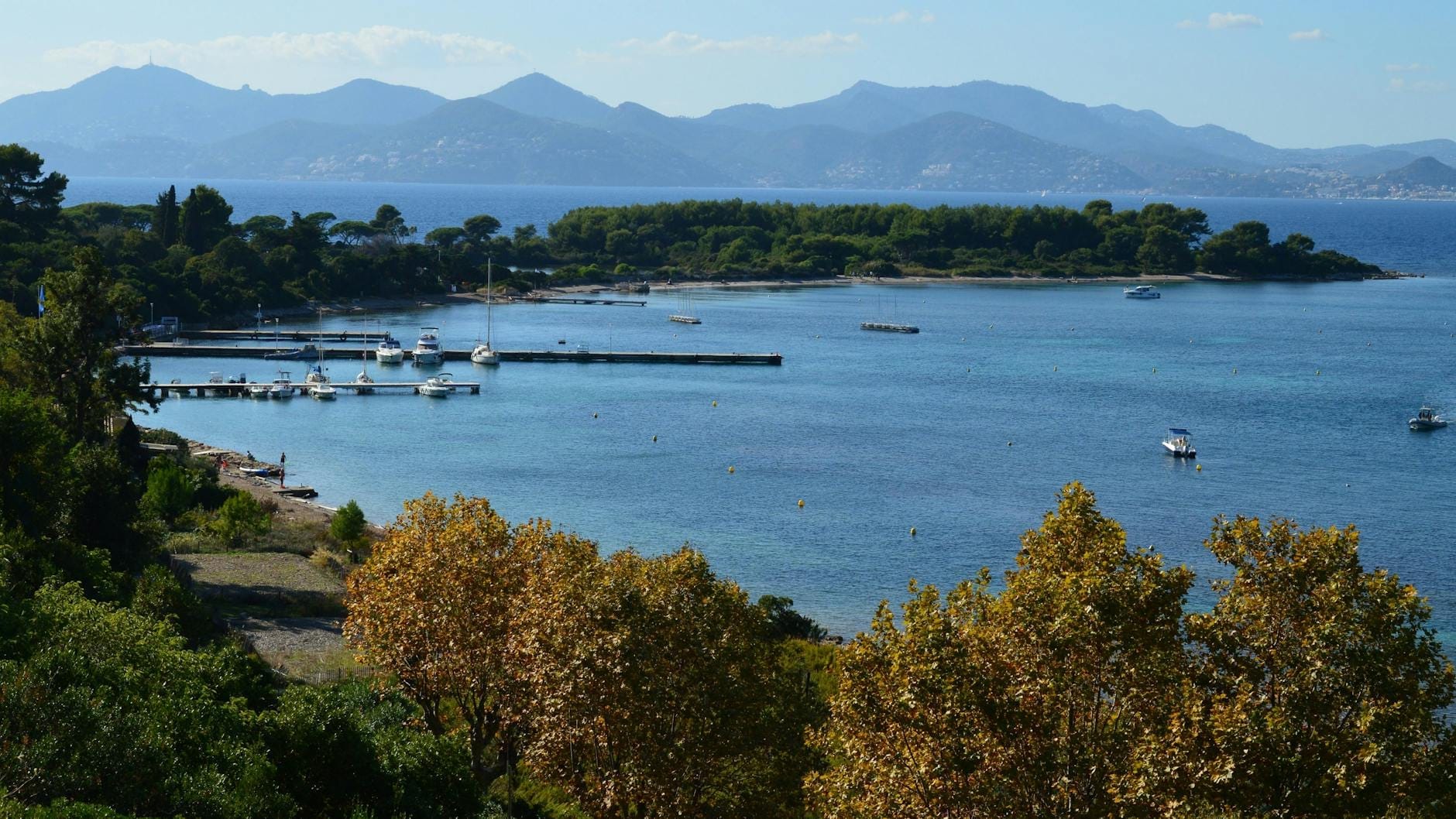
What Île Sainte-Marguerite Actually Is
Île Sainte-Marguerite is the largest island in the Lérins archipelago and the closest to the Cannes shoreline. At about 152 hectares, with roughly 9 km of coastline and 22 km of marked footpaths, it is big enough to lose the crowds on a busy summer day. The interior is dominated by a thick forest of stone pines and Aleppo pines, which keeps the island noticeably cooler than the mainland in July and August. The northern shore faces Cannes and is where the ferry jetty, Fort Royal, and a handful of seasonal restaurants are located. The southern shore, by contrast, is wilder, rockier, and largely deserted by mid-morning — even in August.
The island sits at the heart of a broader island group that includes Saint-Honorat Island to the south-west, which operates under very different conditions — a working Cistercian monastery with its own ferry schedule and wine estate. Sainte-Marguerite is the secular counterpart: no monks, no wine cellar, but more trails, a larger beach area, and the famous prison. If you are weighing up which island to visit first, see the complete Lérins Islands guide for a side-by-side comparison.
ℹ️ Good to know
The island has no cars, no scooters, and only a handful of service vehicles. The silence in the pine forest — punctuated by birdsong and the occasional distant ferry horn — is one of the things visitors remember most.
Fort Royal and the Man in the Iron Mask
The stone bulk of Fort Royal dominates the island's north-eastern tip. Construction began under Richelieu in the 17th century and was expanded under Vauban, Louis XIV's master military engineer. The fort's layout reflects Vauban's characteristic geometry: low, angular bastions designed to deflect cannon fire rather than tower above it. Standing on the seaward ramparts, you can see clearly across the bay to Cannes's seafront and, on clear days, eastward toward the hills behind Antibes.
The fort served as a state prison for nearly four centuries. Its most notorious chapter began in 1687, when an unidentified prisoner arrived wearing a mask — later romanticised in iron in popular culture, though contemporary accounts suggest it was velvet. This prisoner remained on Sainte-Marguerite until 1698 and died in the Bastille in 1703. His identity has never been definitively established. Voltaire, Alexandre Dumas, and a procession of historians have proposed candidates from the brother of Louis XIV to an Italian diplomat. The mystery remains genuinely open, and the museum inside Fort Royal handles the evidence honestly: it presents what is known and acknowledges the gaps.
The Musée du Masque de Fer et du Fort Royal is housed within the fort itself. The exhibits include the actual prison cell where the masked prisoner was held — a small, thick-walled room whose stone floor, scratched walls, and single high window communicate confinement more effectively than any display panel. The broader collection covers the island's Roman-era history (known as Lero in antiquity, with first habitation estimated around the 6th century BC), naval history, and underwater archaeology from wrecks in the surrounding waters.
💡 Local tip
Museum hours: Oct–Mar Tue–Sun 10:30–13:15 and 14:15–16:45; Apr–May Tue–Sun 10:30–13:15 and 14:15–17:45; Jun–Sep daily 10:00–17:45. Closed Mondays outside summer. Standard entry €6.50, concessions €3.50. Free on the first Sunday of each month from November to March.
Tickets & tours
Hand-picked options from our booking partner. Prices are indicative; availability and final rates are confirmed when you complete your booking.
Cannes, Antibes and Saint Paul de Vence shared tour from Nice
From 65 €Instant confirmationFree cancellationCannes, Antibes and St Paul de Vence half-day private tour
From 60 €Instant confirmationFree cancellationBoat & snorkeling trip to the Esterel Calanques from Cannes
From 75 €Instant confirmationFree cancellationCannes food tour with full meal
From 105 €Instant confirmationFree cancellation
The Forest, the Paths, and the Ornithological Reserve
Beyond the fort, the island shifts entirely in character. The main path network runs through dense pine forest where the canopy closes overhead and the light drops to a dappled green. The smell is resinous and sharp, especially on warm afternoons when the pine sap heats up. Paths are unpaved but generally well-maintained; the terrain is gentle enough for most walkers, though flat sandals are a poor choice on the grittier sections.
A botanical trail on the northern side is marked with identification panels covering the island's plant species, including species of particular interest in a protected Mediterranean context. The eastern end of the island is home to an ornithological reserve classified as a biological reserve since 2002. Birdwatching here is understated rather than spectacular — this is not a major migration hotspot — but the reserve status means the woodland is managed for wildlife first, which keeps it unusually quiet and undisturbed. Early morning visitors in spring have a reasonable chance of hearing warblers and other woodland birds before the ferry crowds arrive.
The full circuit of the island on foot takes roughly two to two-and-a-half hours at a relaxed pace. Most visitors, however, spend considerably longer because the southern-facing rocky coves invite swimming stops. The water along the southern shore is clear and turquoise over pale rock, with none of the boat traffic that affects the northern side. There are no lifeguards, no facilities, and no shade structures on the wilder sections of coast — which is precisely why they stay quieter.
How the Experience Changes Through the Day
The first ferry of the day typically brings a mix of serious walkers and early-bird visitors who want the fort to themselves. Arriving on one of the morning departures, ideally before 10:00, gives you the northern beach and the approach to Fort Royal in near-solitude. The light at that hour falls across the ramparts at a low angle, emphasising the texture of the stone and making this the best window for photography of the fort's exterior.
By late morning, especially between June and September, the island fills noticeably. The narrow beach near the ferry jetty gets crowded quickly, and the handful of on-island restaurants develop queues by noon. This is the window when walking further into the island — south or east — pays off most. The further from the jetty, the thinner the crowd.
Mid-afternoon in summer brings a lull of sorts: visitors are either at the beach, in the restaurant, or back on the ferry, and the paths through the pine forest are at their quietest for an hour or two. Late afternoon light through the trees is particularly warm. The last ferry back to Cannes departs in the early evening — check the current schedule carefully, as missing it means either an expensive water taxi or an unplanned overnight on an island with no hotel.
⚠️ What to skip
Ferry schedules vary significantly by season and operator. Always check the current timetable before visiting and note the time of the last departure back to Cannes. Riviera Lines is one of the main operators; verify current schedules at riviera-lines.com.
Getting There: Ferries from Cannes
Ferries to Île Sainte-Marguerite depart from Quai Saint-Pierre at the Vieux Port waterfront in Cannes. The crossing takes approximately 15 minutes. Multiple operators run services, and the departure point is well-signed from the port area. Tickets are usually purchased at the quayside booths on the day, though during peak summer months it is worth arriving early as boats can fill.
From central Cannes, the Vieux Port is walkable from most points along La Croisette. The walk from the Palais des Festivals to Quai Saint-Pierre takes under ten minutes. There is no need for a taxi or bus unless you are arriving from further afield.
💡 Local tip
Ferry fares to Sainte-Marguerite are set by operators and change seasonally — do not rely on figures printed in guidebooks. Check Riviera Lines (riviera-lines.com) or the quayside boards for current return prices before you travel.
Practical Notes: What to Bring and What to Expect
The island has no pharmacy, no ATM, and limited food and drink options outside the seasonal restaurants near the jetty. Bring water in a quantity appropriate to the temperature: in July and August, 1.5 litres per person for a half-day is a conservative minimum. Sunscreen and a hat matter more here than in the city because shade on the coastal paths is intermittent and the reflected light off the water is intense.
For swimming, the southern rocky coves require footwear for the approach — water shoes or old trainers are useful. The water entry points are typically via rock rather than sand, and sea urchins are present, particularly in the rockier sections. The northern beach near the jetty is sandy and more accessible, but correspondingly more crowded.
Accessibility across the island is limited by the unpaved paths and uneven coastal terrain. The area immediately around the fort and the jetty is more navigable, but a full circuit of the island on foot is not suitable for wheelchairs or pushchairs. Visitors with significant mobility limitations may find the fort and museum worthwhile while skipping the perimeter walk.
Weather affects the experience significantly. In autumn, the bay can become choppy and ferry crossings may be cancelled at short notice. Winter visits are quieter — arguably more atmospheric for the fort and forest — but some restaurants will be closed and the museum operates reduced hours. For optimal weather odds combined with manageable crowds, May, June, and September are the strongest months to visit. See the best time to visit Cannes for a broader seasonal breakdown.
Who Will Not Enjoy This Island
Visitors expecting resort-style beach facilities — loungers, parasols for hire, beach bars, or water sports rental — will be disappointed. The island is a protected natural area, not a beach club. The on-island restaurants are pleasant but simple, and they close outside the main season. If your primary interest is a day of comfortable beach lounging with service, the beaches along La Croisette or further east will serve you better.
The island also requires a degree of physical engagement. The full walk, combined with museum time, involves several hours on your feet over uneven ground. Travellers with very limited time in Cannes who are trying to cover the main city highlights may find the ferry round-trip eats more of the day than they can spare, particularly if ferry connections are slow.
Insider Tips
- Take the first or second ferry of the day and head directly to the fort before the main crowds arrive. You can often have the masked prisoner's cell entirely to yourself for ten or fifteen minutes in the early morning.
- The southern coves are not marked on most tourist maps handed out at the jetty. Follow the main path anti-clockwise from the fort and look for the narrow tracks heading seaward through the pines — the first good cove appears roughly 25 minutes from the jetty.
- The first Sunday of each month from November to March, entry to Fort Royal and the museum is free. Combined with an off-season ferry crossing on a clear winter day, this is genuinely one of the best-value half-days on the French Riviera.
- Pack a picnic rather than relying on the island's restaurants. The pine forest has shaded clearings with wooden picnic tables that are mostly empty even in summer, and eating there rather than queuing at the restaurant saves a significant amount of time.
- If you are visiting between October and May, double-check that the museum is not closed on a Monday before booking your ferry — the fort exterior and grounds remain accessible, but the interior museum is closed Mondays outside the summer season.
Who Is Île Sainte-Marguerite For?
- History and mystery enthusiasts drawn to the unresolved Man in the Iron Mask story
- Walkers and nature lovers seeking Mediterranean pine forest and coastline with minimal infrastructure
- Families with older children comfortable with a half-day of walking, swimming in natural coves, and a genuinely engaging museum
- Photographers wanting dramatic fort architecture and clear turquoise water away from the crowded city beaches
- Travellers who want one complete day or half-day away from Cannes's commercial centre without travelling far
Nearby Attractions
Other things to see while in Îles de Lérins:
- Fort Royal & Musée du Masque de Fer et du Fort Royal
Rising from the pine-covered interior of Île Sainte-Marguerite, Fort Royal is a 17th-century coastal fortress that once imprisoned the mysterious Man in the Iron Mask. Today it houses the Musée du Masque de Fer et du Fort Royal, combining genuine historical intrigue with sweeping views over the Bay of Cannes. The ferry ride alone is worth the trip.
- Île Saint-Honorat
One of the Lérins Islands in the Bay of Cannes, Île Saint-Honorat has been home to a monastic community since around 410 AD. Today, about 21 Cistercian monks still live and work here, tending vineyards and welcoming visitors to a place of genuine historical weight and unusual calm, about 20 minutes by ferry from the Cannes waterfront.