Fort Royal & Musée du Masque de Fer: The Island Prison That Keeps Its Secrets
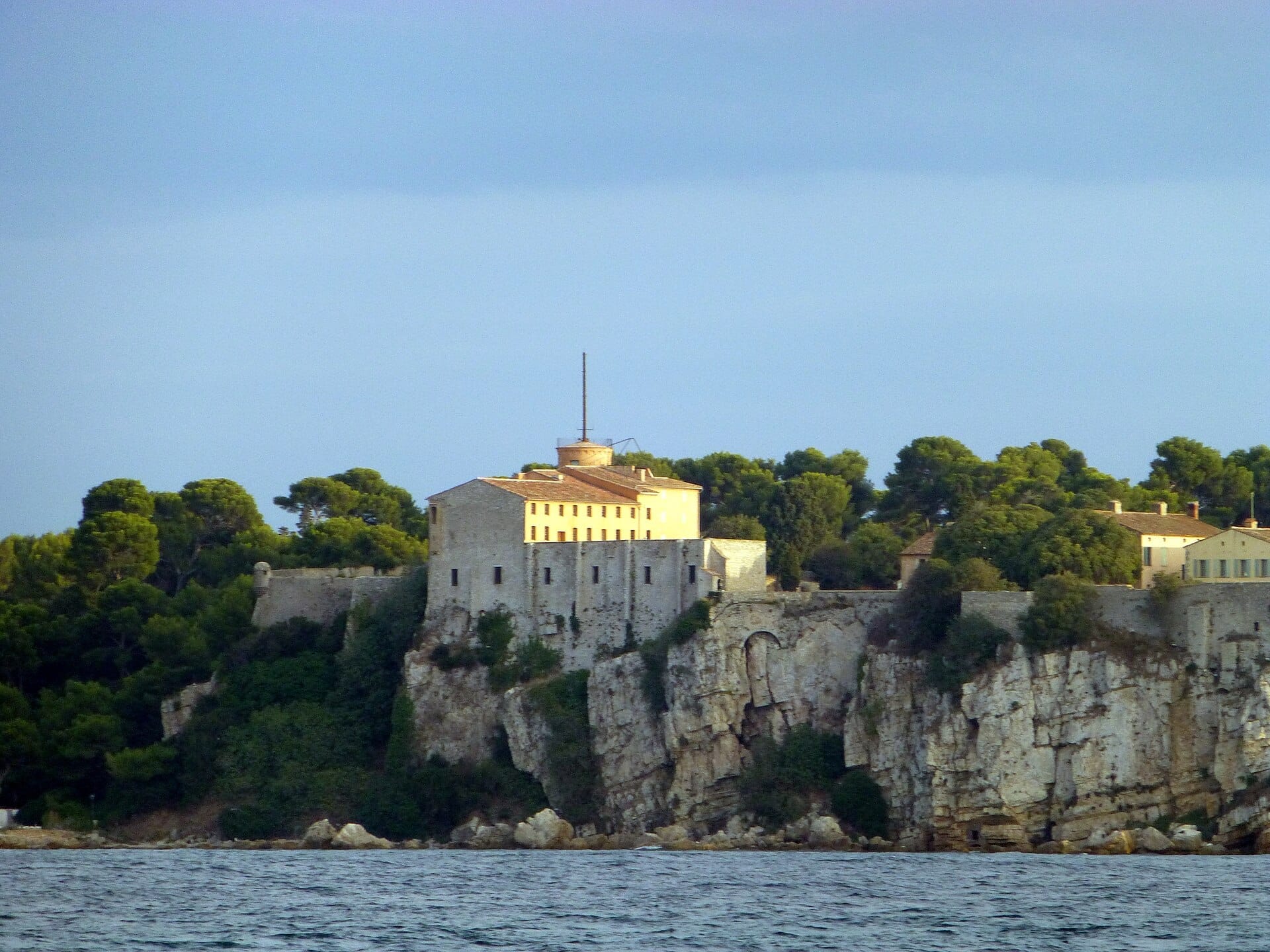
Rising from the pine-covered interior of Île Sainte-Marguerite, Fort Royal is a 17th-century coastal fortress that once imprisoned the mysterious Man in the Iron Mask. Today it houses the Musée du Masque de Fer et du Fort Royal, combining genuine historical intrigue with sweeping views over the Bay of Cannes. The ferry ride alone is worth the trip.
Quick Facts
- Location
- Fort Royal, Île Sainte-Marguerite, 06400 Cannes, France
- Getting There
- Maritime shuttle from Vieux Port (Old Port), Cannes — approximately 15 minutes crossing
- Time Needed
- 2–4 hours (including ferry crossing and island walk)
- Cost
- €6.50 full price; €3.50 reduced (museum admission); free for under-18s and students up to 26 year-round; free 1st Sunday Nov–Mar
- Best for
- History lovers, families, photographers, escaping the Cannes crowds
Why Fort Royal Stands Apart from Cannes' Usual Attractions
Cannes is a city defined by surfaces: polished marble, luxury storefronts, the photogenic sweep of Boulevard de la Croisette. Fort Royal is its opposite. To reach it, you leave the mainland behind entirely, boarding a ferry at the Vieux Port for a 15-minute crossing to Île Sainte-Marguerite, the larger of the two Lérins Islands. By the time you step off the boat and walk through the island's eucalyptus and Aleppo pine forest to the fort's entrance, the Croisette feels like a different world.
The Musée du Masque de Fer et du Fort Royal — officially renamed from the older 'Musée de la Mer' — sits inside Fort Royal, a coastal fortress built in the early 17th century on the foundations of Roman cisterns. For much of its history it functioned as a state prison, and its most famous occupant was a man whose identity has never been conclusively established: the prisoner known as the Man in the Iron Mask, held here for 11 years between 1687 and 1698. That mystery is at the heart of everything the museum does.
💡 Local tip
Take the first or second ferry of the morning to reach the island before day-trippers from Nice and nearby resorts arrive. The fort's internal courtyard and the prisoner's cell are noticeably quieter before 11:00.
The Fort: Architecture and Layers of History
Fort Royal's construction reflects the military priorities of 17th-century France under Cardinal Richelieu. The fortress was designed to protect the Bay of Cannes from naval incursion, and its thick stone ramparts, low profile, and commanding position above the water make its strategic logic immediately legible. Walking its outer walls, you can see the coastline from Cannes to the Esterel massif in one direction and across to Saint-Honorat island in the other.
Beneath the current structure, Roman cisterns and remnants of earlier occupation are partly visible. The fort was converted into a state prison in 1685, just two years after its military function was formalized, and the transition left architectural traces: narrow cell corridors, reinforced doors, and small barred apertures that still carry the weight of their original purpose. The stonework has a roughness that no restoration has entirely smoothed away.
The rampart walks offer the best unobstructed views on the island, and the light here in late afternoon turns the stone a warm ochre that rewards photographers. Morning light is sharper and better for architecture; late afternoon is better for the seascape. On clear days the Alps appear faintly on the horizon to the north-east.
Tickets & tours
Hand-picked options from our booking partner. Prices are indicative; availability and final rates are confirmed when you complete your booking.
Cannes, Antibes and St Paul de Vence half-day private tour
From 60 €Instant confirmationFree cancellationBoat & snorkeling trip to the Esterel Calanques from Cannes
From 75 €Instant confirmationFree cancellationCannes, Antibes and Saint Paul de Vence shared tour from Nice
From 65 €Instant confirmationFree cancellationCannes food tour with full meal
From 105 €Instant confirmationFree cancellation
The Prisoner's Cell and the Iron Mask Mystery
The cell where the Man in the Iron Mask was held is one of those rare historical spaces that genuinely delivers on its reputation. It is small, stone-walled, and faces the sea through a narrow window that would have made the proximity of the outside world a particular kind of torment. The museum presents the historical evidence carefully: the prisoner arrived in 1687, was transferred to the Bastille in Paris in 1698, and died there in 1703. His identity remains unknown, though theories have ranged from an illegitimate royal brother to a disgraced diplomat.
Alexandre Dumas made the story famous in his 1847–1850 novel, transforming a real and unresolved mystery into romantic fiction. The museum is honest about the line between documented history and literary embellishment, which makes it more, not less, compelling. Display panels cite primary sources alongside the cultural afterlife of the legend, giving visitors enough to form their own view.
ℹ️ Good to know
The museum's last entry is 30 minutes before closing. On Mondays from October to May, the museum building is closed but the Fort Royal grounds are open for a reduced fee of €3.50 — worth knowing if you're primarily interested in the ramparts and outdoor spaces.
What the Museum Contains Beyond the Legend
The Musée du Masque de Fer et du Fort Royal covers more than the Iron Mask story. Permanent collections include Roman and early medieval artifacts recovered from the island and surrounding waters: ceramics, amphorae fragments, coins, and inscriptions that document Île Sainte-Marguerite's role as a staging point for maritime trade and military operations across centuries. The island was occupied in Roman times and appears in documents from the early Christian period as a site of monastic activity before the Cistercian monks settled on the smaller Saint-Honorat.
There are also exhibits covering the fort's use as a prison beyond its most famous occupant. Huguenot prisoners were held here after the Revocation of the Edict of Nantes in 1685, and the museum touches on this period too. The overall effect is of a place where layers of history overlap without any single narrative overwhelming the others.
If the museum sharpens your appetite for the islands' broader story, the Lérins Islands guide covers both Sainte-Marguerite and Saint-Honorat island, where Cistercian monks have lived continuously since the 5th century and still produce wine and liqueur sold on-site.
How the Experience Changes Through the Day
The island changes character significantly depending on when you arrive. Early morning ferries (typically the first departures from the Vieux Port) land you on Sainte-Marguerite before most visitors, and the 15-minute walk through the interior forest carries the particular quiet of somewhere that has been uninhabited at night. The fort itself smells of salt air and old stone. Birdsong from the pine forest is audible from inside the courtyard walls.
By midday in July and August the island path fills with day-trippers, and the small café near the landing stage does steady trade. The museum interior provides welcome shade and a degree of relief from the heat that becomes genuinely useful in summer. The courtyard can feel exposed in full sun; a hat and water are sensible.
Late afternoon is the most photogenic window on the ramparts, and the last ferry back typically allows enough time to combine the museum with a walk along the island's southern shoreline, where the water is transparent and the Cannes skyline reads as a thin strip of white and pale stone across the bay. In October and November, the crowds thin dramatically, the light softens, and the fort takes on a more austere quality that suits its history better than the high-summer version.
Getting There: The Ferry from Vieux Port
Ferries to Île Sainte-Marguerite depart from the Vieux Port waterfront in Cannes. The crossing takes approximately 15 minutes. Multiple operators run services, with frequency varying by season — more departures in summer, reduced timetable in winter. Check current timetables with the operators at the port or via the Cannes Tourism office before your visit, as schedules and fares are subject to change.
The ferry fare and the museum admission are sold separately. Allow time to walk from the island's landing stage to Fort Royal; the path through the forest takes around 10 to 15 minutes and is largely flat, with compacted surfaces that are manageable for most visitors. Large luggage, prams, and animals are not permitted inside the museum building. Visitors with mobility considerations should note that parts of the fort, particularly the rampart stairs, involve uneven and sometimes steep stone surfaces.
⚠️ What to skip
The museum is closed on Mondays from October to May (though the fort grounds remain open at a reduced entry fee). It is also closed on 1 and 11 November, 25 December, 1 January, and 1 May. Check the latest hours before making the ferry crossing.
Opening Hours and Admission at a Glance
- October–March: Tuesday–Sunday, 10:30–13:15 and 14:15–16:45. Closed Monday.
- April–May: Tuesday–Sunday, 10:30–13:15 and 14:15–17:45. Closed Monday.
- June–September: Daily (Monday–Sunday), 10:00–17:45.
- Last entry: 30 minutes before closing.
- Mondays, October–May: Fort Royal open, museum closed — €3.50 entry.
- Full admission: €6.50. Reduced (ages 18–25, adult groups of 10+, Cannes Pass Culture): €3.50.
- Free admission: under-18s and students up to 26 years, year-round; first Sunday of each month November–March.
Who Will Get the Most from This Visit — and Who Might Not
Fort Royal rewards visitors who read exhibition panels and engage with historical ambiguity. If you come expecting a dramatized experience with costumed guides or interactive installations, you will find something considerably more spare. The museum is scholarly in tone: well-curated, informative, and honest about the limits of what is known. That restraint is a virtue for the right visitor and a disappointment for others.
Visitors primarily interested in sun, sand, and beach time might find the island more rewarding than the museum itself. Sainte-Marguerite has clear water, forest shade, and a genuinely different pace from the mainland. If that sounds more appealing, the Île Sainte-Marguerite page covers the full island, including its beaches and ecology. You can combine a museum visit with an afternoon on the island's shores without feeling rushed.
Families with children who have encountered the Man in the Iron Mask through Dumas or film adaptations will find the visit tangible and memorable. The cell is small enough that children grasp its reality immediately. Those traveling with infants in prams should note that the museum does not permit prams inside the building.
Insider Tips
- Book the earliest available ferry departure. By 10:30 in summer the island path is already busy; arriving before 9:30 gives you the fort and its views in near-solitude.
- The first Sunday of each month from November to March, museum entry is free. Combined with the quieter low-season atmosphere, this is arguably the best-value day to visit.
- Bring your own water and a small snack. The café near the island landing stage has limited hours and can have queues. There is no food service inside the fort.
- The ramparts on the seaward side of the fort, facing Cannes, offer the cleanest compositional view of the bay with no foreground clutter — arrive in the 45 minutes before closing for the warmest light.
- If you plan to visit both Lérins islands in one day, check ferry timetables carefully: services between Sainte-Marguerite and Saint-Honorat are not continuous, and missing the last return ferry to Cannes is a real possibility if you are not paying attention.
Who Is Fort Royal & Musée du Masque de Fer et du Fort Royal For?
- History enthusiasts drawn to unsolved mysteries and 17th-century French history
- Photographers wanting dramatic coastal fortress compositions with bay views
- Families looking for a half-day with genuine substance away from the Cannes promenade
- Visitors who want to escape the mainland crowds without leaving the wider Cannes area
- Travelers combining culture with a walk in protected Mediterranean pine and eucalyptus forest
Nearby Attractions
Other things to see while in Îles de Lérins:
- Île Saint-Honorat
One of the Lérins Islands in the Bay of Cannes, Île Saint-Honorat has been home to a monastic community since around 410 AD. Today, about 21 Cistercian monks still live and work here, tending vineyards and welcoming visitors to a place of genuine historical weight and unusual calm, about 20 minutes by ferry from the Cannes waterfront.
- Île Sainte-Marguerite
Île Sainte-Marguerite is the largest of the Lérins Islands, sitting about 1.3 km off the Cannes waterfront. It combines a genuine historical mystery at Fort Royal with 22 kilometres of forest paths, an ornithological reserve, and clear Mediterranean coves. A half-day here feels entirely removed from the Riviera's usual pace.