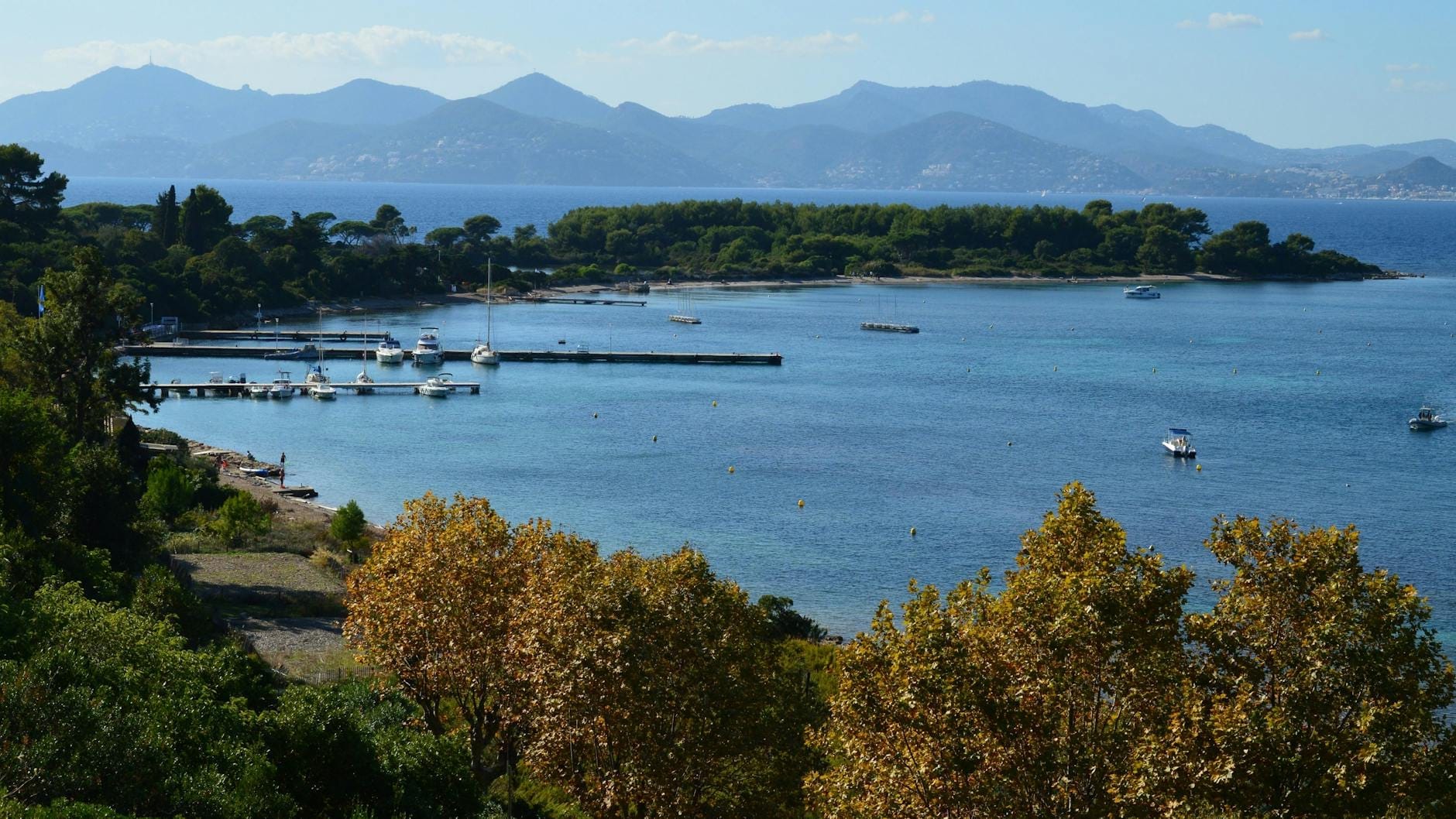
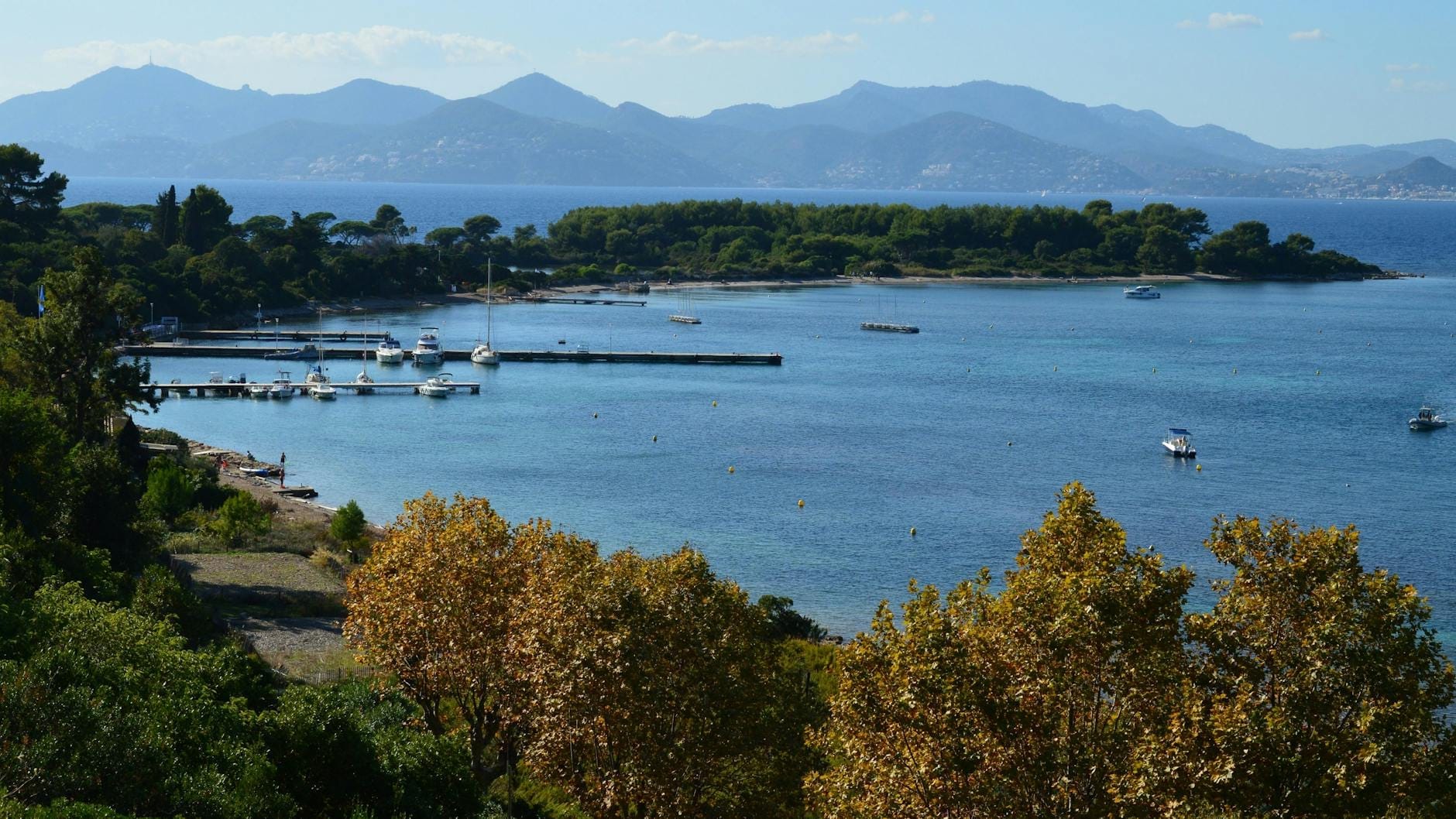
The Îles de Lérins are a small Mediterranean archipelago just off the coast of Cannes, offering forest walks, secluded coves, a storied fortress, and a working monastery — a world apart from the Croisette, reachable in under 20 minutes by ferry.
Fifteen minutes by ferry from the Palais des Festivals, the Îles de Lérins feel like a different planet. Two small islands — one shaped by military history and royal intrigue, the other by centuries of monastic life — sit just off the Cannes waterfront, offering pine-scented paths, clear water, and a stillness that the mainland rarely delivers.
Orientation: Where the Islands Sit
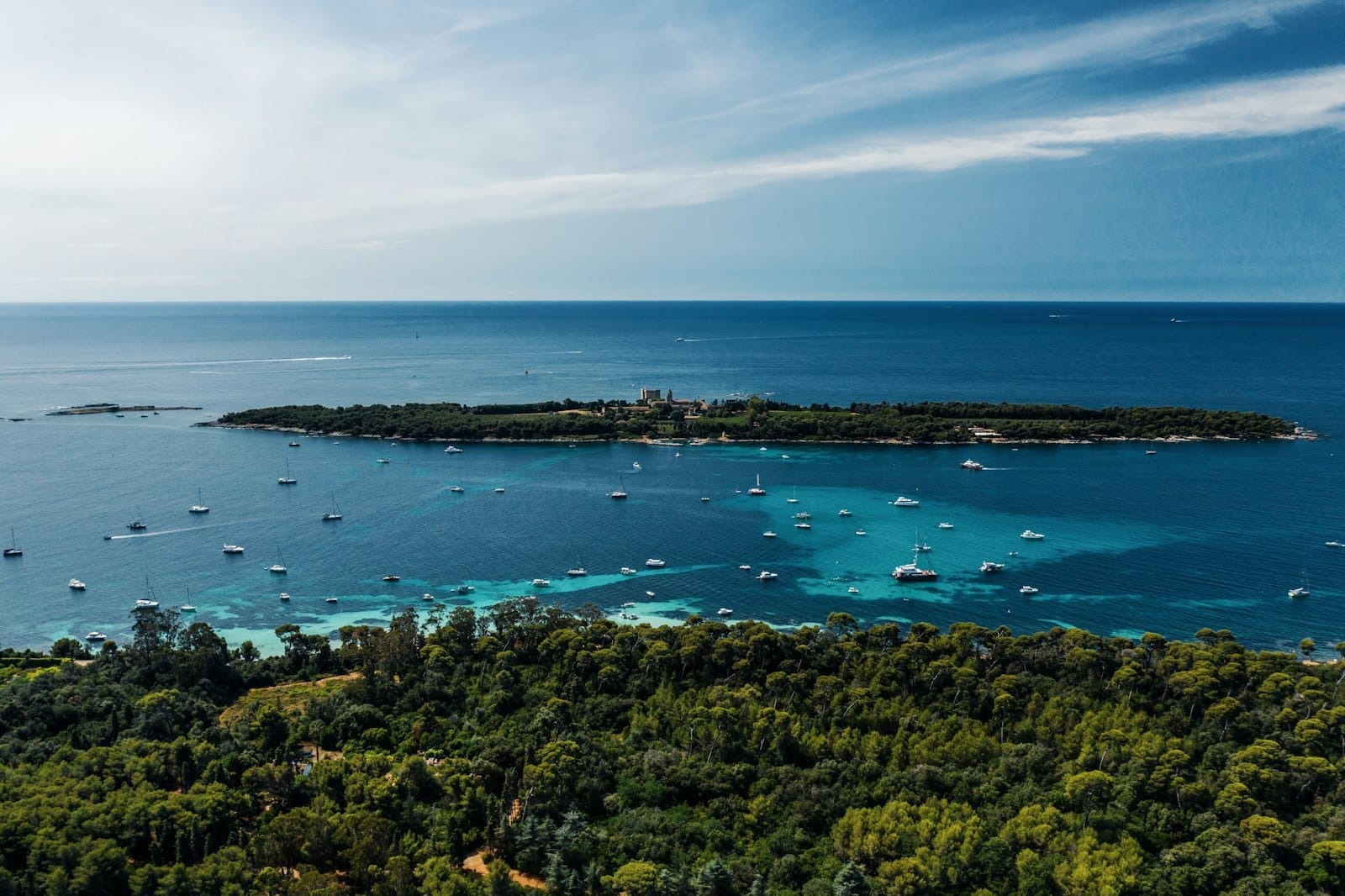
The Îles de Lérins form a small archipelago in the Bay of Cannes, positioned southeast of La Croisette and the old port. Administratively, they belong to the commune of Cannes in the Alpes-Maritimes department, even though they are separated from the mainland by open water. Geographically, they sit between the Golfe de la Napoule to the west and Golfe-Juan to the east, and from their shores you can see both the Esterel massif and the gentle curve of the Cannes coastline.
The archipelago consists of two main inhabited islands and two uninhabited islets. Île Sainte-Marguerite is the larger of the two main islands, lying to the north and closest to Cannes at roughly 700–800 m from the nearest point of the Cannes shoreline. Île Saint-Honorat sits just to the south of Sainte-Marguerite, slightly smaller and almost entirely given over to the Cistercian abbey and its vineyards. The uninhabited islets La Tradelière and Saint-Ferréol, along with a small rock formation, complete the group but are not served by regular ferries and have no visitor facilities.
Ferries depart from the Cannes waterfront area near the Palais des Festivals. If you are already on La Croisette, the embarkation point is a short walk east to Allées de la Liberté and Quai Max Laubeuf. The crossing to Sainte-Marguerite takes about 15 minutes; Saint-Honorat is slightly further at around 20 minutes. Both islands are day-trip destinations only — no overnight accommodation exists on either island, which means the islands empty out each evening and you get the mornings largely to yourself.
Character and Atmosphere
Arriving on Sainte-Marguerite on a weekday morning in May, the silence hits you before anything else. The ferry engine cuts out, the gangway drops, and you step onto an island where the loudest sounds are pine branches moving in the sea breeze and the occasional cry of a hawk circling over the tree line. The contrast with the Cannes waterfront — where traffic, hotel concierges, and yacht engines compete constantly — is immediate and sharp.
Sainte-Marguerite has a denser, more varied character. The area around the ferry dock has a handful of open-air restaurants and snack kiosks that fill up at midday, and the path to Fort Royal is well-worn and clearly signposted. By late morning on a sunny summer day, the coves nearest the dock can fill with swimmers, but walk fifteen minutes around the island's perimeter and the crowd thins considerably. The interior forest, threaded with walking paths, stays cool even in July. The understory is thick with Mediterranean scrub, and the Étang du Batéguier bird sanctuary on the island's eastern side draws birdwatchers year-round.
Saint-Honorat has a quieter, more contemplative feel. The Cistercian monks of the Abbaye de Lérins have maintained a presence here for over 1,500 years, and the island retains something of that atmosphere even for secular visitors. Vineyards occupy a significant portion of the land, and the rows of vines along the island's perimeter path give the walk a rhythm that feels distinctly un-Mediterranean in the best way. The abbey shop, where visitors can purchase wine, liqueur, and olive oil produced on the island, is a legitimate destination in itself.
💡 Local tip
Come early. The first ferry of the day is noticeably less crowded, the light is better for photography along the coastal paths, and you can reach Fort Royal before tour groups arrive. By early afternoon in summer, the coves near the Sainte-Marguerite dock are genuinely packed.
What to See and Do
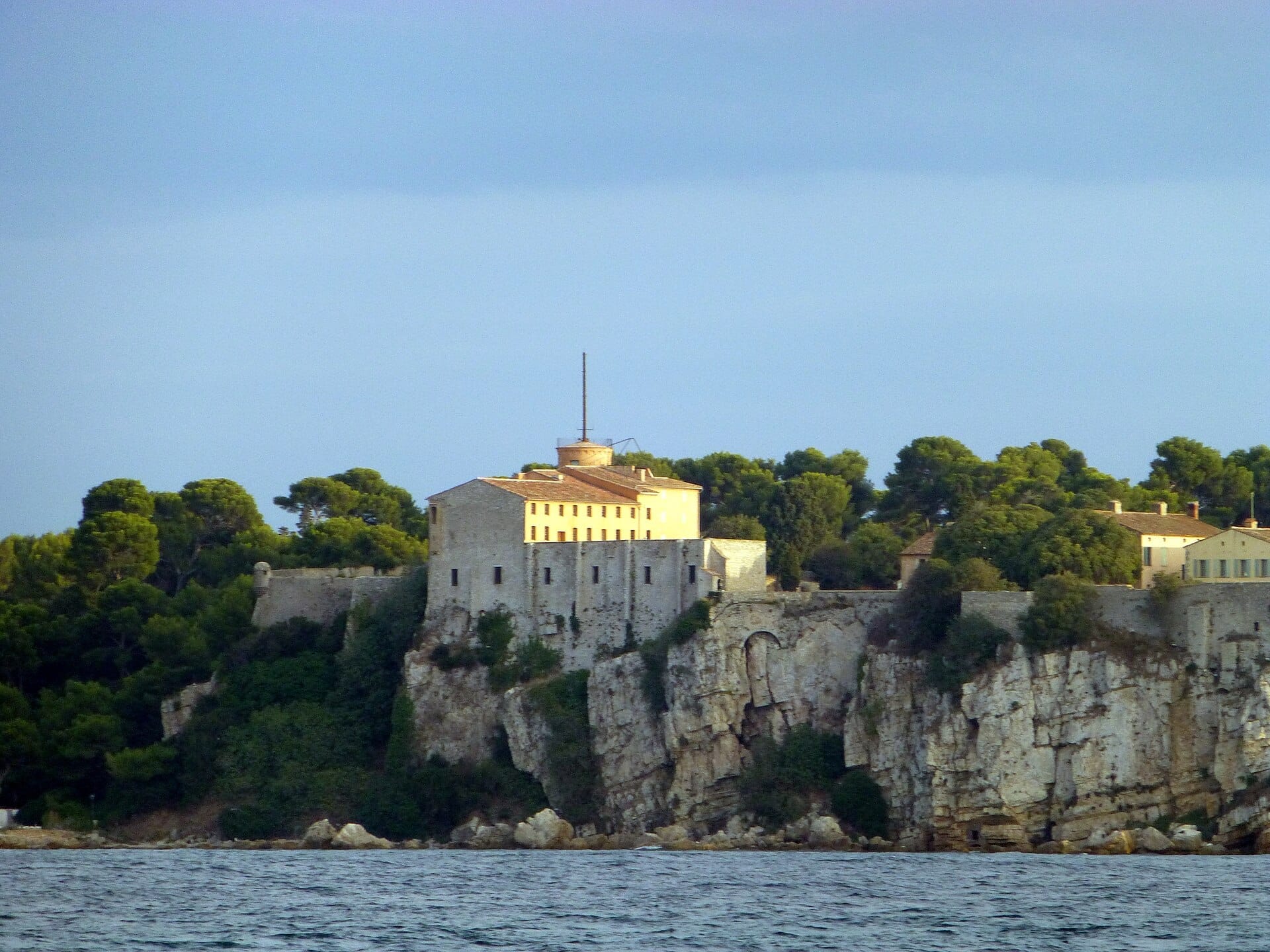
The centerpiece of Sainte-Marguerite is Fort Royal, a 17th-century state prison and military fortification built under Vauban and reinforced under Richelieu. Its most famous association is with the legend of the Man in the Iron Mask — a mysterious prisoner held here in the late 1600s whose true identity has never been definitively established, a fact that has fueled speculation for centuries. The fort now houses the Musée de la Mer (Museum of the Sea), which holds a collection of prison cells with original graffiti, Roman-era amphorae recovered from underwater excavations in the bay, and artifacts relating to the island's long occupation history going back to antiquity.
The museum is genuinely interesting rather than merely decorative. The preserved cells where the masked prisoner and later captives were held are atmospheric in the right way — plain stone walls, small barred windows looking out over the sea — and the archaeological displays provide real context for the island's 2,000-year history of human settlement. Allow 45 to 60 minutes to move through it properly.
On Saint-Honorat, the Abbaye de Lérins is the main draw. The current Cistercian community continues the monastic tradition established in 410 AD by Saint Honoratus, making this one of the oldest continuously occupied monastic sites in Western Europe. Visitors can attend services, tour the abbey church, and walk the island's perimeter path past the medieval fortified monastery that juts out into the sea at the island's southern tip. The abbey shop sells bottles of Lérins wine — produced from vines the monks cultivate themselves — alongside fruit liqueurs and olive oil. Buying a bottle here is one of the more honest souvenirs available anywhere in the Cannes area.
Beyond the specific landmarks, both islands reward simple exploration. Sainte-Marguerite has a network of marked paths through dense Aleppo pine and holm oak forest, with clearings that open onto views of the Esterel mountains to the west. The island's wildlife includes Montpellier snakes (harmless to humans), pheasants, hedgehogs, little owls, and various birds of prey. The Étang du Batéguier, a shallow lagoon on the eastern side, is a protected bird sanctuary and a genuinely peaceful place to sit for an hour with binoculars.
Musée de la Mer (Fort Royal, Sainte-Marguerite): prison cells, archaeology, Man in the Iron Mask history
Abbaye de Lérins (Saint-Honorat): active monastery, church visits, abbey shop with local wine and liqueur
Coastal walking paths on both islands with views toward Cannes, the Esterel, and the Alps
Étang du Batéguier bird sanctuary on Sainte-Marguerite's eastern shore
Swimming coves, particularly on the southern and eastern sides of Sainte-Marguerite away from the ferry dock
Perimeter walk around Saint-Honorat past vineyards and the medieval fortified tower
⚠️ What to skip
The channel between Sainte-Marguerite and Saint-Honorat is a popular anchorage for pleasure boats, and there is regular marine traffic in the surrounding waters. If you are swimming off the rocks away from designated areas, stay alert to boat movements. On land, stick to marked paths — partly to protect nesting birds and fragile scrubland, and partly because the terrain off-trail can be uneven and some of Sainte-Marguerite's snake population, though non-venomous, can startle the unprepared.
Eating and Drinking
Dining options on both islands are limited by design. Sainte-Marguerite has a small cluster of open-air restaurants and food kiosks near the ferry landing, typically serving salads, grilled fish, mussels, and simple Mediterranean plates at prices that are moderately higher than comparable mainland restaurants — a reasonable premium for the setting. These spots fill up quickly between noon and 2 pm, so either eat early, eat late, or plan to bring your own lunch.
Saint-Honorat has even less in the way of commercial food options. The abbey restaurant serves simple lunches, but it operates limited hours and is primarily oriented toward visitors to the monastery. The abbey shop is the real culinary highlight: bottles of Lérins AOC wine (including red, white, and rosé varieties), several fruit-based liqueurs, honey, and olive oil. Buying wine directly from the monks who produced it is the kind of experience that justifies the ferry ticket on its own.
If you want a serious lunch or dinner before or after your island visit, the area around the Vieux Port in Cannes has a good concentration of seafood restaurants at various price points. The Quai Saint-Pierre in particular has a row of restaurant terraces facing the water that work well for a pre-ferry breakfast or a post-island dinner. For a broader overview of what and where to eat in the city, the Cannes food guide covers the full range from market lunches to Michelin-level dinners.
💡 Local tip
Bring a picnic. Both islands have shaded spots along their coastal paths that are ideal for an outdoor lunch, and packing food from Marché Forville in Cannes — the city's main covered market, a short walk from the ferry dock — is a genuinely good option. Fresh bread, local cheese, charcuterie, and fruit from the market make for a better island lunch than most of what the dock-side kiosks offer.
Getting There and Around
Ferries to the Îles de Lérins depart from the Cannes waterfront, close to the Palais des Festivals and the Vieux Port waterfront. The embarkation point is walkable from the Gare de Cannes (Cannes railway station) in about 10 to 15 minutes on foot, heading south through the city center toward the seafront. Multiple ferry operators run services throughout the day during the main tourist season; check current schedules and fares directly with the operators or at the Cannes tourist office at 1 Boulevard de la Croisette, as timetables and prices change seasonally.
The crossing to Sainte-Marguerite takes approximately 15 minutes; Saint-Honorat is slightly further at around 20 minutes. Some ferry services stop at both islands on the same crossing, while others serve each island separately. There is no car access to either island — no private vehicles are permitted — which is a significant part of what makes them feel different from the mainland. Bicycles can be rented on Sainte-Marguerite near the dock, which is a practical option for covering more ground on the larger island without rushing.
From Nice Côte d'Azur Airport (IATA: NCE, approximately 26 km from central Cannes), the most practical routes to Cannes are the regional bus line LR 81 (roughly 45 to 60 minutes, around €5 to €10 one-way) or the TER regional train via Nice Saint-Augustin station (approximately 30 to 40 minutes, around €6 to €8). Once in Cannes, the ferry dock is an easy walk from the station. For a full breakdown of getting around the city, the Cannes transport guide covers all the options in detail.
On the islands themselves, navigation is straightforward. Both islands are small enough that you cannot get seriously lost, and the main paths are well-marked. Sainte-Marguerite can be circumnavigated on foot in two to three hours at a relaxed pace; Saint-Honorat takes roughly an hour to walk around. Neither island has public transport of any kind — everything is on foot or by hired bicycle. Wear comfortable shoes with some grip if you plan to explore beyond the main paths, as coastal rocks can be uneven.
Planning Your Visit: Practical Considerations
The Îles de Lérins are best visited between April and October, when ferry services run frequently and the weather makes outdoor exploration comfortable. The peak summer months of July and August bring the largest crowds, particularly to the coves near the Sainte-Marguerite ferry dock. For more on the best time to visit the wider Cannes area, the Cannes seasonal guide covers the tradeoffs between weather, crowds, and events across the calendar year.
During the Cannes Film Festival in May, the city itself becomes exceptionally crowded and ferry services to the islands can be busier than usual as visitors seek an escape. If you are visiting during the festival period, an early morning departure to the islands is advisable. Outside of July and August, the islands can feel surprisingly quiet even on good weather days — a weekday visit in late May or September offers close to ideal conditions.
There is no accommodation on either island. Both close to overnight visitors, and the last ferries back to the mainland run in the early evening. Confirm the last departure time before you go, particularly outside peak season when schedules are reduced. Missing the last ferry back is not a genuine emergency — the islands are well-staffed and safe — but it would make for an expensive problem to resolve.
The islands are part of a broader day-trip ecosystem around Cannes. Many visitors combine an island excursion with time in Le Suquet, the old hilltop town directly above the old port, which makes for a natural complement — history and elevated views on the mainland, then a ferry across for swimming and forest paths. The full Lérins Islands guide goes deeper on both islands, covering ferry operator details, swimming spots, and a full breakdown of the abbey visit.
Who the Islands Are For (And Who Should Skip Them)
The Îles de Lérins work well for a specific kind of traveler: someone who wants a genuine break from the pace of the Côte d'Azur, who enjoys walking or swimming without a lot of infrastructure around them, and who appreciates places with real historical depth. The combination of a 17th-century state prison, a 1,600-year-old monastery, protected Mediterranean forest, and reasonable swimming is unusual anywhere in Europe, let alone this close to a major resort city.
They are less suited to visitors primarily interested in shopping, nightlife, or restaurant dining — none of which the islands offer in any meaningful form. Families with young children can do well here, particularly on Sainte-Marguerite where the Musée de la Mer and the island's wildlife tend to hold attention, but the lack of facilities (no pharmacies, no medical services beyond basic first aid, limited food options) means you need to be reasonably self-sufficient. The terrain is mostly flat, but the coastal paths are uneven in places and not universally accessible.
If you are trying to decide whether a Cannes visit is worth it at all, the islands often tip the balance. The city itself has its charms and its limitations — for a fuller assessment, the guide to visiting Cannes covers both sides of that question. But the islands consistently offer something the mainland cannot: genuine quiet, Mediterranean nature, and a sense of being somewhere that has absorbed a great deal of history without making a production of it.
TL;DR
Two islands, two distinct personalities: Sainte-Marguerite for history, forests, and swimming; Saint-Honorat for monastic atmosphere, vineyards, and abbey wine.
Fort Royal and its Musée de la Mer are legitimately interesting — not just a backdrop for selfies. Allow at least an hour.
Come early, especially in summer. The islands empty out in the evenings and fill up at midday. The first ferry is nearly always the best ferry.
Bring food and water if you plan a full day. The dock-side options on Sainte-Marguerite are limited and pricey; Saint-Honorat has almost nothing commercial beyond the abbey shop.
Best for: walkers, swimmers, history readers, anyone needing a break from the Croisette. Not suited for nightlife seekers or visitors dependent on restaurant variety.
Confirm last ferry times before departure — the islands do not have overnight accommodation and schedules reduce significantly outside peak season.
Two days is genuinely enough to cover the best of Cannes, from the famous seafront promenade to the medieval hilltop quarter and the islands just offshore. This itinerary cuts through the noise with a practical, day-by-day plan, honest timing estimates, and the local details that make the difference between a rushed visit and a memorable one.
Cannes is a year-round destination, but each season delivers a completely different experience. This guide breaks down the weather, crowd levels, hotel prices, and key events by season so you can choose the timing that actually fits your trip.
Cannes has around 7 kilometres of coastline and far more beach variety than its Film Festival image suggests. This guide covers every type of beach experience: free public stretches, glamorous private clubs on the Croisette, and the wild coves of the Lérins Islands just offshore.
The Cannes Film Festival is the world's most prestigious cinema event, but it's also one of the most misunderstood. This guide breaks down exactly who can attend, how accreditation works, what ordinary visitors can experience, and how to plan logistics around the festival dates.
Cannes has a reputation for luxury, but visiting on a budget is entirely realistic if you know when to go, where to eat, and how to get around. This guide breaks down the real costs, the genuine free experiences, and the practical moves that keep your spending in check without missing what makes Cannes worth the trip.
Cannes, France offers far more than film festival glamour when it comes to retail. This guide covers the city's two main shopping corridors, the best local markets, neighborhood finds, VAT refund tips for non-EU visitors, and straightforward advice on what to skip.
Monaco is one of the most rewarding day trips from Cannes, and it is easier to reach than most visitors expect. This guide covers every transport option, the key sights to prioritise, timing advice for cruise passengers, and what to skip if your day is short.
Two iconic cities, one coastline, very different experiences. This guide breaks down the real differences between Cannes and Nice across beaches, budget, transport, atmosphere, and events — so you can choose the one that fits your trip, or figure out how to do both.
Cannes is compact enough to explore entirely on foot, yet layered enough to reward a full day of walking. This guide covers the best self-guided route through the city, from the medieval hilltop of Le Suquet to the glamour of La Croisette, with practical tips on timing, stops, and what to skip.
Everything you need to know about getting around Cannes, from arriving via Nice Côte d'Azur Airport to navigating the city on foot, by bus, train, taxi or bike. Includes fares, routes, parking tips and regional connections along the French Riviera.
Cannes has a reputation for exclusivity that puts many travelers off before they even book a train ticket. This guide cuts through the glamour to answer the real question: what does Cannes offer the average visitor, what does it actually cost, and when should you go?
Just 15 minutes by ferry from Cannes, the Lérins Islands offer a striking contrast to the Riviera's glamour: pine forests, a royal fortress, and a monk-owned vineyard. Here is everything you need to plan a visit, from ferry operators and current fares to what is worth your time on each island.
Cannes is far more than a film festival backdrop. This guide covers the best things to do in Cannes, France, from historic hilltop walks and island escapes to seafront promenades, local markets, and practical planning tips for every season.
Cannes is far more than film festivals and luxury hotels — it sits at the heart of one of France's richest culinary traditions. This guide covers the essential dishes, where to find them, what to pay, and which traps to avoid when eating your way through the French Riviera.
Choosing where to stay in Cannes shapes your entire trip. This guide covers every major neighborhood, the full range of accommodation types from the iconic Hotel Martinez to budget picks near the train station, and clear advice on when to book and what to avoid.