Île Saint-Honorat: The Monastery Island Off Cannes That Time Forgot
One of the Lérins Islands in the Bay of Cannes, Île Saint-Honorat has been home to a monastic community since around 410 AD. Today, about 21 Cistercian monks still live and work here, tending vineyards and welcoming visitors to a place of genuine historical weight and unusual calm, about 20 minutes by ferry from the Cannes waterfront.
Quick Facts
- Location
- Bay of Cannes, approx. 1 km offshore — Saint-Honorat, 06400 Cannes, France
- Getting There
- Ferry from the Old Port area in Cannes with Planaria, operated by the monks (currently from Quai Saint-Pierre while Parking Laubeuf is under long-term works). Journey approx. 20 minutes. First boat typically 08:00–10:00; last return 16:00–18:00 depending on season.
- Time Needed
- 2 to 4 hours — enough for the full coastal walk, the monastery, and a chapel or two
- Cost
- Ferry ticket required (price varies by season — check current tariffs with Planaria before travel). Entry to the fortified monastery is free.
- Best for
- History, solitude, photography, hiking, and escaping the Croisette crowd
- Official website
- www.cannes-ilesdelerins.com/en
What Is Île Saint-Honorat?
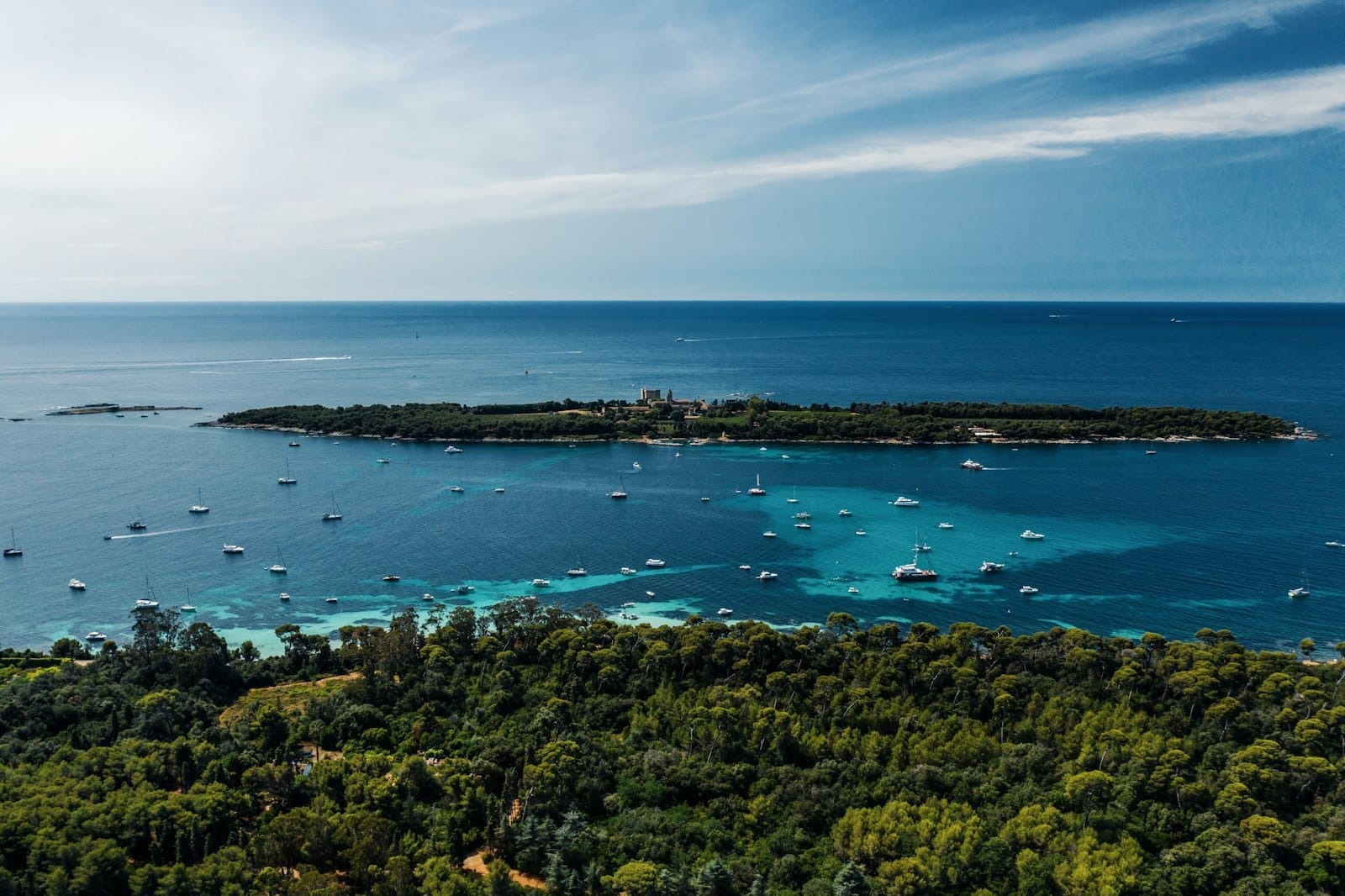
Île Saint-Honorat is the smaller and quieter of the two main Lérins Islands that sit in the Bay of Cannes, roughly 1 kilometre from the mainland. The island measures about 1,500 metres long and 400 metres wide, covering around 40 hectares. That is a very small piece of land, but one with an outsized historical footprint: a monastic community has existed here since around 410 AD, making the Abbey of Lérins one of the oldest monasteries in the Western world.
Today, about 21 Cistercian monks of the Congregation of the Immaculate Conception still inhabit the island. They farm vineyards, produce wine and liqueur sold in the abbey shop, and hold daily services in the monastery church. Visitors are welcome, but the island operates entirely on the monastery's terms, which makes for an unusually grounded experience in a region better known for yacht shows and film festivals. If you are planning a broader trip to the islands, the Lérins Islands guide covers both Saint-Honorat and its larger neighbour Sainte-Marguerite in full detail.
ℹ️ Good to know
The ferry to Saint-Honorat is operated by the Planaria company, which is run by the monks themselves. Tickets are sold at the Vieux Port quays in Cannes (currently Quai Saint-Pierre while Quai Laubeuf is under long-term works) or online. Verify current timetables and fares before travel, as they vary significantly by season.
The Crossing and First Impressions
The ferry ride from Cannes takes roughly 20 minutes, cutting across the flat blue water of the bay with the Alps visible on clear days to the north and the long curve of the Croisette shrinking behind you. The contrast is immediate. By the time you step off at the small wooden jetty on Saint-Honorat, the noise levels have dropped sharply. No cars, no mopeds, no amplified music. The loudest sounds are typically cicadas in summer and the crunch of gravel underfoot.
The dock sits on the northern side of the island, where a wide pathway begins its loop around the perimeter. The vegetation is dense Mediterranean scrub and mature pine forest, threaded with eucalyptus. In the morning light, especially between May and October, the air carries a distinct resinous scent from the trees mixed with something faintly briny from the sea. It is the kind of sensory combination that makes the island feel genuinely removed from the mainland rather than just technically offshore.
Tickets & tours
Hand-picked options from our booking partner. Prices are indicative; availability and final rates are confirmed when you complete your booking.
Cannes, Antibes and St Paul de Vence half-day private tour
From 60 €Instant confirmationFree cancellationBoat & snorkeling trip to the Esterel Calanques from Cannes
From 75 €Instant confirmationFree cancellationCannes, Antibes and Saint Paul de Vence shared tour from Nice
From 65 €Instant confirmationFree cancellationCannes food tour with full meal
From 105 €Instant confirmationFree cancellation
The Fortified Monastery and the Abbey Church
The most striking structure on the island is the medieval fortified monastery, a tower that rises directly from the sea on the southern shore. Begun at the end of the 11th century as a refuge from raids, it looks less like a place of prayer and more like a small coastal fortress, with thick stone walls that still show their age. Entry is free, and the interior reveals the layered history of a community that has survived invasions, suppression during the French Revolution, and eventual restoration in the 19th century.
The larger abbey church, where the monks hold daily mass, is open to visitors at specific times. Mass is generally celebrated at 11:30 from Tuesday to Saturday, and at 10:00 on Sundays and solemnities, though these times can shift around religious festivals and ceremonies. The church itself is quietly remarkable — plain Cistercian architecture with none of the gilded excess found in many French religious buildings, which makes the quality of the stonework and the quality of the silence all the more noticeable. Sitting in on a service is permitted and treated as a genuine act of hospitality by the community, not a tourist performance.
💡 Local tip
Attend the morning mass if your ferry schedule allows. The chanting in the stone church, with light coming through narrow windows, is one of the more memorable experiences the island offers — and it costs nothing.
The Seven Chapels and Napoleonic Remains
Scattered across the island are seven chapels dating from the 10th and 11th centuries. Not all are accessible at all times, and several are in varying states of preservation, but they give the island an archaeological texture that rewards slow exploration rather than a quick circuit. Each chapel has a different orientation, scale, and condition — walking between them through the scrub gives you a sense of how the island was once densely populated with hermit cells and communal prayer spaces.
Less frequently mentioned but worth seeking out are the two Napoleonic hot-shot furnaces preserved on the island. These were used to heat cannonballs before firing, a technique designed to set wooden ships alight. They are a reminder that Saint-Honorat's position in the bay made it strategically important well beyond its religious life. Finding them requires leaving the main coastal path and paying attention — part of what makes the island reward unhurried visitors over those racing around the perimeter.
The Coastal Walk: Timing and Conditions
A wide pathway encircles the entire island from the ferry terminal, making a full loop accessible on foot without any significant elevation change. The circuit takes between 45 minutes and 90 minutes depending on pace, with plenty of spots to stop along the southern and eastern shores where flat rocks reach into clear water. The Lérins Islands have no public beach infrastructure in the conventional sense on Saint-Honorat, so bring water, sun protection, and anything else you need before boarding the ferry.
Early morning arrivals on the first or second ferry — typically before 10:00 — have the island almost entirely to themselves. By midday in July and August, day-trippers fill the paths noticeably, especially around the monastery and the abbey shop. Late afternoon is another relatively quiet window, though you need to watch the last ferry time carefully. In autumn and spring, visitor numbers drop substantially and the light on the southern shore in the late afternoon is particularly good for photography.
Winter visits are possible and the island is open year-round, but the on-island restaurant and snack bar are closed from January to mid-February. Outside those closures, there is a restaurant serving lunch and a smaller snack bar near the monastery. Neither is open for dinner, so the island is strictly a daytime destination.
⚠️ What to skip
There are no shops outside the abbey and its immediate surrounds. Bring sufficient water, especially in summer. Sun exposure on the southern coastal path is intense between 11:00 and 15:00 from May through September.
The Vineyard and the Abbey Shop
The monks cultivate vineyards covering a significant portion of the island's interior, producing wines and a range of liqueurs under the Abbaye de Lérins label. The abbey shop near the monastery sells these directly — the wines are genuinely good and not widely available elsewhere, which makes the shop worth a stop even for visitors with no particular interest in religious history. Bottles make unusually specific and compact souvenirs.
The shop also sells honey and other products made on the island. It is one of the more authentic monastery shop experiences on the Côte d'Azur, partly because the products reflect real agricultural work happening on the land around you. This stands in contrast to much of what passes for local produce in the boutiques along Boulevard de la Croisette or Rue d'Antibes.
Practical Details for Planning Your Visit
The ferry to Saint-Honorat departs from the Old Port area in Cannes (currently Quai Saint-Pierre while Parking Laubeuf is closed for long-term works). The Planaria service is operated by the monks and runs year-round, with more frequent departures in summer. First departures are typically between 08:00 and 10:00 depending on the season; last returns from the island are generally between 16:00 and 18:00. These times shift, so check the current schedule on the operator website or at the quay before the day of travel.
From central Cannes, the walk to Quai Laubeuf takes about 10 minutes from Palais des Festivals. There is no need to rent equipment or book a guide. Sensible footwear and weather-appropriate clothing are sufficient. The coastal path is wide and well-maintained, but flat sandals or flip-flops become uncomfortable over the rougher sections near the chapels.
Accessibility information for visitors with limited mobility is not definitively stated by the ferry operator or the abbey. Visitors with specific needs should contact Planaria or the abbey directly before travel to confirm what is and is not navigable.
Who Should Probably Skip This
Saint-Honorat is not the right choice for travelers who want a full beach day with sunbeds, parasols, and bar service — the larger neighbour Sainte-Marguerite has better beach access and more facilities. It is also not suitable for very young children on hot days without careful planning, given the limited shade on portions of the coastal path and the absence of any significant food options outside the monastery restaurant. If your time in Cannes is limited to one day and you want maximum variety, you may find that splitting time between two islands leaves you rushed at both.
Insider Tips
- Take the first ferry of the day, ideally before 09:30 in summer. The island has an entirely different quality in the early light before day-trippers arrive, and the morning mass in the abbey church is easier to attend without the midday crowd.
- The southern shore of the island, reached by continuing past the fortified monastery on the coastal path, offers the clearest water for swimming from the flat rocks. There are no facilities but also very few people compared to the areas near the jetty.
- The abbey shop has limited stock of older vintages of Lérins wine and sometimes sells bottles not available online. If wine is a priority, arrive before noon — the shop closes for the afternoon rest and the best bottles sell quickly on busy days.
- Bring cash. The abbey shop and restaurant do accept cards, but connection can be unreliable. Cash covers you for everything on the island without frustration.
- Check the last ferry time when you arrive, not just when you book. Timetables change seasonally and missing the last return means an unplanned night with very limited accommodation options on the island.
Who Is Île Saint-Honorat For?
- Travelers who want genuine historical depth rather than festival glamour
- Photographers looking for Mediterranean light, ancient stone, and coastal textures away from crowds
- Anyone needing a half-day of quiet after the intensity of peak-season Cannes
- Wine enthusiasts interested in buying directly from one of France's most unusual vineyards
- Couples and solo walkers who prefer exploring at their own pace on foot
Nearby Attractions
Other things to see while in Îles de Lérins:
- Fort Royal & Musée du Masque de Fer et du Fort Royal
Rising from the pine-covered interior of Île Sainte-Marguerite, Fort Royal is a 17th-century coastal fortress that once imprisoned the mysterious Man in the Iron Mask. Today it houses the Musée du Masque de Fer et du Fort Royal, combining genuine historical intrigue with sweeping views over the Bay of Cannes. The ferry ride alone is worth the trip.
- Île Sainte-Marguerite
Île Sainte-Marguerite is the largest of the Lérins Islands, sitting about 1.3 km off the Cannes waterfront. It combines a genuine historical mystery at Fort Royal with 22 kilometres of forest paths, an ornithological reserve, and clear Mediterranean coves. A half-day here feels entirely removed from the Riviera's usual pace.