Rue d'Antibes: Cannes' Main Shopping Street, Decoded
Rue d'Antibes runs nearly 3 km through the heart of Cannes, linking many shops from high-street chains to independent boutiques. It sits one block inland from La Croisette, making it the practical, price-conscious counterpart to the seafront's luxury parade. Here's exactly what you'll find, and whether it's worth your time.
Quick Facts
- Location
- City centre, Cannes — parallel to Boulevard de la Croisette
- Getting There
- a short walk from Gare de Cannes (SNCF regional trains); a short walk from La Croisette seafront
- Time Needed
- 1 to 3 hours depending on how much you shop; the full street can be walked end-to-end in about 30 minutes
- Cost
- Free to walk; individual shops and cafés charge their own prices
- Best for
- Everyday shopping, people-watching, comparing Cannes beyond the Croisette glamour
What Rue d'Antibes Actually Is
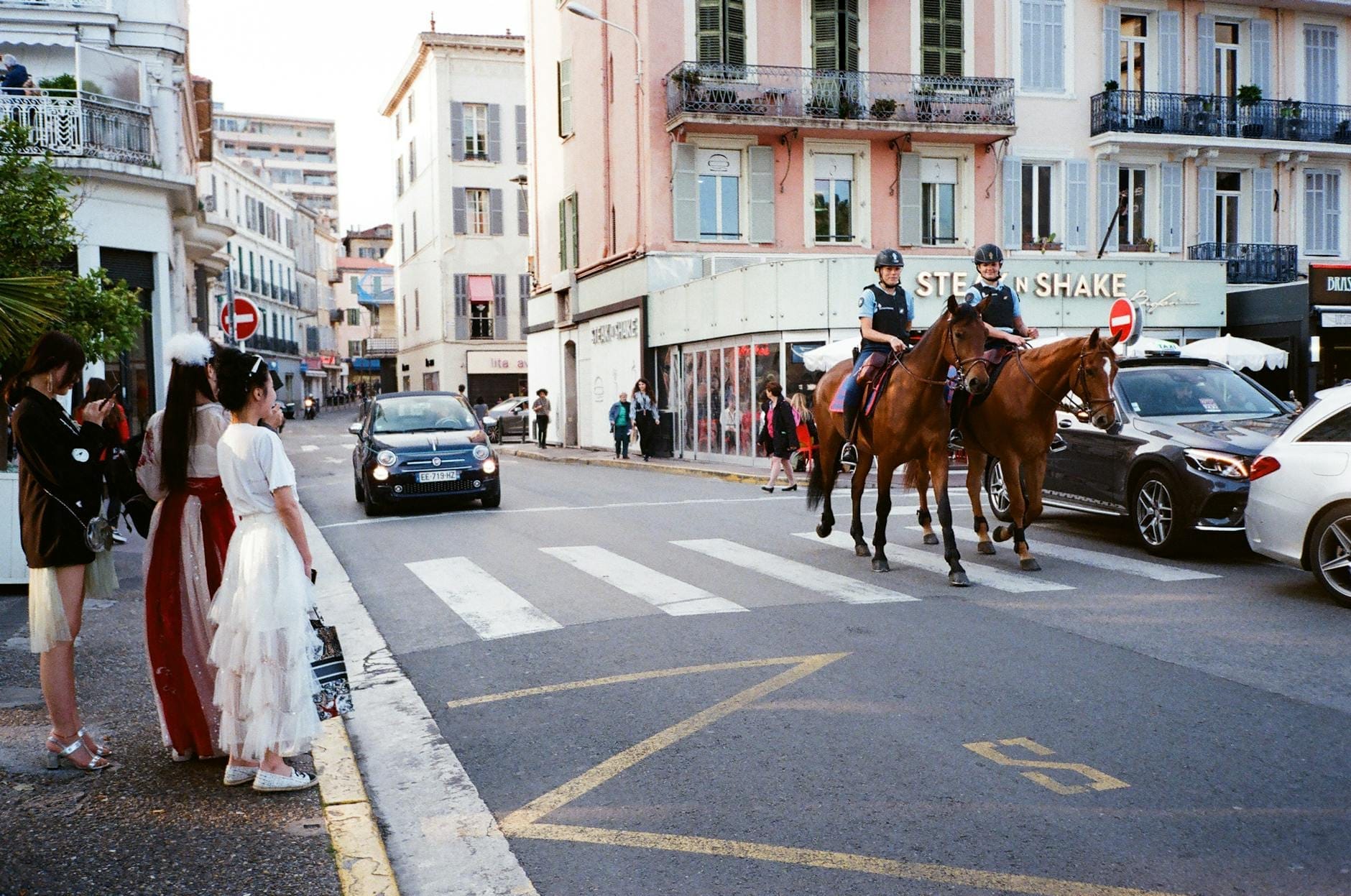
Rue d'Antibes is Cannes' primary commercial artery, running through the city centre in a near-straight line, one block inland from the seafront. While Boulevard de la Croisette gets all the postcards, Rue d'Antibes is where Cannes actually shops. It runs parallel to Boulevard de la Croisette in the city centre, threading past many shops in the process.
The street has deep historical roots. Before Cannes became a resort destination, Rue d'Antibes served as part of the old coastal road linking Toulon to Antibes. As the town developed rapidly in the late 19th and early 20th centuries, it was built up intensively: records indicate that many buildings had already lined the street before 1915. That early commercial DNA never left. What you see today is a layered streetscape, with Belle Époque facades above chain-store windows and renovated shopfronts alongside older residential buildings.
ℹ️ Good to know
Rue d'Antibes is a public street, open at all hours. Individual shops typically keep standard French retail hours, roughly 10:00 to 19:00, with some closing for lunch between 12:30 and 14:00. Many stores stay closed on Sunday mornings. Verify individual shop hours before making a special trip.
The Character of the Street at Different Times of Day
Mornings before 10:00 belong to the street itself. Café chairs are being unstacked, delivery vans double-park along the kerb, and the smell of fresh bread from nearby boulangeries drifts across the pavement. It is the quietest the street gets, and one of the better moments to appreciate the architecture overhead, where wrought-iron balconies and shuttered apartments stack up above the retail ground floors.
By mid-morning the rhythm shifts. The international retail brands fill up first, drawing purposeful shoppers rather than browsers. The middle stretch, roughly between Rue du Maréchal-Joffre and Rue Meynardier, is the most densely commercial and the most crowded. Weekday afternoons are manageable; Saturday afternoons in peak summer season are genuinely packed. The pavement is not wide in every section, and the street is not fully pedestrianised, so moving through a Saturday crowd alongside slow-moving traffic requires patience.
Evenings see the shopping window display lights take over from daylight. Some cafés and restaurants spill onto the pavement in warmer months. Most shops close by 19:30, but the street stays active as people cut through on their way to or from the seafront. In the days around the Cannes Film Festival in May, the atmosphere shifts noticeably: foot traffic increases, more of the crowd speaks languages other than French, and some shop windows dress for the occasion.
Tickets & tours
Hand-picked options from our booking partner. Prices are indicative; availability and final rates are confirmed when you complete your booking.
Cannes, Antibes and St Paul de Vence half-day private tour
From 60 €Instant confirmationFree cancellationBoat & snorkeling trip to the Esterel Calanques from Cannes
From 75 €Instant confirmationFree cancellationCannes, Antibes and Saint Paul de Vence shared tour from Nice
From 65 €Instant confirmationFree cancellationCannes food tour with full meal
From 105 €Instant confirmationFree cancellation
What You Will Find: The Shopping Reality
The honest summary: Rue d'Antibes is a well-stocked, well-maintained high street, not a luxury boulevard. Visitors expecting an extension of the designer boutiques on Boulevard de la Croisette will be surprised by the mix. Major chains and independent boutiques are well represented. Between them, there are independent French boutiques selling clothing, accessories, and homewares, several pharmacies (useful for sunscreen and basic supplies), and a handful of jewellers and perfume shops.
The western portion of the street, towards Général Maubert, tends to be less tourist-focused and more residential-commercial: dry cleaners, opticians, mobile phone shops. The eastern stretch, closer to the eastern end, becomes more varied and slightly more upscale. If you cross into the side streets near Rue Meynardier, you enter a different register entirely, with covered passages and smaller independent traders.
For food shopping, Marché Forville is a short walk away and is a far better option for fresh produce, cheese, and charcuterie. Rue d'Antibes has supermarkets and small food shops, but the market is the better experience by some margin.
💡 Local tip
If you want specifically French labels or independent Cannes boutiques, focus on the central and eastern stretches of Rue d'Antibes, and explore the parallel Rue Meynardier and the side streets between them. The chain store concentration is highest towards the western end near the station.
Getting There and Moving Around
The street is directly accessible from Gare de Cannes, the main SNCF railway station, in about five minutes on foot. Regional TER trains from Nice take roughly 30 to 45 minutes and are the most practical option from elsewhere on the Riviera. From Nice Côte d'Azur Airport, the regional bus network connects to Cannes in approximately 45 to 75 minutes.
From the seafront, Rue d'Antibes is a short walk inland from points along La Croisette. The two streets run parallel, separated by a block or two of residential and hotel buildings. Cannes has no metro or tram; the Palm Bus network covers the wider urban area, but the central section of Rue d'Antibes is easy walking distance from most central hotels.
Driving to Rue d'Antibes is inadvisable. Parking in central Cannes is limited and expensive, and the street itself mixes pedestrian and vehicle traffic in a way that makes car navigation slow and frustrating. Arriving by train, bus, or on foot from a nearby hotel is the practical approach for the vast majority of visitors.
Practical Considerations for Visitors
Rue d'Antibes is not a pedestrian-only zone, which is the most important thing to understand before visiting. Vehicles do use the street, particularly early in the day for deliveries and throughout the day in sections where parking exists. Pavement width varies considerably. In the busiest central sections, two people walking side by side with shopping bags takes up most of the walkable space when it is busy.
Accessibility has improved across much of the street following shop renovations, with step-free access into many modernised stores. However, some older shopfronts retain small steps at their entrances, and the uneven pedestrian flow caused by vehicle traffic makes it less straightforward for wheelchair users than a fully pedestrianised street would be. Checking individual shops before visiting is advisable for those with mobility needs.
In terms of weather and timing, the street is fine in most conditions. Rain is not a major problem as there are covered sections and plenty of shop awnings. Summer heat is more significant: by early afternoon in July and August, the lack of shade on the more exposed stretches makes a long shopping session uncomfortable. Earlier in the morning or after 17:00 is a notably more pleasant experience during peak summer.
⚠️ What to skip
During the Cannes Film Festival (typically held in May), the city centre becomes significantly more crowded. Rue d'Antibes remains open and operational, but foot traffic increases sharply, and some road closures in surrounding streets can affect vehicle traffic nearby. Allow extra time and expect a more congested experience.
How Rue d'Antibes Fits Into a Cannes Visit
Most visitors to Cannes spend their first hours on La Croisette, at the Palais des Festivals, or around the old port. Rue d'Antibes tends to come later in the itinerary, often as the practical complement to a seafront walk. That sequencing makes sense. The Croisette shows you the aspirational Cannes of luxury and spectacle; Rue d'Antibes shows you the functioning city underneath.
For travellers using Cannes as a base to explore the wider Riviera, Rue d'Antibes is a convenient resource rather than a destination in itself. It has the pharmacies, supermarkets, clothing shops, and cafés that make a longer stay comfortable. Those spending more than a day in the city and wanting to understand how it lives beyond the seafront will find it genuinely useful. For a broader picture of what the city offers, the full guide to things to do in Cannes puts the street in context alongside the other major draws.
Shoppers with a specific interest in high-end retail and the Cannes luxury market should read the dedicated Cannes shopping guide before committing an afternoon to Rue d'Antibes. The street is good value and well-stocked, but it is not the correct address for the couture and jewellery brands that define the city's luxury retail identity.
Insider Tips
- The best independent boutiques are concentrated in the central and eastern sections of the street. If you enter from the train station end and head east, the quality and originality of the shops increases as you go.
- Side streets branching north from Rue d'Antibes, particularly towards Rue Meynardier, contain a different layer of Cannes retail: covered passages, delicatessens, and local traders that the main street does not have. Worth 15 minutes of exploration.
- Pharmacies on Rue d'Antibes are well-stocked and competitively priced compared to hotel alternatives. If you need sunscreen, skincare, or basic medication during your stay, this is a practical stop.
- Many shops close for lunch between roughly 12:30 and 14:00, particularly the smaller independent ones. Arriving at 13:00 expecting a full shopping experience will be frustrating. Plan around French retail rhythms.
- The street's pavement cafés in the central stretch are considerably cheaper than the equivalents on La Croisette, with similar coffee quality. A practical detail if you are watching your spending while still wanting to sit outside.
Who Is Rue d'Antibes For?
- Practical shoppers who want everyday retail, French pharmacy brands, and high-street clothing in a central location
- Travellers staying in Cannes for several days who need to run errands or stock up on supplies
- First-time visitors curious about how Cannes functions as a real city beyond its festival and seafront identity
- Budget-conscious visitors who find La Croisette's luxury boutiques out of reach but still want to browse and buy
- Those combining a Croisette walk with a return route through the city centre
Nearby Attractions
Other things to see while in La Croisette:
- Boulevard de la Croisette
Boulevard de la Croisette is Cannes' defining address: a roughly 3-kilometre sweep of palm-shaded walkway running along the Baie de Cannes from the Vieux Port to Port Canto. Free to walk at any hour, it anchors the city's luxury hotels, private beach clubs, and the Palais des Festivals — and looks completely different depending on when you show up.
- Carré d'Or (Golden Square)
The Carré d'Or, or Golden Square, is Cannes' compact luxury district wedged between Rue d'Antibes and La Croisette. Four streets pack in high-end boutiques, aperitivo bars, fine dining, and some of the city's most sought-after nightlife, all within easy walking distance of the Palais des Festivals.
- Centre d'Art La Malmaison
Reopened in January 2025 after a major renovation, Centre d'Art La Malmaison brings contemporary art into one of the most historically layered buildings on Boulevard de la Croisette. With 600 m² of exhibition space, free rooftop terrace access during opening hours, and admission from €6.50 (€3.50 reduced), it offers real cultural depth just steps from the sea.
- Carlton Cannes, a Regent Hotel
Standing at 58 Boulevard de la Croisette since 1911, the Carlton Cannes is the most recognisable building on the French Riviera's most famous seafront boulevard. With its twin Belle Époque domes, a private beach, and a history entwined with the Cannes Film Festival, it draws visitors whether they're booked into a suite or simply curious enough to step inside the lobby.