Carré d'Or (Golden Square): Cannes' Most Concentrated Stretch of Luxury
The Carré d'Or, or Golden Square, is Cannes' compact luxury district wedged between Rue d'Antibes and La Croisette. Four streets pack in high-end boutiques, aperitivo bars, fine dining, and some of the city's most sought-after nightlife, all within easy walking distance of the Palais des Festivals.
Quick Facts
- Location
- Between Rue d'Antibes and La Croisette, central Cannes
- Getting There
- Walk from Gare de Cannes (about 10–15 min) or Palais des Festivals (about 5–10 min); Palmbus city lines stop nearby on Rue d'Antibes
- Time Needed
- 1–3 hours for browsing; allow a full evening if dining and nightlife are on the agenda
- Cost
- Free to explore; individual shops and restaurants vary widely in price
- Best for
- Luxury shopping, people-watching, aperitivo culture, and Cannes nightlife
What Is the Carré d'Or?
The Carré d'Or, literally the Golden Square, is the name given to a tight grid of streets in central Cannes running between Rue d'Antibes to the north and the Boulevard de la Croisette to the south. The name is not official in an administrative sense, but it is used consistently by the city's tourism office and local businesses to describe what is, in practice, the most concentrated luxury retail and dining zone in Cannes. Four streets form the core of the area, and within that compact block you will find couture boutiques, jewellers, upscale bars, and restaurants that fill early and stay full late.
Unlike some so-called luxury districts that sprawl across multiple arrondissements, the Carré d'Or is genuinely walkable in a single pass. Its power is in density: move half a block and the mood, the price point, and the crowd shift noticeably. That compression makes it one of the more interesting urban districts on the Côte d'Azur to simply navigate on foot, even if high-end retail is not your primary reason for being in Cannes.
ℹ️ Good to know
The district is an open public area with no admission fee and no formal opening hours. Shops generally follow standard French retail hours (roughly 10h–19h30, closed Sunday in many cases), while bars and restaurants extend well into the night.
The Landscape: What You Actually See
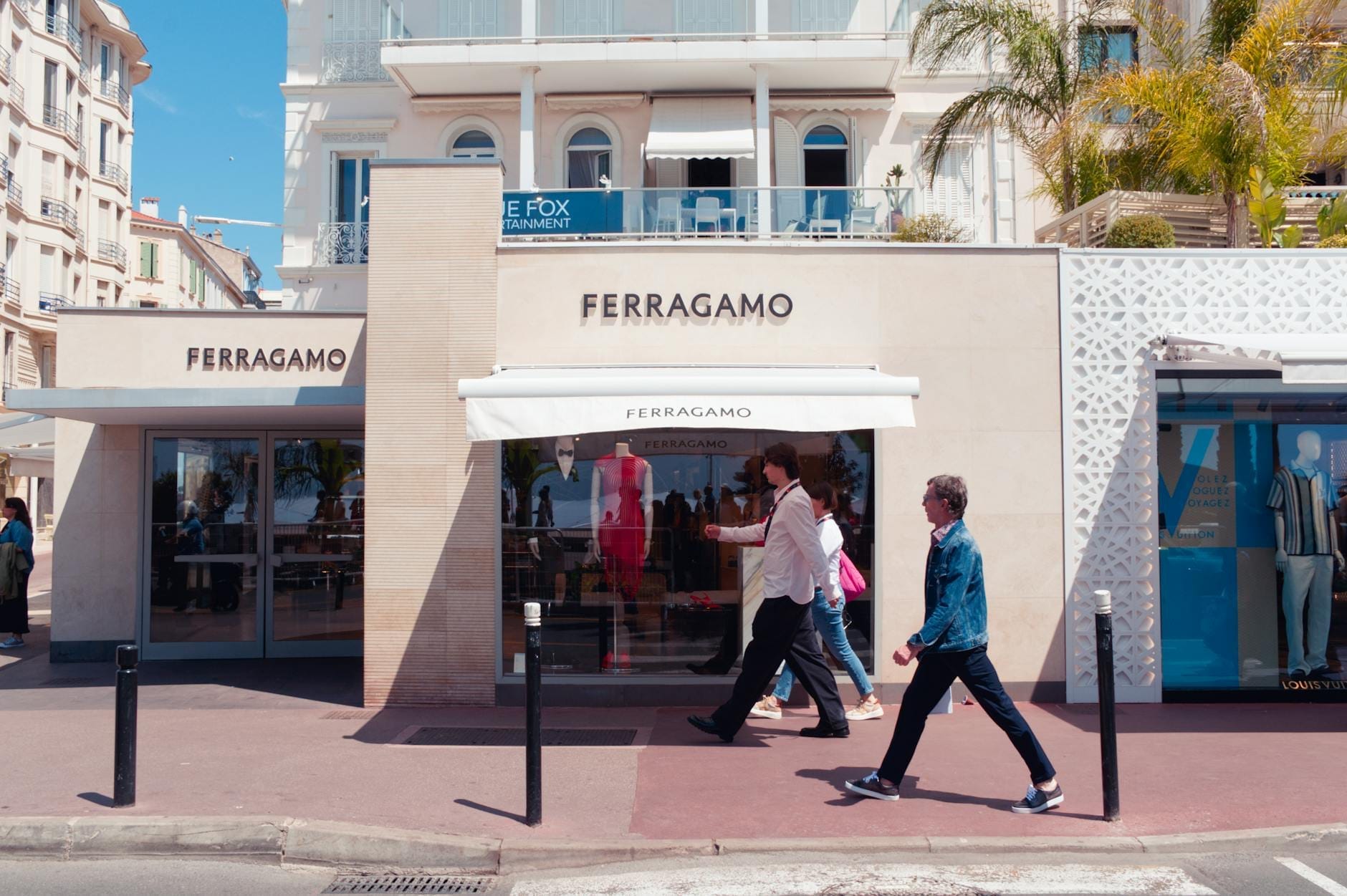
Walking north from La Croisette into the Carré d'Or, the first thing you notice is the architecture. The buildings here are mostly Belle Époque and early 20th-century residential above, retail below, with ornate ironwork balconies and limestone facades that have been kept in reasonable condition. At street level, glass shopfronts are polished, awnings are colour-coordinated, and even the pavement feels deliberately curated compared to side streets a few blocks further inland.
The cross-streets connecting Rue d'Antibes to La Croisette, including Rue des Serbes and Rue du Commandant André among others, form the vertical strokes of the grid. These are narrower than the main boulevard and carry a different energy: shaded in the morning, catching low afternoon sun on one side, and lit theatrically after dark by restaurant terraces and boutique window displays. If you are already exploring Boulevard de la Croisette, the Carré d'Or sits directly behind it and is the natural next step for anyone wanting to move off the seafront.
Closer to the Palais des Festivals end, the boutiques trend toward international luxury brands. Further east along Rue d'Antibes, the mix becomes slightly more varied, with French perfumeries, leather goods shops, and the kind of mid-to-high jeweller that still has a craftsman working in the back. Fragrance from display bottles drifts onto the pavement mid-morning when shop doors are propped open. In summer, that mingles with espresso from the terraces and, by early evening, with the first waft of grilled fish from the restaurants setting up service.
Tickets & tours
Hand-picked options from our booking partner. Prices are indicative; availability and final rates are confirmed when you complete your booking.
Cannes, Antibes and St Paul de Vence half-day private tour
From 60 €Instant confirmationFree cancellationBoat & snorkeling trip to the Esterel Calanques from Cannes
From 75 €Instant confirmationFree cancellationCannes, Antibes and Saint Paul de Vence shared tour from Nice
From 65 €Instant confirmationFree cancellationCannes food tour with full meal
From 105 €Instant confirmationFree cancellation
How the District Changes Through the Day
The Carré d'Or is not the same place at 10h as it is at 22h. Early morning, before shops open around 10h, the streets are quiet enough to appreciate the architecture properly. Delivery vans block the cross-streets, cafe owners are setting out chairs, and the area has the momentary calm of any French city district before commerce starts. This is the window for unobstructed photography of the facades.
From mid-morning through early afternoon, retail traffic builds steadily. The clientele at this hour tends toward purposeful shoppers, hotel guests on boutique runs, and tourists moving between La Croisette and the more functional shopping on Rue d'Antibes. Lunchtime brings a wave of office workers from the surrounding business district and hotel staff on breaks, which means the smaller café-restaurants on the cross-streets fill up fast and offer better value than the same meals served after 19h.
Late afternoon is when the district starts to feel genuinely alive. The angle of the sun on the west-facing facades turns the limestone warm, boutique windows are lit from inside, and the first aperitivo tables appear on terraces. By 18h30–19h, the cross-streets between La Croisette and Rue d'Antibes are noticeably more crowded, and the mood transitions from shopping to socialising. By 21h, the restaurant terraces are in full swing. This is when the Carré d'Or earns its reputation as a nightlife hub as well as a retail one.
💡 Local tip
For the best combination of atmosphere and manageable crowds, arrive around 18h. Shops are still open, the light is flattering for photography, and you can move easily between a boutique and a bar terrace without fighting through peak dinner traffic.
Shopping in the Carré d'Or: What to Expect
The retail offer in the Carré d'Or is anchored at the luxury and upper-mid end. International fashion houses, high jewellery brands, and premium leather goods dominate the block nearest to La Croisette. Further into the grid, you find a more local French retail character. For a broader understanding of Cannes' shopping geography, it helps to know that Rue d'Antibes forms the northern boundary of the Carré d'Or and continues east as the city's main mid-range retail spine — so you can move seamlessly between the two depending on your budget.
Most boutiques in the Carré d'Or do not display prices in the window, which is a universal signal of where the price register sits. Staff inside are generally bilingual in French and English, and during the film festival period in May, you are as likely to hear Italian, English, or Arabic as French on the sales floor. Outside festival season, the atmosphere in the shops is noticeably more relaxed, and browsing without intent to purchase is met with less pressure than you might expect in comparable districts in Paris or Milan.
One practical note: Sunday hours are inconsistent. A number of boutiques close entirely on Sundays, while restaurants and bars remain open. If shopping is your primary reason to visit, plan for Tuesday through Saturday. For context on how the Carré d'Or fits into a broader Cannes itinerary, the Cannes shopping guide covers the full range of retail zones across the city.
Dining and Nightlife
The restaurants and bars within the Carré d'Or range from neighbourhood brasseries with straightforward prix-fixe menus at lunch to destination dining rooms that require booking days or weeks in advance, particularly around major events. The cross-streets have a cluster of Provençal-leaning restaurants where the focus is on seafood, local olive oil, and well-sourced wine rather than theatrical presentation. Prices reflect the address: a three-course dinner with wine in this district will cost significantly more than the same quality of food a few streets further inland.
Bar culture in the Carré d'Or runs from early-evening aperitivo spots, where a glass of rosé and a small plate of olives is the standard order around 18h30, through to late-night cocktail bars that stay busy past midnight on weekends. The district is a genuine nightlife zone, not just a luxury retail block that goes quiet after shop hours. That said, it is upscale nightlife rather than student-bar nightlife: expect cocktail menus, smart-casual dress codes at the more established venues, and prices to match the surroundings.
💡 Local tip
Lunch here is considerably better value than dinner. Many restaurants offer a formule du midi — typically two or three courses with a drink — at prices that are 40–50% lower than the equivalent evening menu. Arrive by 12h30 to secure a terrace table.
Location, Access, and Practical Details
The Carré d'Or sits in the La Croisette district, immediately behind the seafront boulevard. From the Palais des Festivals et des Congrès at the western end of La Croisette, the district begins within a five-minute walk heading north-east. From Gare de Cannes, the walk takes around 15 minutes south along Rue d'Antibes, which will bring you directly to the northern edge of the Carré d'Or.
Palmbus city lines serve Rue d'Antibes and the surrounding streets; stops are marked along the main road and frequency is reasonable during daytime hours. If arriving from Nice Côte d'Azur Airport (IATA: NCE, approximately 26 km by road), the regional bus line 81 connects the airport to Cannes in roughly 45–60 minutes, and the drop-off point is close to the city centre. Taxis and VTC services including Uber also operate in Cannes, with stands near the Palais des Festivals and the railway station.
The district is pedestrian-friendly with paved streets and level surfaces on the main cross-streets. There are no kerbs of concern on the primary routes, though the narrower passages between buildings may present occasional obstacles. No formal accessibility audit was available from official sources at the time of writing, so travellers with specific mobility requirements should verify conditions locally.
During the Cannes Film Festival in May, the entire area experiences a significant increase in foot traffic, prices in restaurants and bars can rise, and some streets may be subject to access restrictions related to official screenings and events. If you are planning a visit around the festival, the Cannes Film Festival guide covers what the city looks and feels like during that period in detail.
Who Should Temper Their Expectations
The Carré d'Or is not a neighbourhood with deep historical narrative or architectural drama. Its interest is primarily commercial and atmospheric. Travellers looking for medieval streetscapes, cultural monuments, or a sense of Cannes' pre-20th-century history should head instead to Le Suquet, the old hilltop quarter above the port. The Carré d'Or offers very little of that. What it offers is a well-maintained, high-end urban shopping and dining district that functions effectively and looks good doing it.
Budget travellers will find the district interesting to walk through but frustrating to spend time in. Almost every sit-down option, from coffee to dinner, will cost noticeably more here than in the streets further north of Rue d'Antibes. You are paying for the address as much as the product, which is a fair trade if you are already invested in the Cannes experience and want to participate in its particular version of French Riviera life.
Insider Tips
- The cross-streets running between Rue d'Antibes and La Croisette see far less foot traffic than either of the main boulevards. Walking these north-south passages rather than staying on Rue d'Antibes gives you a better sense of the district's character and makes spontaneous shop or bar discoveries more likely.
- During the Cannes Film Festival in May, bar terraces in the Carré d'Or fill by 18h30 and remain crowded until midnight. If you want a seat outside during festival week, arrive before 18h or make a reservation.
- The lunch formule at mid-range brasseries on the cross-streets is the best price-to-quality ratio in the district. A straightforward fish dish, salad, and glass of local rosé at midday can cost roughly half what the same restaurant charges at dinner.
- Boutiques here are used to window-shoppers and have a lower pressure-to-buy dynamic than flagship stores on La Croisette itself. If you want to look at high jewellery or couture without committing, the Carré d'Or is an easier environment for it than some comparable districts.
- Street photography is most rewarding in the hour before shops open (around 09h–10h) when the facades are clean, the light is low and directional, and the streets are empty enough to compose a shot without strangers in the frame.
Who Is Carré d'Or (Golden Square) For?
- Luxury shoppers wanting concentrated high-end retail within walking distance of La Croisette
- Couples looking for a good dinner and cocktail bar circuit in a polished setting
- Travellers who enjoy urban people-watching in a distinctly French Riviera context
- Film festival visitors wanting a bar or restaurant within easy reach of the Palais des Festivals
- Day-trippers from Nice or Monaco who want to experience Cannes' city-centre character beyond the seafront
Nearby Attractions
Other things to see while in La Croisette:
- Boulevard de la Croisette
Boulevard de la Croisette is Cannes' defining address: a roughly 3-kilometre sweep of palm-shaded walkway running along the Baie de Cannes from the Vieux Port to Port Canto. Free to walk at any hour, it anchors the city's luxury hotels, private beach clubs, and the Palais des Festivals — and looks completely different depending on when you show up.
- Centre d'Art La Malmaison
Reopened in January 2025 after a major renovation, Centre d'Art La Malmaison brings contemporary art into one of the most historically layered buildings on Boulevard de la Croisette. With 600 m² of exhibition space, free rooftop terrace access during opening hours, and admission from €6.50 (€3.50 reduced), it offers real cultural depth just steps from the sea.
- Carlton Cannes, a Regent Hotel
Standing at 58 Boulevard de la Croisette since 1911, the Carlton Cannes is the most recognisable building on the French Riviera's most famous seafront boulevard. With its twin Belle Époque domes, a private beach, and a history entwined with the Cannes Film Festival, it draws visitors whether they're booked into a suite or simply curious enough to step inside the lobby.
- Palais des Festivals et des Congrès
The Palais des Festivals et des Congrès is the concrete anchor of Cannes' global identity. Home to the world's most famous film festival since 1983, it sits at the western tip of La Croisette where the city's glamour and its working waterfront converge. Whether you visit during the festival frenzy of May or the quieter months when you can actually breathe, this building rewards attention.