Cannes Film Festival: The Complete Visitor Guide
The Cannes Film Festival is the world's most prestigious cinema event, but it's also one of the most misunderstood. This guide breaks down exactly who can attend, how accreditation works, what ordinary visitors can experience, and how to plan logistics around the festival dates.

Plan and book this trip
Tools from our partner Travelpayouts help you compare flights and hotels. If you book through them, we may earn a commission at no extra cost to you.
Flights
Hotels map
TL;DR
- The Cannes Film Festival (Festival de Cannes) runs annually in May at the Palais des Festivals et des Congrès. The 79th edition is scheduled for 19–30 May 2026.
- The festival is not a public ticketed event. Most screenings and the red carpet require professional accreditation or official invitations, not general sale tickets.
- Non-professionals can still experience the atmosphere along La Croisette, watch stars arrive at the red carpet steps, and attend some free public screenings via the Cinéphiles programme.
- Hotel prices and crowds surge dramatically during the festival. Book accommodation many months in advance or plan to stay in Nice and commute.
- If you want a fuller picture of the city beyond the festival, the broader Cannes guide covers what to see and do year-round.
What the Cannes Film Festival Actually Is
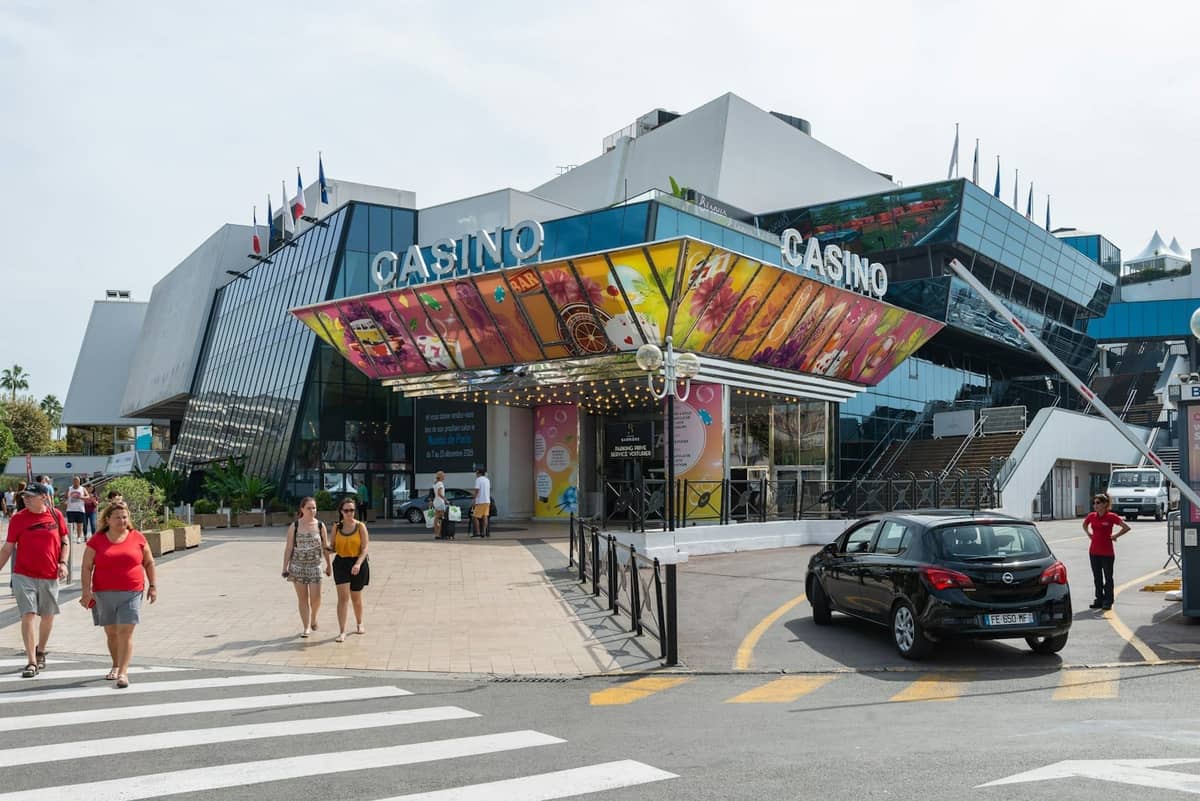
The Festival de Cannes is the world's leading film industry event, held annually at the Palais des Festivals et des Congrès on the Cannes seafront. The first full edition took place in 1946 (an inaugural attempt in 1939 was abandoned at the outbreak of World War II), and the festival has grown into a dual-purpose event: a prestigious competition for cinematic excellence, and a commercial marketplace that drives global film deals. Around 30,000 industry professionals and 5,000 journalists attend each year, making it one of the most publicised events on the planet after the Olympic Games.
The festival runs for approximately twelve days in May. The main Competition section awards the Palme d'Or, cinema's most coveted prize, decided by an international jury. Alongside this run parallel sections: Un Certain Regard for emerging cinema, Directors' Fortnight, Critics' Week, and the Special Screenings. Intertwined with all of this is the Marché du Film, a film market that attracts 15,000-plus participants from 140 countries, with around 600 exhibitors, 1,500 screenings, and 250 industry events. It is, in short, a film industry convention and arts festival fused into one intense two-week event.
ℹ️ Good to know
The 79th Cannes Film Festival is scheduled for 19–30 May 2026. Always confirm dates directly at festival-cannes.com before booking travel, as exact dates are confirmed months in advance and are subject to change.
Who Can Attend: Accreditation, Badges, and Public Access
This is where most first-time visitors get confused. The Cannes Film Festival is not a public event in the way that a music festival or cinema screening night is. You cannot walk up to the Palais des Festivals, buy a ticket at the door, and watch a competition film. Access to screenings, industry areas, and most official events requires a specific accreditation badge. The badge categories include Festival accreditation (for invited filmmakers and industry figures), Press accreditation (for journalists), Marché du Film accreditation (for sales agents, distributors, and buyers), and Cinéphiles passes, which are the main route for film-lovers without industry credentials.
Cinéphiles passes allow registered cinema enthusiasts to attend certain screenings, but allocation is limited and demand is high. Applications typically open several weeks before the festival; check the official Palais des Festivals schedule and festival-cannes.com for the exact application window. Even with a Cinéphiles pass, access to the main Competition screenings and the famous evening galas is not guaranteed. The red carpet premiers, the ones you see televised with stars in evening dress, require formal invitations or specific professional accreditation, not a general sale ticket.
- Festival / Industry Badge For filmmakers, producers, distributors, and invited guests. Grants broad access to screenings and professional areas. Not available to the general public.
- Press Badge For accredited journalists and photographers. Requires proof of professional media credentials and editorial assignment. Applications close weeks before the festival.
- Marché du Film Badge For film industry buyers, sellers, and market participants. Grants access to market screenings and the Riviera during specified hours. Commercial registration required.
- Cinéphiles Pass The most accessible route for non-professionals. Limited allocation, applied for in advance. Gives access to a selection of screenings but not the main Competition galas.
Badge collection for each edition typically takes place at Gare Maritime, near the Palais; exact 2026 dates and hours will be announced on the official website. The main festival entrances are open to badge-holders from 09:00 to 00:30, with earlier openings for morning screenings. Security is strict: prohibited items include weapons, aluminium cans, glass bottles, laser pointers, rigid poles, flags, and anything that could be used as a projectile. This list is enforced, not decorative.
⚠️ What to skip
Do not pay third-party sellers for "Cannes Film Festival tickets" or "red carpet access" packages. The festival does not sell public tickets for competition screenings or galas. Unofficial sellers are at best misleading, at worst fraudulent. All legitimate accreditation routes go through festival-cannes.com or marchedufilm.com directly.
What Ordinary Visitors Can Experience
Even without any accreditation, being in Cannes during the festival is genuinely exciting, though you need realistic expectations. The atmosphere along Boulevard de la Croisette is unlike anything the city sees the rest of the year. The seafront fills with photographers, fans, and curious visitors hoping to catch a glimpse of arrivals outside the Palais. The red carpet itself is closed to non-badge-holders, but the area around the Palais steps becomes an informal spectacle, particularly in the evenings before major premieres.
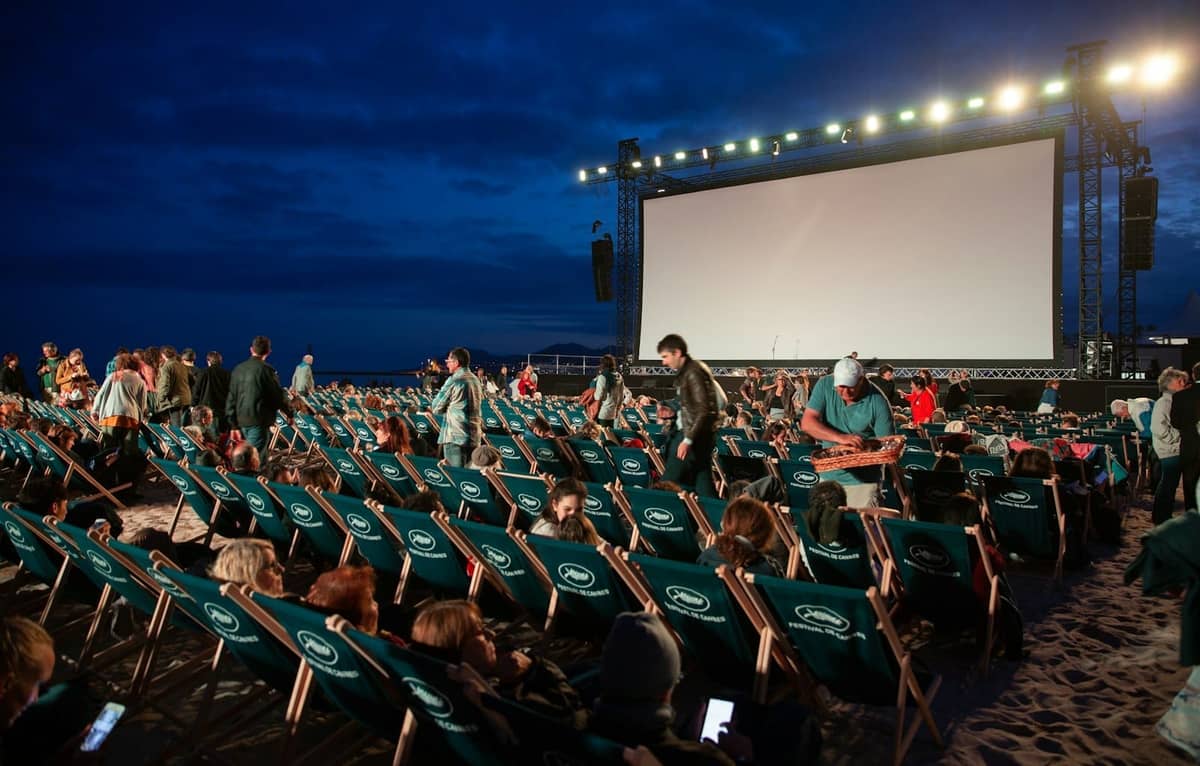
Several free outdoor screenings are typically scheduled during the festival period, often on the beach opposite the Palais. These are genuine public events and have historically shown competition films in the open air, though programming changes year to year. Checking the festival's official programme closer to the dates will confirm what is available. Cannes also comes alive with satellite events: gallery openings, brand activations, parties, and pop-ups around the city, many of which are open or semi-open to visitors.
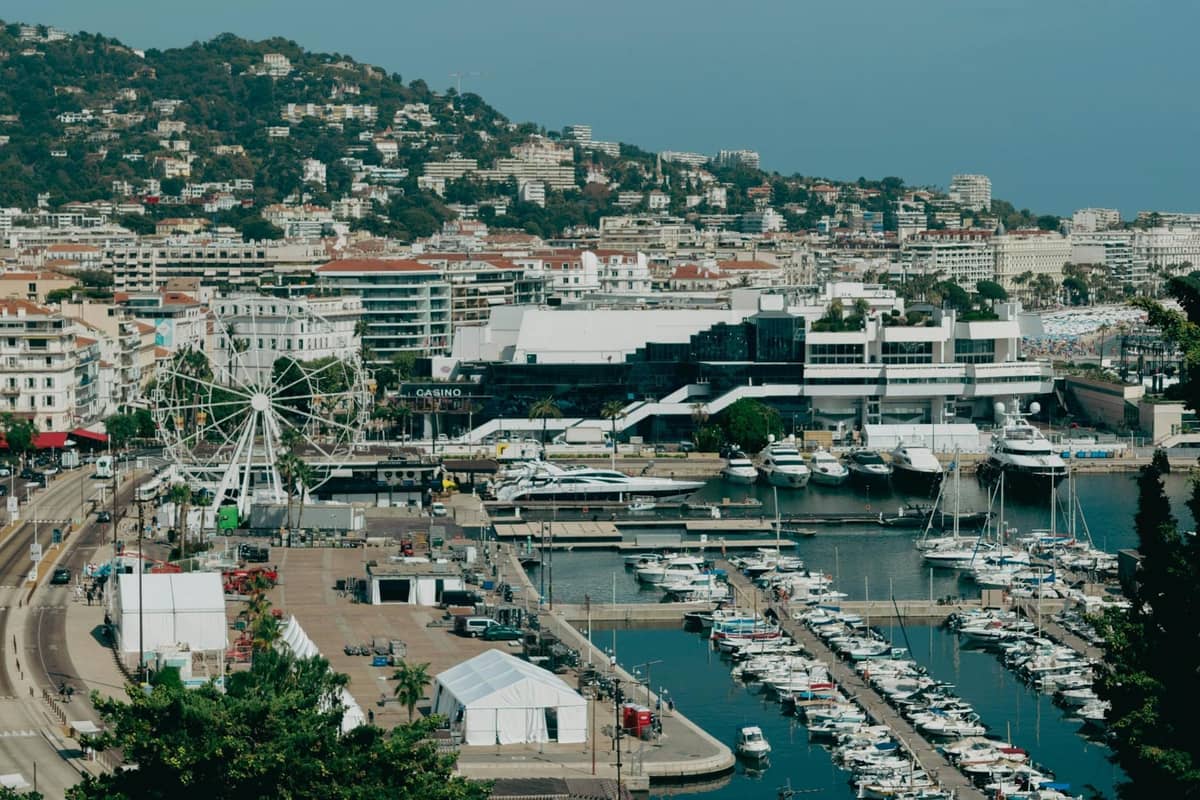
The old port area, known as the Vieux Port, transforms during festival weeks. Superyachts line the harbour, and the quaysides fill with industry parties and press gatherings. Walking the port and watching the yachts is entirely free and offers a sharp lens on the festival's commercial side. The contrast between the glossy waterfront and the calmer streets of Le Suquet, the old town up on the hill, is one of the more interesting aspects of visiting during this period.
Planning Your Visit: Logistics, Accommodation, and Timing
Visiting Cannes during the film festival requires more planning than a regular trip. Hotel rates across the city increase dramatically for the festival period, with many properties requiring minimum stays of several nights. The same applies to the surrounding area: Nice, Antibes, and Juan-les-Pins all see elevated prices. If your goal is to experience the festival atmosphere rather than attend official events, booking a base in Nice and commuting by train is a practical alternative. The TER regional train runs frequently between Nice-Ville and Cannes, taking around 30–40 minutes, with fares around €6–€8 one-way.
The main international gateway is Nice Côte d'Azur Airport (IATA: NCE), approximately 26 km from central Cannes. From the airport, the regional express bus line 81 (Lignes d’Azur/Sud) connects directly to Cannes in around 45–60 minutes for roughly €5–€10 one-way, though services and fares should be checked closer to travel. A taxi or ride-hailing service covers the same route in 30–45 minutes but costs considerably more, typically €80–€120 by licensed taxi. Pre-booked shared shuttles run at around €25–€40 per person. For full transport options, the getting around Cannes guide covers every route in detail.
- Book accommodation at least 6 months ahead for the festival period. Properties fill up fast and last-minute prices are punishing.
- Nice is a viable base: the TER train runs frequently and takes around 30–40 minutes to Cannes.
- Arrive early in the day. The Croisette and areas around the Palais become very crowded from mid-afternoon through the evening during premiere days.
- The festival runs for 12 days. Visiting mid-week rather than the opening or closing weekends means slightly smaller crowds around public areas.
- Smart-casual or smarter dress is appropriate for any evening activities near the Palais. Official evening screenings specify black tie or formal dress for accredited attendees.
💡 Local tip
If you want the film festival atmosphere without peak festival prices and crowds, consider visiting Cannes in late April or very early May, just before the festival begins. The city is preparing but not yet at maximum capacity, and you can walk the Croisette and visit the Palais area freely.
The Marché du Film: The Business Side Most Visitors Overlook
Running concurrently with the festival is the Marché du Film, the world's largest film market. While the Competition and its red carpet get the media attention, the Marché is where the actual industry operates. Over 15,000 participants from 140 countries buy and sell distribution rights, arrange co-productions, and pitch projects across the Palais, the Riviera Hall, and various hotel suites along the Croisette. Around 1,500 screenings and 250 industry events take place across the twelve days.
For professionals in film, television, distribution, or related industries, Marché du Film accreditation is the practical way to attend the festival. Registration is handled separately through marchedufilm.com and is open to anyone with a verifiable professional connection to the screen industries. Access hours for Marché badge-holders include the Riviera entrance from 09:00–22:45 during the main market days. This is the working engine of the festival, less glamorous than the red carpet, considerably more commercially significant.
Cannes Beyond the Festival: What Else to Know
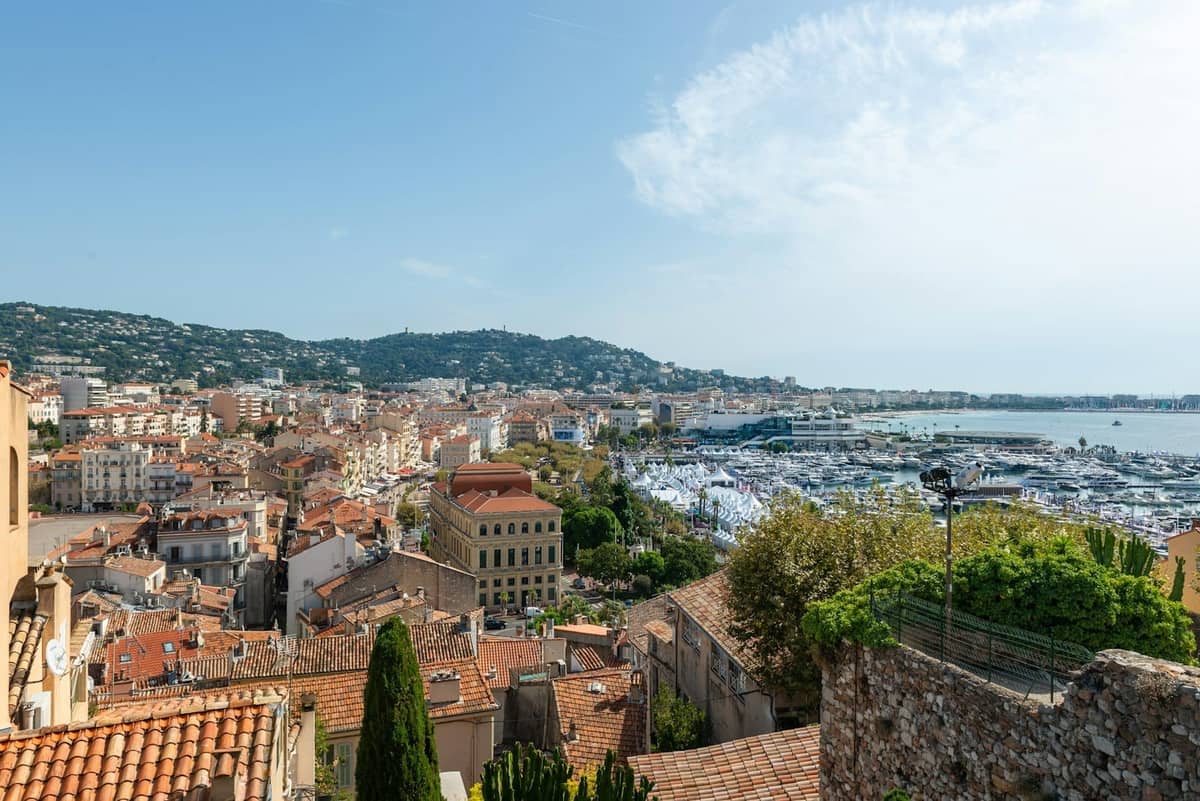
The festival runs in May, which is also one of the better months to visit Cannes on its own merits. Temperatures average around 13–21°C, the city is active but not at August capacity, and the light on the Côte d'Azur is at its best. If you're combining the festival with broader sightseeing, the Cannes walking tour covers the main neighbourhoods on foot, from the Vieux Port through Le Suquet and along the Croisette.
One of the most underrated things to do during the festival period, or at any other time in May, is to take the short boat trip from the Vieux Port to the Îles de Lérins. The islands are within the Cannes commune but feel completely separate from the festival circus. Île Sainte-Marguerite has the Fort Royal and pine forest trails. Île Saint-Honorat is home to a working monastery. Both are accessible in under 15 minutes by ferry and offer a genuine contrast to the Croisette.
For those who want practical advice on fitting the festival into a short trip, the 2 days in Cannes itinerary shows how to structure a visit efficiently. And if you're weighing whether the city itself justifies the trip outside festival season, the best time to visit Cannes guide gives an honest seasonal breakdown.
✨ Pro tip
Don't confuse the Cannes Film Festival with Cannes Lions, the international advertising and creativity festival held separately in late June. Both draw large professional crowds and affect hotel availability. If you're visiting in June and wondering why the city is busy again, Cannes Lions is likely the reason.
FAQ
What are the Cannes Film Festival 2026 dates?
The 79th edition of the Cannes Film Festival is scheduled for 12–23 May 2026. Always verify the latest confirmed dates at festival-cannes.com, as exact dates are announced officially and can occasionally shift.
Can the public attend the Cannes Film Festival?
Not in the same way you attend a public cinema or festival. The official screenings, red carpet galas, and industry events require accreditation badges. However, non-accredited visitors can attend free outdoor public screenings (typically on the beach), walk the Croisette, watch arrivals near the Palais, and experience the overall atmosphere of the city during festival period.
How do I get a Cannes Film Festival ticket or pass?
There are no general public tickets for sale. The main options for film enthusiasts without industry credentials are the Cinéphiles passes, which are applied for in advance through the official festival website. Places are limited. Industry professionals can register for Marché du Film accreditation through marchedufilm.com. Do not purchase access from unofficial third-party sellers.
Where should I stay for the Cannes Film Festival?
Accommodation in Cannes during the festival fills up fast and prices surge significantly. Book as early as possible, ideally six or more months in advance. If Cannes is too expensive or fully booked, Nice is a practical alternative with frequent TER train service to Cannes taking around 30–40 minutes each way.
Is the Cannes Film Festival worth attending as a regular traveller?
It depends on your expectations. If you want to watch competition films or attend premieres, you will need accreditation, which is not available to the general public. If you want to experience the atmosphere, see the Croisette at its most animated, watch the spectacle of arrivals, and enjoy outdoor public screenings, then visiting during the festival is a genuinely memorable experience. Just go in with realistic expectations and a confirmed hotel booking.