Cannes vs Nice: Which French Riviera City Should You Visit?
Two iconic cities, one coastline, very different experiences. This guide breaks down the real differences between Cannes and Nice across beaches, budget, transport, atmosphere, and events — so you can choose the one that fits your trip, or figure out how to do both.
Plan and book this trip
Tools from our partner Travelpayouts help you compare flights and hotels. If you book through them, we may earn a commission at no extra cost to you.
Flights
Hotels map
TL;DR
- Nice is the larger, more affordable city (around 342,000 residents) with a broader range of accommodation and a year-round city feel; Cannes is smaller (~73,500 residents) and more resort-focused.
- The Nice to Cannes train takes 30-40 minutes and costs around €7-10 one-way, making it easy to visit both in one trip.
- Cannes beaches are mostly sandy but dominated by private clubs on La Croisette; Nice's beaches are pebbly but largely free and public.
- Cannes prices spike dramatically during the Film Festival in May; Nice prices rise during Carnival (February) and the Jazz Festival (July) but generally remain more moderate.
- Both cities are worth visiting on the same trip — see our 2-day Cannes itinerary for how to structure your time.
The Core Difference: Resort Town vs Regional Capital
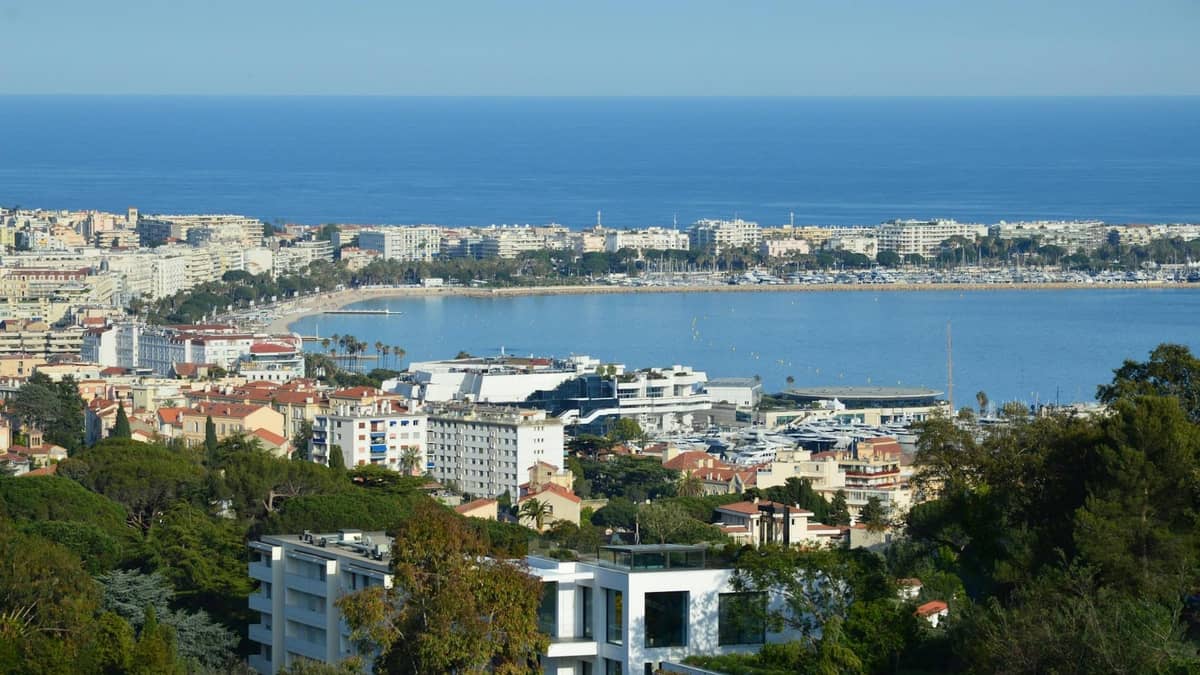
The Cannes vs Nice comparison often gets framed as glamour versus grit, but that oversimplifies both cities. The real distinction is function. Nice is the de facto capital of the French Riviera, with a population of around 342,000, a functioning metro area, two universities, a major international airport, and all the infrastructure of a genuine city. Cannes, with roughly 73,500 residents spread across 19.62 km², is built almost entirely around tourism, events, and the hospitality industry. It is a resort city that happens to have locals living in it, not the other way around.
This distinction shapes everything: the atmosphere, the price of a coffee, the type of hotel available, how the streets feel at 9am in November. Nice operates on its own rhythms regardless of whether tourists are present. Cannes recalibrates itself almost entirely around its event calendar and the summer season.
ℹ️ Good to know
Both cities share a Mediterranean climate with hot, dry summers (average July-August highs of 26-28°C) and mild, wetter winters. May-June and September offer the best combination of warm weather and manageable crowds in both places.
Beaches: Sand vs Pebbles, Private vs Public
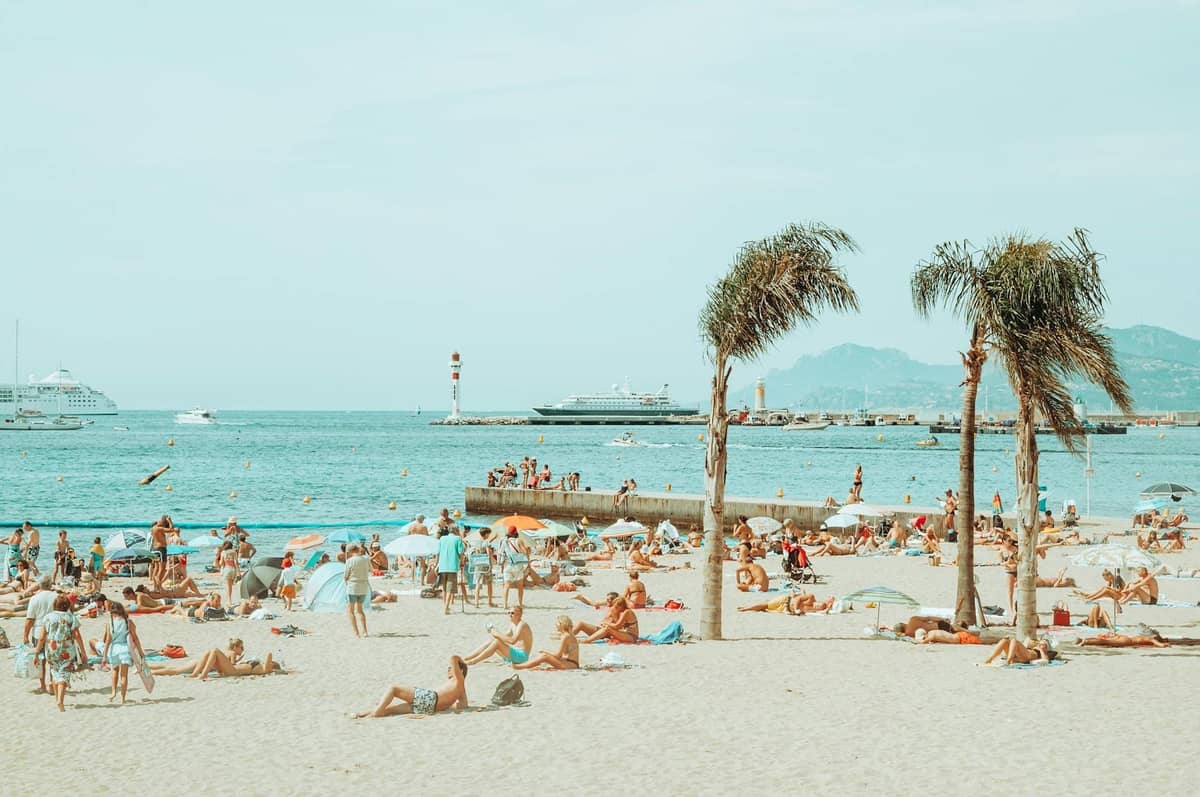
This is where the two cities diverge most visibly. Cannes has sandy beaches, mostly concentrated along the Croisette seafront, where the majority of the beach space is carved up between private clubs attached to hotels. To use a sunbed and umbrella at one of these establishments, expect to pay €25-50+ per person for the day. The beaches themselves are attractive and well-maintained, but the experience is transactional. You are buying access to a curated beachfront, not just lying on the sand.
A common misconception is that all Cannes beaches are private. The city maintains several free public beach sections along La Croisette and near the Palais des Festivals, but these fill up quickly in summer and offer fewer facilities. The western stretch near La Bocca also has more accessible sandy beach. If your priority is a sandy beach without paying for a sun lounger, Cannes can deliver, but you need to know where to look.
Nice's beaches are pebbled, which is genuinely off-putting for some visitors. The stones are rounded and large enough that walking on them barefoot requires adjustment. However, the vast majority of Nice's central beachfront along the Promenade des Anglais is public and free. You can spread a towel and stay all day without spending a euro. Private beach clubs exist here too, but they occupy a smaller share of the total frontage. If free beach access matters more than sand, Nice wins outright.
- Cannes beaches Mostly sandy; predominantly private clubs charging €25-50+ per day; some free public sections near Palais des Festivals and at La Bocca.
- Nice beaches Pebbled; mostly public and free along the Promenade des Anglais; private clubs available but not dominant.
- Alternative The Îles de Lérins, accessible by boat from Cannes Vieux-Port, offer quieter beaches in a natural setting with no sun-lounger fees.
Costs: What to Budget in Each City
Cannes is expensive by default. Nice is expensive compared to the French interior, but offers genuine value by Riviera standards, particularly in accommodation. Nice's larger size means more competition between hotels, more mid-range options, and more affordable apartments for longer stays. Cannes accommodation skews toward four and five-star properties along La Croisette and the surrounding streets, with limited genuine budget options in the centre.
⚠️ What to skip
During the Cannes Film Festival (typically 12 days in mid-May), hotel prices in Cannes can multiply several times over, and availability disappears months in advance. If your trip falls during this period, either book Cannes accommodation extremely early or base yourself in Nice or Antibes and day-trip in by train.
Outside peak events, a mid-range dinner for two in Cannes will typically run €60-100 in the central area, with wines added. In Nice's Vieux-Nice quarter, you can eat very well for €40-60 for two at a good neighbourhood restaurant. Street-food options like socca (a chickpea flour pancake, a Nice specialty) cost €3-5 and don't exist in Cannes in the same way. For budget travelers, Nice is the clear choice. For those prioritising a specific luxury experience, see our guide on where to stay in Cannes which covers the spectrum of options.
Getting Between Cannes and Nice
The good news is that the Cannes vs Nice debate doesn't have to be either/or. The two cities are 30-40 minutes apart by regional TER train, with services running roughly 3-4 times per hour during the day. The one-way fare between Nice-Ville and Cannes station is around €7-10 depending on time of travel and whether you hold a discount card. You can buy tickets through the SNCF Connect app or at station machines.
Nice Côte d'Azur Airport (NCE) is the main international gateway for the whole region, located approximately 26 km from central Cannes by road. If you're flying in, you have several options to reach Cannes: the regional bus line LR 81 connects the airport directly to Cannes in around 45-60 minutes for roughly €5-10; a taxi or ride-hail from NCE to central Cannes typically costs €80-120 depending on time of day and traffic; private shuttle transfers start from around €25-40 per person for shared services. The train is slightly indirect from the airport (requiring a walk or short bus to Nice Saint-Augustin or Nice-Ville station) but remains the cheapest reliable option for most travelers.
💡 Local tip
If you're basing yourself in Nice but want a full day in Cannes, the first TER trains run early enough to arrive before the beaches fill up. Buy a return ticket and aim to be back before 7pm to avoid the slower evening services.
- TER train (recommended) Nice-Ville to Cannes in 30-40 min; ~€7-10 one-way; 3-4 services per hour during daytime.
- Bus LR 81 Nice Airport directly to Cannes in 45-60 min; ~€5-10 one-way; useful if arriving/departing via NCE.
- Taxi/Uber from Nice Airport Around €80-120 by meter; fastest door-to-door but significantly more expensive.
- Private shuttle From ~€25-40 per person shared; pre-bookable; good for groups or airport arrivals with luggage.
Culture, Atmosphere, and Things to Do
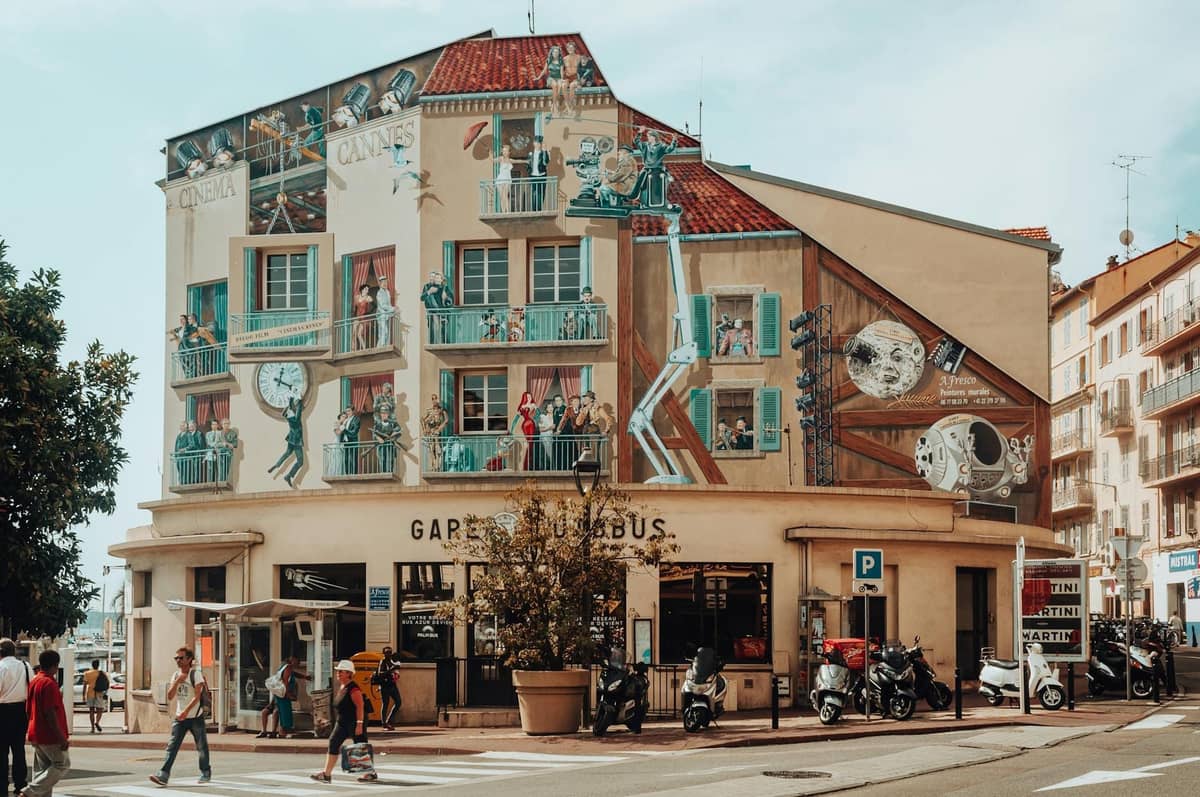
Nice has accumulated cultural infrastructure over centuries. The Vieux-Nice quarter is genuinely old in feel and texture, with baroque churches, covered markets, and narrow streets that reward slow walking. The city has serious museums, including MAMAC for modern and contemporary art, and the Musée Matisse up in Cimiez. There are neighbourhood restaurants that have been feeding locals for decades. If you want to understand the French Riviera as a place people actually live, rather than as a backdrop for a film, Nice is the more instructive city.
Cannes has its own historic quarter in Le Suquet, the old hilltop town above the port, which is genuinely worth an afternoon. The Tour du Suquet and the Église Notre-Dame d'Espérance give a sense of Cannes before it was famous. But outside Le Suquet, the city is oriented primarily toward consumption: beaches, restaurants, shopping on Rue d'Antibes, and the spectacle of La Croisette. That is not a criticism. For many visitors, that is exactly the point.
One thing Cannes offers that Nice cannot match is immediate access to the Îles de Lérins. Boats depart from the Vieux-Port to Sainte-Marguerite and Saint-Honorat year-round in about 15 minutes. Both islands are largely car-free, forested, and quiet. Sainte-Marguerite has the Fort Royal and the cell where the Man in the Iron Mask was imprisoned. Saint-Honorat has a working monastery that has been producing wine for centuries. A half-day trip to the islands is one of the best things you can do on the entire Riviera, and it's a genuine advantage Cannes holds over Nice.
Events: When Each City Peaks
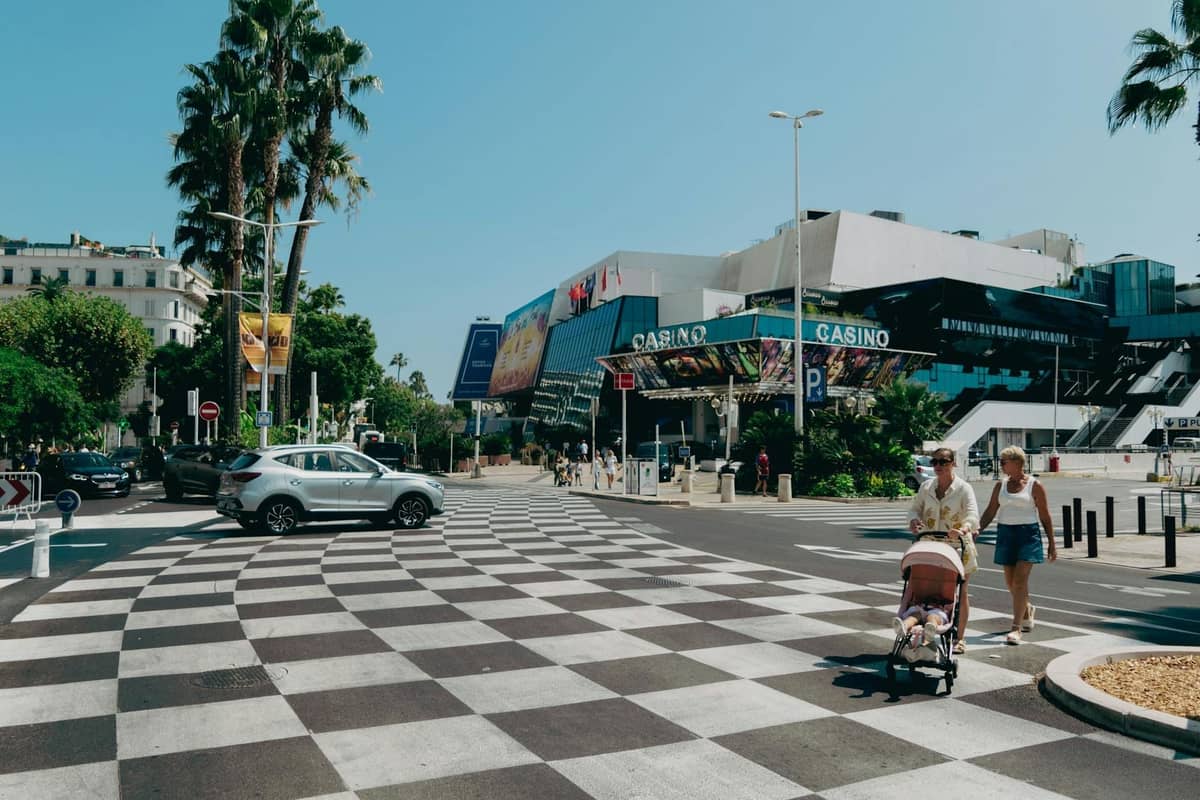
The Cannes Film Festival transforms the city every May. Over 12 days, the Palais des Festivals becomes the centre of the global film industry. The red carpet steps are accessible for photographs outside screening hours, but red-carpet screenings themselves are restricted to accredited professionals. Visiting Cannes during the Festival without accreditation means paying elevated prices for hotels and restaurants, navigating closed-off streets, and watching the spectacle from the perimeter. Some visitors love the energy. Many find the restrictions frustrating relative to the cost.
Nice's major public events work differently. The Nice Carnival in February is one of the largest carnivals in Europe and is genuinely open to the public with ticket purchase. The Nice Jazz Festival in July attracts international headliners and is ticketed but accessible. These events drive up prices and reduce hotel availability, but they don't close off large parts of the city the way the Cannes Film Festival does. If attending a major event is part of your trip, Nice's events are generally more visitor-friendly in terms of access.
For more detail on planning a trip around the film festival, the Cannes Film Festival guide covers what non-accredited visitors can realistically see and do during those two weeks.
Who Should Choose Cannes, and Who Should Choose Nice
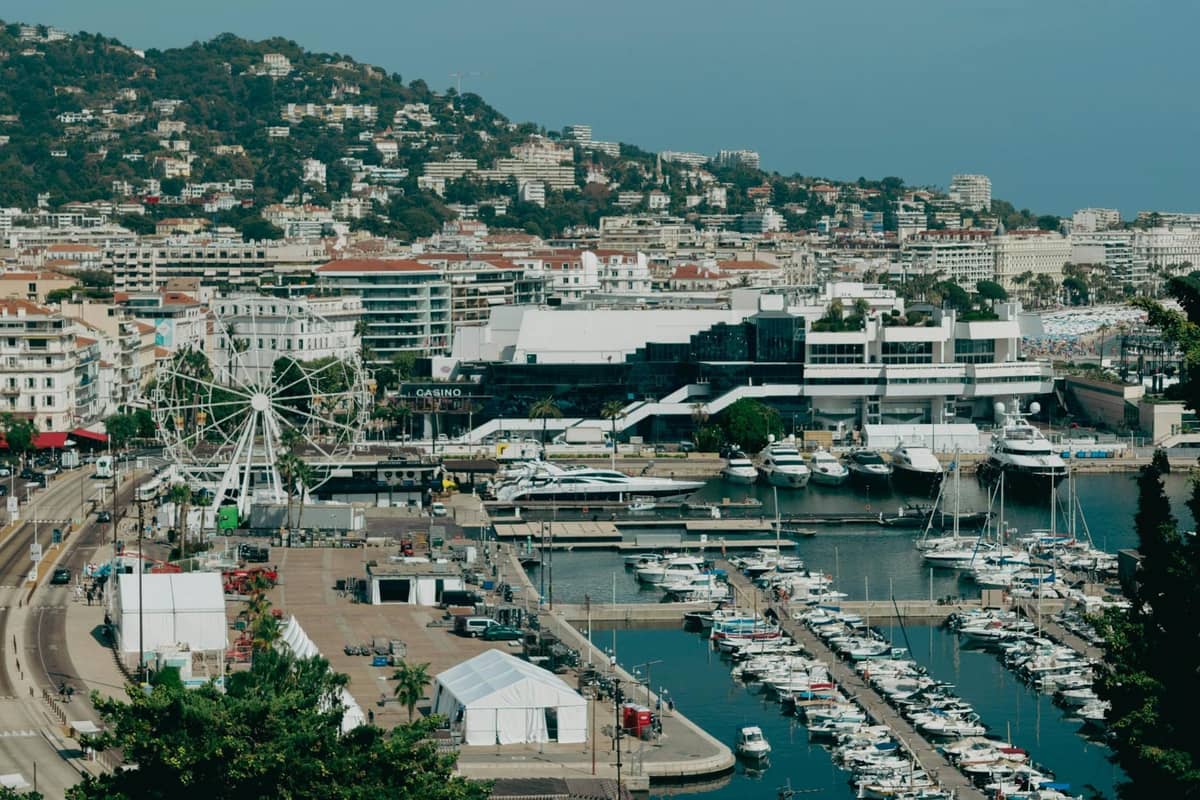
Cannes is the right choice if you want a concentrated luxury beach experience, if you're attending a specific event or conference, if you plan to spend significant time at beach clubs or on a boat, or if visiting the Îles de Lérins is a priority. It suits shorter trips where you want a high-end Riviera atmosphere without much cultural distraction.
Nice is the right choice if you want more variety, more cultural depth, better value for money, or a base from which to explore the wider region. From Nice, you can reach Monaco in under 30 minutes by train, Cannes in 30-40 minutes, and Antibes in 20 minutes. If you're spending a week on the Riviera and want flexibility, basing yourself in Nice makes logistical sense. Cannes can then be a day trip, and the Cannes to Monaco day trip is another option worth considering if you want to stretch further east.
If your time allows only one city, be honest with yourself about what you actually want from a beach destination. For first-time Riviera visitors, Nice typically offers more per euro. For those returning who want to experience something more focused and resort-like, Cannes delivers. Either way, check the best time to visit Cannes before committing to dates, particularly in May.
✨ Pro tip
The most practical approach for a first Riviera trip of 5-7 days: fly into Nice, spend 2-3 nights there, then take the train to Cannes for 2 nights. You get the cultural depth of Nice plus the beach-club experience of Cannes, without committing to either entirely. This also keeps transport simple since you arrive and depart from the same airport.
FAQ
How long is the train from Nice to Cannes?
The TER regional train between Nice-Ville and Cannes takes approximately 30-40 minutes depending on the service. Trains run roughly 3-4 times per hour during daytime. The one-way fare is around €7-10. Tickets can be bought via the SNCF Connect app, at station machines, or at the ticket window.
Is Cannes or Nice better for beaches?
It depends on your priorities. Cannes has sandy beaches, which are more comfortable, but the majority of the central seafront is divided among private beach clubs that charge €25-50+ per person. Nice has pebbly beaches that take getting used to, but most of the seafront is free public beach. For sand, Cannes wins; for free access, Nice wins.
Is Nice cheaper than Cannes?
Generally yes. Nice's larger size means more competition between hotels and restaurants across all price ranges. Cannes skews toward high-end properties, and prices spike sharply during the Film Festival in May and during major congresses. Outside those periods, both cities are expensive by French standards, but Nice offers more genuine mid-range options.
Can you visit both Cannes and Nice on the same trip?
Easily. The fast train between the two cities runs throughout the day and costs around €7-10 each way. Many visitors base themselves in one city and day-trip to the other. Nice works particularly well as a base for day-tripping to Cannes, since Nice has the international airport and a wider choice of accommodation.
Should I go to Cannes during the Film Festival?
Only if you're accredited or if the atmosphere alone is worth the cost to you. During the 12-day festival in May, hotel prices multiply, restaurants are crowded, and large sections of the city centre are restricted to badge-holders. The red carpet steps are accessible for photos outside screening hours, but actual screenings are closed to the public. If you want to visit Cannes in May, consider the weeks before or after the festival, which often offer pleasant weather with normal prices.