Tour du Suquet: Cannes' Medieval Watchtower Above the Old Town
Rising from the hilltop of Le Suquet, the Tour du Suquet is an 11th-century stone watchtower offering the finest panoramic views in Cannes. Accessed through the Musée des Explorations du Monde, it rewards the climb with sweeping vistas across the Baie de Cannes and out to the Îles de Lérins.
Quick Facts
- Location
- 6 rue de la Castre, Le Suquet, 06400 Cannes
- Getting There
- 10–15-minute walk from Palais des Festivals; follow rue du Suquet uphill through the old town to Place de la Castre
- Time Needed
- 30–60 minutes (tower + museum)
- Cost
- €6.50 full price; €3.50 reduced; free for under-18s, students, and on the 1st Sunday Nov–Mar
- Best for
- Panoramic views, medieval history, photography, escaping the seafront crowds
What the Tour du Suquet Actually Is
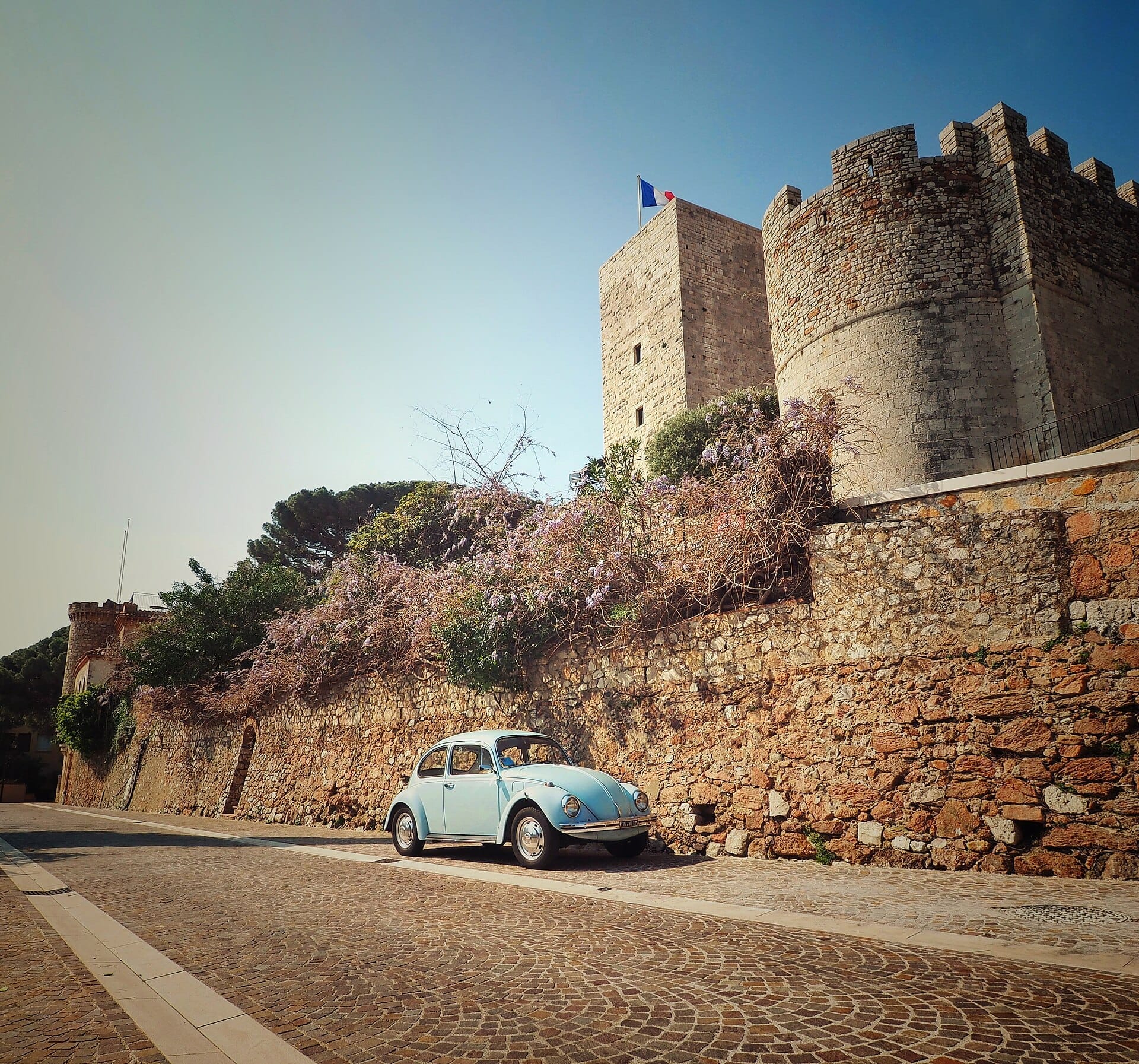
The Tour du Suquet is a squat, square medieval watchtower built in the 11th century as part of Cannes' original hill fortifications. It stands on Place de la Castre at the top of Le Suquet, the city's oldest quarter, and forms the centrepiece of a small fortified complex that also includes the Chapelle Sainte-Anne and the main building of the Musée des Explorations du Monde (formerly known as the Musée de la Castre).
The tower is not a standalone attraction. Entry is included in the museum ticket, and you pass through the museum courtyard to reach the base of the staircase. What awaits at the top is one of the most complete panoramas available in Cannes without chartering a boat or helicopter: the sweep of the Baie de Cannes, the Îles de Lérins sitting low on the horizon, the red-roofed jumble of Le Suquet below, and on a clear day, the Esterel hills bleeding deep red to the west.
ℹ️ Good to know
The tower is accessed via the Musée des Explorations du Monde at Place de la Castre. The museum is closed on Mondays. Plan accordingly.
The Climb: What to Expect on the Way Up
Getting to the tower involves two separate ascents. The first is the walk from the port level up through Le Suquet itself, a neighbourhood of narrow cobbled lanes, sun-bleached plaster walls, and the occasional cat dozing on a doorstep. The route from the Vieux-Port waterfront to Place de la Castre takes roughly 10–12 minutes on foot, but the gradient is real. Wear flat, rubber-soled shoes. The stones are uneven and can be slippery when wet.
Once inside the museum complex, the second ascent is the tower staircase itself: a tight, winding stone spiral with uneven steps, low head clearance in places, and no handrail for significant stretches. It is not suitable for visitors with mobility difficulties or young children who are not steady on their feet. Those who make it to the top find a modest platform, open on all sides to the Mediterranean breeze. For more context on the surrounding neighbourhood, the Le Suquet old town guide covers the full hilltop quarter in detail.
⚠️ What to skip
The tower staircase involves narrow stone steps with limited handrail support. Visitors with reduced mobility, vertigo, or young toddlers should consider whether the climb is suitable before purchasing tickets.
Tickets & tours
Hand-picked options from our booking partner. Prices are indicative; availability and final rates are confirmed when you complete your booking.
Cannes, Antibes and St Paul de Vence half-day private tour
From 60 €Instant confirmationFree cancellationBoat & snorkeling trip to the Esterel Calanques from Cannes
From 75 €Instant confirmationFree cancellationCannes, Antibes and Saint Paul de Vence shared tour from Nice
From 65 €Instant confirmationFree cancellationCannes food tour with full meal
From 105 €Instant confirmationFree cancellation
The View: How It Changes Through the Day
The platform at the top of the Tour du Suquet is small enough that two or three groups of people make it feel busy. That is part of why timing matters. In the morning, particularly between 9 and 10am, the light falls at a low angle from the east, and the sea takes on a pale, almost silver quality. The Palais des Festivals is visible to the right, La Croisette stretching eastward from it, and the private beach clubs on the seafront are still being set up for the day.
By midday in summer, the platform can feel exposed and hot. The light becomes flatter, and the haze thickens. Late afternoon, however, produces the most dramatic conditions: the western light hits the Esterel hills and the terracotta rooftops glow. At this hour, the Lérins islands are clearly silhouetted against a deepening blue.
Sunset from the tower is worth planning around. The sun drops behind the Esterel range, and the sky over the bay can shift through amber and rose before the lights of the port come on below. If you are combining this with an evening in Le Suquet, the restaurants around Place du Suquet fill up quickly after dusk. The Vieux-Port waterfront is a natural next stop downhill after visiting the tower.
The Museum: More Than Just a Tower Ticket
Your €6.50 entry covers the full Musée des Explorations du Monde, and it is worth spending 30–40 minutes inside before or after climbing the tower. The collection is eclectic in the best sense: Pacific island artefacts, pre-Columbian objects, Mediterranean antiquities dating back to the Bronze Age, and a room of 19th-century Provençal landscape paintings that document what this coastline looked like before the hotels arrived.
The museum's original collection was assembled in the 19th century by Baron Lycklama à Nijeholt, a Dutch nobleman who spent years travelling through the Middle East and Central Asia. His acquisitions, combined with later donations, give the museum an unusual depth for a city of Cannes' size. It sits in a different league from the kind of token municipal museum that seems present in most French seaside towns. The Musée des Explorations du Monde merits its own visit if you have any interest in ethnographic collections.
Historical Context: Why the Tower Is Where It Is
The hill of Le Suquet was the original settlement of Cannes, occupied long before the seafront was developed. The monks of the Abbaye de Lérins, who controlled the area from the 10th century onward, built the fortified complex here to oversee the port and watch for coastal raids. The watchtower dates to the 11th century in its earliest form, making it roughly a thousand years old.
The strategic logic is obvious from the top: whoever held this tower could see ships approaching from any direction across the Baie de Cannes. Today the threat of raiding galleys has been replaced by superyachts and ferry traffic to the islands, but the sightline remains unchanged. The monks of Saint-Honorat, whose island is visible from the platform, still produce wine and honey on Saint-Honorat Island today, maintaining a continuity with the medieval world that built this tower.
Practical Details: Getting There, Hours, and Photography
The Musée des Explorations du Monde is open year-round but closed on Mondays. Seasonal hours vary, so check the Cannes Tourist Office listing before visiting. Full admission is €6.50; reduced tickets at €3.50 apply to visitors aged 18–25, adult groups of 10 or more, and Cannes Pass Culture holders. Admission is free for under-18s and students. The first Sunday of each month from November to March is also free.
The walk from the Palais des Festivals takes about 10–15 minutes. Head toward the Old Port and then follow the signs up through Le Suquet. There are no direct Palmbus routes that stop at the top of the hill; it is essentially a walking destination. If arriving by TER train to Gare de Cannes, the walk from the station to the tower is around 15–20 minutes, then uphill. For a broader orientation of the area, the Cannes walking tour guide includes the Le Suquet hill as part of a half-day route.
Photography from the tower platform is unrestricted. A wide-angle lens or a phone in landscape mode captures the full bay panorama. The platform is narrow and other visitors will need to move around each other, so patience helps. Mornings before 10am offer the clearest light and the smallest crowds. In July and August, expect to share the platform. The tower has no shade at the top.
💡 Local tip
For the clearest long-distance views toward the Lérins islands, visit on a morning after a mistral or light rain has cleared the haze. Spring and early autumn typically offer the best visibility.
Insider Tips
- The museum courtyard, just before you enter the tower staircase, offers a ground-level panorama framed by stone walls that photographs beautifully and requires no climbing at all — useful if someone in your group cannot manage the stairs.
- Free entry on the first Sunday of the month (November through March) makes the tower particularly good value in the off-season, when the Cannes crowds have thinned and the light is often exceptional.
- The Chapelle Sainte-Anne, tucked within the same complex, is frequently overlooked by visitors focused on the tower. It contains rotating exhibitions and is worth a few minutes inside.
- If you visit at dusk in summer, the open-air cinema Les Étoiles du Suquet sometimes operates in the square just below. Check local listings — watching a film with the tower silhouetted against the night sky is a genuinely Cannes experience.
- Combine the tower visit with a stop at the Marché Forville on the way up or down. The covered market operates most mornings and is two minutes from the base of the Le Suquet hill.
Who Is Tour du Suquet (Watchtower) For?
- Travellers who want the best free-standing panoramic view of Cannes and the bay without paying resort prices
- History and architecture enthusiasts interested in pre-resort Cannes and medieval Mediterranean fortifications
- Photographers seeking morning or late-afternoon golden-hour shots across the Baie de Cannes
- Visitors combining a museum visit with a viewpoint in a single ticket
- Anyone spending a day in Le Suquet who wants to understand why the hill was settled first
Nearby Attractions
Other things to see while in Le Suquet (Old Town):
- Musée des Explorations du monde (formerly Musée de la Castre)
Perched at the top of Le Suquet, Cannes' historic old quarter, the Musée des Explorations du monde occupies the ruins of a medieval castle built by the monks of Lérins. Its collections span Himalayan-Tibetan artifacts, Arctic objects, pre-Columbian Americas pieces, Mediterranean antiquities, and 19th-century landscape paintings — all for under €7 admission.
- Notre-Dame de l'Espérance Church
Perched at the summit of Le Suquet, Cannes' historic old town, the Église Notre-Dame de l'Espérance is a classified historic monument begun in 1521 and largely completed by 1627, with work continuing into the 17th century. Entry is free, the architecture is genuinely impressive, and the views from the adjoining square over the bay and the Îles de Lérins are among the best in the city.