Musée des Explorations du monde: Cannes' Hilltop Museum Inside a Medieval Castle
Perched at the top of Le Suquet, Cannes' historic old quarter, the Musée des Explorations du monde occupies the ruins of a medieval castle built by the monks of Lérins. Its collections span Himalayan-Tibetan artifacts, Arctic objects, pre-Columbian Americas pieces, Mediterranean antiquities, and 19th-century landscape paintings — all for under €7 admission.
Quick Facts
- Location
- 6 rue de la Castre (Place de la Castre), Le Suquet, 06400 Cannes
- Getting There
- 15-minute walk from Gare de Cannes or La Croisette; steep uphill climb through Le Suquet's lanes
- Time Needed
- 1.5 to 2.5 hours for collections plus terrace views
- Cost
- €6.50 full price; €3.50 reduced; free for under-18s and first Sunday of month (Nov–Mar)
- Best for
- Ethnography enthusiasts, history lovers, panoramic views, rainy-day culture
What Is the Musée des Explorations du monde?
The Musée des Explorations du monde — formerly known as the Musée de la Castre — sits at the very top of Le Suquet, Cannes' medieval hill district, inside the partial ruins of a castle originally built by the monks of the Îles de Lérins. The building itself is as much the attraction as anything inside: rough stone walls, a Romanesque chapel, and a square watchtower that you can climb for one of the best unrestricted panoramas in Cannes.
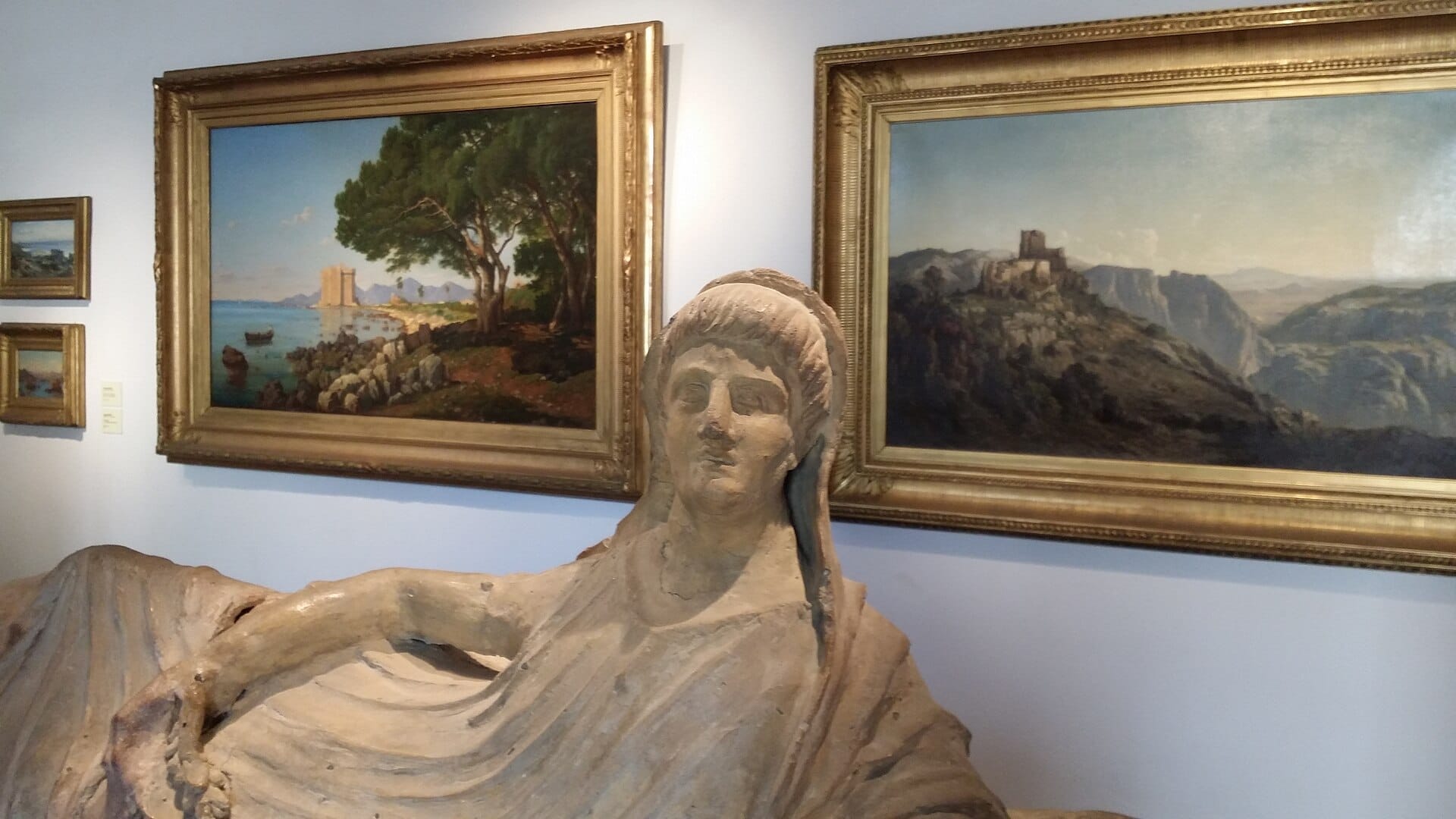
The museum holds the 'Musée de France' label, a national quality designation granted by the French Ministry of Culture to institutions with significant permanent collections. Its holdings are genuinely eclectic: Himalayan and Tibetan ritual objects, Arctic tools and clothing, pre-Columbian artifacts from the Americas, Mediterranean antiquities from Greece, Cyprus, and Egypt, and a gallery of 19th-century landscape paintings. The common thread is exploration — the collections were assembled largely by 19th-century travellers and collectors whose curiosity ranged far beyond Europe.
💡 Local tip
Admission is free on the first Sunday of each month from November through March. If your visit falls on one of those dates, you can combine the museum with a walk through Le Suquet and save the entrance fee entirely.
The Building: A Medieval Castle in the Middle of a Resort City
The castle complex dates to the 11th and 12th centuries, constructed by the abbots of Saint-Honorat as a fortified presence on the mainland. The monks of Lérins controlled this hilltop for centuries before Cannes gradually grew around it. What remains today includes the castle keep, a Romanesque chapel dedicated to Sainte-Anne, and a square tower — the Tour du Suquet — that rises above everything on the hillside.
Walking into the courtyard for the first time, the contrast with the resort city below is striking. The stones are worn smooth, the courtyard is relatively quiet even during busy tourist season, and the view over the terracotta rooftops of Le Suquet toward the bay opens up before you even reach the entrance. The Tour du Suquet itself is accessible from inside the museum and rewards the climb with a 360-degree view: the old port to one side, the Lérins Islands sitting flat in the bay, and La Croisette curving away to the east.
The chapel of Sainte-Anne, which forms part of the museum circuit, is a sober, single-nave Romanesque structure. It now houses part of the Mediterranean antiquities collection — Greek ceramics, Cypriot bronzes, Egyptian objects — displayed in stone alcoves and under low vaulting. The combination of setting and content is unusually coherent: ancient objects in an ancient space, without the clinical feel of a purpose-built gallery.
Tickets & tours
Hand-picked options from our booking partner. Prices are indicative; availability and final rates are confirmed when you complete your booking.
Private tour of Eze and Monaco from Cannes port
From 696 €Instant confirmationFree cancellationCannes, Antibes and St Paul de Vence half-day private tour
From 60 €Instant confirmationFree cancellationBoat & snorkeling trip to the Esterel Calanques from Cannes
From 75 €Instant confirmationFree cancellationCannes, Antibes and Saint Paul de Vence shared tour from Nice
From 65 €Instant confirmationFree cancellation
The Collections: What You Actually See Inside
The permanent collection is organized thematically across several rooms and the chapel. The Himalayan-Tibetan room is among the strongest: masks, ritual implements, thangka paintings, and ceremonial objects that were collected during 19th-century expeditions. The pieces are well-labeled in French and English, and the room is intimate enough that you can examine objects at close range.
The Arctic section covers tools, hunting equipment, and clothing from Indigenous peoples of the Arctic regions — a collection that feels genuinely rare in the context of a French Riviera museum. The pre-Columbian Americas section includes ceramics, figurines, and decorative objects from several Mesoamerican and South American cultures, though this room tends to be smaller and less expansive than the Himalayan or Mediterranean galleries.
The 19th-century painting collection occupies one of the upper rooms and features landscape work from artists who traveled the Mediterranean and North Africa. These are not household names, but the paintings document a specific moment in European exploration and romanticized travel that pairs well with the broader theme of the museum. On a grey afternoon, this room in particular has a quiet, absorbed quality.
ℹ️ Good to know
Temporary exhibitions run throughout the year alongside the permanent collection. Check the official city of Cannes website before your visit to see what's showing — the exhibition program sometimes adds significant depth to specific collection areas.
When to Visit and How It Changes by Time of Day
Morning visits — before 11:30 — tend to be the quietest. The Le Suquet lanes that lead up to the museum are largely empty of other tourists, and the courtyard gets good light for photographs without competing with tour groups. By early afternoon, particularly in July and August, the terrace and tower can get congested with visitors who have combined the museum with a walk through the old quarter.
During certain periods the museum has offered late Wednesday openings until 21:00, but these are not guaranteed every year and are not listed as standard current hours. This is easily the most atmospheric time to visit: the light over the bay turns golden around 19:30, the crowds thin out by 18:00, and the tower view in the last hour of daylight is considerably more dramatic than the midday version. If you are visiting in shoulder season, the Wednesday late opening is worth planning around.
The museum may close for a short midday break in certain seasons; check the current timetable when planning your visit. This is easy to miss if you arrive just before 13:00 expecting to spend two hours inside. Plan accordingly and budget at least 90 minutes after 14:00 to see the full collection without rushing.
Getting There: The Climb Through Le Suquet
The museum is at the top of Le Suquet, which means getting there requires walking uphill. From the Vieux Port waterfront, the walk takes roughly 10 to 15 minutes through progressively narrower streets and occasional flights of steps. From the Palais des Festivals or La Croisette, budget 20 minutes on foot. There is no direct bus service to the hilltop itself.
The approach through Le Suquet is genuinely pleasant — you pass the covered market hall of Marché Forville at the base, then wind up through residential streets with shuttered windows and small restaurants. The smell of bread from a boulangerie near the lower steps is a reliable constant on weekend mornings. Wear comfortable shoes with grip; the older stone steps can be slippery after rain.
⚠️ What to skip
Large luggage, bulky bags, and pushchairs (strollers) are not permitted inside the museum. The hilltop location also makes accessibility genuinely difficult for visitors with limited mobility — the streets approaching the museum involve significant inclines and steps with no ramp alternatives.
Animals are not allowed inside. The museum has no on-site café or shop of any size, so eat or drink before you arrive — the restaurants and cafés in the lanes just below the museum are a reasonable option.
Photography and Practical Logistics
Photography for personal, non-commercial use is generally tolerated in the permanent collection galleries; flash photography and tripods are typically restricted in French 'Musée de France' institutions. Verify the current policy at the entrance. The courtyard and tower terrace are unrestricted for photography, and the terrace view is the single most photographed element of a visit here.
For the tower view specifically: a wide-angle lens or a smartphone with a wide mode captures the full sweep from the old port across to the Lérins Islands. On clear days you can see Sainte-Marguerite and Saint-Honorat sitting distinctly in the bay. If you are planning a day trip to the islands, the tower gives you a useful orientation before you board the ferry from the Vieux Port.
Is It Worth Your Time?
The Musée des Explorations du monde is not a world-class ethnographic museum in the league of Paris's Musée du quai Branly. The collections are modest in scale, and some rooms cover their subject matter in relatively brief terms. If you are a specialist in any of the represented cultures, you will likely find the depth limited.
That said, for a Cannes visit, it delivers more than its modest size suggests. At €6.50, it is one of the more affordable cultural experiences in a city not known for cheap entertainment. The medieval building is worth the climb alone. The tower view is excellent. And the combination of a museum visit with a walk through Notre-Dame de l'Espérance next door and lunch at one of the Le Suquet terraces makes for a satisfying half-day that feels nothing like the beach-and-Croisette version of Cannes.
Who should skip it: visitors with very limited time who are focused exclusively on the waterfront, beach culture, or shopping; families with young children in pushchairs (accessibility rules make entry impossible); and anyone who has difficulty with stairs or steep inclines.
Insider Tips
- When available, special Wednesday evening late openings (sometimes running in summer) can be the best single time slot for the tower view, but they are occasional and should be confirmed on the official website. The bay light after 19:00 is noticeably warmer, and the crowds have largely dispersed by then.
- From November through March, admission is free on the first Sunday of each month. Combine this with a morning visit to Marché Forville at the base of Le Suquet — the market runs on Sunday mornings — for a full neighborhood half-day at minimal cost.
- At certain times the schedule includes a short midday closure, so always verify same-day opening hours before going up the hill. If you arrive at 12:45 expecting to spend two hours, you will be turned away at the door. Arrive by 10:30 or wait until 14:00.
- The chapel of Sainte-Anne, which houses the Mediterranean antiquities, is often overlooked by visitors who rush toward the tower. Take 20 minutes in here: the acoustics are unusual and the Greek ceramics displayed in the stone alcoves are among the most visually coherent displays in the museum.
- Leave the museum via the small terrace on the south side of the courtyard rather than retracing your steps. The downhill route toward the port through the back lanes of Le Suquet passes some of the quarter's best-preserved medieval architecture and delivers you near the Vieux Port in about 10 minutes.
Who Is Musée des Explorations du monde (formerly Musée de la Castre) For?
- Travelers who want cultural depth beyond the Croisette and beach scene
- History and architecture enthusiasts drawn to medieval buildings in active use
- Visitors on a budget looking for quality museum experiences under €7
- Photography-focused travelers seeking elevated panoramic views of the bay
- Anyone combining a Le Suquet walking tour with a half-day of culture
Nearby Attractions
Other things to see while in Le Suquet (Old Town):
- Notre-Dame de l'Espérance Church
Perched at the summit of Le Suquet, Cannes' historic old town, the Église Notre-Dame de l'Espérance is a classified historic monument begun in 1521 and largely completed by 1627, with work continuing into the 17th century. Entry is free, the architecture is genuinely impressive, and the views from the adjoining square over the bay and the Îles de Lérins are among the best in the city.
- Tour du Suquet (Watchtower)
Rising from the hilltop of Le Suquet, the Tour du Suquet is an 11th-century stone watchtower offering the finest panoramic views in Cannes. Accessed through the Musée des Explorations du Monde, it rewards the climb with sweeping vistas across the Baie de Cannes and out to the Îles de Lérins.