Notre-Dame de l'Espérance: Cannes' Oldest Church and Its Hilltop Reward
Perched at the summit of Le Suquet, Cannes' historic old town, the Église Notre-Dame de l'Espérance is a classified historic monument begun in 1521 and largely completed by 1627, with work continuing into the 17th century. Entry is free, the architecture is genuinely impressive, and the views from the adjoining square over the bay and the Îles de Lérins are among the best in the city.
Quick Facts
- Location
- 1 Place de la Castre, 06400 Cannes, France (Le Suquet hill, Old Town)
- Getting There
- Walk from Vieux-Port (approx. 10–15 min uphill through Le Suquet's narrow streets); no direct bus stop at the summit
- Time Needed
- 30–60 minutes for the church; allow extra time to explore Le Suquet and enjoy the panoramic square
- Cost
- Free entry
- Best for
- History lovers, architecture enthusiasts, photographers, and anyone wanting genuine local atmosphere away from the Croisette
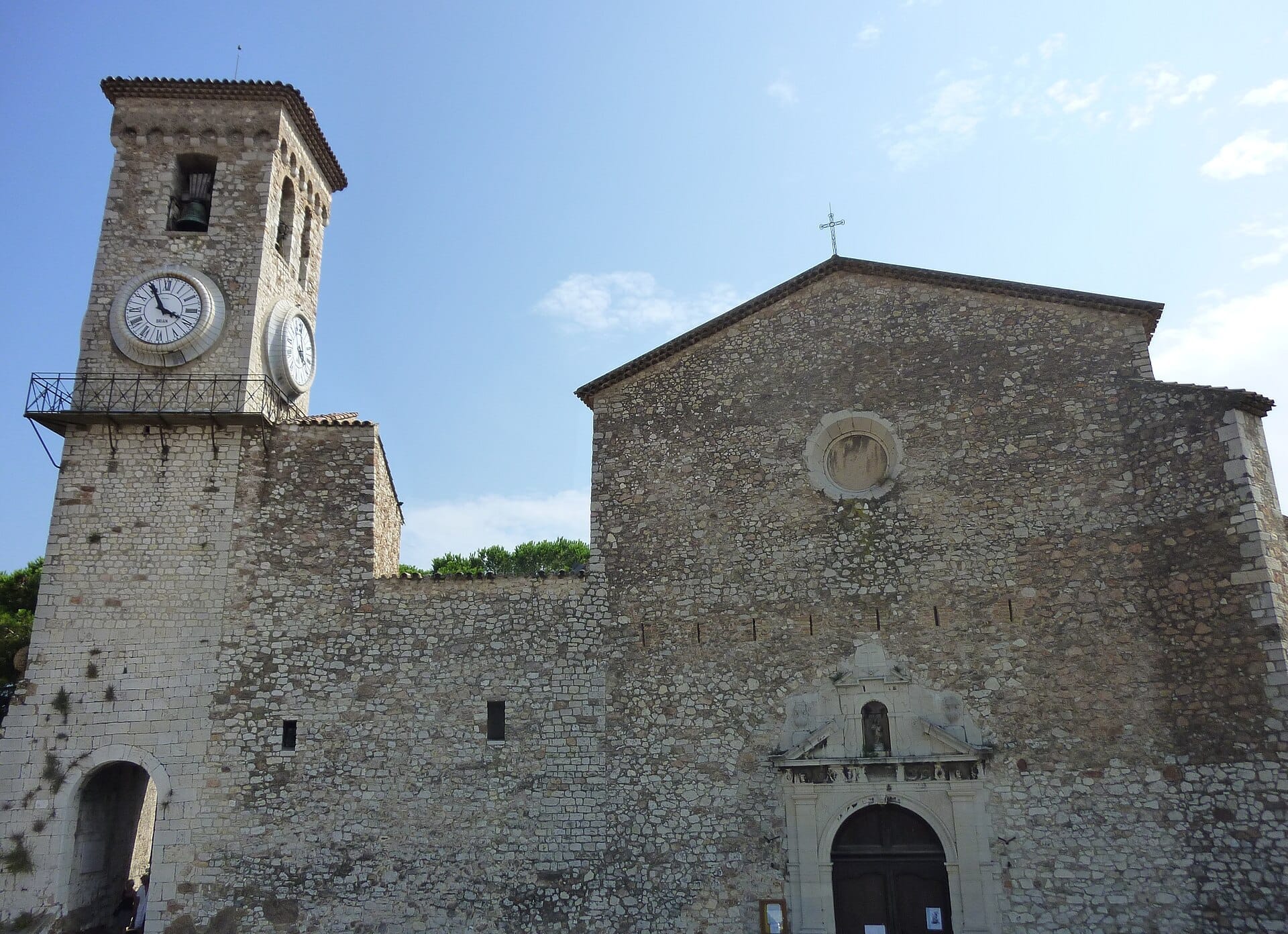
What Notre-Dame de l'Espérance Actually Is
The Église Notre-Dame de l'Espérance is the oldest standing church in Cannes, a classified historic monument (monument historique) rising from the crown of the Suquet hill above the old port. Construction began in 1521, replacing an earlier chapel dedicated to Sainte-Anne, and the building work stretched over more than a century, being largely completed by 1627 and not finally finished until the 17th century after repeated interruptions caused by epidemics and conflicts. Certain artworks inside were formally listed as protected in 1910; the church itself gained full monument historique status in 1914. To put that in context: the church was already centuries old when the Cannes Film Festival opened its first edition in 1946. For the full story of the Le Suquet quarter that grew around it, the neighbourhood rewards a slow, exploratory walk.
The building is Provençal Gothic in character, with a single nave divided into four bays, eight side chapels arranged along the flanks, and a semi-circular choir at the east end. The exterior is austere limestone, worn and textured by centuries of Mediterranean sun and salt air. Step inside and the temperature drops noticeably, even on a hot August afternoon. The interior is dim but not gloomy: light filters through the windows at angles that shift dramatically depending on the hour, catching the carved stonework of the chapels and the gilded details of the altarpiece.
💡 Local tip
The church is typically open daily 09:00–17:00, year-round, though hours can occasionally vary. Sunday Mass is celebrated at 11:30. If you want the interior to yourself, come on a weekday morning before 10:00.
The Climb Up Le Suquet: What to Expect
There is no shortcut to Notre-Dame de l'Espérance that doesn't involve a climb. From the Vieux-Port waterfront, the ascent through Le Suquet takes roughly 10 to 15 minutes on foot, following a network of narrow cobbled lanes and stairways that wind between old stone houses. The streets smell of jasmine in spring and of wood smoke in winter. Restaurant menus appear in French, the handwriting on the chalkboards is often hasty, and the crowd here is noticeably more local than what you find down on the waterfront.
The route is uneven and consistently steep. Comfortable shoes are essential. Visitors who use wheelchairs or have significant mobility limitations should be aware that there is no step-free access route documented for the summit, and the cobblestones can be slippery after rain. The ascent is not suitable for pushchairs unless they are robust and you are prepared for a genuine workout.
As you near the top, the lane opens onto Place de la Castre, a small square bordered by the church facade on one side and the walls of the old Castre castle on the other. The square itself is worth pausing in before entering the church: the stone is warm underfoot in summer, the shade from the church tower catches the southern side of the square in the afternoon, and the view south over the bay is suddenly, fully revealed.
Tickets & tours
Hand-picked options from our booking partner. Prices are indicative; availability and final rates are confirmed when you complete your booking.
Cannes, Antibes and St Paul de Vence half-day private tour
From 60 €Instant confirmationFree cancellationBoat & snorkeling trip to the Esterel Calanques from Cannes
From 75 €Instant confirmationFree cancellationCannes, Antibes and Saint Paul de Vence shared tour from Nice
From 65 €Instant confirmationFree cancellationCannes food tour with full meal
From 105 €Instant confirmationFree cancellation
The View from Place de la Castre
The panorama from the square adjacent to the church is one of the most comprehensive in Cannes, and it is free. From here you can see the full sweep of the Baie de Cannes, the long line of La Croisette curving east, the green silhouettes of the Îles de Lérins in the middle distance, and on clear days the red volcanic peaks of the Massif de l'Esterel to the west. The Cannes marina fills the foreground below, the white hulls of the yachts packed tightly in winter and spread more loosely in summer when the largest ones are out at sea.
For photography, the early morning light is exceptional here. Between roughly 07:00 and 09:00 in summer, the sun rises over the eastern hills and casts a low, warm light across the bay while the waterfront is still quiet. In the evening, the square catches the last of the western light and the shadow of the Tour du Suquet, the medieval watchtower a few metres away, falls across the square in a long diagonal. Sunset views from here, looking west toward the Esterel, are dramatic without requiring any effort beyond the climb.
💡 Local tip
Photographers: for the classic view of the bay and La Croisette, position yourself at the southern edge of Place de la Castre, just to the right of the church entrance. A 24–35mm equivalent focal length captures the full arc of the bay comfortably.
Inside the Church: Architecture and Artworks
The interior of Notre-Dame de l'Espérance rewards careful attention rather than a quick glance. The single nave draws the eye toward the semi-circular choir, which is flanked by the eight side chapels. Each chapel contains its own altar and devotional artworks, several of which were listed as protected heritage in 1910. The stone vault above the nave is plainly rendered, which concentrates attention on the chapels and on the quality of the carved details at the column capitals.
The acoustic character of the space is also worth noting: the thick walls absorb street noise completely, and even on a busy Saturday afternoon in July the interior maintains a genuine quiet. Voices drop instinctively. The smell is the particular combination of cool stone, candle wax, and old wood that marks every actively used church of this age in southern France.
If you visit during the main Sunday Mass at 11:30, be aware that the church is a functioning parish, not a museum. Respectful observation is generally welcomed but photography during services is not appropriate. The congregation is primarily local and the Mass is conducted in French.
When to Visit and What to Pair It With
The church is worth visiting year-round, but the experience shifts considerably by season. In May and early June, the lanes of Le Suquet are warm but not crowded, the light in the morning is clear, and the square is peaceful. If you are visiting during the Cannes Film Festival, note that the festival activity stays almost entirely on La Croisette and around the Palais des Festivals; Le Suquet remains relatively calm even during that period, which makes it a useful escape. In July and August, the summit square is busier in the late afternoon and evening when visitors combine it with a dinner reservation in one of the restaurants in the lanes below.
The most natural pairing is with the Musée des Explorations du Monde (formerly Musée de la Castre), which occupies the medieval castle immediately adjacent to the church on Place de la Castre. The museum holds collections of Mediterranean archaeology and ethnographic objects from the Pacific, the Americas, and the Middle East. The Tour du Suquet, the castle's medieval watchtower, can also be climbed for an elevated view that adds a different vertical perspective to the panorama you already have from the square. Between the church, the museum, and the tower, a focused visit to the summit of Le Suquet can comfortably fill two hours.
On the way back down, the Marché Forville is a five-minute walk from the base of the hill. The covered market operates most mornings and carries Provençal produce, olives, cheese, and fresh fish from local boats. It is one of the few places in central Cannes where the commerce feels genuinely directed at local residents rather than visitors.
⚠️ What to skip
Weather note: the cobbled lanes leading up to the church become genuinely slippery in rain. Autumn in Cannes sees the heaviest rainfall (October–November peaks statistically). If the forecast is wet, wear shoes with grip and allow extra time for the descent.
Who Should Skip This, and Who Should Prioritize It
Visitors who are primarily drawn to beaches, shopping, or the glamour of the Croisette will find Notre-Dame de l'Espérance peripheral to their trip. The church is not visually spectacular in the way that, say, a major cathedral in a larger French city might be. It is a compact, somewhat austere Provençal Gothic building, and if religious architecture leaves you cold, the main draw here is the view from the square and the atmospheric quality of the neighbourhood rather than the church itself.
For travellers with limited mobility, the steep cobbled approach is a genuine obstacle and there is currently no documented step-free alternative route to the summit. If this is a concern, the view over the bay from the lower quays of the old port is a reasonable substitute, though the elevation and the 360-degree perspective are naturally different.
For anyone with an interest in French history, Provençal architecture, or simply the texture of a city that existed before its famous film festival, this is a high-priority stop. It also makes a practical starting point for a walking tour of Cannes that moves from the old town downhill through the port and along the waterfront.
Insider Tips
- Arrive before 10:00 on a weekday morning to have the church interior and the panoramic square almost entirely to yourself. By 11:00, tour groups begin arriving from the port area.
- The square faces south-west, which means the best photographic light for the bay view is in the morning. By mid-afternoon in summer, you are shooting into the sun.
- The Musée des Explorations du Monde next door is housed in the medieval castle that predates the church. Admission to the museum is paid, but parts of the exterior courtyard and the lookout areas around the castle are accessible without a ticket and add context to the whole hilltop site.
- If you hear music drifting up from the streets below on a summer evening, it is likely the Nuits Musicales du Suquet festival, which uses the square in front of the church as an open-air concert venue. Check local listings when planning your trip — performances are usually in July.
- The narrow Rue du Suquet, which leads directly up to the church from the port side, is lined with restaurants. Tables outside at dusk, with the church tower visible above the rooftops, make for one of the more genuinely Provençal dining settings in the city.
Who Is Notre-Dame de l'Espérance Church For?
- History and architecture enthusiasts who want to understand Cannes before the glamour arrived
- Photographers seeking elevated views of the bay and the Îles de Lérins without a paid ticket
- Travellers visiting during the Film Festival who want an hour of calm away from the Croisette
- Walkers combining the church with the Marché Forville and a tour of Le Suquet's old lanes
- Anyone who prefers free, substantive cultural experiences over ticketed tourist attractions
Nearby Attractions
Other things to see while in Le Suquet (Old Town):
- Musée des Explorations du monde (formerly Musée de la Castre)
Perched at the top of Le Suquet, Cannes' historic old quarter, the Musée des Explorations du monde occupies the ruins of a medieval castle built by the monks of Lérins. Its collections span Himalayan-Tibetan artifacts, Arctic objects, pre-Columbian Americas pieces, Mediterranean antiquities, and 19th-century landscape paintings — all for under €7 admission.
- Tour du Suquet (Watchtower)
Rising from the hilltop of Le Suquet, the Tour du Suquet is an 11th-century stone watchtower offering the finest panoramic views in Cannes. Accessed through the Musée des Explorations du Monde, it rewards the climb with sweeping vistas across the Baie de Cannes and out to the Îles de Lérins.