Plage de la Croisette: Cannes' Famous Seafront Beaches
Plage de la Croisette extends along most of Boulevard de la Croisette, mixing free public sand with private beach clubs backed by palace hotels. Whether you want a sun lounger at a five-star establishment or a free spot to watch the ferries head out to the Îles de Lérins, this is the heart of Cannes beach life.
Quick Facts
- Location
- Boulevard de la Croisette, 06400 Cannes, France (Bay of Cannes seafront)
- Getting There
- Multiple Palmbus stops along Boulevard de la Croisette; 15 min walk from Le Suquet; Parking Roseraie near Port Pierre Canto for drivers
- Time Needed
- 2–4 hours for a beach session; the full 3 km promenade walk takes about 45 minutes
- Cost
- Public sections: free. Private beach clubs charge for sun-lounger and parasol rental; rates vary by establishment and season
- Best for
- Sunbathing, people-watching, scenic walks, and experiencing Cannes' glamour from the waterfront
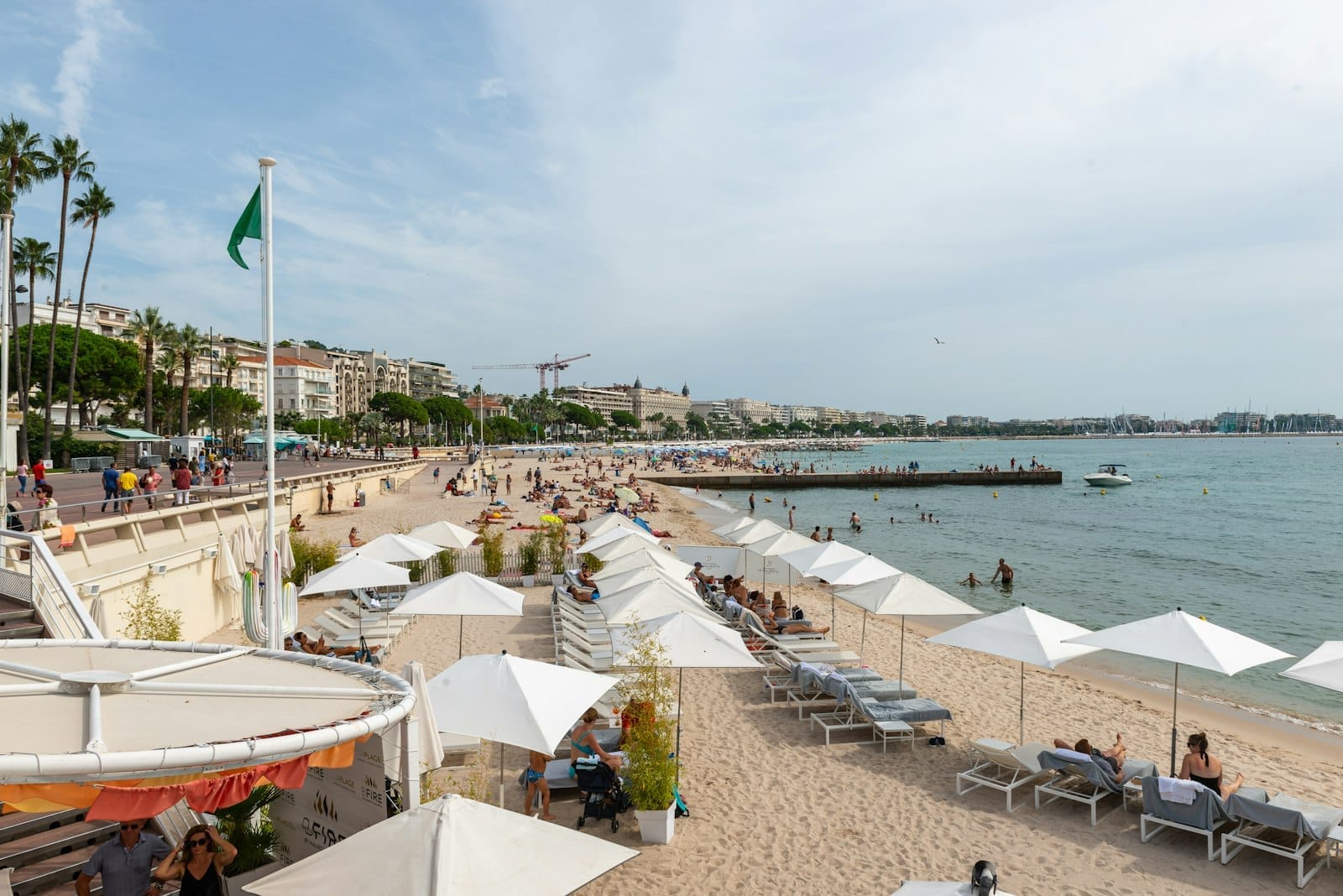
What the Croisette Beaches Actually Are
Plage de la Croisette is not a single beach but a sequence of distinct sandy stretches running for close to 3 kilometres along the Bay of Cannes. Some sections are free public beaches; many others are operated by hotels and restaurants as private concessions, where you pay for a sun lounger and parasol rather than for access to the sea itself. Together they form the defining image most visitors carry of Cannes: pale sand, blue Mediterranean water, and a backdrop of grand hotels whose facades face directly onto the shore.
The beaches sit between the promenade and the water, which means the view from the sand looking back at the city is equally striking: a continuous row of Belle Époque and Art Deco hotel fronts, palm trees, and the occasional camera crew. Out to sea, the silhouette of the Îles de Lérins sits about 15–20 minutes by ferry from the old port, giving every afternoon swim a dramatic horizon.
ℹ️ Good to know
The public beach sections are free to use at any time. You do not need to pay anything to enter the water or lay a towel on the sand at these areas. Look for signage marked 'plage publique' or check the City of Cannes tourism site for the current list of free sections before you arrive.
The Lay of the Land: From West to East
The western end of the Croisette beaches, near the Palais des Festivals, tends to be more accessible and busier with day visitors. Plage du Casino is a sheltered section at the western side of the long cove and is often described as calm for families. Further east, the beaches align with the grand hotel addresses: the Carlton, the Martinez, the Majestic. Here the private concessions dominate the frontage, with uniformed staff, colour-coded loungers, and restaurant service that continues through the afternoon.
If you want both experiences in a single afternoon, a practical approach is to use a public section for a swim, then walk the promenade to a private beach club for a drink or lunch. The promenade itself is a broad, level, paved boulevard, flat enough for wheelchairs and pushchairs along its full length. For more context on the street as a whole, see the guide to Boulevard de la Croisette.
Tickets & tours
Hand-picked options from our booking partner. Prices are indicative; availability and final rates are confirmed when you complete your booking.
Cannes, Antibes and St Paul de Vence half-day private tour
From 60 €Instant confirmationFree cancellationBoat & snorkeling trip to the Esterel Calanques from Cannes
From 75 €Instant confirmationFree cancellationCannes, Antibes and Saint Paul de Vence shared tour from Nice
From 65 €Instant confirmationFree cancellationCannes food tour with full meal
From 105 €Instant confirmationFree cancellation
How the Beach Changes Through the Day
Early morning, before 8 am, the Croisette belongs to joggers, dog walkers, and the occasional hotel guest in a robe collecting the day's first light. The sand is raked and unmarked. The sea at this hour is often glassy, the colour shifting from grey-green to turquoise as the sun climbs. The smell is salt-clean with faint traces of seaweed at the waterline. It is the best time to photograph the water with no swimmers and no beach furniture cluttering the frame.
By 10 am the private beach clubs start setting out their rows of loungers, and the first staff arrive at the beach bars. The public sections begin to fill from around 11 am onward, with the peak hour running from midday to 3 pm in summer. At full capacity on a July or August afternoon, towels overlap on the public patches and the noise level rises considerably: music from the beach clubs, conversations in French, Italian, English, and Russian, and the persistent background hum of motorboats heading for the islands.
Late afternoon, from around 5 pm, has a different character. The light turns amber, the crowds thin slightly, and the water temperature is at its highest point of the day after hours of sun. This is when many locals take their swim. Sunset from the beach looking west toward Le Suquet is genuinely worth timing a visit around, particularly in September when the sky can be theatrical.
💡 Local tip
For the most comfortable beach experience in high summer (July to August), arrive before 10 am to secure a good public spot, or book a private beach club in advance. By midday in peak season, good free positions on public sections go quickly.
Private Beach Clubs: What to Expect
Renting a sun lounger at a Croisette beach club is a different experience from using the public beach. You pay per person, per half-day or full day, and the rate typically includes the lounger, a parasol, and a towel. Prices vary widely by establishment and season; the clubs attached to five-star hotels charge significantly more than standalone beach restaurants. None of this is officially centralised, so check directly with the club before committing.
What the private clubs offer in return is real: staff who bring drinks to your lounger without you having to move, clean changing facilities, and generally softer, better-maintained sand. The beach attached to an MGallery property at 65 Boulevard de la Croisette also specifically accommodates visitors with reduced mobility, with appropriate access and equipment available. If accessibility is a concern, confirm current arrangements directly with the venue before your visit.
During the Cannes Film Festival (held each May), the private beach clubs become extensions of the festival itself: press screenings, brand activations, and invitation-only parties take over sections of the Croisette beach. If you are visiting during that period, expect significantly higher prices, reduced public access to some areas, and a very different atmosphere. The Cannes Film Festival guide covers the practical implications for visitors in detail.
Swimming Quality and Water Conditions
The Bay of Cannes is a relatively sheltered body of water, and sea conditions at the Croisette beaches are generally calm by Mediterranean standards. The sandy bottom slopes gently, making entry straightforward. In summer the water temperature typically reaches around 23 to 26 degrees Celsius, and the sea stays swimmable well into October. Jellyfish do appear periodically in late summer, as they do across the French Riviera; beach staff usually post notices when they are present in numbers.
Cannes maintains the beaches under EU bathing water quality standards. Tap water throughout France, including Cannes, meets EU drinking water standards, and the same regulatory framework applies to coastal water monitoring. That said, conditions in any specific area can vary after heavy rainfall, so check local bathing water reports if you are visiting during or after an autumn storm.
⚠️ What to skip
Autumn in Cannes (October to November) brings the heaviest rainfall of the year. After significant storms, temporary signs may indicate reduced water quality at some beach sections. The beach itself remains open, but check local advisories before swimming.
Photography and Practical Details
Photographically, the Croisette beaches reward patience more than perfect timing. The classic shot, looking east with the row of hotel facades receding into the distance and the sea in the foreground, works best in the morning light when shadows fall toward the water. The late afternoon shot looking west, with the towers of Le Suquet visible in the background, takes advantage of the warm golden-hour quality that arrives around 6 pm in summer.
For practical logistics: there are showers and foot-washing stations at intervals along the public beach sections. Bring your own beach towel if you are using a public section, as towels are only provided by private clubs. Shade is limited on the public patches; bring sun protection. Parking is possible near Port Pierre Canto at Parking Roseraie, a short walk west along the promenade to the central beach sections.
Travelling without a car, the Palmbus network serves multiple stops along Boulevard de la Croisette, making access from central Cannes straightforward. The walk from Le Suquet takes around 15 minutes on foot through the Vieux Port area, making a combined morning visit to the old quarter and an afternoon on the beach a natural pairing.
Who Will Love This Beach and Who Might Not
The Croisette beaches suit visitors who want the full Cannes experience: glamour adjacent to a working beach, good swimming, and strong people-watching. For families, the calm and sheltered Plage du Casino section at the western end is the most practical choice. Couples on a splurge who want a full day on a lounger with table service will find no shortage of options among the private clubs.
Travellers looking for a quieter, less commercial beach experience may find the Croisette too crowded and too manicured in high season. The public sections are genuinely free but also genuinely busy from June through August. For a more local, lower-key alternative, Midi Beach to the west of the city offers a different character entirely. The Cannes beaches guide compares the main options across the city to help you choose the right stretch of sand for your priorities.
Budget travellers should know that while the beach itself is free, the surrounding area is among the most expensive in Cannes. Food and drinks near the Croisette promenade carry a significant premium. For eating and drinking cost-effectively, the streets one block inland and the Marché Forville are much better value. The Cannes on a budget guide covers where to eat and drink without paying Croisette prices.
Insider Tips
- The far eastern end of the Croisette beach stretch, near Port Pierre Canto, sees fewer tourists than the sections opposite the grand hotels. The water quality and sand are the same, but you will have more room on public sections.
- If you want to experience a private beach club without the full-day cost, some establishments offer a restaurant lunch that includes use of a sun lounger for the afternoon. Check the specific club's website for current offers before visiting.
- The Croisette promenade is lined with fixed benches facing the sea, all free to use, and shaded by palm trees. On a warm day you can watch the beach and the water without paying anything or covering yourself in sand.
- September is arguably the best month to use the Croisette beaches: the sea is near its warmest (around 23 to 25 degrees Celsius), summer crowds have thinned, and private beach clubs are less likely to be fully booked.
- The ferry departures for the Îles de Lérins leave from the old port, a short walk from the western end of the Croisette beaches. An easy combination: morning on the beach, afternoon ferry to Sainte-Marguerite or Saint-Honorat.
Who Is Plage de la Croisette For?
- Visitors wanting the classic Cannes seafront experience with good swimming and iconic views
- Couples looking for a beach club day with sun-lounger service and restaurant lunch
- Families with children, particularly the calmer sheltered sections at the western end
- Photographers wanting the quintessential French Riviera hotel-and-sea shot
- Walkers combining a beach visit with the full length of the Croisette promenade
Nearby Attractions
Other things to see while in La Croisette:
- Boulevard de la Croisette
Boulevard de la Croisette is Cannes' defining address: a roughly 3-kilometre sweep of palm-shaded walkway running along the Baie de Cannes from the Vieux Port to Port Canto. Free to walk at any hour, it anchors the city's luxury hotels, private beach clubs, and the Palais des Festivals — and looks completely different depending on when you show up.
- Carré d'Or (Golden Square)
The Carré d'Or, or Golden Square, is Cannes' compact luxury district wedged between Rue d'Antibes and La Croisette. Four streets pack in high-end boutiques, aperitivo bars, fine dining, and some of the city's most sought-after nightlife, all within easy walking distance of the Palais des Festivals.
- Centre d'Art La Malmaison
Reopened in January 2025 after a major renovation, Centre d'Art La Malmaison brings contemporary art into one of the most historically layered buildings on Boulevard de la Croisette. With 600 m² of exhibition space, free rooftop terrace access during opening hours, and admission from €6.50 (€3.50 reduced), it offers real cultural depth just steps from the sea.
- Carlton Cannes, a Regent Hotel
Standing at 58 Boulevard de la Croisette since 1911, the Carlton Cannes is the most recognisable building on the French Riviera's most famous seafront boulevard. With its twin Belle Époque domes, a private beach, and a history entwined with the Cannes Film Festival, it draws visitors whether they're booked into a suite or simply curious enough to step inside the lobby.