Is Cannes Worth Visiting?
Cannes has a reputation for exclusivity that puts many travelers off before they even book a train ticket. This guide cuts through the glamour to answer the real question: what does Cannes offer the average visitor, what does it actually cost, and when should you go?
Plan and book this trip
Tools from our partner Travelpayouts help you compare flights and hotels. If you book through them, we may earn a commission at no extra cost to you.
Flights
Hotels map
TL;DR
- Cannes is absolutely worth visiting, but it rewards visitors who understand what it is and is not.
- Many of the best experiences are free: the Croisette walk, Le Suquet old town, public beaches, and the Forville market.
- Getting here is easy and cheap from Nice: the TER regional train takes about 30-35 minutes for under €10. See getting around Cannes for full transport options.
- Avoid July-August and the Film Festival in May if crowds and prices are a concern. Late May through June and September are the sweet spots.
- The private beach clubs are real, the luxury hotels are real, but so is a satisfying trip on a modest budget. Cannes on a budget is genuinely possible.
What Cannes Actually Is (and What It Isn't)
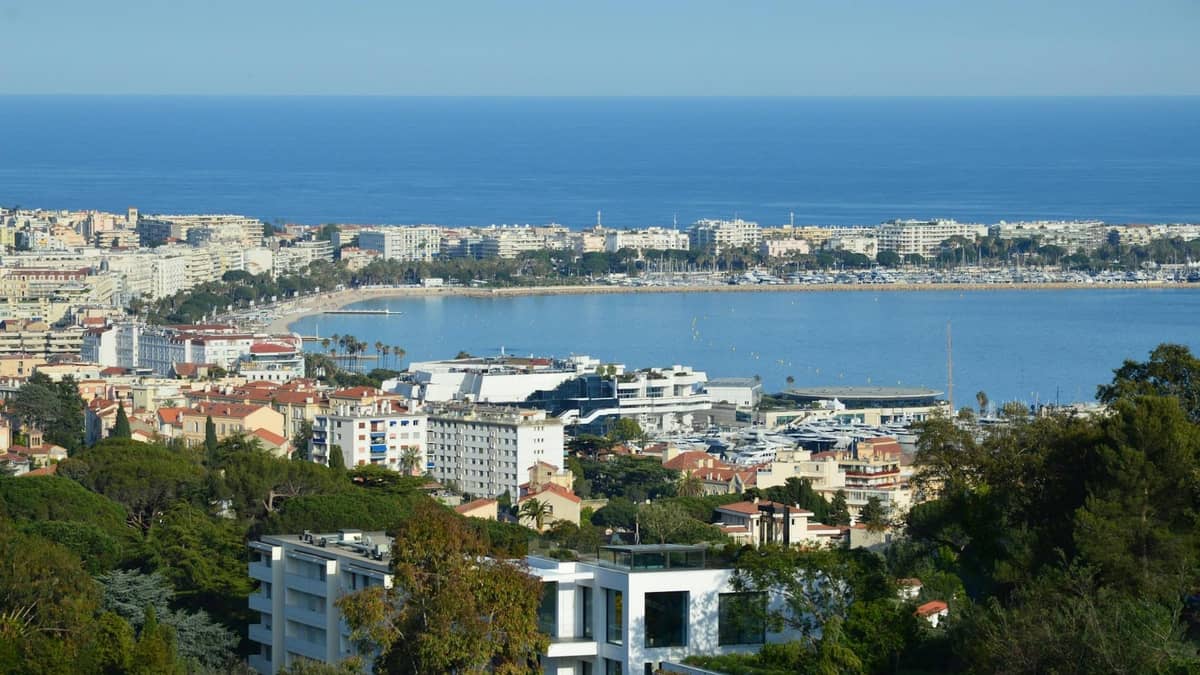
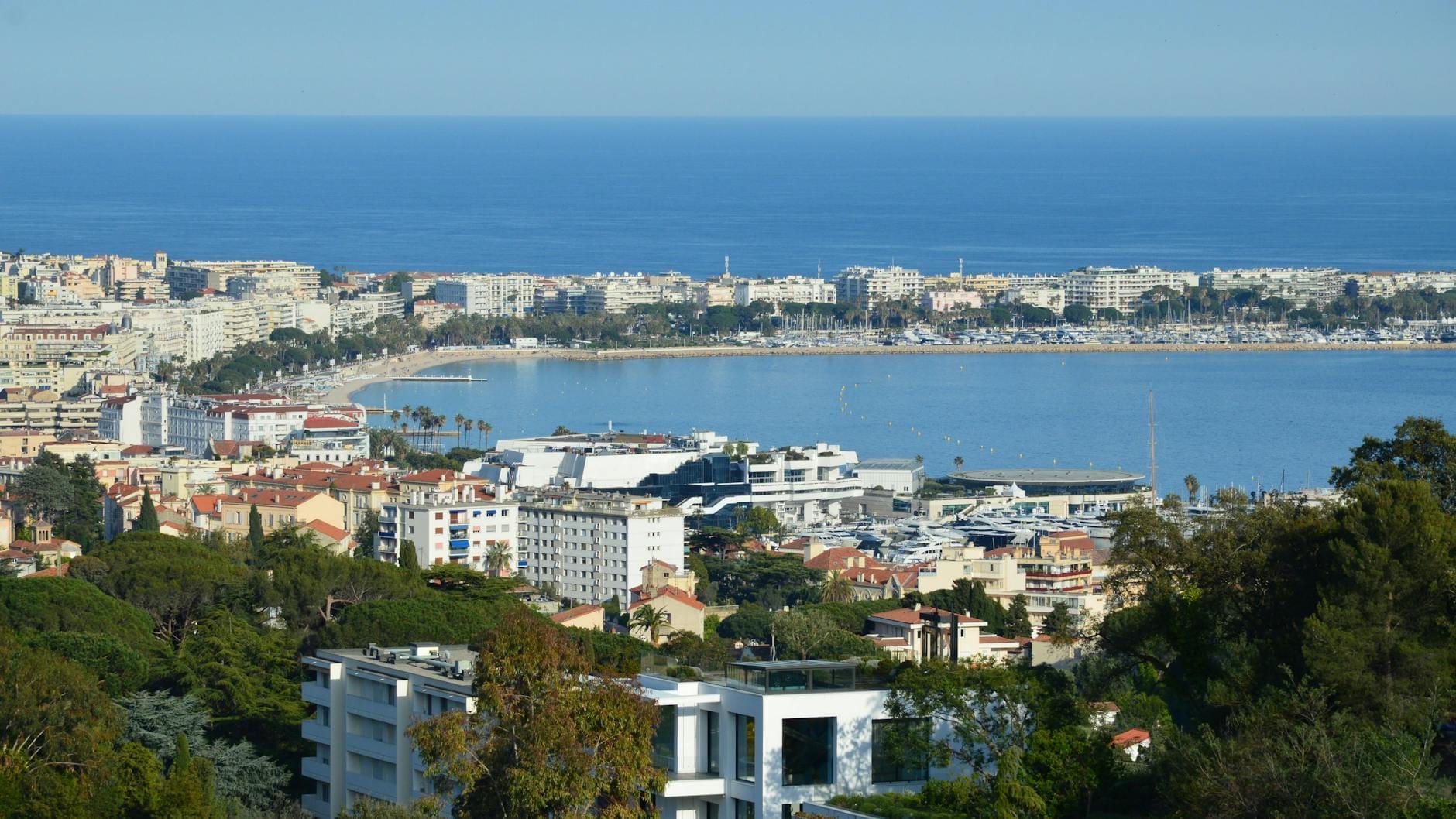
Cannes is a city of around 74,000 people on the French Riviera, in the Alpes-Maritimes department of Provence-Alpes-Côte d'Azur. It sits on the Baie de Cannes, looking out toward the Îles de Lérins, about 30 km southwest of Nice. For 11 months of the year, it functions as a prosperous coastal city with a working port, a covered market, a historic hilltop quarter, and a seafront boulevard that happens to be one of the most famous in Europe.
The Film Festival, which runs for roughly two weeks each May, amplifies everything: prices, crowds, media attention, and the sense that Cannes is off-limits unless you have an invitation and a tuxedo. That impression is misleading. The festival takes place largely within the Palais des Festivals et des Congrès and a circuit of grand hotels; the rest of the city keeps functioning normally. Outside those two weeks, and certainly outside July and August, Cannes is more approachable than its reputation suggests.
ℹ️ Good to know
Cannes is not Monaco. It doesn't have a casino-state economy or a duty-free shopping advantage. It's a French city with French prices, French food culture, and French public services, which means good bread, drinkable tap water, reliable trains, and a market open six days a week.
The Case For Visiting: What Cannes Does Well
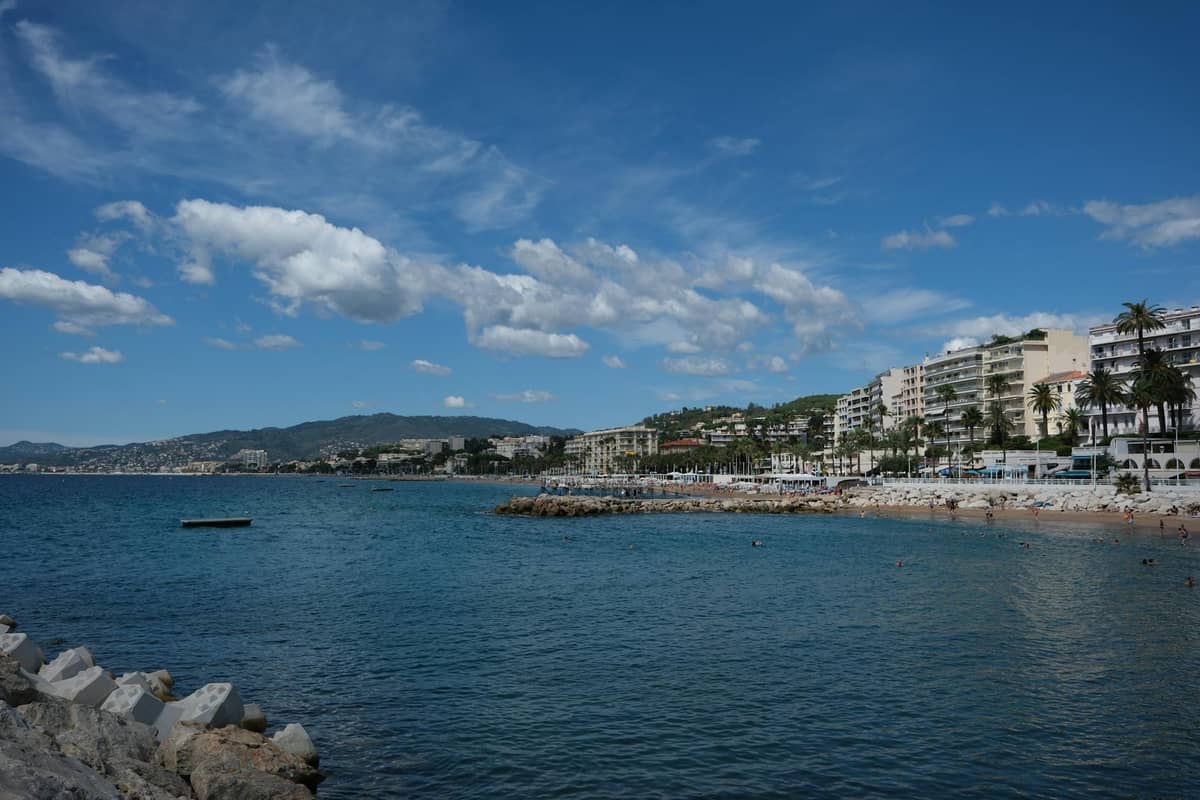
Start with La Croisette, the 2 km seafront boulevard that stretches from the Palais des Festivals to the Palm Beach Casino. Walking it costs nothing. The combination of sea views, palm trees, luxury hotel facades, and the general theatre of Riviera life is genuinely impressive, not just on postcards. The red carpet steps of the Palais des Festivals are freely accessible outside festival periods and attract a steady stream of visitors recreating the iconic pose.
The old town, Le Suquet, is the most underestimated part of Cannes. Narrow streets climb a hill above the Old Port, ending at the medieval castle complex dating back to at least the 11th century and Notre-Dame de l'Espérance, a Gothic church with panoramic views over the bay. The Tour du Suquet tower and the adjacent Musée des Explorations du Monde fill out a genuine half-day. This quarter has the best casual restaurant options in the city, away from the inflated prices along the waterfront.
Then there are the Îles de Lérins. Two main islands sit just 15-20 minutes by boat from the Vieux Port: Sainte-Marguerite, famous for the fortress where the Man in the Iron Mask was allegedly imprisoned, and Saint-Honorat, home to a working Cistercian monastery that produces wine and honey. Both islands offer pine-shaded walking paths and remarkably clear water. The contrast with the Croisette, just a short ferry ride away, is striking. If you only have one day in Cannes, including a morning on one of the islands is the single best use of your time.
- La Croisette walk Free, takes about 45 minutes end to end, best in the early morning or around sunset when light and crowds cooperate.
- Marché Forville Covered market running Tuesday to Sunday mornings for fresh produce, cheese, olives, and charcuterie. Mondays it switches to a flea market for antiques and second-hand goods.
- Le Suquet old town Free to explore, the climb takes 20 minutes from the port, and the views from the top justify every step.
- Îles de Lérins Ferry tickets typically cost around €18-20 return per adult to Sainte-Marguerite; verify current fares at the Vieux Port departure point.
- Public beaches Plage du Midi and Plage de la Bocca are free, sandy, and significantly less crowded than the private beach clubs along La Croisette.
The Drawbacks: Where Cannes Falls Short
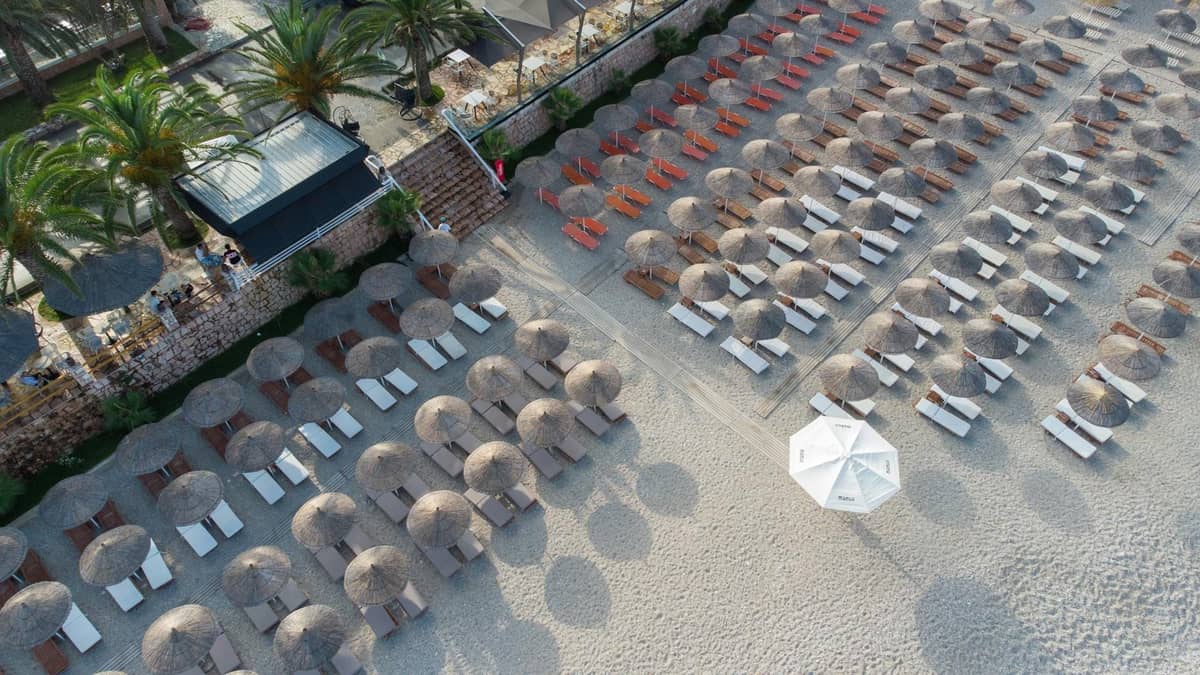
The private beach clubs along La Croisette are the most visible symbol of Cannes pricing. A sunbed at one of the better-known establishments runs around €40-90 per person per day, and that doesn't include food and drinks, which are priced accordingly. This is entirely optional, and the experience is pleasant rather than transformative, but it's worth knowing before you assume all beach access in Cannes is free.
The city centre between Rue d'Antibes and the seafront is dense with luxury shopping aimed at a specific clientele. If you're not in the market for designer goods, these streets offer window dressing but limited substance. The shopping is better and more varied along Rue d'Antibes itself, where you'll find a mix of French chains and independent shops alongside the flagship stores.
⚠️ What to skip
Accommodation prices during the Cannes Film Festival (usually two weeks in May) and throughout July and August can be two to three times higher than shoulder-season rates. If you're flexible on timing, avoiding these periods saves significant money and dramatically improves the experience of moving around the city.
Cannes also lacks a major art museum or world-class cultural institution in the traditional sense. The Musée des Explorations du Monde is interesting but modest in scope. If your primary interest is museum-hopping or high-density cultural tourism, Nice, with the Musée Matisse and the Musée National Marc Chagall, or even Monaco's Oceanographic Museum, will serve you better. Cannes is primarily about the outdoors, the food, the atmosphere, and the islands.
When to Go: Seasons and Crowds Explained
Cannes has a Mediterranean climate (Köppen Csa): hot, dry summers and mild, moderately wet winters. Average summer maximums sit around 26-28°C with minimums of about 20°C. Winter temperatures rarely drop below 3-5°C at night, with daytime highs around 13-14°C. It's a genuinely mild winter by northern European standards, which is why Cannes historically attracted visitors in the cooler months long before summer beach tourism became dominant.
- May (excluding Film Festival weeks) Warm, around 13-21°C, relatively dry, and manageable crowds outside the festival circuit. One of the best months if you can work around the festival dates.
- June Arguably the sweet spot: summer temperatures without the August crush. Averages reach the low-to-mid 20s°C. Beaches are comfortable, restaurants have capacity, and accommodation prices are reasonable.
- September Sea temperatures peak in September after a full summer of warming, making it the best month for swimming. Crowds thin out after the school return in early September. Temperatures sit around 17-25°C.
- July-August Peak season: full beaches, restaurant queues, traffic on La Croisette, and the highest prices of the year. Still enjoyable if you plan ahead, but not the most relaxed version of Cannes.
- October-April Quiet, cheaper, and genuinely pleasant for walking, dining, and day trips. Some beach infrastructure closes, but the islands remain accessible and the old town is at its most atmospheric.
✨ Pro tip
September is underrated. The sea is warmer than it was in June, the summer crowds have gone, and the Forville market is loaded with late-season produce. Many experienced Riviera visitors specifically target the first two weeks of September.
Getting There and Getting Around
Nice Côte d'Azur Airport (IATA: NCE) is the main international gateway, roughly 26 km from central Cannes by road. The regional bus line LR 81 connects the airport directly to Cannes in about 60 minutes, with fares typically around €2.10-€2.50 for a standard regional ticket. Alternatively, taking a local bus or short walk to Nice Saint-Augustin or Nice-Ville railway station and catching a TER regional train to Cannes takes about 30-40 minutes at fares around €6-9. A taxi from the airport runs approximately €80-100 depending on time of day and traffic, with no official flat rate.
Within Cannes itself, the city is compact enough that walking covers most of what matters. The Vieux Port, the Croisette, Le Suquet, and the train station are all within a 15-20 minute walk of each other. The Palmbus network handles local and intercommunal bus routes. There is no metro or tram. Uber operates in Cannes, as do licensed taxis with stands near the Palais des Festivals and the railway station.
Cannes also works exceptionally well as a day trip base or as a hub for exploring the Riviera. Monaco is reachable by train in under an hour. Antibes, Grasse, and Nice are all within about 30-45 minutes by TER train or car, depending on traffic and service. If you're spending two or more days, a two-day Cannes itinerary gives you enough time to cover the city properly and still fit in a half-day on the islands.
The Budget Question: What Does Cannes Actually Cost?
The perception that Cannes is exclusively for the wealthy is the most persistent misconception about the city. The luxury tier is real: Croisette palace hotels charge hundreds to well over a thousand euros per night, private beach clubs charge €45-90 for a sunbed, and waterfront restaurant menus reflect their locations. But this tier sits alongside a completely functional city where you can spend a full day without opening your wallet more than a few times.
The Forville market, the Marché Forville, is priced for locals buying their daily produce. Le Suquet restaurants offer three-course set menus for lunch that, in shoulder season, can come in under €20 per person. Plage du Midi and Plage de la Bocca are free public beaches with actual sand, away from the Croisette hotel strip. A one-way TER ticket from Nice to Cannes can cost under €10, often comparable to or less than a coffee at a Croisette palace bar. A dinner for two with a carafe of house wine at a neighbourhood restaurant in Le Suquet or behind Rue d'Antibes can land comfortably under €50.
💡 Local tip
Skip the Croisette restaurants for dinner. The food quality does not justify the premium. Walk five minutes inland to Rue Saint-Antoine or the backstreets of Le Suquet and you'll eat significantly better for less money.
For a full breakdown of where to save and where it's worth spending, the Cannes on a budget guide covers accommodation options, free attractions, and cost-saving transport tips in detail. For the other end of the spectrum, the where to stay in Cannes guide covers hotels across all price ranges.
FAQ
Is Cannes worth visiting if you're not attending the Film Festival?
Yes, and arguably more so. Outside the festival period, Cannes is calmer, more affordable, and easier to navigate. The core appeal, La Croisette, Le Suquet, the Îles de Lérins, the food market, and the beaches, exists independently of the festival.
How long do you need in Cannes to see the highlights?
One full day is enough for a solid overview: morning at the Forville market and Le Suquet, afternoon on the Croisette or a ferry to Sainte-Marguerite island, evening in the old town. Two days allows you to cover everything properly without rushing, including a half-day on the islands.
Is Cannes expensive compared to other French Riviera destinations?
Cannes sits in the mid-to-high range for the Riviera. It's cheaper than Monaco, comparable to Nice for everyday expenses, and more expensive than smaller towns like Antibes or Juan-les-Pins. The premium is concentrated in seafront hotels and private beach clubs; dining and transport are priced similarly to any French city.
Can you visit Cannes on a day trip from Nice?
Absolutely. The TER regional train runs between Nice-Ville and Cannes Gare in about 30-35 minutes, with tickets typically under €10 one way. Trains run frequently throughout the day, making it one of the easiest day trips on the Riviera.
What is Cannes like in winter?
Quieter, cheaper, and genuinely pleasant for mild-weather walking. Daytime temperatures average 13-14°C in winter, nights drop to 5-6°C. Most beaches are closed for sunbathing infrastructure, but the old town, markets, and islands remain accessible. It's a good option for visitors who want the Riviera atmosphere without summer crowds or prices.