Plage du Midi (Midi Beach): Cannes' Unpretentious Shoreline
Stretching along Boulevard Jean Hibert west of the Old Port, Plage du Midi is the public beach that locals actually use. No velvet ropes, no reservation fees, just sand, sea, and a view toward the Îles de Lérins. It rewards visitors who know when to show up.
Quick Facts
- Location
- Boulevard Jean Hibert, 06400 Cannes (west of the Old Port, Vieux-Port area)
- Getting There
- 10-min walk west of the Old Port; Cannes La Bocca train station to the west; Palmbus stops along the waterfront road
- Time Needed
- 2–4 hours for a beach session; open 24 hours as a public space
- Cost
- Free to enter (public beach); fee-based loungers and parasols available from private concessions in high season
- Best for
- Budget-conscious visitors, families with children, locals wanting to avoid the Croisette crowds
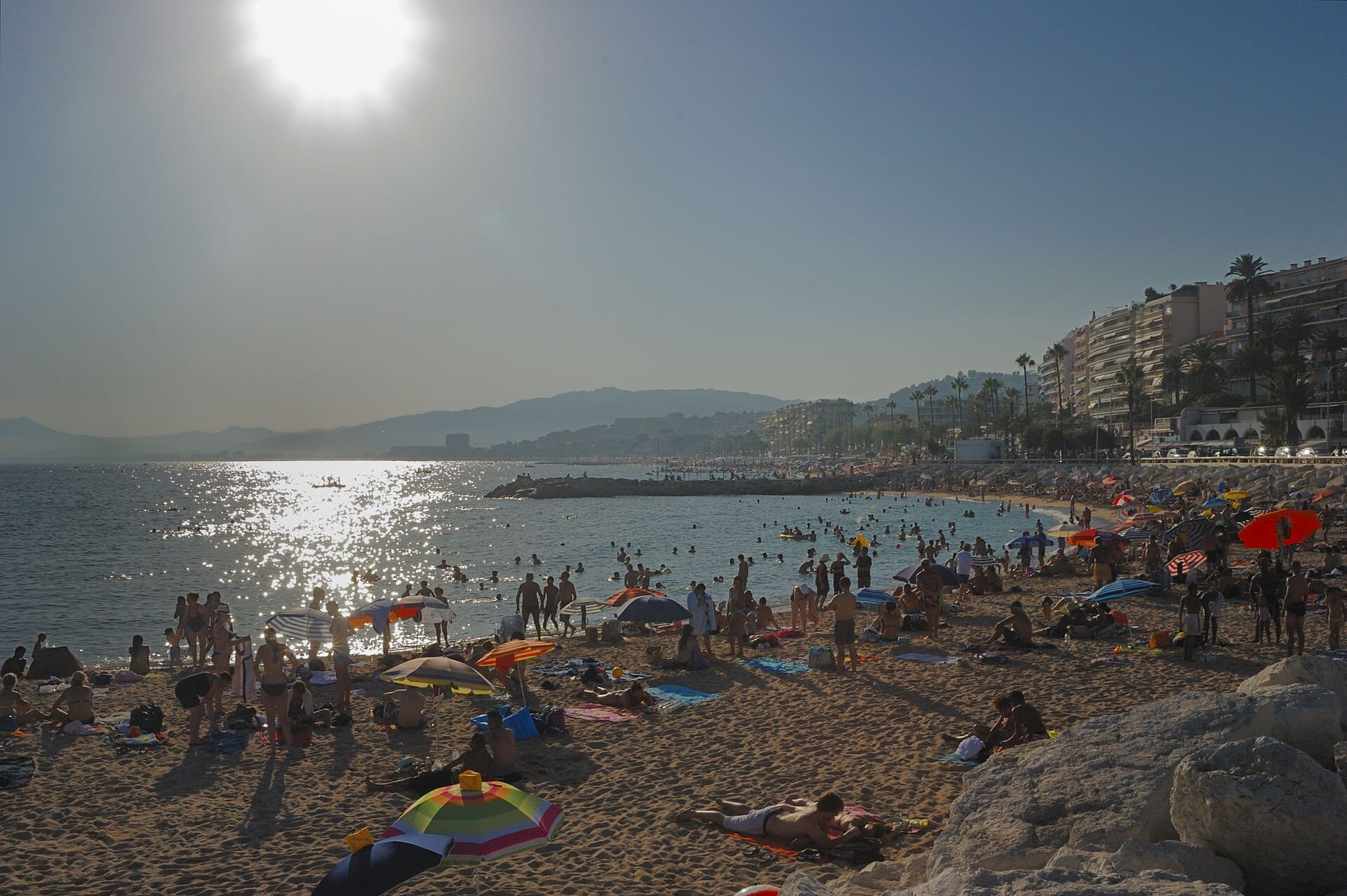
What Plage du Midi Actually Is
Plage du Midi is one of Cannes' main free public beaches, running along Boulevard Jean Hibert to the west of the Vieux-Port. While much of the city's coastal attention focuses on the glamorous stretch of the Plage de la Croisette, Midi operates on a different logic entirely. There are no hotel beach clubs cordoning off prime stretches of sand, no waiting lists for a sun lounger, and no implied pressure to order from a menu to justify your spot on the shore.
The biggest central section signposted as Plage du Midi stretches for about 700–900 metres, with some sources citing nearly 2 km when including the broader run of Midi/Boulevard du Midi beaches toward La Bocca. Either way, it is a long, wide strip of fine sand with a gradual, shallow entry into the water — practical for families and comfortable for anyone nervous about steep drop-offs. The seabed shelves gently, the water stays calm in most conditions, and the open view faces south toward the Îles de Lérins.
ℹ️ Good to know
Plage du Midi is a public beach with no admission fee. Lifeguards are typically present during high season (approximately May to September) during daytime hours. Seasonal beach concessions offering lounger and parasol rentals operate in summer, but the sand itself is always free to use.
The Experience by Time of Day
Early morning on Plage du Midi is one of the more quietly rewarding experiences in Cannes. Before 9am in summer, the beach belongs to swimmers doing proper laps parallel to shore, dog walkers (before the seasonal ban on dogs takes effect), and the occasional jogger using the promenade. The light at this hour is low and warm, hitting the water at an angle that turns the Mediterranean a luminous pale green near the shallows. The smell of salt is clean and uncontested by sunscreen.
By mid-morning in July and August, the character shifts. Families arrive with bags, windbreaks, and children who head immediately for the water. The beach fills steadily but never reaches the compressed density of the Croisette beaches in peak season. There is still room to lay a towel without negotiating territory. By midday the sun is directly overhead and the sand, which is pale and relatively fine, reflects heat upward. Shade is scarce on the public sections, so bring your own parasol or plan to be in the water.
Late afternoon, roughly from 4pm onward, is arguably the most pleasant time to visit in summer. The temperature softens, the light turns golden, and the volume of people begins to thin. The western orientation means you catch a long, slow sunset view over the water. In September, this effect is even better: warm water from summer, thinner crowds, and light that photographers would pay for.
💡 Local tip
For the best combination of comfortable temperatures and manageable crowds, visit between late May and mid-June, or in September. July and August are perfectly usable but require an early arrival to secure a good spot on the public sand.
Tickets & tours
Hand-picked options from our booking partner. Prices are indicative; availability and final rates are confirmed when you complete your booking.
Cannes, Antibes and St Paul de Vence half-day private tour
From 60 €Instant confirmationFree cancellationBoat & snorkeling trip to the Esterel Calanques from Cannes
From 75 €Instant confirmationFree cancellationCannes, Antibes and Saint Paul de Vence shared tour from Nice
From 65 €Instant confirmationFree cancellationCannes food tour with full meal
From 105 €Instant confirmationFree cancellation
How Plage du Midi Fits Into the Neighbourhood
The beach sits at the western edge of the Vieux-Port neighbourhood, which means the approach on foot from the Old Port waterfront takes around ten minutes along a flat coastal path. You pass the fishing quay and the boat moorings, then the road opens up and the beach appears on your right. It is an easy, pleasant walk with the port activity giving way to residential streets and small beach bars.
The backdrop to the beach is not the grand hotel architecture of La Croisette. Instead, you get a more ordinary Cannes: apartment blocks, a few cafes, and the kind of local commerce that serves people who actually live here year-round. The Le Suquet hill is visible to the northeast, its church tower rising above the roofline. On clear days, Sainte-Marguerite and Saint-Honorat islands sit on the horizon, close enough to feel present rather than distant.
The Water and the Sand
The Mediterranean here behaves as it should in summer: calm, warm, and clear. Sea temperatures typically rise to between 22 and 25 degrees Celsius from July through September. The gentle gradient of the seabed makes it suitable for children and for adults who prefer to wade in gradually rather than plunge. On windy days, the surface can get choppy, but there is no significant wave action under normal conditions.
The sand is pale and fine by Riviera standards, though not the powdery white you would find further south in the Mediterranean. It stays hot underfoot from late morning. Footwear for reaching the waterline is worth considering if you are sensitive to heat. The beach is raked regularly in season, and the water quality is monitored under EU standards — French tap water and bathing water quality assessments are published by the relevant health authorities.
⚠️ What to skip
In the height of summer, the public sand fills up faster than it looks like it will from the road. Arriving after 11am on a hot weekend in August means working harder to find a comfortable spot. Weekday mornings are consistently easier.
Getting There and Getting Around
The most straightforward approach is on foot from central Cannes. From the Old Port, follow the waterfront west along Quai Saint-Pierre and continue onto Boulevard Jean Hibert. The walk is flat, takes about ten minutes, and is pleasant in itself. From the train station (Gare de Cannes), the walk takes around fifteen to twenty minutes, also flat.
Palmbus, the local public transport network, runs services such as line 22 along the coast road that stop near the beach. If you are coming from the La Bocca direction, the Cannes La Bocca train station is close to the western end of this beach stretch, opening almost directly onto the waterfront. By car, parking is available along Boulevard du Midi, but in July and August this fills early and the search can be frustrating. Arriving before 9am or after 6pm solves most parking problems.
Practicalities and What to Bring
There are no entrance fees and no booking systems. The beach is a public space, technically accessible around the clock, though the meaningful operating window is during daylight hours when lifeguards are present in season. Private beach concessions rent sun loungers and parasols during high season if you prefer not to bring your own equipment.
The surrounding streets have cafes, small supermarkets, and takeaway options within a few minutes' walk. Bringing your own food and water is straightforward and common. France's tap water is safe to drink, so refilling a bottle before you leave your accommodation is sensible. Beach showers are typically available in season.
For photography, the morning light and the late-afternoon golden hour are the most rewarding windows. The Îles de Lérins in the background give any shot a sense of place — details on visiting those islands are in the Lérins Islands guide. Wide-angle compositions work well given the length of the beach and the open sky.
Who This Beach Is Not For
Visitors expecting the polished glamour of a hotel beach club on La Croisette will find Plage du Midi underwhelming. The facilities are functional rather than luxurious, the setting is residential rather than grand, and the experience is closer to an ordinary French public beach than a Riviera postcard. That is precisely the point for many people, but if the Cannes aesthetic of chilled rosé delivered to a private lounger is what you are after, you are looking at the wrong beach.
Visitors with limited mobility should note that beach access across soft sand presents the usual challenges. The promenade along Boulevard Jean Hibert is flat and navigable, but getting onto the beach itself requires crossing a stretch of sand. For a broader overview of what to plan in Cannes, the things to do in Cannes guide covers how the different beach areas compare.
Insider Tips
- The western end of the beach, closer to the La Bocca boundary, is consistently less crowded than the section nearest the Old Port. Walk an extra five minutes and you will typically find more space.
- September is statistically one of the best months to use this beach: sea temperatures remain at their summer peak while the crowds thin noticeably after the French school holidays end in late August.
- The promenade along Boulevard Jean Hibert is pleasant for an early evening walk after the beach crowd clears. Looking back east, you get a clean view of the Le Suquet hill with the last daylight catching the stone.
- If you are renting a lounger from a private concession, prices are lower at the western end of the beach compared to the section directly adjacent to the port. Ask at multiple concessions before committing.
- Weekday mornings before 10am are reliably quiet even in peak July and August. If your schedule allows flexibility, a Tuesday or Wednesday morning session is a different experience from a Saturday afternoon.
Who Is Midi Beach (Plage du Midi) For?
- Families with young children who need shallow, gentle water entry
- Budget-conscious travellers who want a genuine Mediterranean beach without concession fees
- Visitors staying near the Old Port who want a quick, walkable beach option
- Photographers looking for early-morning light on the water with the Lérins Islands as a backdrop
- Repeat visitors to Cannes who want to see how the city functions outside the Croisette circuit
Nearby Attractions
Other things to see while in Vieux Port (Old Port):
- Cannes Yacht Marina (Port Canto)
Port Pierre Canto, inaugurated in the 1960s as the first private leisure marina built in France, anchors the eastern end of La Croisette with around 600 berths and a backdrop of open sea facing the Îles de Lérins. Free to enter on foot, it rewards an easy stroll with close-up views of serious yachts, a calm promenade away from the Croisette crowds, and direct sightlines toward Sainte-Marguerite island.
- Marché Forville
Marché Forville is Cannes' principal covered food market, operating since 1934 at the base of the Le Suquet old town. Spanning 3,000 square metres, it draws local chefs, fishermen, and morning shoppers in equal measure — and remains free to enter every morning of the week in summer during market hours.
- Vieux Port Waterfront
The Vieux Port de Cannes sits at the foot of the historic Le Suquet quarter, where superyachts now moor alongside fishing boats on the same quay that opened in 1838. Free to explore at any hour, it is the working heart of Cannes and the departure point for the Lérins Islands.