Piha is Auckland's wild west coast at its most elemental: black iron-sand beaches framed by bush-covered cliffs, a surf culture that takes the ocean seriously, and a natural setting that feels genuinely remote despite being less than an hour from the city centre. It is not a resort town, and that is exactly the point.
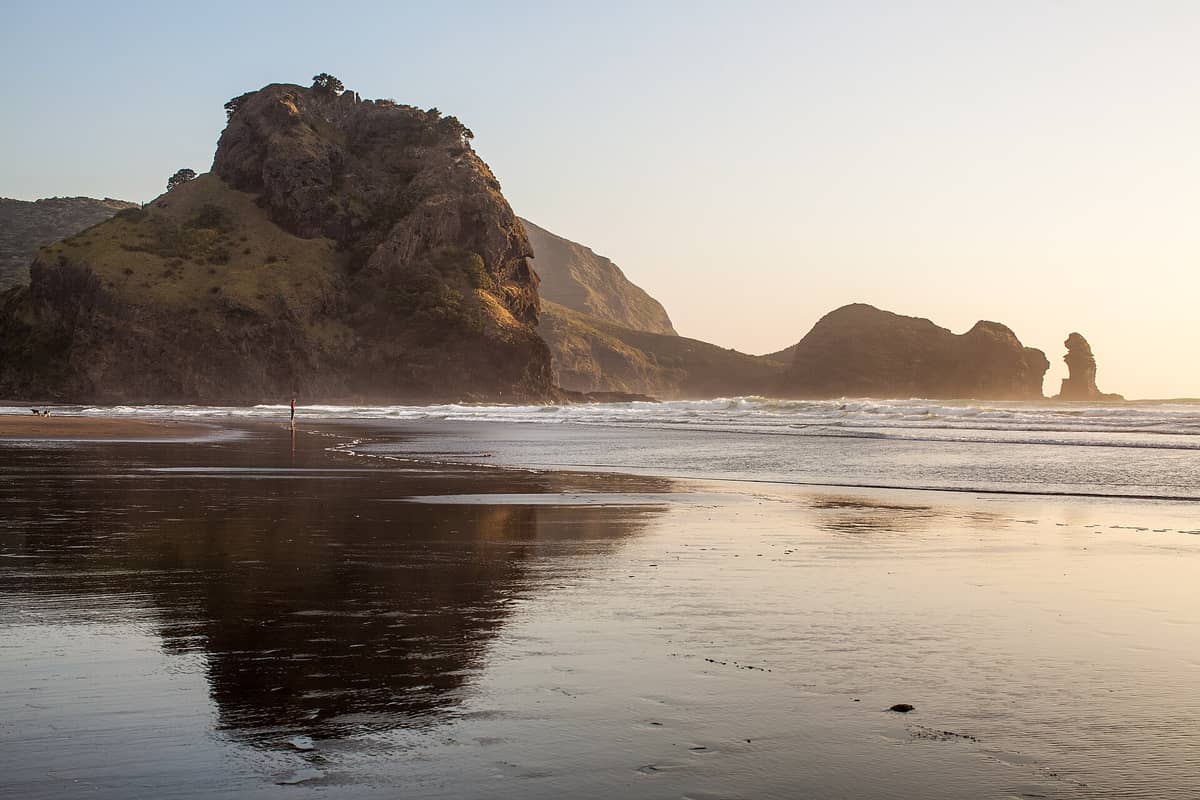
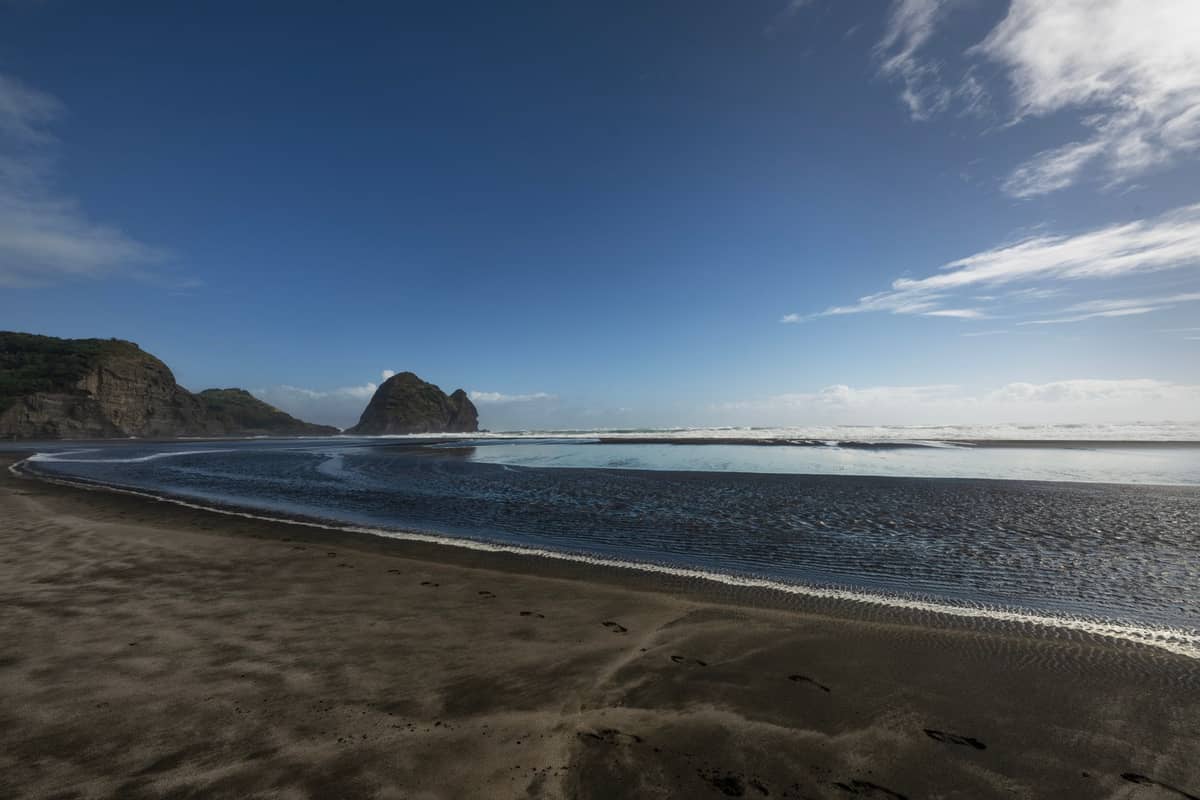
Piha sits on Auckland's west coast inside the Waitākere Ranges Regional Park, roughly 40 kilometres from the city centre but worlds apart in atmosphere. Lion Rock, a prominent coastal landmark, divides the beach into North Piha and South Piha, and the black iron-sand stretching on either side is consistently rated among New Zealand's most dramatic coastline. This is a place people come to surf, hike, and exhale.
Orientation
Piha is a small coastal settlement tucked into a valley on Auckland's Waitākere coast, enclosed on three sides by the steep, forested ridges of the Waitākere Ranges Regional Park. To get there by road, you drive west from central Auckland on the Northwestern Motorway, then south through the ranges via Scenic Drive before descending Piha Road into the valley. The full drive from the Auckland CBD takes roughly 45 to 55 minutes in normal traffic, longer on summer weekends.
The settlement itself is compact. Lion Rock, known in Māori as Te Piha, divides the main beach into North Piha and South Piha. Most visitor facilities, including the surf club, cafés, and the Piha Domain, cluster near South Piha at the bottom of Piha Road. North Piha is quieter and takes a short walk past the rock to reach. The Waitākere Ranges Regional Park surrounds the settlement on all landward sides, and several walking tracks begin directly from the beach end of the valley.
Neighbouring west coast beaches, including Karekare to the south, are accessible by unsealed roads off the main Piha route. Muriwai, another major black-sand beach and gannet colony site, lies about 30 kilometres north along the coast but requires backtracking through the ranges by road. Piha does not connect to any adjacent coastal settlement by walking track alone, so plan each destination separately.
Character & Atmosphere
Piha has a character shaped by its geography and its community. This is not a polished tourist village. The houses are mostly weatherboard baches and permanent residences tucked behind pohutukawa trees, and the pace is set by the ocean rather than any commercial agenda. The people who live here year-round tend to be surfers, artists, and people who have consciously chosen the bush-and-beach lifestyle over city convenience.
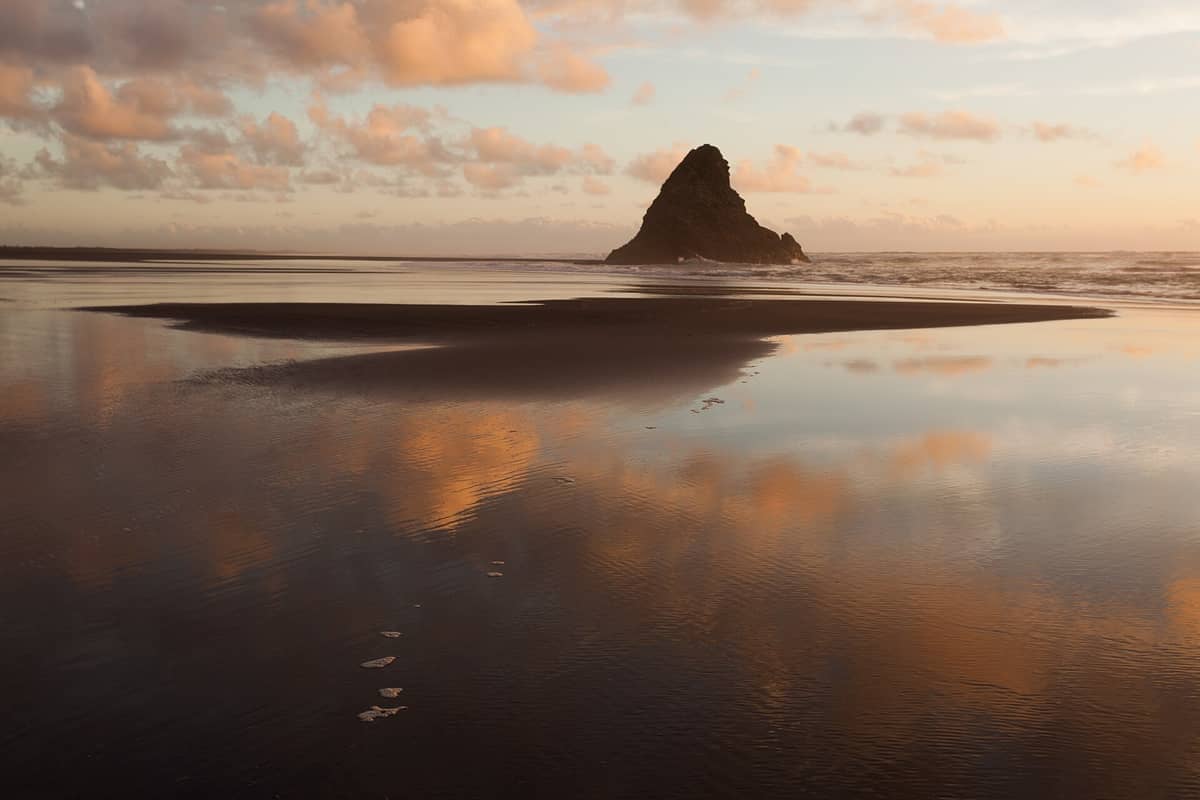
Arrive early on a weekday morning and the scene is almost elemental: the iron-sand is cool underfoot, mist sometimes sits in the valley between the ridges, and the surf breaks with a low, consistent roar. The black sand absorbs heat quickly once the sun gets up, and by midday in summer the beach is warm and the light turns silver-white off the water. On clear evenings, west-facing Piha catches a full Pacific sunset that turns the sea and the sand amber, and Lion Rock goes dark against an orange sky.
Summer weekends bring day-trippers from Auckland in volume, and the narrow Piha Road can back up significantly from the ranges into the valley. The beach itself never quite feels overcrowded in the way a typical resort beach does, partly because the surf keeps casual swimmers cautious, and partly because the terrain naturally spreads people out. By late afternoon on weekdays, even in January, the beach can feel almost private.
⚠️ What to skip
Piha's surf is powerful and the beach has strong, unpredictable rip currents. Always swim between the red-and-yellow flags patrolled by Piha Surf Life Saving Club. The lagoon in Piha Domain is not approved for swimming. If the flags are not flying, the beach is not patrolled and swimming is at your own risk.
What to See & Do
The beach is the primary draw, but reducing Piha to just a beach day undersells it considerably. Lion Rock is the first thing many visitors notice, but its summit track is closed because the rock is unstable and unsafe to use; follow all posted signage and stay outside fenced areas.
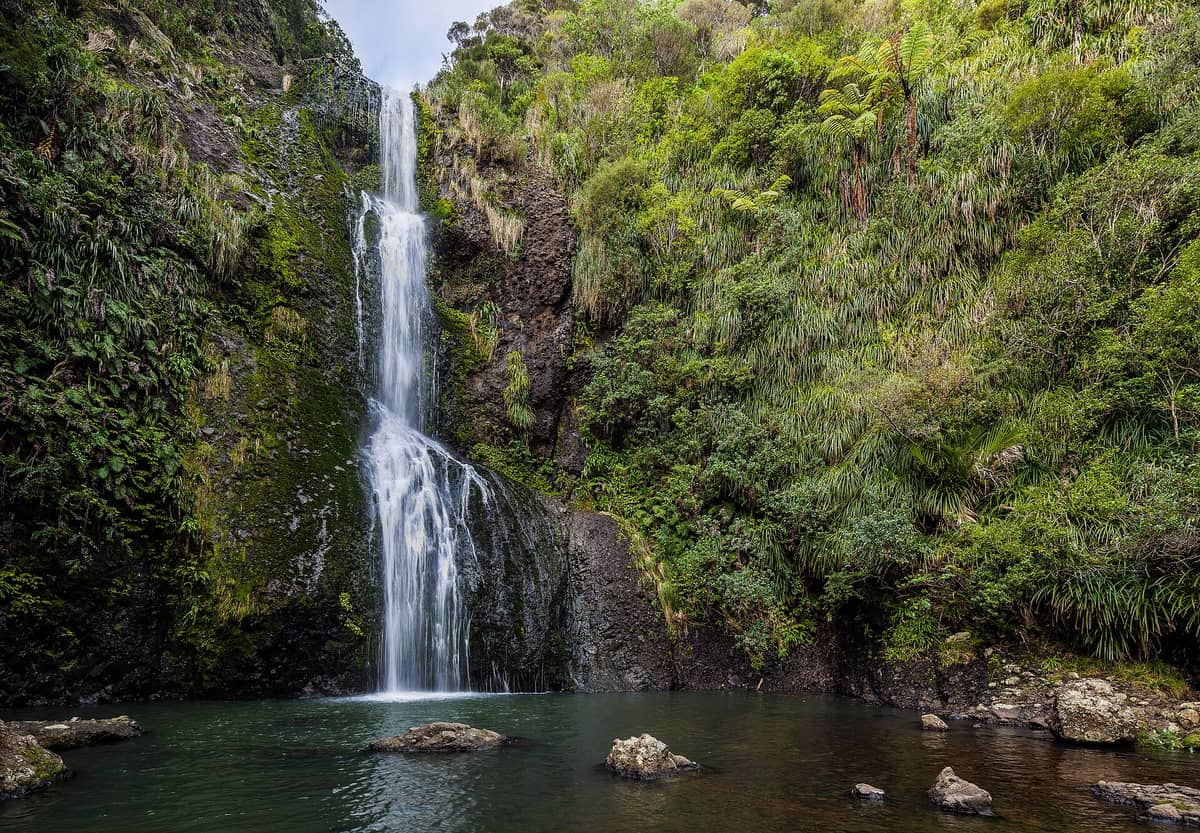
The surrounding park offers some of Auckland's most rewarding day walks. The Kitekite Falls track begins near the end of Glen Esk Road and follows a stream for roughly an hour each way through dense bush to a multi-tiered waterfall with a swimming hole at the base. It is one of the best short walks in the region. For longer routes, the park connects into a broader network of tracks through the ranges. See the best hikes in Auckland guide for trail details and difficulty ratings.
Surfing: Piha is Auckland's premier surf beach with consistent swells and a competitive local surf culture. Lessons are available through local operators for beginners; conditions suit all levels depending on the break and the swell direction.
Lion Rock: The summit track is closed because the rock is unstable; stay outside fenced areas.
Kitekite Falls walk: The out-and-back track reaches the falls, but may close temporarily after heavy rain; check Auckland Council’s current status before setting out. One of the best half-day walks accessible from the beach.
Rock pooling and coastal exploration: The lava shelves at the southern end of South Piha and around the base of Lion Rock reward exploration at low tide.
Photography: The combination of black sand, basalt formations, surf, and forest backdrop makes Piha one of the most photographically compelling beaches in New Zealand.
Piha is also the gateway to the broader west coast beach experience. Karekare Beach lies just a few kilometres south via an unsealed road and is even wilder and less visited, with a waterfall behind the beach. Further north, Muriwai Beach offers a gannet colony and a different landscape entirely. If you are based in Piha for more than a day, both are worth half-day excursions.
ℹ️ Good to know
The Waitākere Ranges Regional Park has been significantly affected by kauri dieback disease (Phytophthora agathidicida), which threatens the region's ancient kauri trees. Some tracks in the wider park are closed to prevent the spread of the disease through soil on boots. Always check track status with Auckland Council before hiking, and clean your footwear thoroughly at designated stations before and after walks.
Eating & Drinking
Piha is not a dining destination in the culinary sense. There are a handful of cafés and a general store, and the overall food scene reflects the settlement's size and character: unpretentious, functional, and occasionally very good in the way simple food at the right moment always is. Expect to find cabinet food, fish and chips, coffee, and basic groceries. Do not arrive on a Sunday evening expecting restaurant options.
The Piha store near the beach end of Piha Road serves as the community hub for supplies, and the café options along the same stretch cover breakfast and lunch well. After a morning surf or a long walk to Kitekite, sitting outside with a coffee and a toasted sandwich while sand dries on your boots is a genuinely satisfying experience. Most places close relatively early by city standards, and weekday opening hours outside of summer can be reduced.
For dinner, especially if you are staying overnight, the most practical approach is to bring supplies or to plan around what is open rather than expecting a range of evening restaurant options. The settlement has a liquor store, so stocking up for a self-catered evening at an accommodation property is a realistic and popular approach. If you want a proper restaurant dinner, Titirangi, a 20-minute drive back into the ranges, has a small dining strip that serves the surrounding community.
💡 Local tip
On hot summer days, the cafés near the beach can have significant queues from late morning through early afternoon. Arrive before 10am or after 2pm for faster service and a better chance of an outside table.
Getting There & Around
This is the most important practical section for any Piha visitor: there is no regular public bus service to Piha. Auckland Transport does not operate a scheduled route to the settlement. The only reliable way to get there is by car, by organised tour, or by shuttle service, some of which operate seasonally from central Auckland. Check current availability before relying on any specific operator.
Driving from central Auckland, the route goes west via the Northwestern Motorway (State Highway 16) to Te Atatu or Lincoln Road, then through Henderson and up into the ranges via Scenic Drive, before descending Piha Road into the valley. The total journey is around 40 kilometres and 45 to 55 minutes in good conditions. On summer weekends, Piha Road can be heavily congested in both directions, particularly between 10am and 2pm heading in and from 3pm to 6pm heading out. Leave early or leave late to avoid the worst of it. For more detail on getting around the wider city, see the getting around Auckland guide.
Parking at Piha is free but limited, concentrated near the surf club and along the main access road near the beach. In peak summer periods it fills by mid-morning. Overflow parking is available further up the valley, and a short walk down brings you to the beach. There is no shuttle service between the car parks and the beach.
If you do not have access to a car, a guided day tour from Auckland is the most practical option. Several operators offer west coast excursions that include Piha and often combine it with a stop at Muriwai Gannet Colony or Karekare. These tours pick up from central Auckland accommodation and remove the parking and navigation issues entirely. Check the Auckland west coast beaches guide for context on what each beach offers and how to combine them in a single day.
Where to Stay
Staying overnight at Piha is worth doing if you want to experience the beach at dawn or dusk without the day-tripper crowds, or if you plan to do multiple walks over two days. Accommodation is limited and books up quickly during summer and long weekends, so planning ahead is essential.
Options range from self-contained holiday houses and baches rented through booking platforms, to a small number of hosted accommodation options and a motor camp with powered and unpowered sites near the beach. The motor camp suits those who want the most direct beach access and a communal atmosphere; the private rentals suit families or groups who want more space and self-sufficiency. There are no large hotels or resort properties at Piha, and that is unlikely to change given the settlement's location inside a regional park.
Most visitors combine Piha with other west coast beaches or with a broader Auckland itinerary rather than basing themselves here for an entire trip. If you are planning your time around the city, the where to stay in Auckland guide covers the full range of central and suburban options that make Piha accessible as a day excursion.
Practical Notes
Piha's weather is shaped by its exposure to the Tasman Sea and its position at the foot of a forested valley. Conditions can shift from brilliant sunshine to heavy rain quickly, even when the Auckland CBD is clear. Always bring a layer and check the forecast before heading out. In winter, the surf can be exceptional for experienced surfers, but swimming is inadvisable and some tracks become slippery.
The beach has no permanent lifeguard presence in winter; surf patrols run on weekends and public holidays from Labour Weekend through Easter, with additional weekday patrols during the busy summer months. Outside patrol hours, the beach is unpatrolled. Respect the ocean: Piha's surf is powerful enough to catch experienced swimmers off guard, and rip currents are not always visible from shore. Respect the ocean: Piha's surf is powerful enough to catch experienced swimmers off guard, and the rip currents that run along the rock faces and beside Lion Rock are not always visible from shore.
Mobile coverage at Piha is patchy depending on your carrier, and the valley topography can cut signal entirely in parts of the settlement and on the walking tracks. Download offline maps before you leave Auckland. If you are thinking about broader west coast and adventure activities, the Auckland adventure activities guide covers surfing, hiking, and other outdoor options across the region.
No public transport: a car, tour, or shuttle is required to reach Piha.
Swim only between the flags when lifeguards are on duty; if there are no lifeguards, stay out of the water.
Check kauri dieback track closures before hiking in the wider Waitākere Ranges.
Bring cash: card facilities at some local businesses can be unreliable.
Fuel up before leaving the city; there is no petrol station at Piha.
Mobile coverage is limited in the valley; download maps before you arrive.
Summer weekend traffic on Piha Road can add 30+ minutes each way.
TL;DR
Piha is Auckland's most dramatic west coast beach: black iron-sand, powerful surf, and a setting inside the Waitākere Ranges Regional Park that rewards visitors who take it seriously.
Best for surfers, hikers, nature lovers, and anyone who wants a genuine contrast to central Auckland's urban energy.
No public transport serves Piha; a car or organised tour is required. Summer weekend traffic on Piha Road is a real consideration.
The Kitekite Falls walk is a standout non-beach activity accessible from the settlement; the Lion Rock summit track is closed.
Not ideal for travellers expecting resort facilities, evening dining options, or easy urban connectivity. Piha asks a little more of you, and rewards accordingly.
Auckland delivers serious adventure on land, sea, and from the top of a 328-metre tower. This guide covers the best adventure activities in Auckland with real pricing, practical logistics, seasonal advice, and clear warnings about what to watch out for before you book.
Auckland Airport (AKL) sits 21 km south of the city centre in Māngere. This guide covers everything from navigating arrivals to choosing the right transport option, so you can get moving the moment you land.
Auckland's event calendar runs from summer beach festivals through winter film screenings to spring heritage tours. This guide covers the major annual events, what they cost, when crowds peak, and how to plan around them — with candid notes on what's worth your time.
Auckland's food scene reflects the city it sits in: diverse, seafood-forward, and shaped by Māori, Pacific, and Asian influences alongside a confident modern New Zealand kitchen. This guide breaks down what to eat, where to eat it, and which food experiences are genuinely worth your time.
Three days is enough time to get a genuine feel for Tāmaki Makaurau Auckland — its volcanic landscape, Māori heritage, waterfront culture, and island escapes. This itinerary cuts through the noise and tells you exactly where to go, when, and why.
Auckland sits on land with deep Māori roots. This guide covers the most meaningful cultural experiences in Tāmaki Makaurau, from museum performances and waterfront heritage spaces to guided tours led by descendants of the city's founding chief. Learn what to see, what to pay, and how to engage respectfully.
Auckland's market scene spans inner-city farmers' markets, rotating suburban night markets, and rural day trips worth planning your weekend around. This guide covers the best markets in Auckland by type, location, and what to expect when you arrive.
Auckland's nightlife is more compact than its size suggests, but the quality runs deep. From waterfront cocktail bars to Karangahape Road's late-night underground, this guide covers the key precincts, practical logistics, and what to realistically expect on a night out in Tāmaki Makaurau.
Auckland has a reputation for being expensive, and that reputation is partly earned. But the city also has a surprising number of genuinely free and low-cost experiences — volcanic walks, world-class beaches, free museum entry, and excellent public markets. This guide breaks down exactly how to visit Auckland without burning through your travel fund.
Auckland's shopping scene runs from polished waterfront precincts and heritage high streets to Saturday morning farmers markets and sprawling suburban malls. This guide breaks down where to shop, when to go, and what to skip, so you spend your time and money well.
Flying is the only practical way to travel from Auckland to Queenstown, and the route is well-served by two airlines year-round. This guide covers your transport options, realistic flight costs, seasonal disruptions, and how to get oriented once you land in Queenstown.
Auckland sits on one of the world's most unusual urban landscapes: a live volcanic field with over 50 cones scattered across the city. This guide covers the most significant maunga, their cultural importance, practical access details, and what to expect when you visit.
Auckland's west coast delivers something the sheltered harbour beaches simply cannot: raw, wind-scoured black-sand shorelines, serious surf, and dramatic coastal scenery within 45 minutes of the city. This guide covers every major beach, how to get there, when to go, and how to stay safe on some of New Zealand's most powerful surf.
Auckland sits within striking distance of three distinct wine regions, each with its own character, grape varieties, and logistical quirks. This guide covers what to expect at Waiheke Island, Kumeū, and Matakana — including real transport costs, how to structure a day trip, and which cellar doors are worth your time.
Auckland delivers a surprisingly rich range of experiences for families, from world-class wildlife encounters and hands-on museums to beach days and island adventures. This guide picks the best activities for kids of all ages, with practical tips on what to expect at each stop.
Auckland sits on an isthmus between two harbours, with the Tasman Sea to the west and the Hauraki Gulf to the east, giving the city an extraordinary range of beaches within an hour of the CBD. This guide covers the best of them, from dramatic west coast surf breaks to sheltered harbour swimming spots.
Auckland sits on a volcanic field, between two harbours, and beside one of New Zealand's great forested ranges. Whether you want a 30-minute summit stroll or a full-day coastal traverse, the city delivers. These are the walks worth lacing your boots for.
Auckland punches well above its weight for museum culture. Whether you're after Māori taonga, Pacific art, colonial history, or vintage technology, the city has a collection to match. This guide covers the best museums in Auckland across every interest and budget.
Auckland sits on an isthmus surrounded by two harbours, and its parks reflect that geography in remarkable variety. This guide covers the best parks in Auckland, from volcanic cones and ancient forest to coastal reserves and formal city gardens.
Auckland is a year-round destination, but the right time to visit depends entirely on what you want to do. This guide breaks down every season, covering weather patterns, crowd levels, major events, and the practical details that generic guides skip.
Auckland sits on an isthmus studded with volcanic cones, harbour headlands, and elevated parks, making it one of the world's most view-rich cities. This guide covers the finest viewpoints across the city, from the Sky Tower's observation deck to wild clifftop lookouts, with practical advice on how to reach each one.
Auckland sits at the centre of one of the most day-trip-rich regions in the Southern Hemisphere. Whether you want a 25-minute ferry to a volcanic island or a full-day drive to Hobbiton, this guide covers logistics, costs, and practical recommendations so you can pick the right trip for your time.
Auckland is one of the most naturally dramatic cities in the world, and a surprising amount of what makes it great costs nothing. From volcanic summit walks and black-sand beaches to free art galleries and gannet colonies, here are 20 genuinely rewarding free experiences across the city and region.
Auckland sprawls across an isthmus with two harbours, dozens of suburbs, and islands in the gulf. This guide breaks down every practical way to navigate the city, from AT HOP card fares to ferry routes, rental cars, and the airport transfer options that are actually worth your time.
The Hauraki Gulf holds more than 50 islands within reach of Auckland, but not all of them suit every traveller. This guide breaks down the four main options by experience, ferry logistics, cost, and what you actually get when you arrive — so you can choose without guessing.
Hobbiton is one of New Zealand's most popular attractions, and it makes for a very doable day trip from Auckland. This guide covers every practical detail: how to get there, which tour to book, what it costs, and how to make the most of your visit.
Auckland divides opinions: some travellers race through it en route to Queenstown or the Bay of Islands, others find it one of the most rewarding cities in the Southern Hemisphere. This guide cuts through the brochure language and gives you a clear-eyed picture of what Tāmaki Makaurau Auckland actually offers, who it suits best, and what genuinely isn't worth your time.
Auckland spans two harbours, 53 volcanic cones, and one of the Pacific's most diverse cities. This guide covers the best things to do in Auckland across nature, culture, food, and island escapes — including what is worth your time and what is not.
Waiheke Island is one of Auckland's most rewarding day trips, combining world-class vineyards, sheltered beaches, and easy ferry access into a single compact island. This guide covers everything you need to know: how to get there, where to eat and drink, how to get around, and when to go.
Choosing where to stay in Auckland shapes your entire trip. This area-by-area guide covers the CBD waterfront, Ponsonby, Parnell, Devonport, and beyond — with clear assessments of who each neighbourhood suits, what to budget, and how to get around once you're there.