Waitākere Ranges Regional Park: Auckland's Ancient Rainforest Wilderness
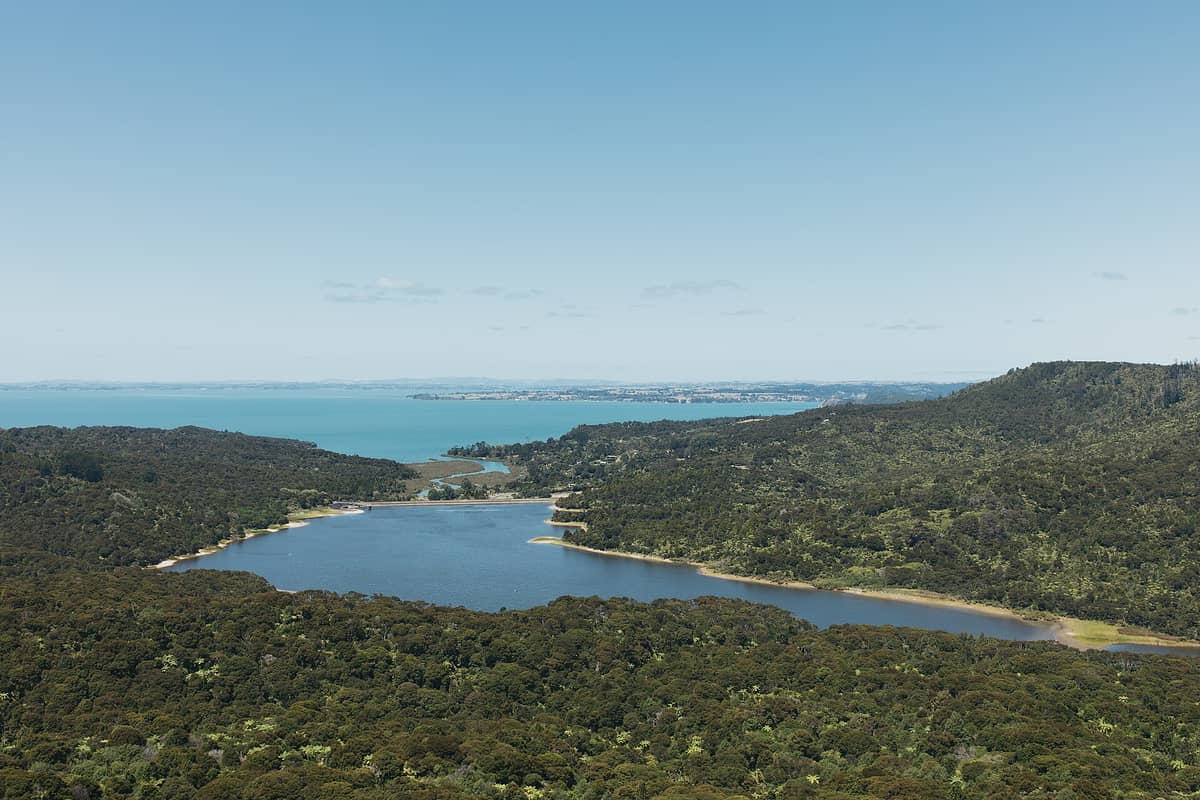
Stretching west of Auckland city, Waitākere Ranges Regional Park protects 16,000 hectares of native rainforest. Known in te reo Māori as Te Wao Nui a Tiriwa, the Great Forest of Tiriwa, this park combines dramatic ridge-top views, ancient kauri remnants, and wild black-sand surf beaches within 40 minutes of the CBD.
Quick Facts
- Location
- Arataki Visitor Centre, 300 Scenic Drive, Titirangi, Auckland (30–40 min by car from central Auckland)
- Getting There
- No direct public transport to most trailheads; a car is strongly recommended. Check Auckland Transport for bus options to Titirangi village as a starting point.
- Time Needed
- 2 hours minimum for Arataki; full day for beach + bush combination
- Cost
- No general admission fee for the park; verify any activity-specific charges with Auckland Council before visiting
- Best for
- Hikers, native bird spotters, families with older children, surfers combining bush with beach
What Is Waitākere Ranges Regional Park?
Waitākere Ranges Regional Park is one of the largest regional parks in New Zealand, covering roughly 16,000 hectares of forested ridgelines, stream-cut valleys, and coastal cliffs on Auckland's western fringe. Its Māori name, Te Wao Nui a Tiriwa, translates as the Great Forest of Tiriwa, and the phrase carries weight: this is genuine, ancient bush, not a planted reserve. The park was established in 1964 and consolidated into a single entity in 1992. Today it is managed by Auckland Council as a working conservation area, not simply a leisure park.
The ranges sit on the Waitākere Volcanic Complex, Miocene volcanic rocks formed roughly 22 to 15 million years ago. This geology produces the thin, acidic soils in which kauri and giant tree ferns thrive. The park is also the water catchment for several of Auckland's drinking water reservoirs, which is why a large portion of it is permanently closed to public access.
For first-time visitors, the Arataki Visitor Centre at 300 Scenic Drive, Titirangi is the best starting point. It sits on a ridge with panoramic views across the forest canopy to the Manukau Harbour and, on clear days, the central city. From here you can orient yourself before choosing between the park's 250-plus kilometres of tracks. If you are planning a full day that combines bush walking with a surf beach, see the Piha Beach guide for what awaits on the coast below.
⚠️ What to skip
Kauri dieback disease (Phytophthora agathidicida) has closed large sections of the park permanently to protect remaining kauri trees. Check the Auckland Council website for current track closures before you visit. Clean all footwear and equipment at the hygiene stations provided at every trailhead — this is not optional.
Arriving and Navigating the Park
The main entrance to the visitor centre is via Scenic Drive, which winds along the spine of the ranges from Titirangi village in the south to Swanson in the north. The drive itself is scenic in the literal sense: the road passes through intact canopy for much of its length, with pull-offs for views and trailheads signposted along the way. From central Auckland, allow 30 to 40 minutes in normal traffic conditions; weekend mornings are noticeably slower once you reach the Titirangi turn-off.
There is no single-gate entry point to the park. Depending on which beach or track you are targeting, you may enter from Piha Road, Bethells Road (Te Henga), Karekare Road, or multiple other access points. This means route planning matters more here than at a typical attraction. Download the Auckland Council parks map before you leave, as mobile coverage is patchy inside the ranges.
A car is effectively essential for most visits. There is no direct bus service to the major trailheads. Auckland Transport buses reach Titirangi village, from which the visitor centre is a further drive. Taxis and rideshare services to Piha or Karekare are possible but can be costly, and return trips are unreliable without pre-booking.
Tickets & tours
Live prices and dates from our booking partner. If you book, we may earn a commission at no extra cost to you.
Luggage Storage in Auckland
From 5 €Instant confirmationFree cancellationNew Zealand West Coast discovery tour
From 100 €Instant confirmationFree cancellation13,000ft skydiving experience in Auckland
From 195 €Instant confirmationFree cancellationDiscover Auckland City Tour
From 88 €Instant confirmationFree cancellation
The Arataki Visitor Centre and Surrounding Tracks
Arataki Visitor Centre is open 9am to 5pm daily, except Christmas Day and Boxing Day. Arataki Visitor Centre is open 9am to 5pm daily, except Christmas Day and Boxing Day. An 11-metre kauri pou welcomes visitors on arrival. Inside, displays cover kauri ecology, the park's hydrological role, and the ongoing effort to stop kauri dieback.
The Arataki Nature Trail begins at the visitor centre and loops through regenerating bush. The path has a metal surface and is partially accessible for visitors with limited mobility, though the council notes only limited pram access. For a short walk with genuine forest atmosphere, this trail delivers in under an hour. Tūī, kererū (New Zealand pigeon), and grey warbler are commonly heard and often seen here in the early morning, when the noise from Scenic Drive has not yet picked up.
The ridge behind the visitor centre offers one of the better elevated views in the Auckland region without requiring a volcanic cone climb. On a clear morning before cloud builds over the Manukau, you can trace the harbour's outline from the Manukau Heads all the way east toward the city. Photographers get the best light on this view in the first two hours after sunrise.
💡 Local tip
Arrive at Arataki before 9am if you want the ridgeline views without other visitors in the frame. The carpark is quiet on weekday mornings and the forest sounds are clearest then — bellbirds are more audible before road traffic begins.
Forest Character: What the Bush Actually Feels Like
Walking into the denser sections of the Waitākere ranges is a textural experience. The understorey is dense with nikau palm fronds and crown ferns, and the ground is almost always damp, even in summer. Kauri trees, where they still stand in accessible areas, are immediately recognisable: their trunks are smooth, pewter-grey cylinders that rise without branching for many metres before their canopy spreads. The oldest kauri in this forest are believed to be several hundred years old, though none of the accessible giants approach the scale of Tāne Mahuta in Northland.
The smell of the forest is distinct — a combination of wet soil, decomposing leaf litter, and the faint resinous scent of kauri gum. In heavy rain, the sound changes completely: the upper canopy catches most water and releases it in bursts, so you hear rain falling in waves rather than continuously. In summer, the canopy moderates the temperature noticeably; it is routinely several degrees cooler inside the bush than on the open ridge.
Native birds are present throughout the ranges, with density improving in areas away from the road. The park sits within the broader network of West Auckland wild spaces that includes Bethells Beach (Te Henga) and the Waitākere coast. If birdwatching is a priority, the quieter northern sections of the ranges near Te Henga Road tend to have less foot traffic and consequently calmer wildlife.
The Coastal Fringe: Beaches Below the Ranges
The western edge of the park drops sharply to a coastline of black ironsand beaches backed by high cliffs. These beaches are not resort beaches: the surf can be powerful and the rips are real. Piha, the most well-known, has a surf lifesaving club and is patrolled in summer. Karekare and Bethells are wilder and almost entirely unpatrolled. The golden rule is to swim only between the flags where they exist, and to check surf conditions before leaving Auckland.
The drive down to the coast from Scenic Drive takes you from temperate forest into an entirely different landscape in under 20 minutes. The road descends through dense canopy, opens briefly at a ridge, and then narrows as it approaches the valley floors. For a detailed breakdown of what to expect at the most visited coastal access point, the Piha Beach page covers tide conditions, parking, and the Lion Rock walk in detail.
Karekare Beach, reached via its own road off Piha Road, is significantly quieter and was the filming location for Jane Campion's 1993 film The Piano. Its waterfall, Karekare Falls, is a short walk from the carpark. For another notable waterfall within the broader West Auckland area, Kitekite Falls at Piha is accessible via a well-maintained track and suits families.
Practical Walkthrough: Planning Your Visit
The Arataki car park is open 6am to 9pm during daylight saving time (roughly late September to early April) and 6am to 7pm outside daylight saving. These hours apply to this car park; check access details for your destination before setting out.
Wear sturdy footwear with grip. Many tracks become slick after rain, and the clay-heavy soils in lower-elevation areas turn treacherous quickly. Bring water — there are no reliable water sources on most tracks, and Arataki's facilities are the only guaranteed option. A waterproof layer is advisable year-round; the ranges generate their own cloud cover and afternoon showers can appear without much warning.
The park falls within the broader West Coast beach and bush corridor that is one of Auckland's most rewarding day-trip options. Combining Arataki in the morning with a beach afternoon is achievable in a single day. For structured day-trip planning, the Auckland West Coast beaches guide covers the full coastal strip from Muriwai south to Whatipu.
Who Should Reconsider This Visit
Visitors expecting manicured trails, cafés at trailheads, or reliable mobile connectivity will be disappointed. This is a working conservation landscape with genuine hazards: steep tracks, changeable weather, kauri dieback closures that can render a planned route impassable, and beaches that are actively dangerous for non-swimmers. It is not an attraction in the theme-park sense.
Travellers without a car who have only a day in Auckland should weigh whether the logistical effort justifies the experience relative to more accessible green spaces. The Auckland Domain, Cornwall Park, and the volcanic cones offer nature within the city. But for anyone who can drive and has a full day spare, the ranges offer something those urban parks cannot match: genuine wilderness at the city's edge.
Families with very young children should note that the Arataki Nature Trail is the only pram-accessible option, and even this is limited. Most tracks require confident walkers. For family-friendly park options closer to the city, Cornwall Park and Auckland with kids offer alternatives suited to all ages.
Insider Tips
- Clean your boots at the hygiene stations every time you move between trailheads within the park, not just on arrival — kauri dieback spores travel in soil clinging to footwear, and the stations exist for this reason.
- The Scenic Drive between Titirangi and Swanson is worth driving end-to-end even if you do not stop for a long walk — it takes around 45 minutes and gives a strong sense of the park's scale and terrain before you commit to a specific area.
- Check Auckland Council's track closure map the day before you visit, not weeks ahead — closures change as new kauri dieback sites are identified, and a track that was open when you planned your trip may not be open when you arrive.
- For the clearest ridge views from Arataki, aim to arrive on a weekday morning between May and August when the air is cool and the Manukau Harbour horizon tends to be sharpest. Summer haze reduces the view significantly by mid-morning.
- The Waitākere Ranges Protection Society (waitakereranges.org.nz) publishes updated information on conservation events and volunteer planting days — a way to engage with the ranges at a level most short-term visitors never access.
Who Is Waitākere Ranges Regional Park For?
- Hikers who want proper native bush rather than urban green spaces
- West Coast beach-goers using the ranges as a scenic route to Piha or Karekare
- Native bird and ecology enthusiasts with time to walk quietly and slowly
- Photographers seeking ridgeline forest and coastal cliff compositions
- Travellers with a full day spare who have a car and want something genuinely wild within the Auckland region
Nearby Attractions
Other things to see while in Piha:
- Karekare Beach
Karekare Beach sits inside the Waitākere Ranges Regional Park, about an hour's drive from central Auckland. This narrow, black-sand beach backed by forest-covered cliffs is free to visit, demands a little effort to reach, and rewards those who make the trip with one of the most striking coastal settings in the Auckland region.
- Kitekite Falls
Kitekite Falls drops 40 metres into a rock pool at the edge of the Waitākere Ranges, just inland from Piha Beach. entry is free. Combine it with a beach visit for one of the most rewarding half-days on Auckland's West Coast.
- Piha Beach
Piha Beach sits on Auckland's Waitākere coast, about 40 minutes from the city, where black ironsand meets the Tasman Sea with relentless force. Dominated by the 101-metre volcanic monolith Lion Rock, it is the kind of place that makes you feel small. Free to visit, dramatic in any weather, and deeply connected to Māori history, Piha is unlike anything else within reach of a major New Zealand city.
Planning a trip? Discover personalized activities with the Nomado app.