Cornwall Park: Auckland's Grandest Green Space
Spread across 172 hectares in Epsom, Cornwall Park is one of Auckland's most generous public gifts, donated in 1901 by settler merchant Sir John Logan Campbell. Free to enter and open daily, it combines pastoral landscapes, a volcanic landmark, resident farm animals, and accessible walking tracks that work for everyone from toddlers to serious hikers.
Quick Facts
- Location
- Green Lane West, Epsom, Auckland
- Getting There
- Bus stops on Green Lane West and Manukau Road; check Auckland Transport for current routes
- Time Needed
- 1.5 to 3 hours depending on whether you climb Maungakiekie
- Cost
- Free entry
- Best for
- Families, walkers, picnickers, and anyone wanting city views without a crowd
- Official website
- cornwallpark.co.nz
What Cornwall Park Is
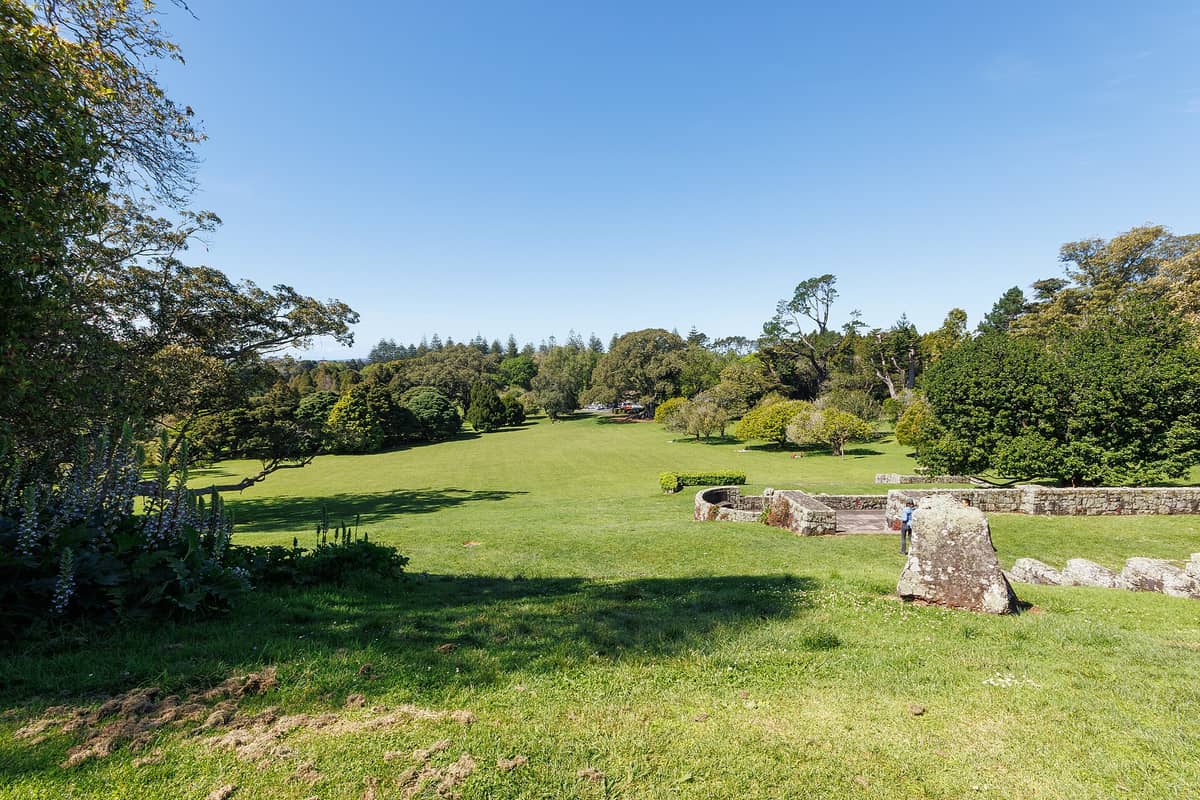
Cornwall Park is a 172-hectare public park in Epsom, roughly four kilometres south of Auckland's city centre. It wraps around the volcanic cone of Maungakiekie, also known as One Tree Hill, and manages to feel genuinely rural while sitting inside a major metropolitan area. Sheep and cattle graze on the grassy slopes, oaks and pohutukawa line the carriageways, and a working orchard survives from an earlier era of the estate.
The park was named for the Duke and Duchess of Cornwall and York during their 1901 visit to New Zealand. Scottish-born merchant and early Auckland settler Sir John Logan Campbell gifted the land that year, with the condition that it remain free for the public to enjoy. It officially opened on 26 August 1903, and that founding principle is still intact today: no entry fee, no booking required.
ℹ️ Good to know
Gates open daily at 7 am and close at 7 pm. Vehicles left inside after closing will be locked in. Foot access may differ, but plan your visit around those hours to be safe.
The Landscape: Pastoral, Volcanic, and Surprisingly Quiet
The first thing most visitors notice is the sound, or rather the relative absence of it. Traffic noise drops off as you move away from Green Lane West, replaced by birdsong, grazing animals, and the crunch of gravel underfoot. The park's interior road loops around the volcanic cone, passing stands of mature trees that provide dense shade in summer and a skeletal, moody quality in winter.
The slopes are genuinely pastoral. Heritage-breed sheep and cattle move across the grass in small clusters, and the sight of livestock grazing within a city of 1.6 million people remains one of those small Auckland pleasures that never quite becomes ordinary. The eastern side of the park is flatter and more open, which also makes it the more accessible section for people with mobility considerations.
A working orchard and farm buildings occupy part of the estate, relics of the property's earlier agricultural use. They add texture to what might otherwise be a conventional city park, grounding Cornwall Park in a specific agricultural history rather than presenting a manicured, abstract green space.
Tickets & tours
Live prices and dates from our booking partner. If you book, we may earn a commission at no extra cost to you.
Luggage Storage in Auckland
From 5 €Instant confirmationFree cancellationNew Zealand West Coast discovery tour
From 100 €Instant confirmationFree cancellation13,000ft skydiving experience in Auckland
From 195 €Instant confirmationFree cancellationDiscover Auckland City Tour
From 88 €Instant confirmationFree cancellation
Maungakiekie: The Volcanic Core
At the heart of the park sits Maungakiekie, the volcanic cone that gives this place its cultural and topographical weight. Maungakiekie translates roughly to 'the mountain of the kiekie plant', and it was one of the most heavily fortified Māori pā sites in the region before European colonisation. The terracing from those pā remains visible on the slopes today, etched into the cone in concentric rings that trace the outlines of where thousands of people once lived.
From the summit, on a clear day, you can see across the Hauraki Gulf to Rangitoto Island, south toward the Manukau Harbour, and across the full arc of the Auckland isthmus. The perspective makes the narrow strip of land between two harbours suddenly obvious in a way that a map never quite conveys. For a broader look at Auckland's volcanic landscape, the Auckland volcanic cones guide explains the geology and significance of each cone in the field.
The track to the summit is a moderate climb on a formed path. It takes around 20 to 30 minutes from the base and is manageable for most people in reasonable health. Wear shoes with some grip as the path can be slippery after rain, which in Auckland can happen at almost any time of year.
💡 Local tip
Arrive before 9 am on weekday mornings if you want the summit largely to yourself. Weekend mornings draw families and joggers from around 8 am. The summit is most photogenic in the hour after sunrise when the light sits low across the terraced slopes.
How the Park Changes Through the Day
Early mornings in Cornwall Park have a contemplative quality. Dog walkers work the perimeter paths before 8 am, and joggers use the internal road loop as a training circuit. The light on the volcanic slopes at that hour is worth getting up for, particularly in autumn when the exotic trees add warm colour to the scene.
By late morning on weekends, the park shifts into family territory. Picnic blankets appear under the oaks, children run toward the grazing animals with obvious intent, and the car parks fill steadily. This is still a large enough space that it absorbs crowds well, but the sensation of having the park to yourself disappears by 11 am on a sunny Saturday.
Weekday afternoons are reliably quieter, especially in winter. Auckland's temperate maritime climate means even July and August deliver usable outdoor days, though the grass is damp and the orchard paths can be muddy. Bring a layer; the cone creates its own wind patterns and the summit can be noticeably cooler than the flat ground below.
Getting There and Getting Around
The main vehicle entrance is on Green Lane West, with a second entrance at Kenneth Myers Gate on Manukau Road. Bus stops are located on both roads; check Auckland Transport's journey planner before your visit as routes and timetables change periodically. The park is not particularly well-served by frequent public transport, so many visitors arrive by car or rideshare.
From central Auckland, the park is about 10 minutes by car in light traffic, longer during peak hours. It sits close to One Tree Hill, which occupies the adjacent Domain and shares the volcanic cone. The two spaces are connected and many visitors explore both in a single outing.
Inside the park, the internal road loop is open to slow-moving vehicles and is also suitable for walking and cycling. The eastern side has the most level ground and is the most accessible area for people using mobility aids or pushing strollers. The park's own map marks disabled access points; download it from the official website before arriving.
⚠️ What to skip
The park's internal roads are shared between pedestrians, cyclists, and vehicles. Keep to the left and watch for cars, especially on the blind curves near the orchard section.
History and Cultural Significance
Long before Campbell arrived, Maungakiekie was one of the most significant sites in the Auckland isthmus. The pā that occupied the cone was among the largest in the country, with an estimated population that some historical accounts place in the thousands. The visible terracing and earthworks are among the best-preserved pā remnants in the region, and they deserve more attention than most visitors give them.
Campbell's decision to gift the land was shaped partly by his long association with the site and partly by a desire to make amends for what he perceived as the losses New Zealand's indigenous people had suffered. The park sits within the broader context of Auckland's Māori history, which the Auckland Māori culture guide explores in more depth.
Campbell himself is buried on the summit of Maungakiekie, near the obelisk that marks the cone. His tomb is modest and easy to miss on the way up. It adds a biographical dimension to the climb that the park's pastoral surroundings do not immediately suggest.
What to Bring and Practical Considerations
Cornwall Park is a working park with animals and weather-exposed paths. Closed-toe shoes with some grip are sensible year-round. The park has toilets near the main entrance area, the Cornwall Park Cafe, and water fountains at several points. Auckland's weather can shift within a single morning, so a light waterproof layer is worth carrying regardless of the forecast.
Photography works well here at any time of day, though the combination of pastoral scenes, volcanic topography, and city skyline makes morning and late afternoon the most rewarding windows. If you're building an itinerary around outdoor Auckland experiences, the best parks in Auckland guide and the best views in Auckland guide both include Cornwall Park alongside other options worth comparing.
Dogs are welcome on a leash but must be kept on a lead at all times and are excluded from signposted areas during lambing and calving. This is enforced, and for good reason: the animals are genuine farm stock, not decorative features. The park's visitor information page confirms this policy.
Who Might Not Enjoy This
Visitors looking for an immersive cultural experience with formal interpretation will find Cornwall Park light on explanation. There are some signage panels, but the pā terracing and archaeological significance of the cone are not prominently explained on-site. People hoping to understand the deeper Māori history of Maungakiekie may need to do additional reading before or after the visit.
Travellers on very tight schedules who are trying to see the entire city in two or three days may find Cornwall Park a lower priority than the waterfront, the Sky Tower, or closer-in green spaces. It is not a compact attraction you can absorb in 30 minutes. The park rewards slow exploration, and if you are not in that frame of mind on a given day, it is fair to skip it.
Insider Tips
- The Cornwall Park Cafe is a genuinely pleasant spot for coffee after a morning walk, but it draws queues on weekend mornings. Arrive before 9 am or after 11 am to avoid the peak.
- The pā terracing on the northern and western slopes of Maungakiekie is easiest to read from the summit looking down, not from the base looking up. Take your time at the top and scan the cone rather than just the horizon.
- Autumn (March to May) is an underrated time to visit. The park's exotic deciduous trees turn gold and copper, the summer crowds have thinned, and the light is lower and warmer through the day.
- If you want a circuit walk that takes in both Cornwall Park and the surrounding Domain, plan for about two hours at a relaxed pace. The two areas connect and the transition between them is easy to navigate on foot.
- The internal road loop is a popular running circuit for local athletes. If you plan to walk it, weekday mornings are quieter than weekend mornings, when organised run groups sometimes use the same route.
Who Is Cornwall Park For?
- Families with young children who want open space and farm animals within easy reach of central Auckland
- History-interested visitors who want to see authentic pā terracing from one of Auckland's most significant pre-European sites
- Walkers and joggers looking for a varied circuit that includes both flat ground and a proper volcanic climb
- Photographers who want pastoral and urban elements in the same frame
- Travellers who want to understand Auckland's isthmus geography from an elevated vantage point without paying for a paid attraction
Nearby Attractions
Combine your visit with:
- Auckland Botanic Gardens
Spread across 64 hectares in Manurewa, the Auckland Botanic Gardens offer free entry every day of the year, with themed garden collections, 10 hectares of native forest, and a visitor centre on site. It sits south of the city centre and rewards a longer visit than most people initially plan for.
- Auckland Zoo
Auckland Zoo has been part of the city's fabric since 1922, sitting in the Western Springs precinct with a collection that spans native New Zealand wildlife and international species. This guide covers everything from ticket prices and transit options to the best time of day to arrive and which exhibits deliver the most.
- Bastion Point (Takaparawhau)
Takaparawhau, known widely as Bastion Point, is a grassy headland in Ōrākei where Māori history, colonial conflict, and sweeping Waitematā Harbour views converge. It costs nothing to visit, carries centuries of significance, and rewards visitors who take time to understand what they are standing on.
- Bethells Beach (Te Henga)
Bethells Beach, officially Te Henga (Bethells Beach), is a raw, dramatic stretch of black-sand coastline about 45 minutes west of central Auckland. With rolling dunes, a freshwater lagoon, strong surf, and zero phone coverage, it delivers a genuine wilderness experience rare for a city of 1.6 million people.
Planning a trip? Discover personalized activities with the Nomado app.