Auckland Botanic Gardens: What to Expect Before You Go
Spread across 64 hectares in Manurewa, the Auckland Botanic Gardens offer free entry every day of the year, with themed garden collections, 10 hectares of native forest, and a visitor centre on site. It sits south of the city centre and rewards a longer visit than most people initially plan for.
Quick Facts
- Location
- 102 Hill Road, Manurewa, Auckland (approx. 25 km south of the CBD)
- Getting There
- Train to Manukau or Manurewa, then check Auckland Transport for the current bus route to the Gardens
- Time Needed
- 2–4 hours; longer if you explore the native forest trails
- Cost
- Free entry; parking is also free
- Best for
- Families, garden enthusiasts, photographers, and anyone wanting open space without a price tag
- Official website
- www.aucklandbotanicgardens.co.nz
What the Auckland Botanic Gardens Actually Are
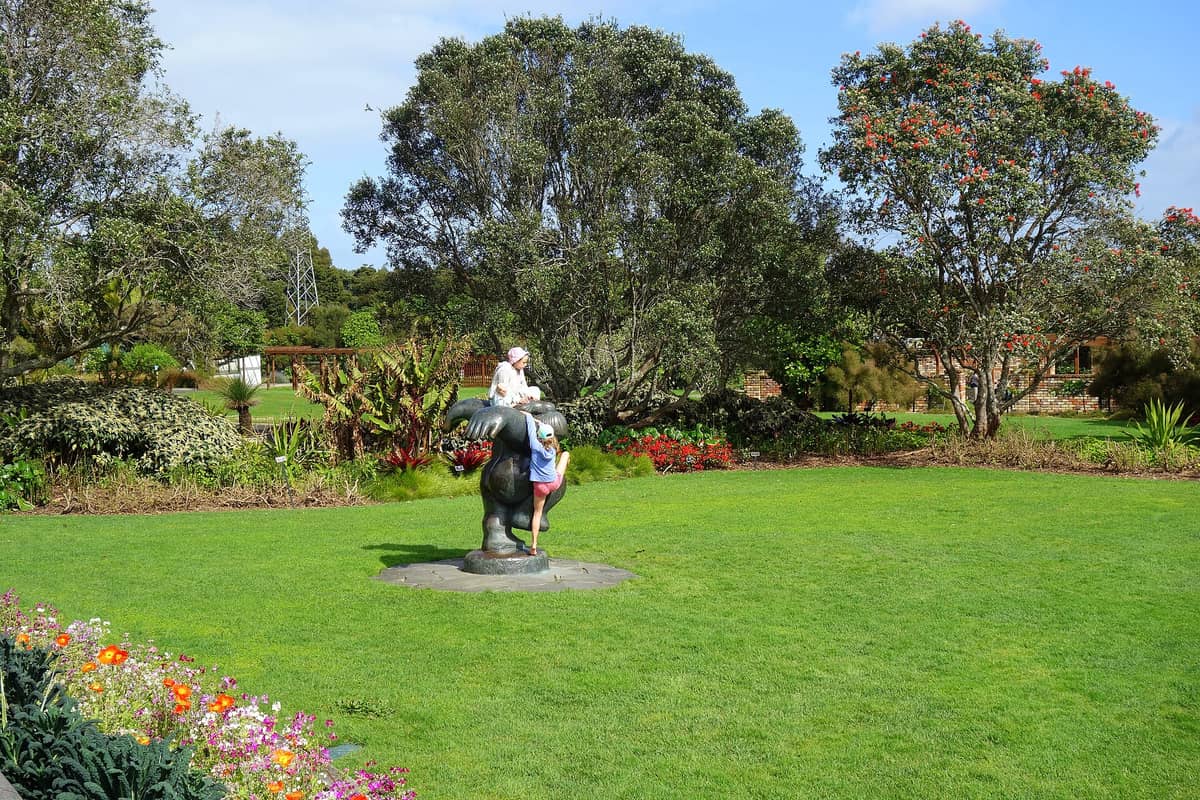
The Auckland Botanic Gardens opened to the public on 23 February 1982 and have grown into one of the largest free public green spaces in the Auckland region. At 64 hectares, the site includes themed garden collections, open lawns, structured plantings, and 10 hectares of regenerating native forest. It sits in Manurewa, a southern suburb that most city-centre visitors pass through on the Southern Motorway without stopping.
This is not a manicured showpiece garden designed for a single Instagram backdrop. The space is wide enough that you can walk for 40 minutes without retracing your steps, and varied enough that a gardener, a toddler, and a trail runner can each find something relevant. The scale takes visitors by surprise. People expecting a compact ornamental garden often spend considerably longer than planned.
ℹ️ Good to know
Opening hours vary by season. In summer (October–March), the gardens are open daily 6:30am–8pm. In winter (April–September), they close at 6pm. The Huakaiwaka Visitor Centre operates 8am–4:30pm daily. The gardens stay open on Christmas Day; the Visitor Centre and café do not.
How the Gardens Feel at Different Times of Day
Early morning, before 8am, is the quietest window. The car park is nearly empty, the light is low and directional, and the only sounds are birdsong from the native forest section and the occasional jogger on the perimeter path. The dew on the grass stays until 9am or so on cool mornings, and the rose garden, when roses are in season, carries a scent that disappears once the sun fully rises and foot traffic picks up.
Midmorning on weekdays, from about 9:30am to noon, is the domain of school groups and pushchair-walking parents. The paths around the children's garden and the sensory garden get noticeably busier. Weekend afternoons from November through February bring picnickers and families to the central lawns, and the café queue at the Visitor Centre can stretch out the door by midday. If you are sensitive to crowds or want a slower pace, aim for a weekday morning or late afternoon on any day.
Late afternoon in summer, from about 5pm onward, has a distinct character. The light turns golden across the open grass areas, and the extended opening hours until 8pm mean the gardens are far less crowded than they were three hours earlier. Dog walkers and local residents on evening walks dominate this hour. It feels less like a tourist attraction and more like a neighbourhood park that happens to be exceptional.
Tickets & tours
Live prices and dates from our booking partner. If you book, we may earn a commission at no extra cost to you.
Luggage Storage in Auckland
From 5 €Instant confirmationFree cancellation13,000ft skydiving experience in Auckland
From 195 €Instant confirmationFree cancellationDiscover Auckland City Tour
From 88 €Instant confirmationFree cancellationAuckland to Rotorua via Hobbiton movie set tour
From 205 €Instant confirmationFree cancellation
The Collections: What Is Actually Worth Seeing
The gardens are organised into themed collections rather than a single continuous landscape. This means you can deliberately prioritise rather than wander aimlessly hoping something appears. The rose garden is one of the most visited sections and performs best from November through January, when the blooms are at their densest. The fragrance on a still morning is particularly strong around the heritage rose varieties.
The New Zealand native plant collections are botanically significant and underappreciated by first-time visitors who head straight for the ornamental sections. These plantings demonstrate the range of species found across New Zealand's different climate zones, and they are labelled well enough that you can actually learn something on the walk. The 10 hectares of native forest at the site's edge provides a markedly different environment: the canopy closes over the path, the temperature drops, and the forest floor smells of damp earth and decaying leaf matter. Small birds move through the understorey.
Other collections cover herbs, vegetables, sustainable gardening, shade plants, and heritage trees. The heritage trees are genuinely old specimens and worth pausing at if you know anything about arboriculture. The café and Visitor Centre are positioned centrally enough that you can split a visit into two loops and return for a break without significant backtracking.
Getting There and Getting Around on Site
By car from central Auckland, follow State Highway 1 south to the Hill Road or Manurewa exit and enter via the first driveway on Hill Road. Parking is free and the car park is large enough to absorb busy weekend attendance, though it can fill during special events. A drop-off area is available near the Visitor Centre.
By public transport, the most practical route is a train to Manukau or Manurewa station, followed by bus 366 to the Botanic Gardens stop. Auckland Transport's journey planner at at.govt.nz will give you current timetables, as services can vary. The journey from the CBD takes roughly 45–60 minutes in total, depending on connections. For more detail on navigating Auckland by public transport, see the guide on getting around Auckland.
Most paths inside the gardens are accessible to wheelchair users, pushchairs, and mobility scooters. Paths that are not accessible are signposted. Wheelchairs and mobility scooters can be borrowed at no cost from the Visitor Centre, with a bond held during use. Accessible parking bays and wheelchair-accessible bathrooms are available on site.
💡 Local tip
Wear flat, closed-toe shoes. The lawns and forest paths can be uneven and muddy after rain, and Auckland's weather can shift quickly regardless of the season. A light waterproof layer is worth carrying year-round.
Photography Conditions and Practical Notes
The Auckland Botanic Gardens offer genuinely useful conditions for photography. The variety of settings — structured rose beds, informal woodland paths, open grass, reflective water features, and dense native planting — means different compositions are possible within a short walk. Early morning light is the most dramatic and falls across the open sections without obstruction.
Overcast days, which Auckland delivers frequently, are actually well suited to botanical photography. The diffused light suppresses harsh shadows and allows detail in flowers and foliage that bright midday sun would wash out. Midday on a clear summer day is the least photogenic window, when shadows are flat and the colours in the ornamental sections can appear bleached.
If you are building a broader outdoor itinerary around Auckland, the Botanic Gardens pair well with a visit to One Tree Hill and Cornwall Park further north, which offer a different mix of volcanic landscape and open farmland within the city. For a guide to Auckland's wider green spaces, the best parks in Auckland overview is a useful reference.
Honest Assessment: Who This Suits and Who Should Skip It
The Auckland Botanic Gardens work particularly well for visitors travelling with children, anyone with an interest in horticulture or New Zealand native plants, and people who want a low-cost, low-pressure half-day that does not require booking anything in advance. The free entry removes any pressure to feel like you are getting value from the time spent, which changes the experience noticeably.
For visitors on a short Auckland itinerary who are prioritising the city centre, the waterfront, and inner-suburb neighbourhoods, the 25 km distance to Manurewa is a real consideration. The Botanic Gardens require a deliberate half-day trip south, and that time competes with places like Auckland Domain and Albert Park, which are walkable from the city centre and require no transport planning. If you have three days in Auckland and are following a tight schedule, the Botanic Gardens are best saved for a second or third visit, or for travellers who specifically prioritise green space and gardens over cultural or waterfront attractions.
Visitors expecting the grandeur of a major international botanical garden — Kew, Singapore, or Melbourne's Royal Botanic Gardens — may find the scale modest by comparison. The Auckland Botanic Gardens are excellent for what they are, but calibrating expectations before arrival produces a better experience. This is a well-maintained regional garden, not a world-heritage botanical institution.
The gardens are also worth considering if you are combining a day trip to the south Auckland area with other stops. Manurewa is not far from the Hunua Ranges, and travellers with a car can combine the Botanic Gardens with a walk at Hunua Falls for a full day out of the city without retracing the motorway.
Insider Tips
- The gardens open at 6:30am, well before the Visitor Centre and café. If you arrive at opening time on a summer morning, you will have the entire site to yourself for at least an hour. This is particularly effective in the rose garden and native forest sections.
- Free wheelchair and mobility scooter loans are available at the Visitor Centre, but supply is limited. If you need one, phone ahead to confirm availability before making the trip from central Auckland.
- The gardens host regular events including open-air markets, plant sales, and twilight events in summer. Check the events calendar on the official website before visiting, as these can transform the atmosphere entirely and attract large crowds.
- The native forest section is the most undervisited part of the gardens and worth seeking out deliberately. Follow the signage toward the forest trails rather than staying on the main ornamental circuit. The transition from manicured garden to closed-canopy forest happens quickly and feels genuinely different.
- Auckland's weather can include four seasons in one day at any time of year. Even on a forecast-clear morning, a light rain jacket takes almost no space and can determine whether a visit is pleasant or not.
Who Is Auckland Botanic Gardens For?
- Families with young children looking for free, accessible outdoor space with toilets and a café on site
- Gardening and horticulture enthusiasts interested in New Zealand native plant collections
- Photographers seeking variety of botanical settings in a single location
- Visitors wanting a quiet, low-pressure half-day that requires no booking or admission fee
- Travellers combining a south Auckland day trip with other stops in the Manurewa or Hunua area
Nearby Attractions
Combine your visit with:
- Auckland Zoo
Auckland Zoo has been part of the city's fabric since 1922, sitting in the Western Springs precinct with a collection that spans native New Zealand wildlife and international species. This guide covers everything from ticket prices and transit options to the best time of day to arrive and which exhibits deliver the most.
- Bastion Point (Takaparawhau)
Takaparawhau, known widely as Bastion Point, is a grassy headland in Ōrākei where Māori history, colonial conflict, and sweeping Waitematā Harbour views converge. It costs nothing to visit, carries centuries of significance, and rewards visitors who take time to understand what they are standing on.
- Bethells Beach (Te Henga)
Bethells Beach, officially Te Henga (Bethells Beach), is a raw, dramatic stretch of black-sand coastline about 45 minutes west of central Auckland. With rolling dunes, a freshwater lagoon, strong surf, and zero phone coverage, it delivers a genuine wilderness experience rare for a city of 1.6 million people.
- Coast to Coast Walkway
The Coast to Coast Walkway stretches 16 km across the Auckland isthmus, linking Waitematā Harbour in the north to Manukau Harbour in the south. Free to walk and open every day, this route passes volcanic cones, historic parks, and inner-city neighbourhoods that most visitors never see.
Planning a trip? Discover personalized activities with the Nomado app.