Auckland Domain (Pukekawa): The Complete Guide to Auckland's Oldest Park
Occupying the remnant of an ancient volcano in Parnell, Auckland Domain is the city's oldest public park — 75 hectares of open lawns, formal gardens, and native bush. Entry is free, and it rewards visitors who give it more than a passing glance.
Quick Facts
- Location
- Park Road, Parnell, Auckland 1010
- Getting There
- InnerLink and OuterLink buses stop near the Domain entrance
- Time Needed
- 1.5–3 hours depending on activities
- Cost
- Free to enter (Auckland War Memorial Museum charges a separate admission)
- Best for
- Outdoor walks, garden visits, picnics, and combining with Parnell
What Auckland Domain Actually Is
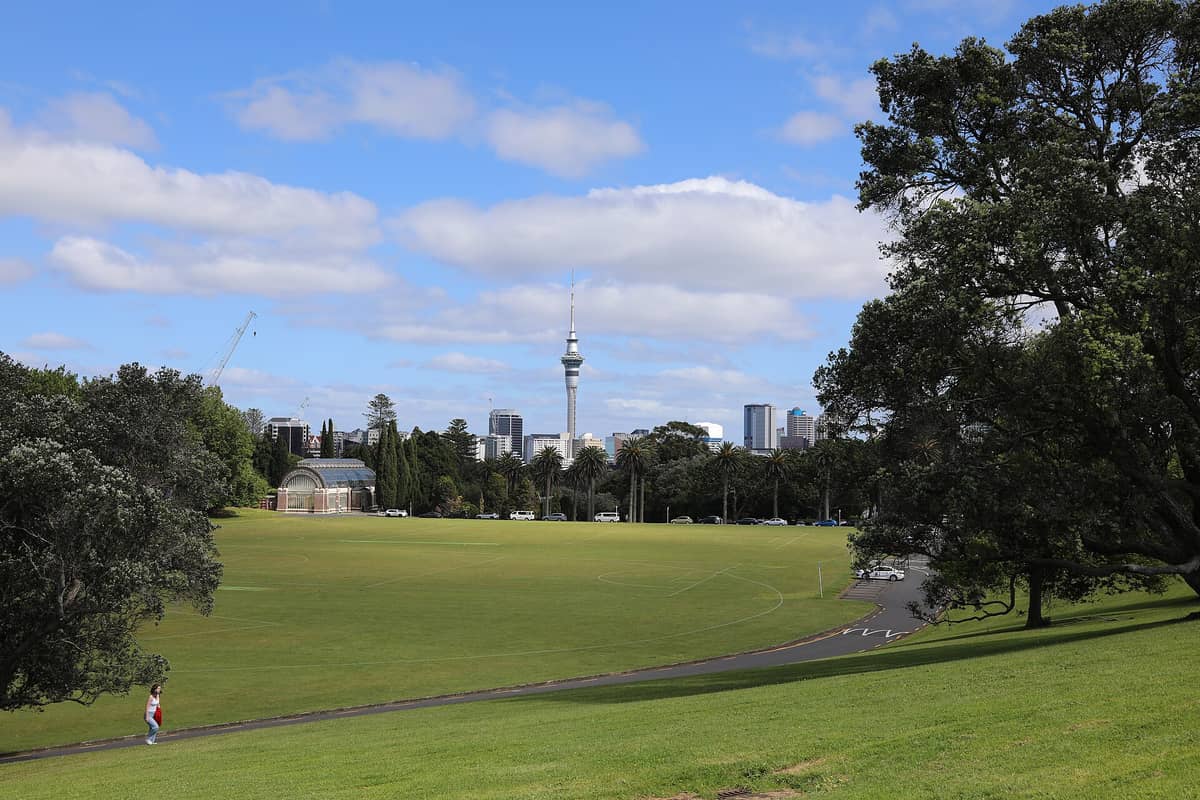
Pukekawa, known in English as Auckland Domain, is a 75-hectare public park sitting on the eroded remnant of an ancient volcano in the Parnell neighbourhood, roughly a kilometre east of the CBD. It is Auckland's oldest park, set aside by Governor Robert FitzRoy in 1843, which makes it older than most of the city that now surrounds it. The park contains open playing fields, formal Victorian-era gardens, native plantings, a bandstand, a duck pond, and the Auckland War Memorial Museum perched prominently on the park's highest rise.
Unlike many city parks, this one has genuine layers. At ground level you get broad lawns used by joggers, dog walkers, and cricket players depending on the day. Move deeper and you find the Wintergarden complex, a pair of glasshouses flanking a sunken formal courtyard, which represents one of the most carefully maintained free attractions in the city. Higher up, the museum terrace opens onto panoramic views across the harbour. The park earns its reputation not from any single feature but from how these elements stack up across a single visit.
ℹ️ Good to know
The park itself is open daily from 6am to 10pm. The Wintergarden has seasonal hours: 9am–5pm from 1 November to 31 March, and 9am–4:30pm from 1 April to 31 October. Auckland War Memorial Museum has its own separate admission fee and opening hours.
The Volcanic Foundation: Why Pukekawa Matters
Auckland sits within one of the world's largest basaltic volcanic fields, and nearly every significant hill in the city has volcanic origins. Pukekawa is no exception. The domain's gently rolling landform is what remains of a scoria cone and associated lava flows that predate European settlement by a very wide margin. Erosion and extensive landscaping over nearly two centuries have softened the original volcanic topography considerably, but the elevated ridge where the museum stands still traces the outline of the original crater rim.
The Māori name Pukekawa translates roughly as 'hill of bitter memories', referring to tribal battles fought there between Hongi Hika and Potatau Te Wherowhero. Parnell, the surrounding suburb, also carries significant historical depth — its heritage streetscape and Victorian-era buildings make the domain's immediate neighbourhood one of the more coherent inner-city areas to explore on foot.
For travellers interested in Auckland's wider volcanic story, the domain fits into a broader network of cones and reserves worth exploring. The Auckland volcanic cones guide covers the full picture, including Maungawhau (Mount Eden) and One Tree Hill, which offer more defined crater shapes and higher viewpoints.
Tickets & tours
Live prices and dates from our booking partner. If you book, we may earn a commission at no extra cost to you.
Luggage Storage in Auckland
From 5 €Instant confirmationFree cancellation13,000ft skydiving experience in Auckland
From 195 €Instant confirmationFree cancellationDiscover Auckland City Tour
From 88 €Instant confirmationFree cancellationAuckland to Rotorua via Hobbiton movie set tour
From 205 €Instant confirmationFree cancellation
The Wintergarden: The Park's Quiet Highlight
The Wintergarden complex sits in the lower section of the domain and comprises two large Victorian-style glasshouses connected by a formal outdoor courtyard. The Temperate House contains ferns, orchids, begonias, and seasonal flowering plants. The Tropical House runs considerably warmer and wetter, and the change in atmosphere is immediate when you step through its doors: the temperature climbs, the air smells dense and green, and broad-leaved tropical plants press close to the path.
The sunken courtyard between the two glasshouses is the kind of place that stops people mid-stride. A formal fountain sits at the centre, surrounded by symmetrical garden beds that are replanted seasonally, meaning the colour palette shifts between visits. On a bright morning, light falls into the courtyard at an angle that makes it genuinely photogenic without requiring any particular skill. On overcast days, the glasshouses become the obvious retreat, and the warmth of the Tropical House earns its keep in a Auckland winter.
💡 Local tip
Arrive at the Wintergarden before 10am if you want the courtyard largely to yourself. School groups arrive mid-morning and can fill the glasshouses quickly on weekdays during term time.
The Open Park: Fields, Paths, and the Museum Terrace
The main bowl of the domain is a broad expanse of well-maintained grass used by local sports clubs for cricket in summer and football in winter. On weekend mornings, the pathways that circle the fields fill with joggers, and the peripheral benches tend to be occupied by people with coffee from nearby Parnell cafés. The park has enough space that even on popular Saturday afternoons it rarely feels overcrowded across its full 75 hectares.
A gradual path leads from the lower park up to the museum terrace, where the view north across the inner harbour and Waitemata is one of the best flat-walk panoramas in central Auckland. The Auckland War Memorial Museum building itself is architecturally imposing — a Neoclassical structure with a colonnaded facade completed in 1929, designed to serve as both museum and civic war memorial. Visiting the museum is a separate decision with a separate cost, but the terrace and the steps leading up to it are free and worth using for the view alone.
The museum's Māori collection and natural history galleries are among the strongest in New Zealand. The Auckland War Memorial Museum warrants its own dedicated visit, particularly for those interested in te ao Māori and Pacific cultures — it should not be treated as a quick add-on to a park walk.
How the Domain Changes by Time of Day
Early mornings, roughly 6am to 8am, belong to local residents: dog walkers crossing the main lawns, runners doing laps of the outer path, and the occasional group doing outdoor fitness training near the lower fields. The light is soft, the park is quiet, and the Wintergarden is still closed. This is when the duck pond area is at its most peaceful.
From mid-morning through the early afternoon the visitor mix shifts. Tour buses begin arriving at the museum, families settle on the lawns with picnic blankets, and the Wintergarden fills with a steady flow of visitors. On clear summer days, the main field area gets noticeably warm by midday, and the shade of the trees lining the paths becomes genuinely useful.
Late afternoons are consistently pleasant. The crowds thin after 3pm, the light becomes warmer and lower, and the museum terrace gets long shadows that make the colonnade look its best. If Auckland's weather cooperates, the hour before dusk on a clear evening is the time to be on the upper terraces. The park is open daily from 6am to 10pm, and the pathways are lit, but the experience after dark is primarily for locals rather than tourists.
⚠️ What to skip
Auckland's weather changes fast. The domain is largely exposed on its upper sections, and a morning forecast can shift significantly by afternoon. Light waterproof layers are worth carrying, especially outside summer.
Getting There, Parking, and Accessibility
The domain is accessible by the InnerLink and OuterLink bus services, which stop near the Park Road entrance. These routes connect the domain directly to the CBD, Newmarket, Ponsonby, and other central neighbourhoods. Auckland Transport's journey planner at at.govt.nz is the most reliable way to check current stop locations and service times, as routes can be subject to change.
Paid parking is available within the park, and the access roads lead to several car parks distributed across the site. Auckland Council provides 10 designated mobility parking spaces: three outside the Wintergarden, two at the end of The Crescent, one at the end of Kiosk Road, and four in front of the museum. The main pathways through the lower park and around the formal gardens are paved and navigable by wheelchair, though the gradient on the path up to the museum is moderate and requires some effort.
Visitors combining the domain with the Parnell neighbourhood should note that the suburb's main shopping and café strip is walkable from the Park Road entrance. The wider 3-day Auckland itinerary often pairs a Domain morning with an Albert Park and CBD afternoon, which works logistically without requiring a car.
What to Manage Expectations On
Auckland Domain is not a dramatic landscape. It does not have steep cliffs, wild coastal scenery, or the kind of summit views you get from Maungawhau or Rangitoto. Visitors who arrive expecting spectacle may find it underwhelming compared to Auckland's more visually intense parks. Its appeal is quieter: well-maintained green space, genuine historical layers, and the Wintergarden as a genuine draw in its own right.
Travellers with very limited time in Auckland who are prioritising viewpoints or coastal experiences may find that the domain sits lower on their list. Those who enjoy urban parks for their own sake, who appreciate formal gardens, or who are already planning a museum visit will find it a natural and efficient use of half a morning.
If dramatic views are the priority, Mount Eden (Maungawhau) is about 2 kilometres west and offers a clear crater and 360-degree city views. The two sites pair well together in a half-day itinerary without overlap.
Insider Tips
- The sunken Wintergarden courtyard is one of the best photography spots in the domain, but it faces north, so morning light from the east catches only one side. Return in the early afternoon for more even light across the fountain and garden beds.
- The duck pond in the lower park is quieter and less visited than the main lawn areas. It's a useful spot to sit if the main fields are occupied by sports events on weekends.
- Paid parking inside the domain can be difficult to find on event days, particularly when the main field hosts cricket or when concerts are scheduled. Use the AT journey planner to check the bus options before driving in on a weekend.
- The museum terrace may be accessible when the museum itself is closed, during the Domain's park hours. Check access before visiting; the terrace still delivers the view and a close look at the building's exterior. If you arrive outside museum hours, the terrace still delivers the view and a close look at the building's exterior.
- The domain connects directly to Parnell via short paths leading to Park Road. The café and restaurant strip on Parnell Road is less than 10 minutes on foot from the Wintergarden, making it a natural end point for a morning visit.
Who Is Auckland Domain For?
- Families with children who want outdoor space, ducks, and the Wintergarden without paying admission
- Travellers pairing a museum visit with an outdoor walk in the same area
- Joggers and walkers based in central Auckland looking for a flat-to-moderate circuit in a green setting
- Visitors interested in Auckland's Māori and colonial history who want physical context before entering the museum
- Anyone looking for a free half-day option that combines gardens, views, and heritage architecture
Nearby Attractions
Other things to see while in Parnell:
- Auckland War Memorial Museum
One of New Zealand's most significant cultural institutions, Tāmaki Paenga Hira Auckland War Memorial Museum sits at the top of the Auckland Domain in Parnell, housing world-class Māori taonga, natural history collections, and moving war memorials under a grand Greek Revival facade. It rewards several hours of careful exploration, and rewards repeat visitors too.
- Holy Trinity Cathedral
Holy Trinity Cathedral on Parnell Road is one of Auckland's most architecturally significant religious buildings, a Gothic Revival complex that has been taking shape for over a century. Entry is free, the atmosphere is genuinely calm, and the site tells a layered story about the city's Anglican heritage and its ongoing relationship with craft and faith.
Planning a trip? Discover personalized activities with the Nomado app.